


 Claim Ownership
Volts
Subscribed: 1,007Played: 96,669
Subscribe

© David Roberts
Description
Volts is a podcast about leaving fossil fuels behind. I've been reporting on and explaining clean-energy topics for almost 20 years, and I love talking to politicians, analysts, innovators, and activists about the latest progress in the world's most important fight. (Volts is entirely subscriber-supported. Sign up!)
www.volts.wtf
www.volts.wtf
454 Episodes
Reverse
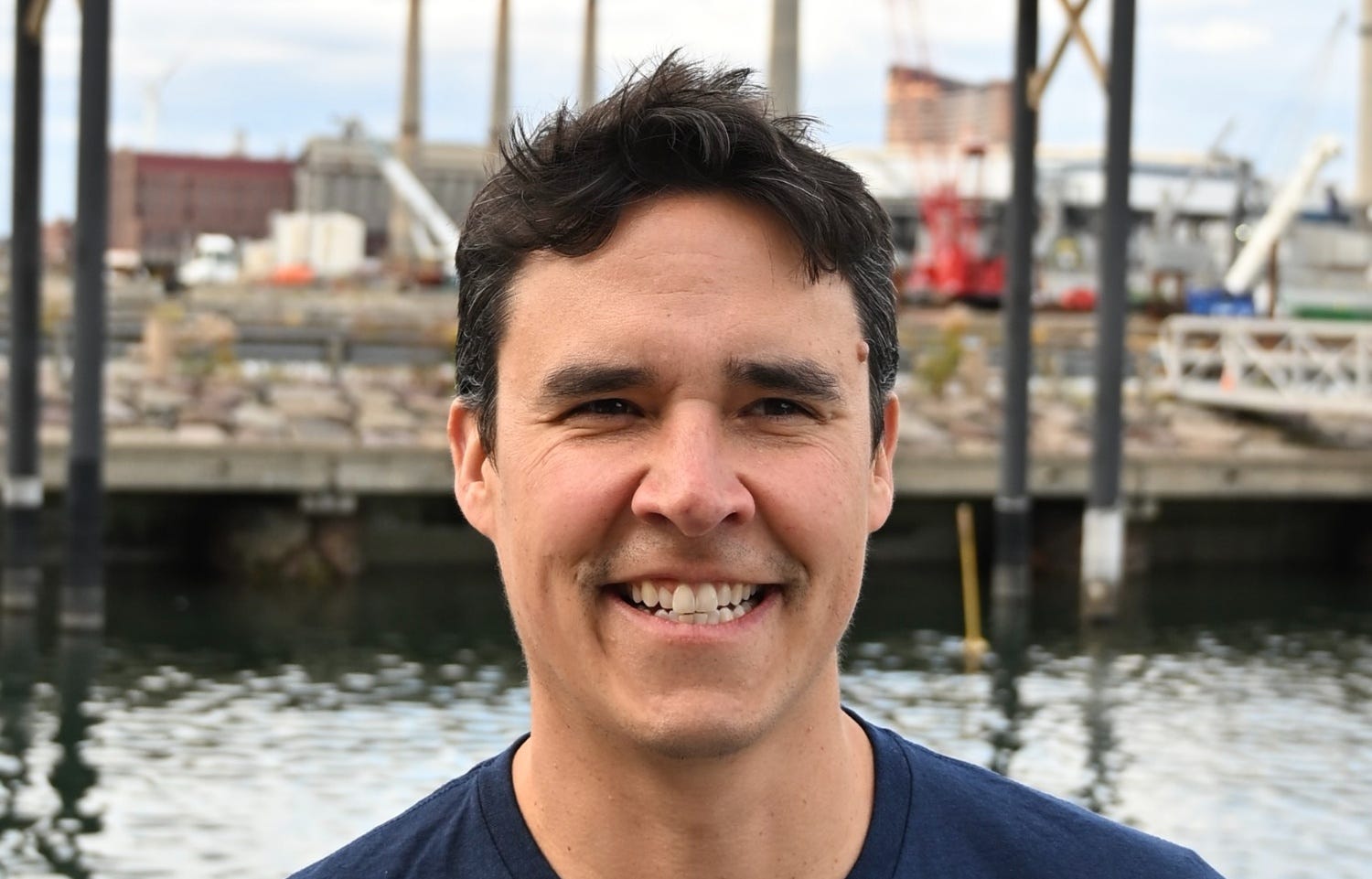
This is a public episode. If you'd like to discuss this with other subscribers or get access to bonus episodes, visit www.volts.wtf/subscribeHeat pump water heaters use a fraction of the energy of conventional electric resistance heaters — which use more electricity in a year than an EV — but they're only 2 percent of the market, mainly because they tend to cost more, be slow and loud, and require a plumber and an electrician. Reservoir is a Boston company trying to fix all that, with a smarter, quieter machine and its own plumbers. I talk with CEO Luke Winston-Almanzar about how it works, what it costs, and its potential role in demand response programs.Chapters:00:00 – Introduction03:06 – Why water heaters06:34 – How gas, resistance, and heat pump water heaters work09:33 – Size and slow recovery: predictive heating and party mode15:31 – Installation and vertical integration22:19 – Cutting electric resistance backup20:31 – What Reservoir builds and what it sources23:41 – Tankless gas, virtual capacity, and the booster heater27:11 – Recirculation, freeze protection, leak detection, and Legionella32:03 – What it costs and what it saves36:01 – Placement: small rooms, basements, and cold climates42:37 – Noise and durability48:19 – Demand response and virtual power plants53:22 – A. O. Smith’s CO2 split system and Reservoir’s moat55:54 – Policy headwinds after the IRA59:29 – What’s next for Reservoir

This is a public episode. If you'd like to discuss this with other subscribers or get access to bonus episodes, visit www.volts.wtf/subscribeHome batteries like the Tesla Powerwall are nice, but what about people who can’t afford them, or renters who aren’t allowed to install them, or people who just don’t want the hassle of dealing with a permit and an electrician? A company called Pila is selling small (1.6 kWh) batteries that simply plug into a normal electrical socket. They can serve as backup for a refrigerator or other appliance in the event of a blackout, but they can also “mesh” with one another to form a network, pair with rooftop solar, or participate in VPP programs. CEO Cole Ashman explains the value proposition.Chapters:00:00 Introduction02:26 Lessons from Powerwall and Span05:33 What Pila is and how it works07:14 How long a fridge runs on one battery09:28 Fire risk, LFP chemistry, and New York City16:02 Why the price went up, and cost per kilowatt hour19:55 Who is actually buying Pila23:00 Financing models and free batteries27:04 Do the bill savings add up?32:05 Why utilities want small batteries in VPPs36:58 Pilots with Holy Cross Energy and Brooklyn SolarWorks41:09 Solar pairing and the Pila mesh network47:14 Camping batteries and built-in storage54:19 Utilities and visibility at the grid edge55:58 Bidirectional outlets and the next five years1:00:10 Clean energy as invisible infrastructure

This is a free preview of a paid episode. To hear more, visit www.volts.wtfBack in 2011, I wrote that fossil fuel interests had a much better media game than clean energy. My example was Frank Maisano, a media relations guy for coal utilities and the natural gas industry. Thirty years on, he’s still at it — still writing his newsletter, still connecting reporters to sources, still better at it than anyone on the clean side (sigh). So I’m finally talking to him about it: clean energy trade groups nobody in Washington fears, Trump’s daft efforts to kill renewables, the PAC picking off dirty-energy Republicans, permitting and data center fights, and the climate denial shop he worked for in the ‘90s. Spoiler: he regrets nothing.Chapters:00:00 – Introduction03:46 – What a DC media strategist actually does09:50 – Republicans, Trump, and a narrow House majority15:29 – Why tax cuts beat energy in the OBBBA fight18:54 – Competing with China on AI without the electric stack21:15 – Paying $4 billion to hand back offshore wind leases28:07 – Red-state wind and the orders keeping coal plants open32:52 – Clean energy trade groups and the building trades38:41 – Gas as a bridge, and what longer term means44:55 – Whether a half-gas trade group can serve clean energy48:43 – A coherent clean vision against an incoherent coalition51:14 – Do the green groups still scare anyone55:18 – Permitting reform and the Whitehouse-Capito path59:46 – Data centers, animal spirits, and the midterms1:06:48 – The revenge PAC, and whether it is working1:12:31 – Congress, the courts, and what Democrats could do1:18:53 – COP, climate change, and the client he would turn down

This is a public episode. If you'd like to discuss this with other subscribers or get access to bonus episodes, visit www.volts.wtf/subscribeVerrus is building data centers designed to address every objection the public has raised: they use batteries instead of diesel generators, which makes them grid assets that help hold down power prices; they use closed-loop cooling, which uses a tiny fraction of the water; their equipment is quieter; and as a bonus, they squeeze more servers into the same grid connection. Yet both of Verrus’s proposed sites, in Michigan and Oregon, are mired in fierce local opposition. In this episode, CEO Nelson Abramson walks through the engineering — and the politics that the engineering hasn’t quite solved.Chapters:00:00 – Introduction02:43 – Three decades in data centers05:05 – What a Verrus data center looks like07:39 – The medium voltage power plane12:13 – UPS batteries vs. the big LFP battery17:27 – Priority aware capping and provisioned utility capacity22:31 – Why not buy the pieces off the shelf?25:42 – Duration: what happens when four hours runs out34:28 – Diesel backup and what customers ask for37:15 – How flexible is compute, really?42:37 – Noise, fans, and the sound studies48:42 – Water use and the 12 million gallon question52:19 – Industrial land and by-right zoning56:07 – Public opposition, recall petitions, and community benefits1:00:07 – Oregon, Salem, and the moratorium1:03:56 – Ride-through, NERC, and losing the moat1:07:11 – What V2 looks like

 1
1This is a public episode. If you'd like to discuss this with other subscribers or get access to bonus episodes, visit www.volts.wtf/subscribeJane Flegal has worked inside philanthropy at the Hewlett Foundation, industrial emissions policy at the Biden White House, and carbon-removal market development at Frontier; she's now a senior fellow at the Searchlight Institute, writing some of the smartest climate policy analysis around. We cover a lot of ground: industrial policy versus market approaches, what the IRA got right and wrong, philanthropy's proper role, data centers and the case for an infrastructure fund, and behind-the-meter gas, among other things. This is a long one, and spicy!Chapters:00:00 – Introduction03:11 – Flegal's thesis: building a clean grid fast enough to power growth06:29 – Why she rejects degrowth09:27 – The Roosevelt essay: climate as more than a market failure13:30 – Why clean energy underuses its political muscle15:24 – Industrial policy and the green spiral theory of change20:40 – Was IRA the right approach?22:12 – Lily Bermel's paper and the fight over what survived23:21 – What she would have done differently under IRA30:11 – Philanthropy, Silicon Valley, and what government is for33:29 – The epistemic crisis inside environmental NGOs39:09 – The abundance movement and what each faction misses44:16 – What establishment Democrats get wrong on climate46:06 – Why issue polling misleads50:34 – Republicans and the Cold War analogy52:47 – Data centers and the American Grid Infrastructure Fund59:13 – Affordability politics and who pays for the grid1:08:14 – Emissions, behind-the-meter gas, and flexible load1:13:57 – The clean firm debate: storage plus transmission?1:20:14 – Capacity markets, ERCOT, and the case for planning1:24:32 – Utility incentives, public power, and affordability fixes1:35:55 – Permitting reform and the land footprint asymmetry1:41:05 – NEPA reform and the political window1:48:21 – Where fresh policy thinking comes from

Comments

Download from Google Play

Download from App Store
 United States