


 Claim Ownership
Wait! That Actually Happened?
Subscribed: 1Played: 1
Subscribe

© Daniel P. Douglas
Description
Podcast about history's most unbelievable true stories. From wars against birds to dancing plagues, discover the absurd events your teacher never mentioned.
authordanielpdouglas.substack.com
authordanielpdouglas.substack.com
13 Episodes
Reverse
In 1731, Spanish coast guards boarded British Captain Robert Jenkins’ ship, tortured him, and sliced off his ear before telling him to “take it to your king.” Jenkins did something even better. He pickled the ear, carried it around for eight years, and eventually showed it to Parliament, where his testimony sparked public outrage that forced Britain into a nine-year war with Spain. The War of Jenkins’ Ear (1739-1748) saw one of the largest naval invasions in history fail spectacularly at Cartagena, where 18,000 British soldiers died mostly from tropical diseases.By the time the war ended, about 35,000 people were dead, and the peace treaty essentially returned everything to exactly how it was before. The only lasting legacy? George Washington’s Mount Vernon plantation got its name from an admiral who fought in this war, all because one stubborn sea captain refused to stop talking about his ear.Subscribe to never miss history’s weirdest moments.Until then, remember: truth is stranger than fiction, and history is weirder than you think.Be sure to check out my Substack (Intelligence Bulletin from Author Daniel P. Douglas) for other podcast series, written articles, and links to my books.Thanks for listening. Have a memorable day!Thanks for listening to Wait! That Actually Happened? from Author Daniel P. Douglas. This podcast is public, so feel free to share it! This is a public episode. If you would like to discuss this with other subscribers or get access to bonus episodes, visit authordanielpdouglas.substack.com
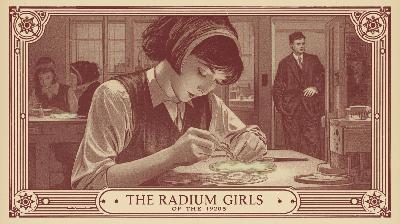
In the 1920s, hundreds of young American women were hired to paint watch dials with radium paint that made them glow in the dark. Their employers told them it was completely safe, even encouraged them to lick their brushes to create fine points, while company executives used lead shields and protective equipment when handling the same material. The women, thinking it was harmless fun, painted their nails and teeth with the glowing paint for parties.Within years, their teeth fell out, their jaws literally dissolved, and their bones broke from simple movements as the radium they’d ingested destroyed them from the inside. When they tried to seek help, the companies claimed they had syphilis to destroy their reputations. Five dying women, led by Grace Fryer, finally sued in 1928, arriving in court on stretchers, and won a settlement that established workplace safety rights we still rely on today. Many of the victims are still radioactive in their graves nearly a century later.Subscribe to never miss history’s weirdest moments.Until then, remember: truth is stranger than fiction, and history is weirder than you think.Be sure to check out my Substack (Intelligence Bulletin from Author Daniel P. Douglas) for other podcast series, written articles, and links to my books.Thanks for listening. Have a memorable day!Thanks for listening to Wait! That Actually Happened? from Author Daniel P. Douglas. This podcast is public, so feel free to share it! This is a public episode. If you would like to discuss this with other subscribers or get access to bonus episodes, visit authordanielpdouglas.substack.com
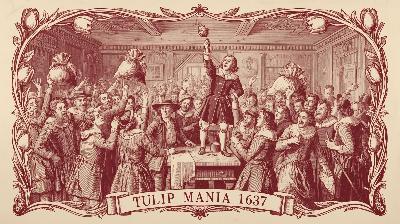
In this episode of “Wait, That Actually Happened?” we explore Tulip Mania, the world’s first recorded financial bubble that gripped Holland from 1633 to 1637. During the Dutch Golden Age, tulip bulbs became so valuable that single bulbs sold for ten times a skilled worker’s annual salary, and people traded entire houses for just three rare bulbs. The market operated through taverns turned into flower exchanges, where merchants and craftsmen traded futures contracts on bulbs that hadn’t even grown yet, with some contracts changing hands ten times in a single day.The bubble spectacularly burst in February 1637 when an auction in Haarlem failed to attract any bidders, triggering a panic that saw prices plummet 99 percent within days. While myths have exaggerated the economic impact, the verified history is strange enough: Amsterdam’s bankruptcies doubled, the government had to void contracts, and the most beautiful tulips, ironically made gorgeous by a virus, went extinct. The episode draws parallels to modern bubbles like cryptocurrency and NFTs, showing how the “greater fool theory” has driven human behavior for nearly 400 years, proving that financial madness isn’t new, it just updates its format.Subscribe to never miss history’s weirdest moments.Until then, remember: truth is stranger than fiction, and history is weirder than you think.Be sure to check out my Substack (Intelligence Bulletin from Author Daniel P. Douglas) for other podcast series, written articles, and links to my books.Thanks for listening. Have a memorable day!Thanks for listening to Wait! That Actually Happened? from Author Daniel P. Douglas. This podcast is public, so feel free to share it! This is a public episode. If you would like to discuss this with other subscribers or get access to bonus episodes, visit authordanielpdouglas.substack.com
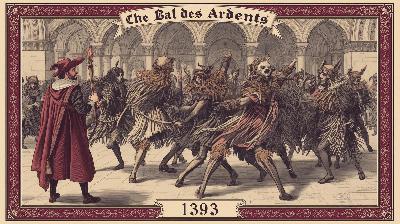
This Party Was Fire!On January 28, 1393, King Charles VI of France and five nobles dressed as “wild men” for a masquerade, covering themselves in pitch (tar) and flax to look hairy and savage, then chaining themselves together for a group dance. When the king’s brother arrived late with a torch and got too close to investigate the costumes, the highly flammable outfits instantly ignited, creating human torches chained together. Four nobles burned to death while the king only survived because his teenage aunt tackled him and smothered the flames with her dress. The disaster worsened the king’s existing mental illness, destabilized France, and contributed to French defeats in the Hundred Years’ War, proving that even in 1393, people should have known not to combine tar-covered costumes with open flames.New episodes drop weekly. Subscribe to never miss history’s weirdest moments.Until then, remember: truth is stranger than fiction, and history is weirder than you think.Be sure to check out my Substack (Intelligence Bulletin from Author Daniel P. Douglas) for other podcast series, written articles, and links to my books.Thanks for listening. Have a memorable day!Thanks for listening to Wait! That Actually Happened? from Author Daniel P. Douglas. This podcast is public, so feel free to share it! This is a public episode. If you would like to discuss this with other subscribers or get access to bonus episodes, visit authordanielpdouglas.substack.com
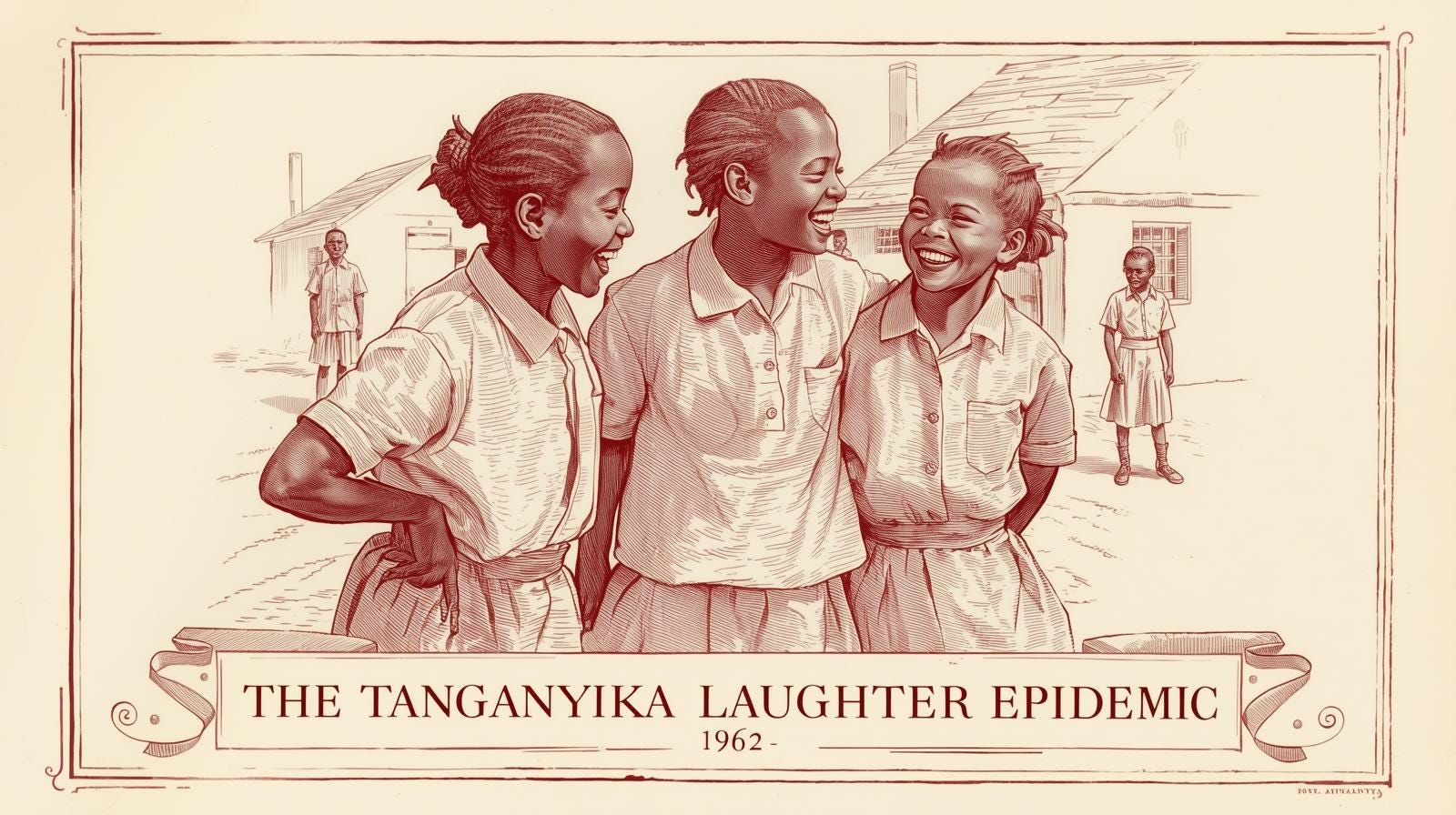
On January 30th, 1962, three girls at a mission school in Tanganyika (now Tanzania) started giggling and couldn’t stop, triggering one of history’s strangest epidemics that would last 18 months and affect over 1,000 people. The uncontrollable laughter spread from Kashasha School to nearby villages, forcing 14 schools to close as students laughed continuously for days or even weeks, experiencing pain, fainting, and terror rather than joy. The epidemic primarily affected young women and students in the newly independent nation, with some victims laughing for up to 16 days straight before collapsing from exhaustion.Scientists later diagnosed it as Mass Sociogenic Illness, essentially stress-induced mass hysteria triggered by the extreme pressures of political independence, poverty, and strict colonial-style education. The laughter finally stopped in mid-1963 as mysteriously as it began, leaving affected individuals stigmatized in their communities and providing a disturbing preview of how psychological symptoms can spread through populations like a contagious disease, a phenomenon we now see globally through social media with conditions like “TikTok Tics.”New episodes drop weekly. Subscribe to never miss history’s weirdest moments.Until then, remember: truth is stranger than fiction, and history is weirder than you think.Be sure to check out my Substack (Intelligence Bulletin from Author Daniel P. Douglas) for other podcast series, written articles, and links to my books.Thanks for listening. Have a memorable day!Thanks for listening to Wait! That Actually Happened? from Author Daniel P. Douglas. This podcast is public, so feel free to share it! This is a public episode. If you would like to discuss this with other subscribers or get access to bonus episodes, visit authordanielpdouglas.substack.com
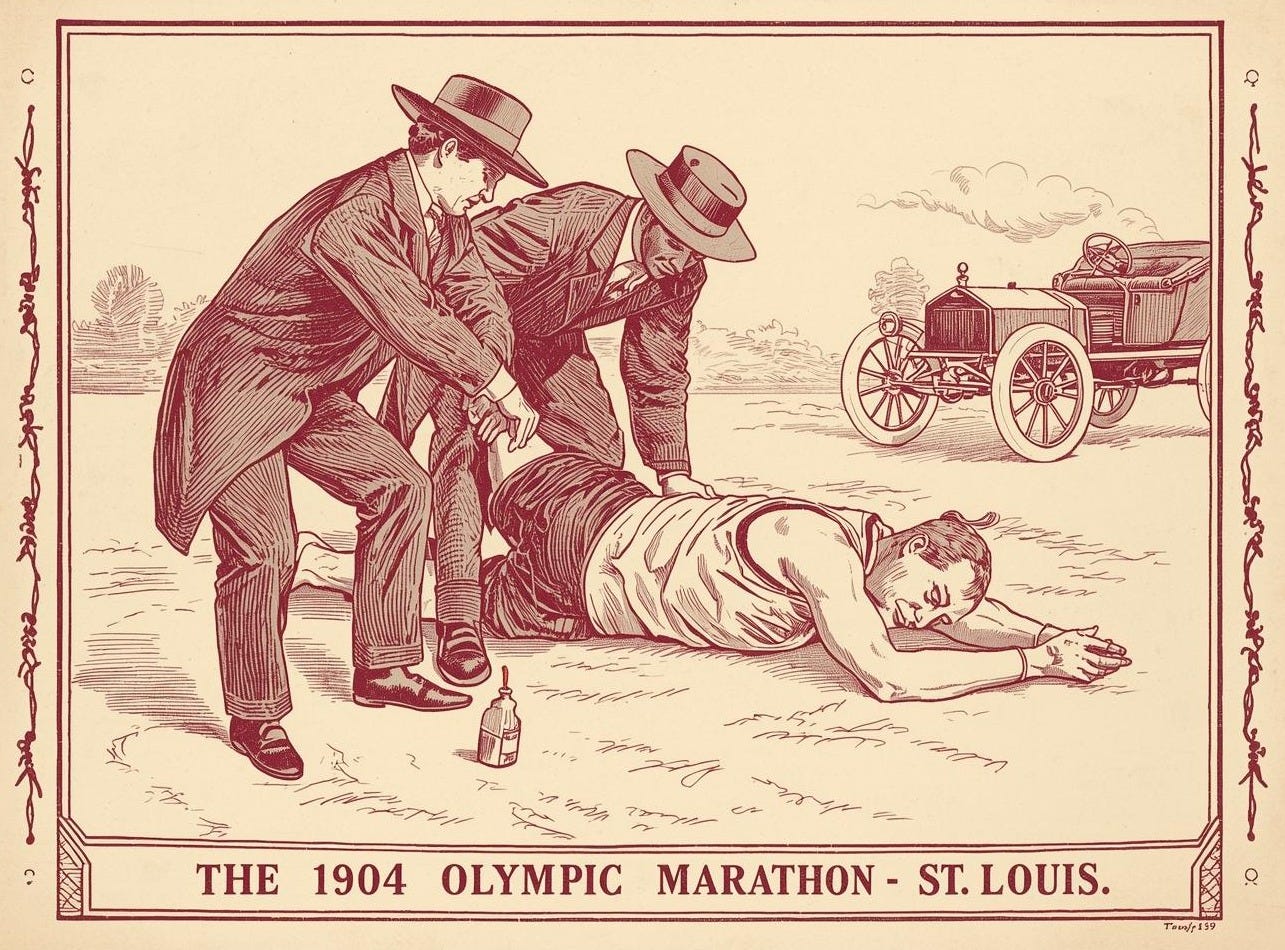
When the Olympics Decided Water Was Bad and Poison Was GoodThe 1904 Olympic Marathon in St. Louis remains the most catastrophic Olympic event ever held, when organizer James E. Sullivan deliberately withheld water from runners in 90-degree heat as a “scientific experiment” to study dehydration. Of 32 starters, only 14 finished the dusty 24.85-mile course that wound through traffic on dirt roads. Thomas Hicks “won” after his trainers fed him multiple doses of strychnine sulfate (rat poison) mixed with brandy and egg whites, causing him to hallucinate the entire last mile while they literally carried him across the finish line.Other highlights include Felix Carvajal stopping mid-race to eat rotten apples and taking a nap, Fred Lorz hitchhiking 11 miles then trying to claim victory, Len Tau being chased off course by wild dogs, and William Garcia nearly dying from internal hemorrhaging caused by dust inhalation. The race was so disastrous it almost got the marathon removed from future Olympics, yet Sullivan declared it a complete success for his dehydration research.New episodes drop weekly. Subscribe to never miss history’s weirdest moments.Until then, remember: truth is stranger than fiction, and history is weirder than you think.Be sure to check out my Substack (Intelligence Bulletin from Author Daniel P. Douglas) for other podcast series, written articles, and links to my books.Thanks for listening. Have a memorable day! This is a public episode. If you would like to discuss this with other subscribers or get access to bonus episodes, visit authordanielpdouglas.substack.com
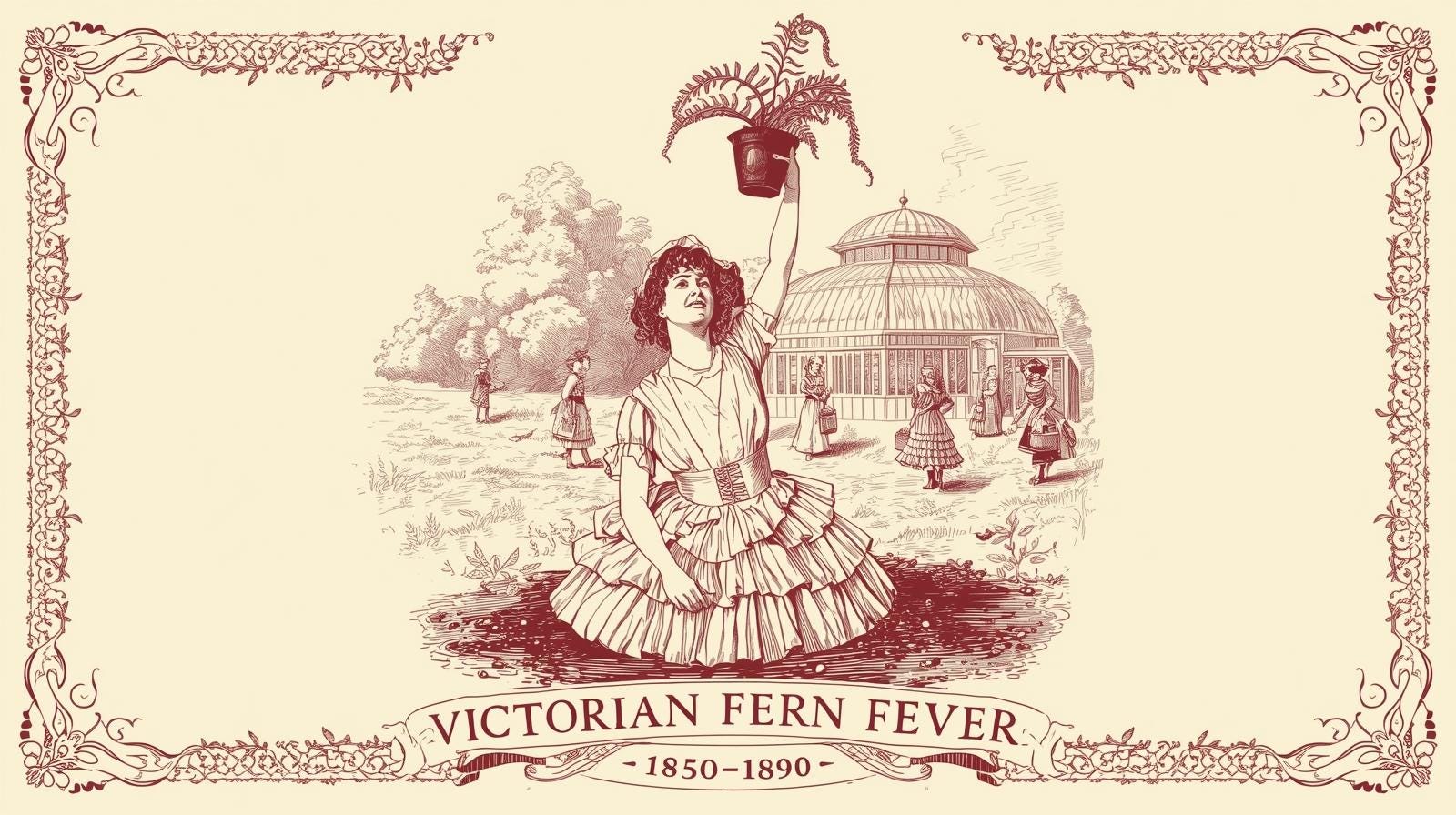
When Ladies Fought in the Mud for PlantsIn the 1850s, Victorian Britain experienced “Pteridomania” or Fern Fever, when the entire nation became obsessed with collecting ferns to the point of ecological disaster. Wealthy women abandoned society events to crawl through mud hunting rare specimens, single ferns sold for months of working wages, and collectors hired teams to strip entire valleys bare of every fern they could find. The mania was so intense that people built special glass buildings just for their fern collections, printed fern patterns on literally everything from wallpaper to tombstones and drove species like the Killarney fern to near extinction. The fever only broke in the 1890s when collectors had literally taken so many ferns that there weren’t enough interesting ones left to collect, leaving behind environmental damage that still affects endangered fern species today.New episodes drop weekly. Subscribe to never miss history’s weirdest moments.Until then, remember: truth is stranger than fiction, and history is weirder than you think.Be sure to check out my Substack (Intelligence Bulletin from Author Daniel P. Douglas) for other podcast series, written articles, and links to my books.Thanks for listening. Have a memorable day! This is a public episode. If you would like to discuss this with other subscribers or get access to bonus episodes, visit authordanielpdouglas.substack.com
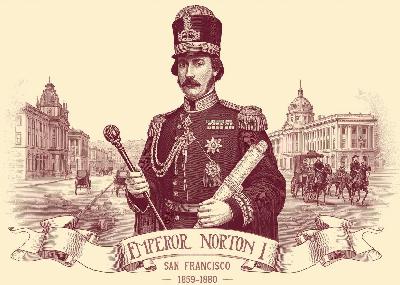
When San Francisco Crowned Its Own KingIn 1859, a broke businessman named Joshua Norton declared himself Emperor of the United States, and amazingly, the entire city of San Francisco just went with it. For 21 years, Norton I issued decrees (like ordering a bridge to be built exactly where the Bay Bridge stands today), printed his own money that stores actually accepted, and was treated like real royalty by everyone from police officers to Mark Twain. When he died in 1880, 10,000 people attended his funeral, and the city gave him a royal burial, proving that sometimes a community's decision to embrace harmless eccentricity can create more joy and lasting good than most "real" authority ever does.New episodes drop weekly. Subscribe to never miss history's weirdest moments.Until then, remember: truth is stranger than fiction, and history is weirder than you think.Be sure to check out my Substack (Intelligence Bulletin from Author Daniel P. Douglas) for other podcast series, written articles, and links to my books.Thanks for listening. Have a memorable day! This is a public episode. If you would like to discuss this with other subscribers or get access to bonus episodes, visit authordanielpdouglas.substack.com
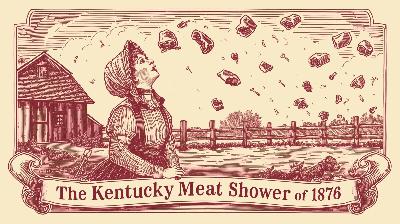
On March 3, 1876, chunks of fresh red meat fell from a clear Kentucky sky for several minutes, covering an area the size of a football field around Mrs. Allen Crouch's farm in Bath County. The meat appeared fresh enough that two men tasted it raw (declaring it mutton or venison), and samples were preserved and sent to scientists who couldn't agree whether it was horse lung, bear muscle, or even human infant cartilage. The leading scientific explanation, published in medical journals, was synchronized vulture vomit, though no birds were seen during the clear-weather event. Nearly 150 years later, the Kentucky Meat Shower remains unexplained, with preserved samples still existing in museums as testament to one of history's most bizarre and disgusting meteorological mysteries.New episodes drop weekly. Subscribe to never miss history's weirdest moments.Until then, remember: truth is stranger than fiction, and history is weirder than you think.Be sure to check out my Substack (Intelligence Bulletin from Author Daniel P. Douglas) for other podcast series, written articles, and links to my books.Thanks for listening. Have a memorable day! This is a public episode. If you would like to discuss this with other subscribers or get access to bonus episodes, visit authordanielpdouglas.substack.com
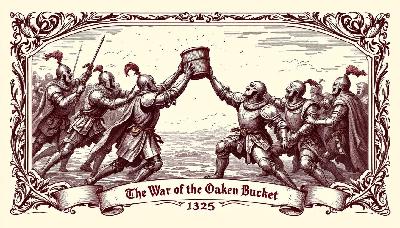
Yes, you read that correctly.In 1325, medieval Italy witnessed one of history's most ridiculous wars when Modena stole a wooden bucket from Bologna's city well. What should have been a minor prank between rival city-states escalated into full-scale warfare, with Bologna sending 32,000 soldiers to reclaim their bucket while Modena defended it with just 7,000 troops. The Battle of Zappolino resulted in over 2,000 deaths, proving that medieval honor was apparently worth dying for—even when it involved ordinary household items.The truly absurd part isn't just that thousands died fighting over a bucket, but that Modena still proudly displays their war trophy nearly 700 years later in their town hall, where tourists can visit the "Secchia Rapita" (stolen bucket) that sparked a 12-year conflict. The two cities maintain their rivalry to this day, though thankfully it's now limited to soccer matches and arguments about whose food is better, serving as a perfect reminder that humans have always been willing to fight over the stupidest things imaginable when pride is on the line.New episodes drop weekly. Subscribe to never miss history's weirdest moments.Until then, remember: truth is stranger than fiction, and history is weirder than you think.Be sure to check out my Substack (Intelligence Bulletin from Author Daniel P. Douglas) for other podcast series, written articles, and links to my books.Thanks for listening. Have a memorable day! This is a public episode. If you would like to discuss this with other subscribers or get access to bonus episodes, visit authordanielpdouglas.substack.com
On October 17, 1814, a 22-foot-tall vat containing 135,000 gallons of beer exploded at London's Horse Shoe Brewery, triggering a catastrophic chain reaction that released 388,000 gallons of porter into the streets. The resulting beer tsunami raced through the St. Giles slum at 25 miles per hour, demolishing houses, drowning eight people including children, and creating surreal scenes of human nature at its worst—locals arrived with buckets to collect free beer from streets where people had just died, entrepreneurs charged admission to view the disaster scene, and at least two more people died from alcohol poisoning at the victims' funeral wakes. The brewery successfully avoided all liability and even got a tax refund for their lost beer, while the victims' families received nothing, making this not just one of history's most bizarre disasters but also a stark reminder that industrial negligence paired with corporate immunity is nothing new.In the next episode, we're heading to medieval Italy, where two city-states went to war over a stolen wooden bucket. Yes, a bucket. Over 2,000 people died fighting for this bucket. And here's the kicker—the bucket still exists. You can go see it. It's in a museum. Proudly displayed. Because they won the bucket war.New episodes drop weekly. Subscribe to never miss history's weirdest moments.Until then, remember: truth is stranger than fiction, and history is weirder than you think.Be sure to check out my Substack (Intelligence Bulletin from Author Daniel P. Douglas) for other podcast series, written articles, and links to my books.Thanks for listening. Have a memorable day! This is a public episode. If you would like to discuss this with other subscribers or get access to bonus episodes, visit authordanielpdouglas.substack.com
In July 1518, a woman named Frau Troffea began dancing in the streets of Strasbourg and couldn't stop. Within days, dozens had joined her in this compulsive, uncontrollable dancing; within a month, up to 400 people were dancing themselves to death. The city's authorities, consulting the best medical minds of the time, prescribed the worst possible solution: more dancing, complete with hired musicians and constructed stages to "help them dance it out of their systems." This catastrophically bad decision led to scores of deaths from exhaustion, heart attacks, and strokes before the plague mysteriously ended in September. The Dancing Plague of 1518 remains one of history's most documented cases of mass psychogenic illness, showing what happens when extreme social stress meets spectacularly incompetent crisis management.This is the second episode of "Wait, That Actually Happened?" a weekly podcast exploring history's most unbelievable true stories. Up next: we're heading to London in 1814, where a tsunami of beer killed more people than sharks do in a year. Yes, really. It's called the London Beer Flood, and it's exactly as bizarre as it sounds.Be sure to check out my Substack (Intelligence Bulletin from Author Daniel P. Douglas) for more podcast series, written articles, and links to my books.New episodes drop weekly. Subscribe to never miss history's weirdest moments.Thanks for listening! This is a public episode. If you would like to discuss this with other subscribers or get access to bonus episodes, visit authordanielpdouglas.substack.com
In 1932, farmers faced an invasion of 20,000 emus devastating their wheat crops in Western Australia. Their solution? Call in the military with machine guns and 10,000 rounds of ammunition. What followed was one of history's most absurd "wars"—a month-long campaign where trained soldiers with automatic weapons failed spectacularly against large, flightless birds. Despite multiple operations, strategic adjustments, and thousands of bullets fired, the military managed to kill perhaps 200 emus out of 20,000, ultimately withdrawing in defeat. The Great Emu War became an international embarrassment, proving that sometimes nature wins by simply refusing to play by human rules, and cementing the emu's place as the only bird species to defeat a military force in open combat.This is the first episode of "Wait, That Actually Happened?" a weekly podcast exploring history's most unbelievable true stories. Up next: The Dancing Plague of 1518, when hundreds of people literally danced themselves to death in France.Be sure to check out my Substack (Intelligence Bulletin from Author Daniel P. Douglas) for more podcast episodes, written articles with full sources, and links to my books.New episodes drop weekly. Subscribe to never miss history's weirdest moments.Thanks for listening! This is a public episode. If you would like to discuss this with other subscribers or get access to bonus episodes, visit authordanielpdouglas.substack.com
Comments

Download from Google Play

Download from App Store
 United States