


 Claim Ownership
Watts in Your Data
Subscribed: 1Played: 2
Subscribe
© Denis Gontcharov
Description
Watts in Your Data, hosted by Denis Gontcharov, explores how enterprises in energy & utilities leverage Databricks to improve operations. Listeners can expect in-depth technical discussions and interview that break down complex topics automated data quality testing, and advanced analytics into understandable segments, actionable insights, and real-world applications.
More About Me: https://gontcharov.eu
More About Me: https://gontcharov.eu
7 Episodes
Reverse
In this episode, Denis sits down with Jim Gavigan, founder of Industrial Insight, to discuss Datatude, a framework for measuring your organization's readiness to leverage industrial data effectively.About the Guest: Jim Gavigan brings 30 years of experience in industrial manufacturing, from vibration analysis and control systems to working at Rockwell Automation and OSIsoft. He founded Industrial Insight in 2016 to help companies maximize the value of their time series data.Key Topics:What is Datatude and why it mattersThe five dimensions: Data, Technology, People, Priorities, and CultureWhy companies struggle to build sophisticated analytics on poor foundationsThe importance of starting small with concrete, achievable projectsCommon pitfalls: prioritizing technology over people and processHow to scale data initiatives across multiple plantsBuilding the right team and culture for data successKey Takeaway: Stop trying to implement advanced AI and analytics on crappy data. Focus on getting the basics right first — clean data, proper documentation, the right people, and a culture that supports data-driven decisions.Connect with Jim:LinkedIn: https://www.linkedin.com/in/jimgavigan/Website: https://www.industrialinsightinc.com/
In this episode of the 'Watts In Your Data' podcast, Denis discusses advancements in AI agent technology in the energy and utilities industry with Serena, the lead data architect at Bluedigit, the IT subsidiary of Italgas, Europe’s first gas distributor. Serena details their initiatives at Italgas particularly focusing on their AI-driven IT operations.The conversation delves into their journey since 2017, leveraging AI to ease workload, reduce ticket resolution times, and improve data quality. Key points include the integration of Databricks for centralizing data, the creation of an AI Factory combining IT and HR departments, and the deployment of multiple AI agents to automate IT operations, manage data, and resolve support tickets.Serena emphasizes the importance of human feedback in improving AI agents, observability for effective resource management, and future plans for extending automation in cyber-security and cloud infrastructure. The discussion concludes with a call for empathy towards users adapting to AI and the potential for future innovations.
In this episode of the Industrial Data Quality Podcast, I talk with with John Walmsley of Aluminate Technologies, about what AI actually does in heavy industry today, cutting through the hype to explore real applications and challenges.John brings experience from semiconductors to medical devices to AI in heavy industry. The conversation covers three levels of industrial AI: continuous monitoring, multi-sensor analysis, and autonomous optimization. Using aluminum industry examples, we explore why AI projects get stuck in pilot phase and what it takes to scale solutions enterprise-wide.Notable Quotes"The two words to remember every time you think you've got a great solution that will generate more data for someone is 'so what?'" - John"The reason for projects getting stuck at pilot is that the value they propose to deliver is not sufficient to clear that potential barrier for everyone involved to take the risk of investment and failure to roll it out." - John"Companies often assume data is just lying around ready to be used, but it's a bit like saying you have aluminum in the ground: you can just dig it up with a shovel. But no, to get it in pure metal form, you need a lot of processing." - DenisKey LearningsMulti-sensor approach works: Single-sensor solutions stay stuck in pilots; combining multiple data streams creates valuable insights worth scaling.Infrastructure over algorithms: Enterprise deployment needs robust, maintainable data architecture, not just clever code.Products beat projects: Successful AI needs ongoing support and evolution, not one-time engineering solutions.New pressures create opportunities: CO2 regulations and grid stabilization markets are driving fresh AI adoption in heavy industry.Start with problems, not technology: Identify significant operational challenges first, then find appropriate AI solutions.Reach out to John Walmsley on LinkedIn.
In this episode of the Industrial Data Podcast, I interview Lonnie Bowling about the evolution of operational technology (OT) data integration from the 1990s to present day (2025). Lonnie, who runs Diemus consulting, shares insights from his extensive career in industrial automation and data integration. The discussion traces how manufacturing and utility companies moved from focusing purely on automation to recognizing the value of operational data, the rise of historian systems like OSIsoft PI, challenges with proprietary formats and data quality, and the industry's current shift toward cloud computing and AI-powered analytics. Both of us acknowledge that while new technologies will transform the landscape, legacy systems will remain an essential part of industrial operations for decades to come. Key Ideas:Historians evolved from simple trend-viewing tools within SCADA systems to specialized products like OSIsoft PI that could connect multiple systems. The industry is experiencing consolidation, with AVEVA (now part of Schneider) acquiring OSIsoft PI and other players to build integrated stacks. Despite technological advances, legacy systems will remain for decades, especially in control functions. Problems include proprietary formats, inconsistent naming conventions, connectivity issues with distributed systems, and poor data quality. Companies are increasingly moving data to cloud platforms like Databricks for better analytics capabilities and computing power, though often without clear objectives.Reach out to Lonnie Bowling:Email: lonnie@diemus.comDiemus website: https://diemus.com/
In this episode Denis invites Thomas to speak on the topic of industrial time series data quality. we delve into the challenges and importance of ensuring data reliability and observability in industrial settings. Thomas shares his extensive background in industrial time series data and his current work with Timeseer, a platform focused on data quality and observability. The conversation covers various aspects, including the differences between data reliability and observability, the challenges of moving data from the shop floor to the cloud, and the need for a proactive approach to data quality management. Finally, we discuss real-world examples and the technical and organizational components required to address data quality issues.Notable QuotesData quality is not just a technical issue — it's a people and process problem, deeply tied to governance and ownership.Data management at many companies is still reactive — fixing issues only after models break or KPIs look suspicious. When companies scale their data-driven operations, they need to turn to proactive data management to avoid ending up in firefighting mode.Data maturity varies by company and by industry — utilities and pharma often lead, some other industries may still view data as a byproduct.Data should be treated like a product — with quality checks, documentation, and accountability — especially as you scale analytics. This is also true for OT data.AI needs data quality — ML and AI depend on quality inputs and sensor drift or misconfigured tags can quietly corrupt your entire model output. Interestingly, AI is also a key enabler in scaling data quality.Moving data to the cloud introduces new risks — missing context, inconsistent pipelines, and ownership confusion.Reach out to Thomas Thomas Dhollander LinkedInTimeseer websiteE-Mail thomas@timeseer.ai
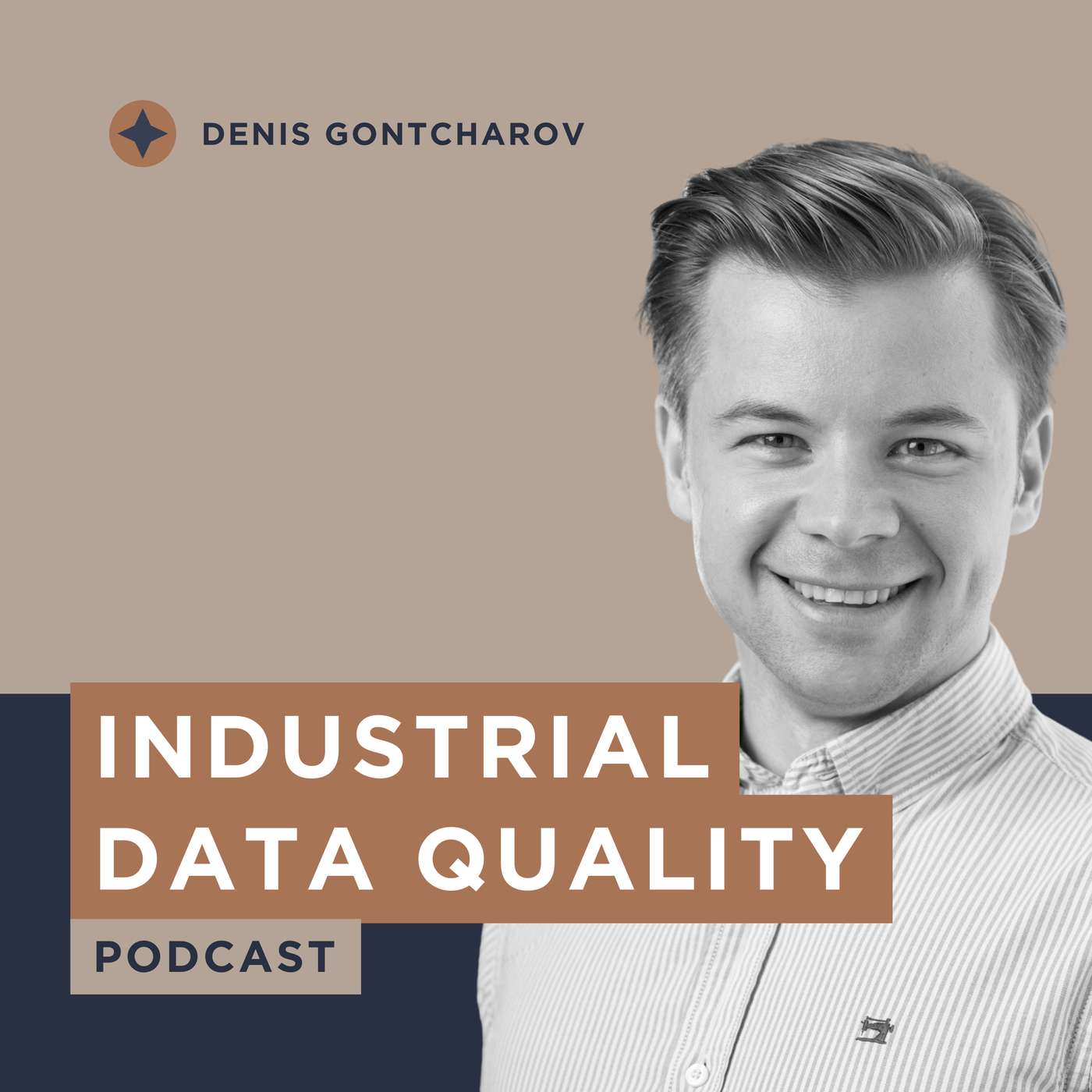
Welcome to my podcast! In this very first episode I introduce the topics of this podcast and explain my background in data.
Comments

Download from Google Play

Download from App Store
 United States