


 Claim Ownership
Way-Word Writers Podcast
Subscribed: 18Played: 451
Subscribe

© Way-Word Writers
Description
A publishing podcast for every writer, illuminating the publishing industry with episodes focused on craft, marketing, business, and mental health for writers of all experience levels.
waywordwriters.substack.com
waywordwriters.substack.com
118 Episodes
Reverse
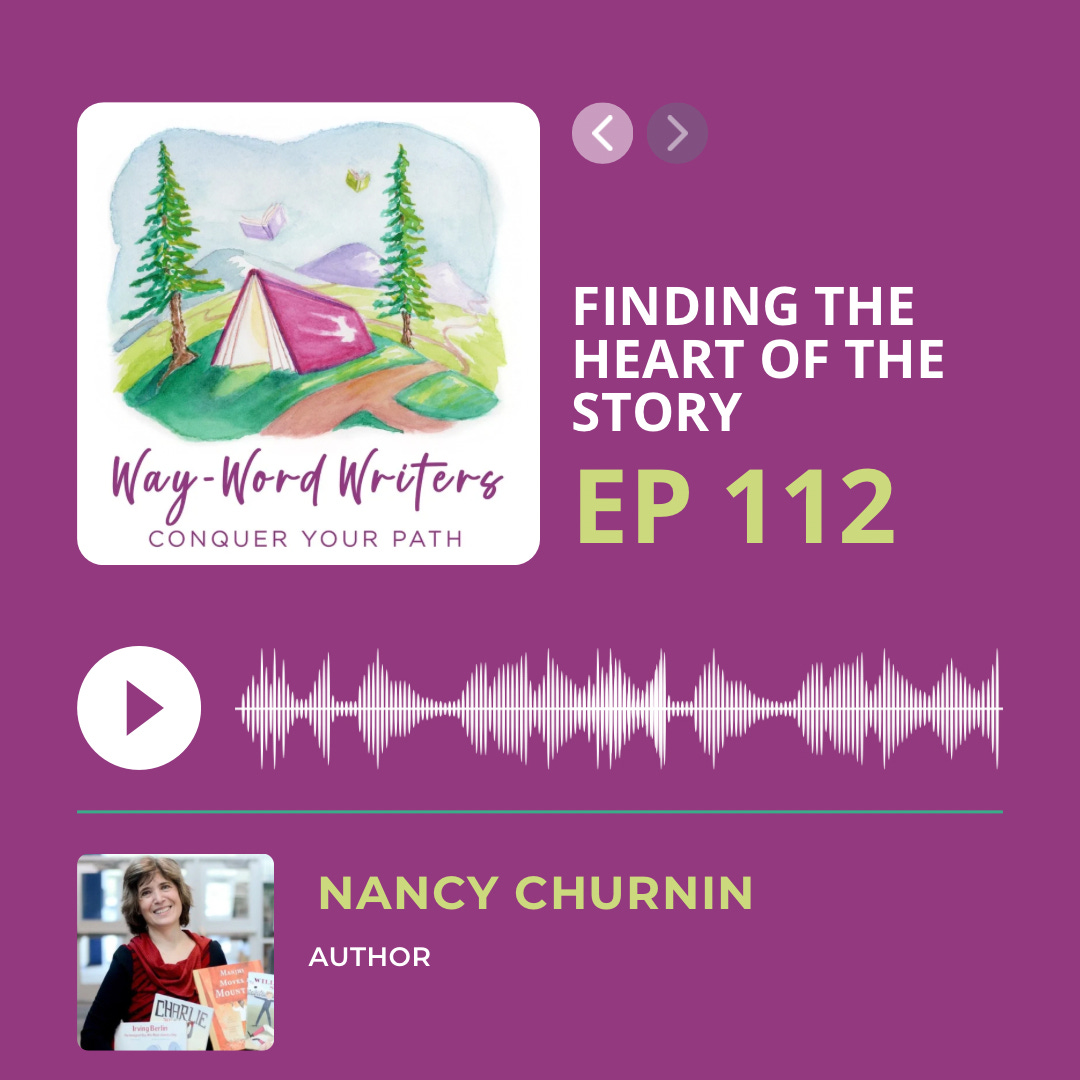
Way-Word Writers hosts Heather Cashman, Stephanie Bearce, and Nicki Jacobsmeyer welcome award-winning children’s nonfiction author Nancy Churnin, known for inspiring stories about real people who changed the world. Churnin shares how a Dallas Morning News article about deaf baseball player William Hoy led to her first children’s book after a 13-year journey, launching her focus on lesser-known changemakers. She explains how she discovers subjects through curiosity and articles, approaches research differently depending on available sources, and ensures accuracy and cultural sensitivity by working closely with families, communities, and scholars. Churnin discusses finding the “heart” of each story, choosing what to include in picture book narratives, creating student projects tied to each book, lessons in perseverance and humility, and advice to write about someone you love, seek support, and stay focused on meaning over facts.00:00 Meet Way-Word Writers00:31 Introducing Nancy Churnin02:15 Why Biographies04:01 William Hoy Origin07:18 Finding Story Subjects11:16 Research Methods14:38 Accuracy And Sensitivity18:48 Choosing What Stays21:03 Staying Focused On Theme24:54 Empowerment Themes26:05 Projects With Every Book29:11 Biggest Writing Lesson29:52 Perseverance Through Rejection32:53 Craft Advice For Nonfiction36:28 Rapid Fire Questions40:15 School Visit Joy42:42 Encouragement And Farewell This is a public episode. If you would like to discuss this with other subscribers or get access to bonus episodes, visit waywordwriters.substack.com
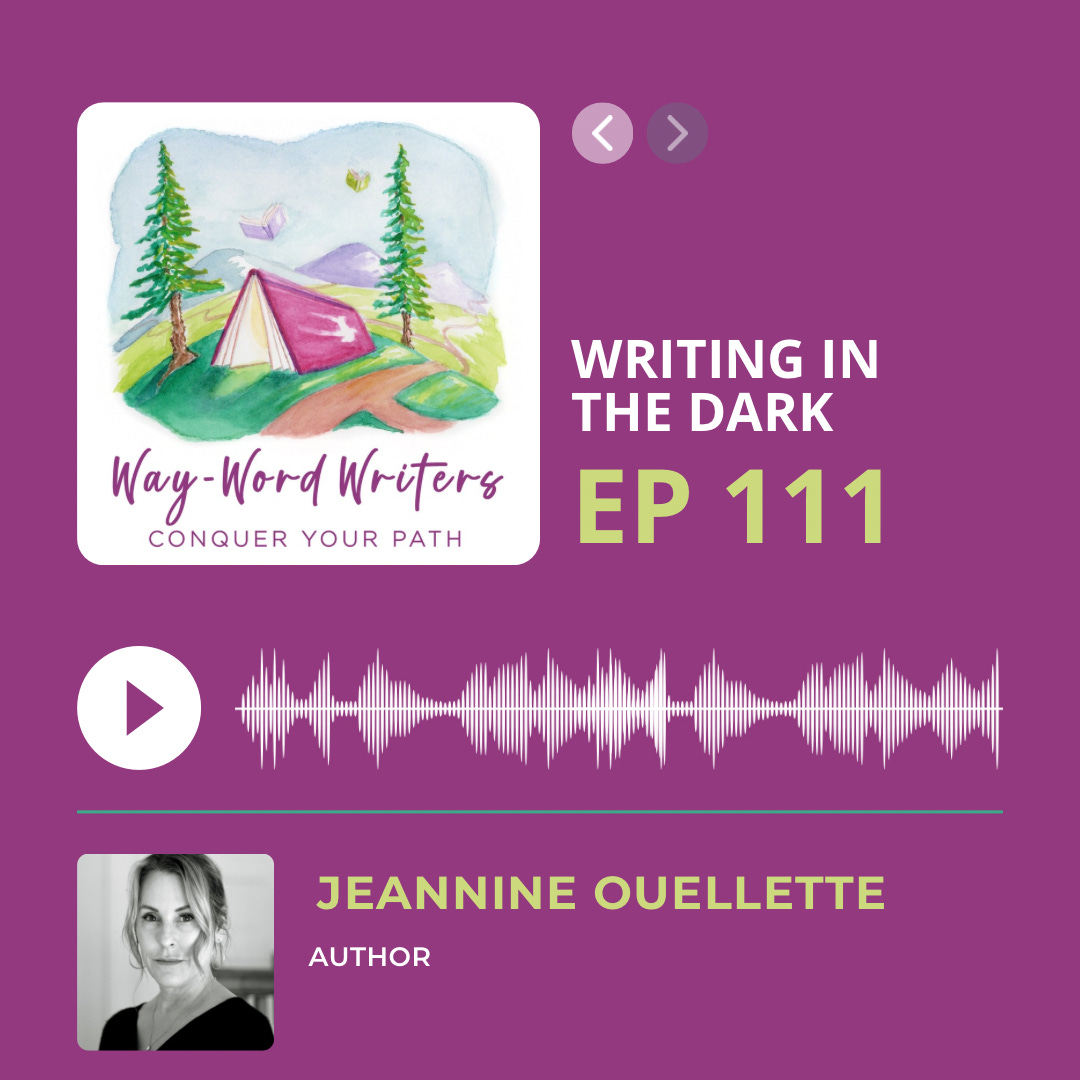
Way-Word Writers hosts Heather Cashman, Stephanie Bearce, and Nicki Jacobsmeyer introduce their mission and welcome guest Janine Ouellette, author of the lyric memoir The Part That Burns and creator of the Substack Writing in the Dark, who teaches writing through the Minnesota Prison Writing Workshop and at the University of Minnesota, with a forthcoming craft book One Word at a Time. Ouellette explains that writing “saved” her life by helping her become herself and transform childhood trauma into something separate and beautiful, echoing André Aciman’s idea that writers create empowering “versions of the past.” She frames writing as a non-dogmatic spiritual practice tied to attention and becoming, describes “Writing in the Dark” as embracing uncertainty and Keats’s “negative capability,” and discusses breaking through the “wall” with tools and community. She contrasts drafting (“morning”) with revision (“afternoon”), defines “sleepy” versus “awake” language via defamiliarization and specificity, and argues for “slow language” and anti-capitalist, process-over-product practice that values playful exercises and creative risk.00:00 Welcome to Way-Word00:34 Meet Janine Ouellette02:40 Writing Saved My Life06:20 Versions of the Past07:41 Writing as Becoming09:51 Uncertainty and Negative Capability13:16 Breaking Through the Wall17:01 Waking Up Language24:45 Story Thinking in Life33:00 Writing as Transformation40:22 Slow Language and Play46:08 Closing and ConnectThe Part That Burns by Jeannine Ouellette This is a public episode. If you would like to discuss this with other subscribers or get access to bonus episodes, visit waywordwriters.substack.com
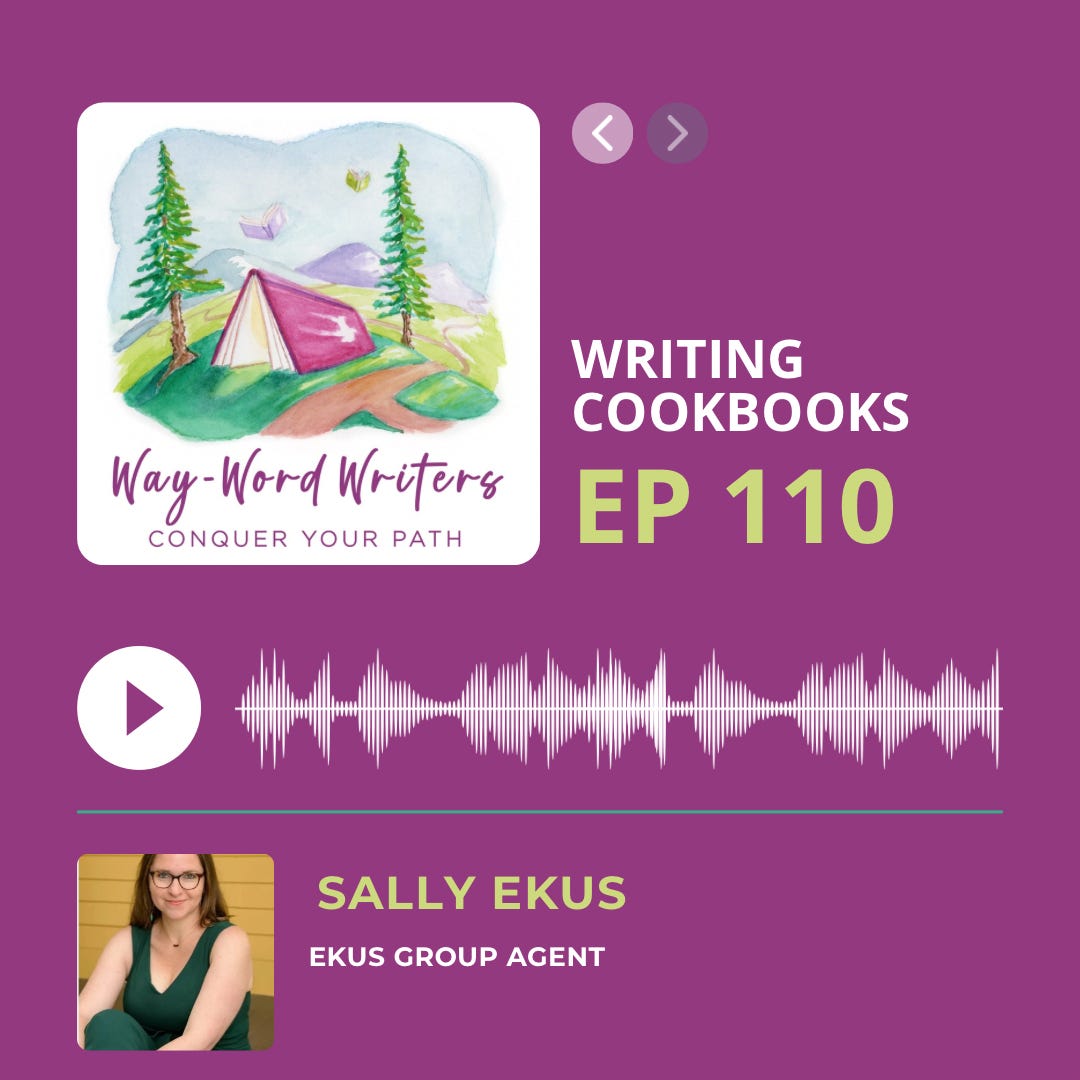
Way-Word Writers cohosts (Heather Cashman, Stephanie Bearce, and Nicki Jacobsmeyer) welcome senior literary agent Sally Ekus of the Jean V. Naggar Literary Agency’s Ekus Group to discuss the current cookbook market and how cookbooks remain viable alongside online recipes. Ekus explains how food culture has expanded opportunities for niche, concept- and technique-driven cookbooks, and why success still depends on exceptional, tested, clearly written recipes plus voice, concept, and platform. She addresses myths such as “everyone loves my family recipes” and “it will be easy,” emphasizes choosing the right medium, and suggests beginners study bookstore shelves, acknowledgments, and agents’ query preferences. Ekus outlines a portfolio approach to platform building and shares resources from her free Substack, including proposal guidelines and where-to-begin posts, plus advice on “coffee table cookbook” positioning.00:00 Welcome to Way-Word00:32 Why Cookbooks Now01:08 Meet Agent Sally Ekus03:07 Cookbook Market Snapshot05:07 Online Recipes vs Books06:22 Why We Buy Cookbooks07:15 Only Three Recipes09:28 What Makes Success11:11 Cookbook Myths Busted12:56 Should You Write One14:16 Getting Started Research15:29 Self Publishing Options16:27 Platform and Pitch Strategy19:11 Publishing Is A Long Game19:28 Fiction Platforms And Publisher Risk20:17 AI Disruption And Human Trust21:32 Why She Built The Newsletter23:02 Hyper Mentorship And Skill Sessions26:12 Cookbook Structure As Story Craft27:49 Proposal Guidelines And Where To Begin29:38 Coffee Table Cookbook Myth31:39 Books That Changed Her Cooking34:12 Lightning Round And FarewellFind Sally at JVNLA HERE and on Substack at Not So Secret Agent! This is a public episode. If you would like to discuss this with other subscribers or get access to bonus episodes, visit waywordwriters.substack.com
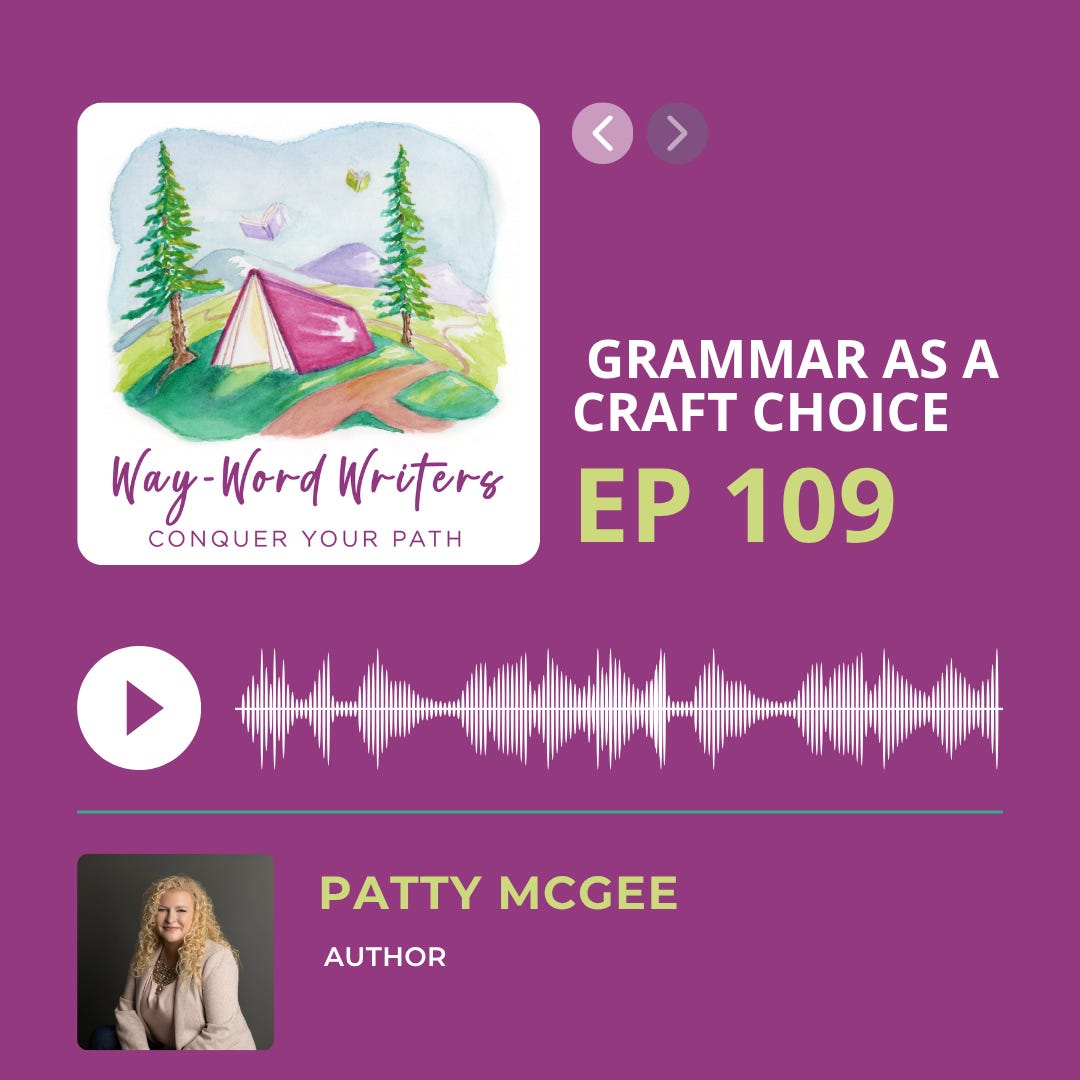
Hosts Heather Cashman, Stephanie Bearce, and Nicki Jacobsmeyer welcome nationally recognized grammar expert Patty McGee, author of “Feedback That Moves Writers Forward” and “Not Your Granny’s Grammar,” to discuss grammar as a tool for clarity, intention, and voice rather than rigid rules. McGee explains why grammar feels scary due to shame-based schooling and “grammar police” culture, and emphasizes learning key sentence structures (simple, compound, complex, compound-complex) to shape rhythm and meaning. She advises that grammar focus during drafting depends on a writer’s fluency, highlights comma splices as a common issue, downplays strict comma-before-conjunction rules, and encourages intentional rule-breaking—especially in dialogue—based on audience and purpose. The group discusses distractions like repetitive punctuation errors, AI’s conflicting guidance, knowing oneself before critique, and trusting candid readers and copy editors, then closes with a lightning round on Oxford commas, fragments, adverbs, and starting sentences with conjunctions.00:00 Welcome to Way-Word00:32 Meet Patty McGee01:38 Why Grammar Feels Scary03:58 Rules vs Voice06:22 Four Sentence Types08:30 Drafting or Revising09:48 Comma Splices and Commas15:00 Grammar as Paintbrush16:38 Authors vs Copy Editors18:41 Grammar Distractions in Queries21:50 Where Rules Came From23:52 AI Grammar Anxiety25:00 Know the Basics26:00 Writing Voice Choices26:57 Audience and Genre Rules29:01 When to Let Go31:04 Lightning Round Grammar36:08 Professional vs Personal36:55 Where to Find Patty37:22 Final Thanks and OutroGo to Patty McGee’s website here! This is a public episode. If you would like to discuss this with other subscribers or get access to bonus episodes, visit waywordwriters.substack.com
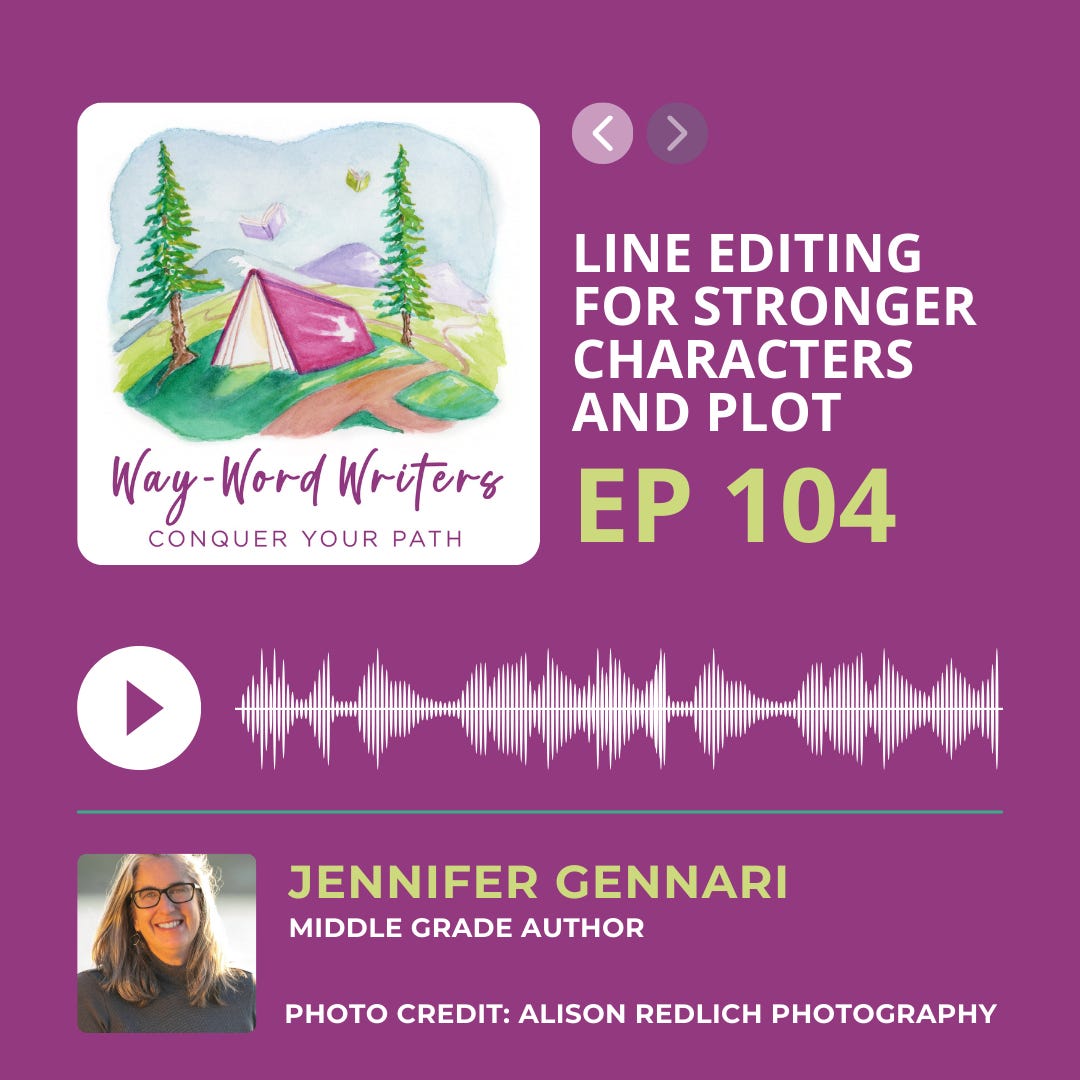
In this episode of Wayward Writers, hosts Heather Cashman, Stephanie Bearce, and Nicki Jacobsmeyer welcome author Jennifer Gennari to discuss the intricacies of line editing and its importance in the writing process. Jennifer talks about her journey as a writer and editor, shares her approach to character-driven dialogue, and offers practical advice for strengthening sentences. The conversation also delves into common issues faced by writers and teaching strategies to improve one’s manuscript. Guest recommendations for craft books and personal anecdotes round out this educational and inspirational episode.If you’d like to read Heather’s deep dive article on this episode, you can find it here:EPISODE 104 DEEP DIVE: The Art of Line Editing, A Guide to Polishing Your Prose00:00 Introduction to Wayward Writers00:32 Meet Jennifer Gennari01:33 Jennifer’s Writing Journey02:48 Books Jennifer Recommends04:23 The Importance of Line Editing06:27 Line Editing Techniques08:18 Character Development Through Line Editing12:35 Character-Driven Analogies17:17 Avoiding Over-Polishing in Writing18:06 The Power of Reading Aloud19:31 Using Beta Readers Effectively21:20 Common Issues in Student Manuscripts23:04 Recognizing Generic Sentences25:11 Polishing Dialogue for Emotional Resonance27:23 Advice for Middle Grade Authors28:54 Recommended Craft Books30:20 Conclusion and Final ThoughtsFind Out MORE:Jennifer Gennari’s Website and Links to Muffled and Stifled.The Art of Description: World Into Word by Mark DotyThe Last Mapmaker by Christina SoontornvatKekla Magoon, AuthorRefuse to Be Done: How to Write and Rewrite a Novel in Three Drafts by Matt BellSelf-Editing for Fiction Writers, Second Edition: How to Edit Yourself Into Print by Renni Browne & Dave King This is a public episode. If you would like to discuss this with other subscribers or get access to bonus episodes, visit waywordwriters.substack.com

Comments

Download from Google Play

Download from App Store
 United States