


 Claim Ownership
We're Only Human
Subscribed: 58Played: 1,926
Subscribe

© All rights reserved by WRKdefined
Description
An HR podcast focusing on the intersection of people and technology at work, We’re Only Human examines research, technology, and practical strategies for creating better outcomes for employers and the workforce. It’s a wealth of insight for anyone looking to create a high-performing organization.
155 Episodes
Reverse

How do you prove the value of HR in terms finance leaders trust? In this episode, recorded on-site at People Analytics World in San Francisco as part of our series on measuring the human impact of work, Ben Eubanks talks with Shane Noe of Astranis Space Technologies. Shane calls himself a recovering finance guy. He moved from finance roles at Apple, Google, and Box into data-driven HR leadership. He explains why measuring productivity is still so hard, why AI surveillance is not the answer, how HR can build credibility with the CFO, how to calculate the cost of a vacancy, how to approach L&D ROI, and the one metric every CHRO should start tracking tomorrow.
Thank you to People Analytics World and Ikona Analytics for supporting the show.
Key Takeaways
Productivity is easy to measure in sales and hard in most other roles, and every method still relies on layers of subjective judgment.
AI could estimate productivity by capturing email, calendar, chat, and conversations, but that creates a surveillance culture and still trains on subjective performance ratings.
Today, the best productivity measure is often the manager, so training managers to assess talent well matters more than ever.
HR faces a credibility barrier because everyone thinks they can do HR and recruiting better, and understanding your business and your data is how you break through.
Accurate capacity planning and hiring forecasts earn instant credibility with finance because headcount is usually the largest expense line.
Reverse funnel analysis shows hiring managers how many applicants and how much lead time it takes to fill roles, turning conflict into alignment.
Estimate the cost of a vacancy by dividing company revenue by headcount, then adjusting by level or salary, and walk leaders through each step.
Focus limited L&D budgets on first-time managers and AI adoption, and measure outcomes like adoption, use cases, and hours saved.
Retention by performance grade is the metric to track first: keep top performers and either improve or manage out low performers.
Org shape analysis by level and tenure reveals people stuck in roles and can expose structural blockers in competency frameworks and career paths.
Timestamps
00:00 Why measuring employee productivity is so hard
02:00 AI productivity tracking and surveillance concerns
06:00 From finance to HR: Shane’s career path
08:00 Balancing people focus with data and numbers
12:50 Overcoming HR’s credibility barrier with finance
14:30 Capacity planning and hiring forecast accuracy
16:00 Reverse funnel analysis for hiring managers
19:00 How to calculate the cost of a vacancy
21:30 Measuring training and L&D ROI
24:30 Retention by performance grade and org shape analysis
Keywords
people analytics, HR metrics, measuring productivity, HR and finance partnership, cost of vacancy, capacity planning, recruiting forecast, L&D ROI, retention by performance, org design
Connect with Shane Noe on LinkedIn: https://www.linkedin.com/in/shane-noe-425a3712/
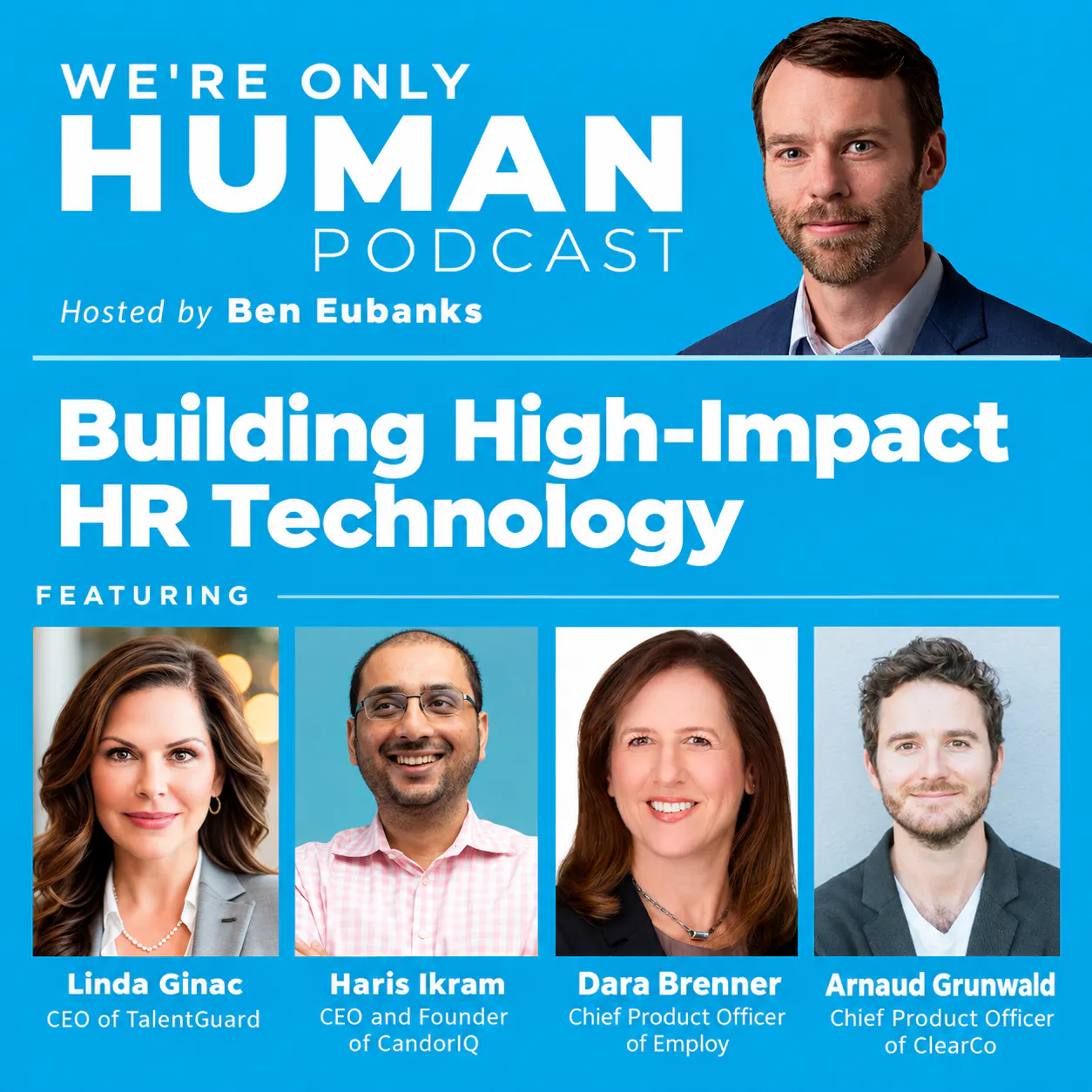
What does it take to build HR technology that delivers real business results?
Four HR tech product leaders explain how they turn customer ideas into product features, use AI to shorten feedback cycles from months to days, and apply AI in talent processes such as job architecture, skills data, and reporting. Guests are @Haris Ikram (CandorIQ), @Dara Brenner (Employ), @Linda Ginac (TalentGuard), and @Arnaud Grunwald (ClearCo).
They also cover the risks of HR teams vibe coding their own tools, how MCP and headless HR tech change who needs to learn the software, and where the industry is heading: AI-native services, shared data across customers, and governance for AI agents.
Key Takeaways
HR technology only works when the data going in is clean. Bad data multiplies when you add AI.
Good product teams solve the underlying business problem. They don’t just build the feature a customer asks for.
AI can pull themes out of sales and customer success calls, which gives product teams feedback that customers never send directly.
Building prototypes with AI lets customers co-develop features and see changes within days.
AI can build job architectures, keep skills data current, and generate board decks automatically.
With MCP and headless HR tech, hiring managers, interviewers and finance partners can do their part of a workflow in tools they already use.
Vibe coding is fine for personal tools. Shared tools bring risks to data security, compliance and ownership.
Code built inside a company is company property. It should live in the cloud, not on someone’s laptop or personal account.
Don’t shut down employee excitement about AI. Point it at fixing internal processes, and leave the high-risk builds to vendors.
As companies deploy more AI agents, they will need rules for who builds them, how governance works, and who approves them.
Timestamps
00:01 What makes HR technology work
00:05 Turning customer ideas into product features
00:07 How AI shrinks the product feedback cycle
00:09 How employers can become product partners
00:12 AI use cases in talent processes
00:15 MCP and headless HR technology
00:19 The risks of vibe coding HR tools
00:26 Compliance, sensitive data, and build vs. buy
00:32 AI-native services and shared data across customers
00:38 Why AI agents need governance
Keywords
HR technology, AI in HR, HR tech product development, vibe coding risks, MCP, headless HR tech, AI agents, HR data quality, change management, AI governance
Connect with the guests from this episode:
Haris Ikram, CandorIQ
Linda Ginac, TalentGuard
Dara Brenner, Employ
Arnaud Grunwald, ClearCo

How does hiring performance affect business performance, and how can talent leaders use AI without losing candidate trust? In this conversation, the Marc Thompson, CEO of ICIMS explains why hiring belongs in strategy and board discussions, not just HR. He covers why job openings are rising while hires stay flat, how to show a CFO or board the cost of vacancies and bad hires, and where AI helps recruiters and where humans must stay in charge. You will also hear why the difference between AI and automation matters, why context and the applicant tracking system are central to the next wave of agentic hiring, and how conversational tools may change the way managers hire.
Key Takeaways
Hiring is a strategy and operations issue. Businesses cannot meet their goals without the right people in the right roles at the right time.
Job openings rose 17 percent in July while hires stayed flat, according to ICIMS workforce data. That means demand is not converting into people on the job, which delays projects and growth.
One customer reached a 33-day time to fill, 33 percent better than its industry benchmark, while recruiter productivity rose 17 percent.
To win board support, tie vacancies and bad hires to specific business objectives and back the case with data.
Estimates put the cost of a bad hire at 50 to 200 percent of salary, and hiring, onboarding, and replacing someone can consume months of a 12-month plan.
Speed matters, but a good hiring decision from a process both candidates and recruiters trust matters more.
58 percent of TA leaders could not clearly tell AI from automation. Automating a broken process only gets you to the wrong answer faster.
AI works best on repetitive tasks like screening, scheduling, and interview communications. 80 percent of TA leaders say recruiters now spend more time engaging candidates, and 73 percent say it strengthens hiring manager partnerships.
Humans should own the final decision. Candidates preferred the message "We use AI for screening, but a human makes the final decision." AI adoption will move at the speed of trust.
The biggest AI opportunity is intelligence built on context such as roles, skills, hiring manager preferences, policies, and interview history. The system of record becomes more valuable as agentic hiring grows, with 46 percent of companies already using or planning agentic AI.
Timestamps
00:03:00 Why the right person, role, and timing matter
00:04:00 Job openings up, hires flat: what it means
00:07:00 How to make hiring a board-level priority
00:09:00 The real cost of a bad hire
00:11:00 Balancing hiring speed with candidate trust
00:12:00 AI versus automation in recruiting
00:14:00 Keeping humans in charge of hiring decisions
00:17:00 Why context makes recruiting AI useful
00:19:00 Agentic hiring and the system of record
00:22:00 Conversational hiring and the future of the ATS
Keywords
talent acquisition, hiring performance, AI in recruiting, agentic AI, applicant tracking system, candidate trust, cost of a bad hire, time to fill, enterprise hiring, recruiting automation
Connect with Marc and ICIMS
To connect with Marc Thompson, follow him on LinkedIn, and to learn more about ICIMS, its intelligent hiring platform, and customer case studies, visit the company LinkedIn page and website below.
Marc Thompson on LinkedIn: https://www.linkedin.com/in/marc-thompson-284a783/
ICIMS on LinkedIn: https://www.linkedin.com/company/icims/home/
ICIMS website: https://www.icims.com/
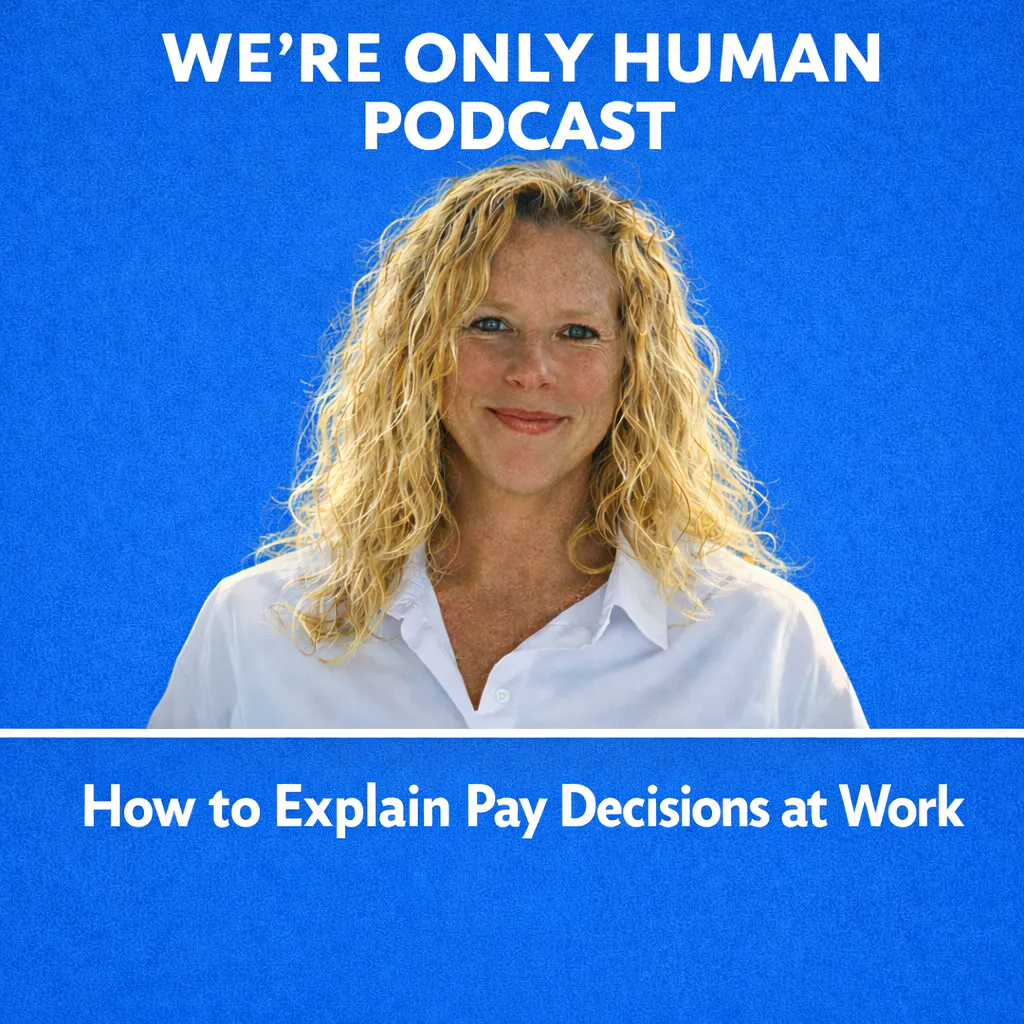
In this episode, Shari Kalsta of Jera Compensation Consulting explains why compensation strategy is no longer just about spreadsheets and market data. As pay transparency laws spread and employees gain access to more information about salaries, organizations must rethink how they explain compensation decisions. Shari shares practical lessons from two decades in compensation consulting on why communication, storytelling, and leadership alignment are now essential skills for HR and compensation teams. Listeners will learn how to build a clear compensation philosophy, align leaders on pay decisions, and translate complex pay data into messages employees and managers actually understand.
Key Takeaways
Compensation strategy is becoming more social and emotional as pay transparency increases.
Many organizations publish salary ranges but fail to explain the reasoning behind them.
Employees often have partial information about pay that leads to confusion or false assumptions.
A clear compensation philosophy should explain how pay decisions are made and why.
Compensation teams must shift from technical analysis to storytelling and communication.
Leaders often define promotions and pay decisions differently, creating misalignment.
Successful compensation programs require leadership alignment before rollout.
Managers and recruiters need clear guidance so they can explain pay decisions consistently.
Storytelling helps leaders and employees understand compensation concepts better than data alone.
Compensation systems fail when organizations build the structure but do not train people to use it.
Connect with Shari on LinkedIn: https://www.linkedin.com/in/shari-kalsta-ccp-grp-22578b7/
Timestamps
00:00 Why compensation conversations matter today
01:00 Shari’s path into compensation consulting
04:00 Learning the complexity of compensation strategy
06:00 How perspective and bias shape compensation decisions
09:00 The impact of pay transparency laws
12:00 Why most companies lack a clear compensation philosophy
15:00 The biggest mistake compensation teams make
18:00 Why storytelling is essential in compensation communication
21:00 The car shopping analogy for compensation budgets
26:00 Solving hiring pain points with structured compensation
Keywords
compensation strategy
pay transparency
compensation philosophy
salary ranges
HR compensation communication
pay equity
compensation consulting
HR leadership alignment
compensation storytelling
workplace pay strategy

In this episode, you will learn how modern talent acquisition leaders improve hiring outcomes while protecting the human side of recruiting. The conversation explores how healthcare organizations handle massive hiring volumes, why candidate experience still matters in a competitive labor market, and how recruiting teams use data to connect HR metrics to real business outcomes. Ryan Henning, Director, Talent Acquisition, Highmark Health, shares practical insights on internal mobility challenges, reducing time to fill, improving candidate experience, and how talent acquisition teams influence patient outcomes by hiring the right people faster.
Key Takeaways:
Recruiting teams can dramatically reduce time to fill while maintaining strong candidate experience.
Hiring the right people faster directly impacts patient care and operational performance in healthcare.
Internal candidates often take longer to hire than external candidates, even though they are known employees.
Talent acquisition leaders must translate HR metrics into business impact when speaking with executives.
Candidate experience matters even in uncertain job markets and should never be taken for granted.
Lowball offers or poor communication can damage employer reputation and long-term hiring success.
Data helps talent acquisition teams influence leadership decisions and demonstrate business value.
Recruiters should operate as consultants to hiring managers, not just resume processors.
Early career and high school pipeline programs are becoming critical in healthcare workforce planning.
Process improvements in interview scheduling and hiring workflows can significantly improve hiring speed.
Connect with Ryan on LinkedIn: https://www.linkedin.com/in/ryan-henning-phr-0376901a/
Also mentioned in this conversation: Episode 180 on reducing recruiting cycle time: https://megaphone.link/DIRED7119433062
Timestamps:
00:00 Why candidate experience still matters today
02:00 Ryan Henning’s role leading talent acquisition at Highmark Health
04:00 Why healthcare organizations recruit talent starting in high school
06:00 The long-term workforce strategy behind healthcare pipelines
11:30 Hiring 10,000 employees while improving recruiting metrics
14:30 Translating HR data into business impact for executives
18:00 Why internal hiring often takes longer than external hiring
22:30 How recruiting experience affects employee performance
24:00 Fixing interview scheduling and recruiting process inefficiencies
26:00 Lessons on collaboration and knowledge sharing in recruiting
Top Keywords:
candidate experience in recruiting
healthcare talent acquisition strategy
internal mobility hiring challenges
reducing time to fill roles
healthcare recruiting pipeline
talent acquisition metrics and data
recruiting process improvement
early career healthcare programs
HR business impact of recruiting
healthcare workforce shortages

Comments

Download from Google Play

Download from App Store
 United States