


 Claim Ownership
Wealthy Wellthy Podcast
Subscribed: 138Played: 11,871
Subscribe

© 2020 Wealthy Wellthy
Description
Welcome to the Wealthy Wellthy™ Life. We are committed to bringing you the very best research, hacks and world-renowned experts in money, health, and happiness. We want to change the world. Our intention is to create a movement that wakes you up to something more…to help you create extraordinary wealth and health…to live the Good Life.
362 Episodes
Reverse
EPISODE SUMMARYI love conversations that get underneath success and ask: What's actually driving it?I was introduced to Keegan Walden through our mutual friend Cameron Bodenstadt, who predicted we'd hit it off. He was right. What followed was a fascinating conversation about the psychology behind ambition, achievement, and the patterns that can make us successful — until they become the very things holding us back.We go all the way back to childhood to unpack how our early fears, defenses, identity wounds, and need to be seen can quietly shape the way we lead, build, perform, and burn out. And we explore the question many high achievers eventually face: What happens when achievement stops being enough?WHAT WE TALKED ABOUTHow Keegan went from psychology to building a venture-backed companyThe childhood experiences that shaped his ambition and need to be seenBuilding Torch, raising nearly $100 million, and eventually selling the companyWhy the patterns that make us successful can eventually hold us backHow childhood defenses quietly shape leadership and decision-makingThe Enneagram, founder psychology, and the "dark triad" of personality traitsWhy AI may make great coaching and human development even more valuableWhat therapy can uncover when you feel stuck despite being successfulWhy more achievement doesn't necessarily resolve insecurityWho are you when achievement is no longer enough?TIMESTAMPS0:00 Intro and welcome 1:37 Keegan's upbringing as the only child of a single mom 3:01 Growing up attuned to his mom's emotions 4:22 Childhood safety, uncertainty, and growing up in a rough neighborhood 7:04 Survival skills, daydreaming, and trying on different identities 11:24 The desire to be seen and the Yale story 15:55 Keegan's unexpected path into psychology 18:17 Feeling stuck and finally choosing the psychology path 23:10 Building a private practice and wanting something bigger 25:47 The text that led to co-founding Torch 26:46 Scaling Torch and raising venture capital 27:52 Selling Torch and how AI changed the business 34:08 Why coaching matters more than ever 36:27 Studying and writing about founder psychology 40:16 The hero's journey of entrepreneurship 43:34 How childhood defenses show up in founders 45:26 Idealization, startup culture, and the Enneagram 47:22 Core founder fears and the "status founder" 50:39 The dark triad and its risks in leadership 55:01 What to do when you feel stuck or unmotivated 57:27 Where to find KeeganLINKS & RESOURCESFollow Keegan's work at: keeganwalden.substack.comConnect with Keegan on LinkedIn: linkedin.com/in/keegan-walden-ph-d-672ab9101Subscribe & Share: If you enjoyed this episode, please subscribe, rate, and review — and share it with someone who needs to hear this!

I was introduced to Ari Page through a friend who thought we should meet since we both work in the world of money, investing, and capitalization. When I learned that Ari helps entrepreneurs access funding through business credit card stacking, I was immediately intrigued — but also skeptical.Like most things involving credit, funding, and financial products, there are plenty of companies making big promises. And because I teach money for a living, I take referrals seriously. I never recommend anything I haven't personally vetted and tested for myself.So instead of simply interviewing Ari, I became a client.I went through the entire process myself, step by step, with no intention of using the funding. I simply wanted to see if it worked. Within weeks, I had access to $60,000 in business credit at 0% interest for 12 months. Ironically, shortly afterward, two opportunities appeared: a real estate investment and an advanced training program. Having access to capital allowed me to move quickly without taking a major cash flow hit.In this conversation, Ari breaks down how to use business credit cards to access capital, exactly how business credit stacking works, and how using his stacking strategy can become one of the most important growth tools in your business.Most importantly, we talk about why uncertain economic times often create the greatest opportunities for entrepreneurs willing to keep investing in themselves and their future.WHAT WE TALKED ABOUTWhy access to capital is one of the biggest constraints facing business ownersHow business credit cards can function like a business line of creditThe difference between personal credit cards and business credit cardsHow investors use business credit to fund real estate deals and renovationsWays entrepreneurs use business credit to fund marketing, coaching, hiring, and growthThe advantages of 0% introductory financing versus traditional business loansHow rewards, cash back, and chargeback protection create additional business advantagesThe importance of having capital available before opportunity arrivesHow to think about funding as a strategic business tool rather than consumer debtTIMESTAMPS00:00 Introduction to Fund&Grow 01:52 Ari's journey into business credit 06:09 The process of obtaining business credit 11:41 Utilizing business credit effectively 17:41 Real-life applications of business credit 23:43 Understanding qualification requirements 29:52 Navigating economic challenges and opportunitiesLINKS & RESOURCESClick here to prequalify for interest-free business credit through Fund&Grow → https://www.fundandgrow.com/wealthywellthypqSubscribe & Share: If you enjoyed this episode, please subscribe, rate, and review — and share it with someone who needs to hear this!

I was introduced to Sam Horn through JJ Virgin and the Unicorn Club, a mastermind of seven-figure female founders. We met poolside, instantly connected, and have been good friends ever since. Beyond friendship, Sam has become one of my personal mentors in leadership, communication, and storytelling. She's also advised organizations like NASA, Intel, Oracle, and TED, and her work has influenced leaders around the world.In this conversation, Sam and I talk about something deeper than business strategy or success tactics. We talk about what it means to live well in a world increasingly driven by fear, outrage, distraction, and disconnection.This episode is about becoming a force for good. About how the smallest moments — a conversation, an act of kindness, what we choose to pay attention to — shape not only our lives, but the emotional climate of the people around us. We explore the stories we tell ourselves, the energy we bring into a room, the difference between success and significance, and why so many people feel anxious and disconnected despite having more opportunity and information than ever before.Sam shares powerful insights on communication, leadership, relationships, gratitude, purpose, and legacy through the stories and wisdom of extraordinary people she's interviewed through her Force for Good Project. The result is a conversation filled with real-world lessons that genuinely make you pause and rethink how you're living.This is one of those conversations that stays with you long after it ends.WHAT WE TALKED ABOUTWhy fear spreads faster than wisdom in today's cultureThe difference between success and significanceHow attention shapes identity and experienceWhy "the stories we feed become the life we live"The power of becoming a force for good in ordinary momentsLeadership, communication, and the art of meaningful connectionWhy gratitude and presence are disappearing in modern lifeThe role of faith, love, and service in a fulfilled lifeHow entrepreneurs unintentionally build lives they don't enjoyWhat Fred Rogers, Oprah, Howard Behar, John Mackey and other influential leaders can teach us about humanity and meaningful leadershipWhy legacy isn't something we leave — it's something we leadHow to stay hopeful and grounded in a chaotic worldTIMESTAMPS00:00 Introduction to Sam Horn and how we met 02:15 Sam's journey from speaking and storytelling to the Force for Good Project 05:40 Why fear spreads faster than wisdom today 09:10 "The stories we feed become the life we live" 13:25 How attention shapes identity, energy, and relationships 17:40 The difference between success and significance 21:10 Why so many successful people still feel disconnected 25:00 Fred Rogers, Oprah, and lessons in humanity and leadership 29:15 Hospitality, presence, and making people feel seen 33:40 The role of gratitude, faith, and service in a fulfilled life 38:05 Why entrepreneurs accidentally build lives they don't enjoy 42:30 Communication, connection, and becoming unforgettable 47:00 What it means to become a force for good 51:20 Why legacy isn't something we leave — it's something we live 55:10 How to stay hopeful and grounded in a chaotic world 58:40 Final reflections and closing thoughtsLINKS & RESOURCESWant Sam to speak at your next event? Visit samhorn.comWant to hire Sam as your coach? Visit samhorn.comWant to be inspired by Sam's Force for Good Project? Visit samhorn.comSubscribe, rate, and review — and share this episode with someone who needs to hear it!

Let me introduce you to Karl.I met Karl through JJ Virgin, one of the most well-known and respected leaders in the health and business space. Since meeting Karl, I’ve admired his quiet, humble success. He’s the kind of person who’s built real results without needing to be loud about it. Just a good human doing good work, coming from a grounded place.Karl is a serial entrepreneur, advisor, and three-time INC. 5000 CEO with nearly four decades of experience leading companies at the highest level. He’s held roles as CEO, President, COO, and CMO, advised everyone from startups to Fortune 100 companies, and is the author of Hustle Doesn’t Scale.In my interview with Karl… here’s the takeaway:He built it. Lost it. Went bankrupt. Built it all back again. And then gave it all away to start over from scratch—not because he had to, but to prove that today, with AI and modern tools, you can start from anywhere, at any age, and rebuild success without the grind.This is a conversation about what actually works now. Less hustle. More leverage. More resourcefulness. And building a business that doesn’t consume your life.What we talked about:Building success… losing everything… and choosing to start over againWhy hustle eventually breaks down (and what replaces it)The real reason entrepreneurs become the bottleneckHow to rebuild income with less time and more leverageUsing AI and modern tools to accelerate growthThe difference between working hard and working strategicallyWhy resourcefulness matters more than moneyCreating a business that supports your life, not consumes it⏱ Timestamps 00:00 Introduction to Karl and how we met02:10 Karl’s early entrepreneurial journey and first success05:30 Building multiple companies and hitting major milestones09:45 The collapse — losing everything and going bankrupt14:20 The emotional and financial reality of starting over18:10 Rebuilding from scratch with limited resources22:30 Why hustle doesn’t scale (and where it breaks)26:45 Becoming the bottleneck in your own business31:00 The shift to systems, leverage, and self-managed teams36:20 Giving it all away and choosing to start over again40:10 Using AI and modern tools to rebuild faster and smarter45:30 What success looks like now vs. before49:00 Resourcefulness vs. money — the real advantage52:30 Advice for anyone in a rebuild or transition56:00 Final thoughts and key takeaway💻 Links & ResourcesIf this conversation hit, take the next step. Karl shares the exact AI tools he’s using and the framework behind his approach in his book, Hustle Doesn’t Scale:https://hustledoesntscale.com/Subscribe & Share:If you enjoyed this episode, please subscribe, rate, and review — and share it with someone who needs to hear this!
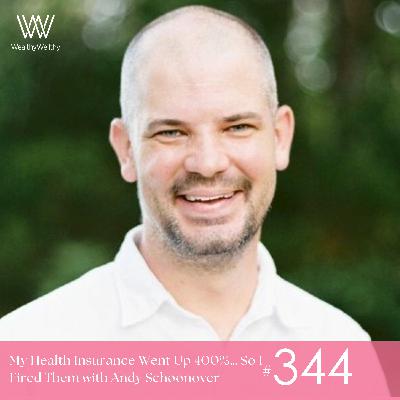
When my insurance premiums jumped 300% even though I almost never use insurance, I hit my limit. I’m healthy, I take care of myself, and I couldn’t justify paying more and more for a system that feels designed to work against the person funding it. So I went looking for alternatives, found CrowdHealth, joined as a member, and invited the founder on the show to unpack how this model actually works.In this episode of the Wealthy Wellthy podcast, I sit down with Andy Schoonover, CEO and founder of CrowdHealth, to talk about what’s broken in traditional health insurance and why it keeps getting more expensive. Andy shares the personal moment that pushed him to build CrowdHealth: paying for a procedure for his daughter, doing everything “right” in-network, then getting hit with an $8,000 bill and a denial for being “medically unnecessary.” That experience led him to build a community-based alternative where members fund each other’s medical bills and pay providers directly, without insurance middlemen driving prices up.We get into the practical details: how CrowdHealth handles big events, how cash-pay negotiation works, what preventative care looks like inside the model, and who it’s a fit for (and who it’s not). If you’re an entrepreneur, self-employed, or just done with the insurance racket, this is a real-world conversation about reclaiming control, lowering costs, and putting healthcare back between you and your doctor.What We Talked About:Why traditional health insurance is incentivized for prices to rise (and why denials happen in-year).Andy’s origin story: the “medically unnecessary” denial that became the spark for CrowdHealth.How CrowdHealth works: pay providers directly, negotiate bills down, and submit eligible costs to the community.The $500 “skin in the game” approach for health events, designed to avoid catastrophic deductibles.Preventative care and quarterly “specials” (including labs and tests) plus the annual wellness visit support.Prescriptions and how CrowdHealth can help negotiate high-cost meds.The care advocate model: one person assigned to you, vs. call-center chaos.⏱ Timestamps 00:00 Introduction to Health Insurance Challenges05:17 The Birth of CrowdHealth10:29 Understanding the Flaws in Traditional Insurance12:35 Addressing Concerns About Crowdfunding Healthcare16:26 Negotiating Costs and Community Support19:56 Reclaiming Healthcare: The CrowdHealth Model21:41 Navigating the Healthcare Landscape: Functional Medicine and Cash Pay26:31 Preventative Care: Investing in Health Before Illness30:45 Understanding Wellness Visits and Community Support31:56 The Future of CrowdHealth: Disintermediating Healthcare34:37 Empowering Patients: Who CrowdHealth is For and Not For💻 Links & ResourcesTo learn more and enroll in Crowdhealth:https://www.joincrowdhealth.com/Use code: KRISSTINAPay only $60 monthly advocacy fee per member and maximum crowdfunding request will be reduced to $39 for the first 3 months.

Comments

Download from Google Play

Download from App Store
 United States