


Weekly Torah Reading (Read by an AI Voice)
Subscribed: 0Played: 0
Subscribe

© Scott Lorsch
Description
I have been wanting to read the entire Chumash each week but there are no audio recordings of it. This is an AI version of my voice reading the Kehot Chumash from Chabad. It weaves in Rashi commentary to make it easier to understand. All readings can be found at https://www.chabad.org/library/article_cdo/aid/4292310/jewish/Kehot-Chumash.htm Any errors in reading are due to the AI. I am not looking over recordings before posting so please listen with caution.
12 Episodes
Reverse
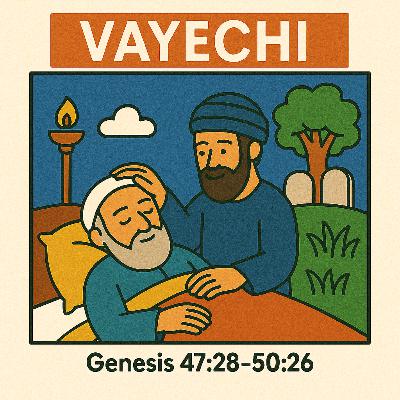
All recordings are created by copying Sefaria using the Kehot Chumash from Chabad english translation. The Text to Voice is using English AI... sorry for any weird speech.Please note that release schedule is based on the year 5786. Some weeks do not have a Parsha. You can always look up the current Parsha Here.If you like the recording please consider donating to Chabad to help continue their effort to make resources like this more accessible to the Jewish population!BereshitVayechi (Genesis 47:28–50:26)Jacob spends his final seventeen years in Egypt and, sensing the end, makes Joseph swear to bury him in the Cave of Machpelah—returning the family’s story to its promised land. He blesses Joseph’s sons, Ephraim and Manasseh, crossing his hands to give the younger the firstborn blessing and adopting both grandsons into the tribal count. Jacob then gathers all twelve sons, offering vivid words that both bless and reveal their distinct destinies—leadership for Judah, priestly zeal for Levi to be tempered later, the seafaring future of Zebulun, the scholarly tents of Issachar, and more. After Jacob dies, an elaborate Egyptian mourning period and a royal funeral procession accompany his body back to Hebron for burial beside the patriarchs and matriarchs.Back in Egypt, Joseph’s brothers fear revenge. They plead for mercy, and Joseph answers with humility and faith: “Am I in God’s place? You intended me harm, but God intended it for good—to save many lives.” He provides for them, ensuring the family’s security. Joseph lives to see great-grandchildren, then charges his kin to carry his bones up from Egypt when God “surely remembers” them. With Joseph’s death and his coffin awaiting redemption, the book of Bereshit closes—turning a family saga into the seed of a nation and setting the stage for Exodus. Themes to listen for: legacy and return, blessing as both vision and responsibility, forgiveness that reframes the past, and hope carried forward as a promise to the future.
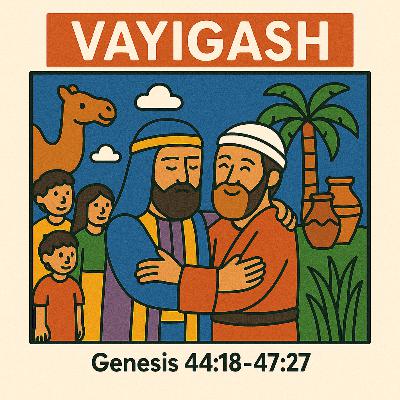
All recordings are created by copying Sefaria using the Kehot Chumash from Chabad english translation. The Text to Voice is using English AI... sorry for any weird speech.Please note that release schedule is based on the year 5786. Some weeks do not have a Parsha. You can always look up the current Parsha Here.If you like the recording please consider donating to Chabad to help continue their effort to make resources like this more accessible to the Jewish population!BereshitVayigash (Genesis 44:18–47:27)Judah steps forward with a heartfelt plea, offering himself in place of Benjamin and recounting the family’s anguish. His courage breaks the stalemate: Joseph sends the court away, reveals his identity with the words “I am Joseph,” and embraces his brothers in tears. He reframes the past—“God sent me ahead of you to preserve life”—and urges them to bring their father to Egypt. Pharaoh welcomes the plan, provisioning wagons and supplies. Back in Canaan, Jacob sees the wagons and his spirit revives; God reassures him at Be’er Sheva that the descent to Egypt is part of a larger promise.The family—seventy souls—settles in Goshen, shepherds by trade. Joseph coaches his brothers on how to address Pharaoh and brings Jacob to bless the king. Meanwhile, Joseph manages the famine statewide: exchanging grain for money, then livestock, then land, instituting a fifth as tax while exempting the priests. The portion closes with Israel’s household established and secure in Egypt, poised to grow into a nation. Themes to listen for: leadership born of empathy, repentance that repairs relationships, providence working through human choices, and how exile can be both refuge and seedbed for a future redemption.
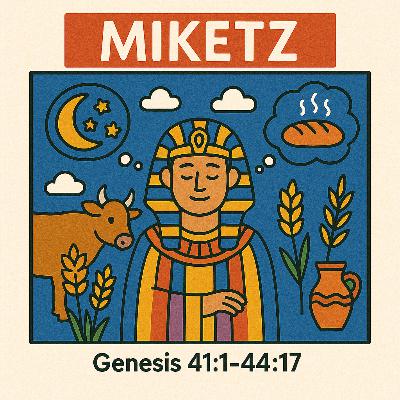
All recordings are created by copying Sefaria using the Kehot Chumash from Chabad english translation. The Text to Voice is using English AI... sorry for any weird speech.Please note that release schedule is based on the year 5786. Some weeks do not have a Parsha. You can always look up the current Parsha Here.If you like the recording please consider donating to Chabad to help continue their effort to make resources like this more accessible to the Jewish population!BereshitMiketz (Genesis 41:1–44:17)Pharaoh’s baffling dreams—seven sleek cows devoured by seven gaunt ones, seven full ears swallowed by seven thin—bring Joseph from prison to the palace. He interprets a divine forecast: seven years of abundance followed by seven of famine, and he crafts a national plan to store grain. Elevated to viceroy, Joseph marries Asenath and fathers Manasseh and Ephraim. When famine grips Canaan, Joseph’s brothers descend to Egypt for food. They do not recognize him; he accuses them of spying, detains Simeon, and demands they return with Benjamin. Their silver mysteriously reappears in their sacks, stirring old guilt. Reluctantly, Jacob later sends Benjamin with Judah as guarantor.Back in Egypt, Joseph hosts them at a strange, tender feast, seating them by birth order and favoring Benjamin. As they depart with grain, Joseph has his silver goblet planted in Benjamin’s sack. The steward overtakes them; the cup is found; the brothers tear their garments and return to the city, facing the unbearable prospect of losing Rachel’s second son. Themes to listen for: how wisdom turns dreams into policy, leadership under crisis, the resurfacing of guilt and responsibility, and the careful tests that prepare a family for reconciliation.
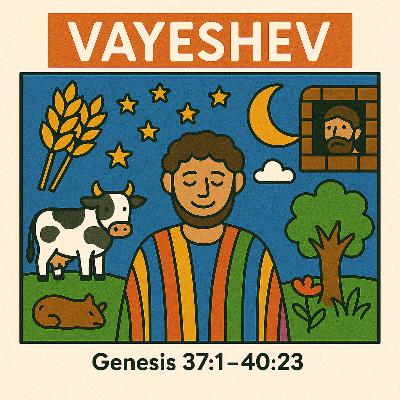
All recordings are created by copying Sefaria using the Kehot Chumash from Chabad english translation. The Text to Voice is using English AI... sorry for any weird speech.Please note that release schedule is based on the year 5786. Some weeks do not have a Parsha. You can always look up the current Parsha Here.If you like the recording please consider donating to Chabad to help continue their effort to make resources like this more accessible to the Jewish population!BereshitVayeshev (Genesis 37:1–40:23)Seventeen-year-old Joseph, favored by Jacob and robed in a special coat, dreams of his family bowing—visions that inflame his brothers’ jealousy. At Dothan they seize him; Reuben’s attempt to save him fails as Judah proposes selling him to passing traders. Joseph is taken to Egypt; the brothers present the bloodied coat, and Jacob mourns inconsolably for a son he believes dead.A parallel drama unfolds with Judah and Tamar: after the deaths of Judah’s sons Er and Onan, Tamar secures justice by obtaining Judah’s pledge items and later reveals, “She is more in the right than I,” leading to the birth of Perez and Zerah—the line of future kings. In Egypt, Joseph thrives in Potiphar’s house until false accusation lands him in prison, where he interprets the dreams of Pharaoh’s cupbearer and baker—accurately foretelling one’s restoration and the other’s demise. The cupbearer, however, forgets Joseph, leaving him waiting as the stage is set for the rise that will come. Themes to listen for: favoritism and its fallout, the hidden turns of justice, integrity under pressure, and how providence can work through detours and delays.
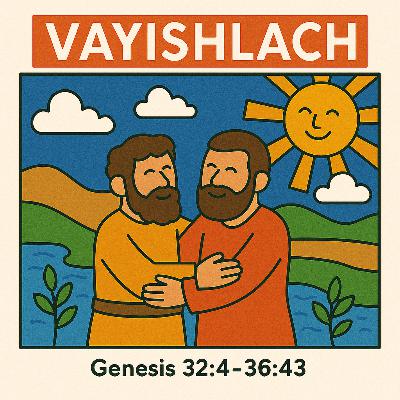
All recordings are created by copying Sefaria using the Kehot Chumash from Chabad english translation. The Text to Voice is using English AI... sorry for any weird speech.Please note that release schedule is based on the year 5786. Some weeks do not have a Parsha. You can always look up the current Parsha Here.If you like the recording please consider donating to Chabad to help continue their effort to make resources like this more accessible to the Jewish population!BereshitVayishlach (Genesis 32:4–36:43)Jacob prepares to face Esau after years of estrangement: he sends conciliation gifts, divides his camp, and prays for protection. Alone at night, Jacob wrestles with a mysterious being until dawn, earning a new name—Israel, “one who wrestles with God”—and a limp that marks the struggle. The reunion surprises with grace: Esau embraces him, and though Jacob declines to travel together, he builds an altar upon arriving safely in the land.Tension soon returns in Shechem, where Dinah is violated by the local prince; her brothers Simeon and Levi respond with deadly deceit, and Jacob fears the fallout. God directs Jacob back to Bethel, where the family discards foreign gods, and the covenant is reaffirmed. Along the road, losses and transitions shape the family: Deborah (Rebecca’s nurse) dies; Rachel dies giving birth to Benjamin; Reuben sins with Bilhah; the twelve sons are listed; and Isaac dies at 180, buried by Esau and Jacob together. The portion closes with Esau’s generations and the rise of Edomite chiefs and kings. Themes to listen for: the work of reconciliation after harm, wrestling toward a truer name, the moral cost of vengeance, and how grief, gratitude, and covenant keep the family moving forward.
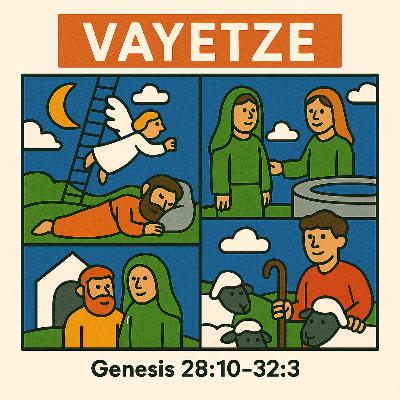
All recordings are created by copying Sefaria using the Kehot Chumash from Chabad english translation. The Text to Voice is using English AI... sorry for any weird speech.Please note that release schedule is based on the year 5786. Some weeks do not have a Parsha. You can always look up the current Parsha Here.If you like the recording please consider donating to Chabad to help continue their effort to make resources like this more accessible to the Jewish population!BereshitVayetze (Genesis 28:10–32:3)Fleeing Esau, Jacob dreams of a ladder set on earth reaching heaven, with angels ascending and descending. God renews to him the promises of land, descendants, and protection; Jacob awakens awed, sets up a stone pillar at Bethel, and vows loyalty to God. In Haran he meets Rachel at a well and agrees to work seven years to marry her, only to be deceived by Laban into marrying Leah first; another seven years secure Rachel. Through Leah, Rachel, and their maidservants Bilhah and Zilpah, Jacob’s family grows—Reuben through Joseph (and later Dinah)—each child’s name marking the parents’ hopes and struggles.As tensions with Laban build, Jacob’s flocks prosper despite shifting terms. God instructs him to return home. Rachel secretly takes her father’s teraphim; Laban pursues, but a nocturnal warning stays his hand. After a tense search and frank words, Jacob and Laban make a covenant at a mound of stones, pledging non-aggression and parting ways. Angels meet Jacob on the road, a sign that the wanderer is no longer alone as he heads toward the reckoning with his past. Themes to listen for: the journey from exile to purpose, how love and rivalry shape a family, integrity under exploitation, and the awakening that turns an ordinary place into “the house of God.”
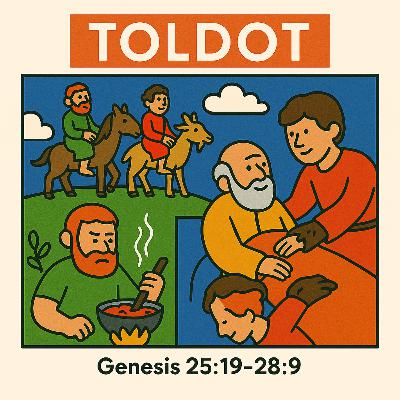
All recordings are created by copying Sefaria using the Kehot Chumash from Chabad english translation. The Text to Voice is using English AI... sorry for any weird speech.Please note that release schedule is based on the year 5786. Some weeks do not have a Parsha. You can always look up the current Parsha Here.If you like the recording please consider donating to Chabad to help continue their effort to make resources like this more accessible to the Jewish population!BereshitToldot (Genesis 25:19–28:9)Isaac and Rebecca pray for children, and Rebecca is told that “two nations” struggle within her—foreshadowing the rivalry of their twins. Esau emerges first, a hunter of the field; Jacob follows, dwelling in tents. One day, driven by hunger, Esau sells his birthright to Jacob for a pot of stew, revealing how appetite can eclipse destiny. A famine sends Isaac to Gerar, where he calls Rebecca his sister; God protects them, blesses Isaac with prosperity, and he re-digs Abraham’s wells despite conflict with local herdsmen. Peace is finally made with Avimelech, and God reaffirms the covenant. Esau’s marriages to Hittite women bring grief to his parents.As Isaac grows old and his sight dims, he seeks to bless Esau. Rebecca, recalling the oracle, directs Jacob to present himself as the firstborn. Disguised in Esau’s garments and goat-skin sleeves, Jacob receives the potent blessing of covenantal abundance and leadership. Esau returns, anguished, and vows to kill his brother. To safeguard the line and find a fitting spouse, Rebecca sends Jacob to her family in Haran, and Isaac endorses the plan with a second blessing. The portion closes with Esau marrying into Ishmael’s family, trying to align with his parents’ wishes. Themes to listen for: the weight of birthright and blessing, the tension between prophecy and human scheming, perseverance in reopening wells of the past, and how family choices ripple across generations.
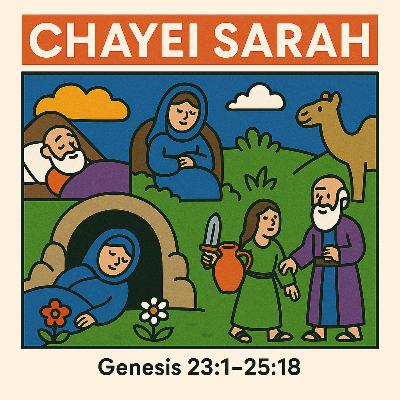
All recordings are created by copying Sefaria using the Kehot Chumash from Chabad english translation. The Text to Voice is using English AI... sorry for any weird speech.Please note that release schedule is based on the year 5786. Some weeks do not have a Parsha. You can always look up the current Parsha Here.If you like the recording please consider donating to Chabad to help continue their effort to make resources like this more accessible to the Jewish population!BereshitChayei Sarah (Genesis 23:1–25:18)Sarah passes away at 127, and Abraham secures a burial place by purchasing the Cave of Machpelah in Hebron from Ephron the Hittite—Torah’s first recorded land acquisition in Canaan. The narrative lingers on the careful, public legal transaction, underscoring dignity in mourning and the permanence of a covenantal foothold in the land.To continue the covenant, Abraham sends his trusted servant to find a wife for Isaac. At a well in Aram, Rebecca’s generous response—offering water to a stranger and his camels—reveals her character and providential fit. With the family’s consent, she journeys to Canaan, meets Isaac in the field, and becomes his wife, bringing him comfort after Sarah’s death. Abraham later marries Keturah and fathers additional children, yet bequeaths the covenantal line to Isaac. Abraham dies at 175 and is buried beside Sarah by both his sons, Isaac and Ishmael; the portion closes with Ishmael’s lineage of twelve princes. Themes to listen for: honoring the dead while securing the future, kindness as the mark of destiny, lawful ownership as sacred presence, and how providence and human initiative weave the covenant forward.
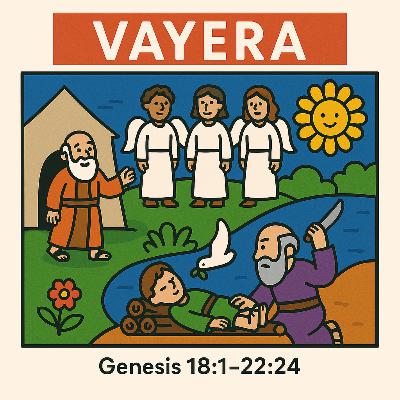
All recordings are created by copying Sefaria using the Kehot Chumash from Chabad english translation. The Text to Voice is using English AI... sorry for any weird speech.Please note that release schedule is based on the year 5786. Some weeks do not have a Parsha. You can always look up the current Parsha Here.If you like the recording please consider donating to Chabad to help continue their effort to make resources like this more accessible to the Jewish population!BereshitVayera (Genesis 18:1–22:24)Abraham’s tent is open on a hot day when three mysterious visitors arrive; he rushes to serve them, and they promise that Sarah will bear a son—prompting her incredulous laugh. God reveals the impending judgment of Sodom and Gomorrah, and Abraham argues for the cities in a bold plea for justice. Two angels reach Sodom, save Lot from a violent mob, and urge his family to flee; Lot’s wife looks back and becomes a pillar of salt. In the aftermath, Lot’s daughters seek a future for their line.Abraham and Sarah’s wandering brings them to Gerar, where a tense encounter with King Avimelech ends with divine intervention. Isaac is born and named for laughter; a painful household conflict leads to Hagar and Ishmael’s departure, yet God hears their cries and promises Ishmael a nation. Abraham secures a well at Be’er Sheva. Finally comes the Akedah—the Binding of Isaac—where Abraham climbs Mount Moriah to answer God’s test. A voice from heaven stops the knife, a ram is offered instead, and the covenant is reaffirmed. The portion closes with a genealogy that quietly introduces Rebecca, the future wife of Isaac. Themes to listen for: radical hospitality, arguing with Heaven for justice, laughter turning to faith, the cost of covenantal loyalty, and a trust that walks to the edge and finds a ram in the thicket.
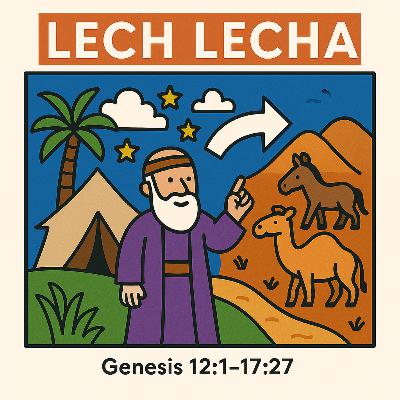
All recordings are created by copying Sefaria using the Kehot Chumash from Chabad english translation. The Text to Voice is using English AI... sorry for any weird speech.Please note that release schedule is based on the year 5786. Some weeks do not have a Parsha. You can always look up the current Parsha Here.If you like the recording please consider donating to Chabad to help continue their effort to make resources like this more accessible to the Jewish population!BereshitLech Lecha (Genesis 12:1–17:27)God tells Abram, “Go forth,” launching a journey that will redefine faith and family. Abram and Sarai leave Haran for Canaan, where God promises land and countless descendants. A famine drives them to Egypt; a crisis with Pharaoh ends when plagues force their release, and they return to the land with new wealth. Strife between the herdsmen of Abram and his nephew Lot leads to a peaceful separation—Lot settles near Sodom while God reiterates His promise, inviting Abram to walk the length and breadth of the land. When four regional kings capture Lot, Abram musters 318 men, rescues him, and meets the priest-king Melchizedek, to whom he gives a tithe.God then cuts a covenant “between the pieces,” foretelling that Abram’s offspring will be strangers in a land not theirs before ultimately inheriting Canaan. Seeking children, Sarai gives her maidservant Hagar to Abram; Hagar conceives Ishmael and encounters an angel who names the child and promises him a future. At age 99, Abram receives the covenant of circumcision, with new names—Abraham and Sarah—and the pledge of a son, Isaac. Abraham circumcises every male in his household that very day. Themes to listen for: trust that moves with incomplete maps, the tension between human plans and divine promises, covenant as calling and responsibility, and leadership that chooses peace yet acts decisively for justice.
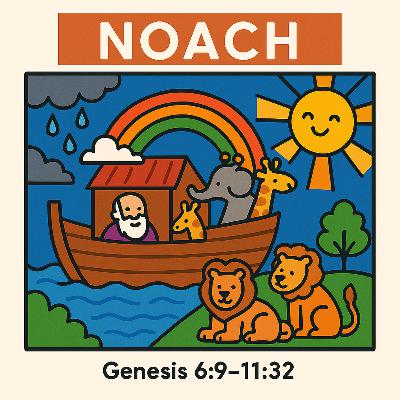
All recordings are created by copying Sefaria using the Kehot Chumash from Chabad english translation. The Text to Voice is using English AI... sorry for any weird speech.Please note that release schedule is based on the year 5786. Some weeks do not have a Parsha. You can always look up the current Parsha Here.If you like the recording please consider donating to Chabad to help continue their effort to make resources like this more accessible to the Jewish population!BereshitNoach (Genesis 6:9–11:32)Humanity’s violence fills the earth, and God calls Noah—“a righteous man in his generation”—to build an ark and preserve life. The floodwaters purge the world; after months adrift, a raven and then a dove test the waters until dry land emerges. Noah offers thanks, and God forges a universal covenant with all living beings, marked by the rainbow, establishing foundational ethics: respect for life and the prohibition of murder and bloodshed.Yet renewal is fragile. Noah’s vineyard leads to a family crisis and the curse of Canaan. Nations branch out from Noah’s sons, culminating in Babel, where humanity’s proud bid for a single tower and name ends with a confounding of languages and a scattering across the earth. The portion closes by tracing the line to Abram, preparing the way for a new kind of calling. Themes to listen for: responsibility after catastrophe, the sanctity of life, cultural diversity as both challenge and blessing, and how covenant reframes survival into purpose.
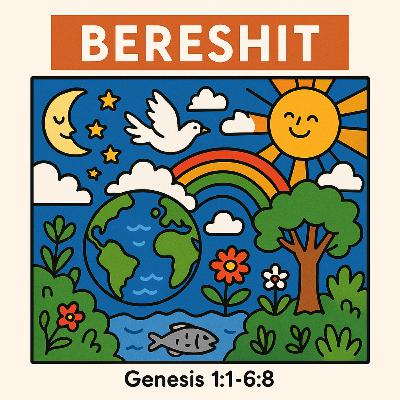
All recordings are created by copying Sefaria using the Kehot Chumash from Chabad english translation. The Text to Voice is using English AI... sorry for any weird speech.Please note that release schedule is based on the year 5786. Some weeks do not have a Parsha. You can always look up the current Parsha Here.If you like the recording please consider donating to Chabad to help continue their effort to make resources like this more accessible to the Jewish population!BereshitBereshit (Genesis 1:1–6:8)From the very first words, “In the beginning,” this portion launches the entire Torah: six days of creation and Shabbat; light and darkness, sky and sea, land and vegetation, sun–moon–stars, creatures of water and air, animals, and finally humanity in the divine image. We enter Eden with Adam and Eve, confront the serpent’s temptation and the first choice with consequences, and follow the couple beyond the garden into a world where work, pain, and hope coexist.Bereshit also tells of the first siblings—Cain and Abel—the birth of jealousy, the tragedy of the first murder, and the haunting question, “Am I my brother’s keeper?” Generations and early civilizations arise; music, metalwork, and cities flourish even as moral corruption spreads. The mysterious “sons of God” and the Nephilim appear, and God resolves to reset creation—yet Noah “finds favor,” hinting at renewal ahead. Themes to listen for: the dignity and responsibility of being human, the power of words to build or break, the boundary and blessing of Shabbat, and how accountability and compassion keep creation “very good.”

Please note that release schedule is based on the year 5786. Some weeks do not have a Parsha. You can always look up the current Parsha Here.If you like the recording please consider donating to Chabad and Sefaria to help continue their effort to make resources like this more accessible to the Jewish population!
Comments


Download from Google Play

Download from App Store
 United States