


 Claim Ownership
Whose Voices?
Subscribed: 0Played: 0
Subscribe

© All rights reserved
Description
Whose Voices? is the podcast from Whose Knowledge?. Here we collect conversations with people and communities who are decolonizing the internet and working towards knowledge justice. Whose Voices? is CC BY-SA 4.0 licensed.
31 Episodes
Reverse
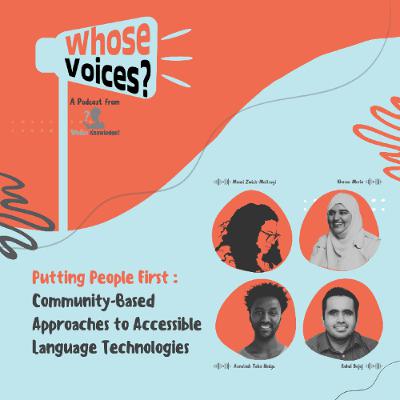
In this episode, Khansa Maria, Rahul Bajaj and Asmelash Teka share insights on language barriers, community-driven solutions, and legal advocacy for an accessible internet.
Learn more: https://podcast.whoseknowledge.org/posts/ep32/

Lydia Pintscher, the portfolio lead for Wikidata, foregrounds the human factor in data and what decolonising it looks like from her perspective as a builder of knowledge graphs.
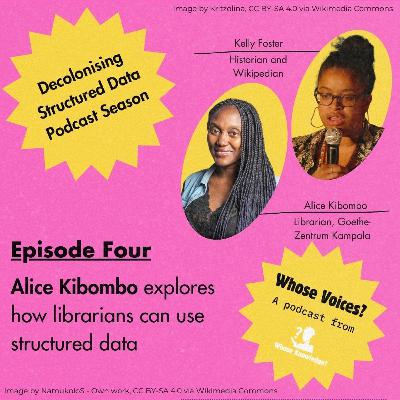
Librarian extraordinaire and wikipedian from Uganda, Alice Kibombo explores the possibilities of structured data for librarians and colonial inheritances within these systems.
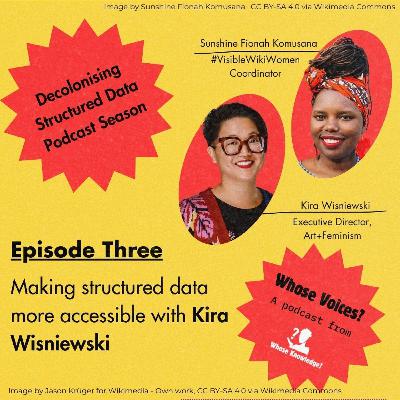
Kira Wisniewski, Executive Director of Art+Feminism, champions moving slowly when it comes to decolonizing structured data. Tune in for more.
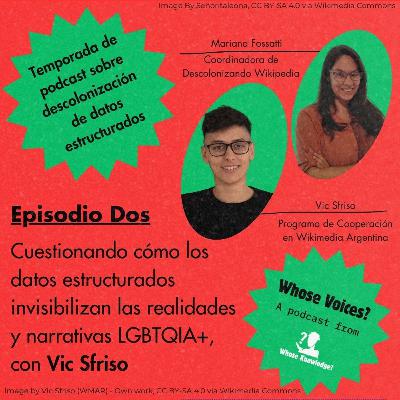
In this episode of we sit down with Vic Sfriso, Cooperation Program Manager at Wikimedia Argentina, to explore queerness and structured data. Note: this episode is only available in Spanish.
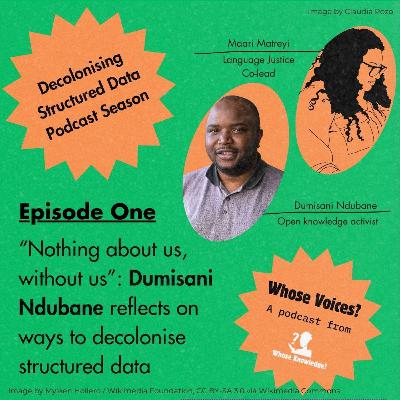
Tune in to listen to our conversation with Dumisani Ndubane, an activist Wikipedian from South Africa who has spent the last 10+ years building wiki communities in the African continent.
Rachel Kagoiya and Anasuya Sengupta sit down to speak about the journey from the first Decolonizing the Internet in Cape Town, to DTI-EA and so much more!
Language exclusion in digital platforms can have significant consequences - this episode with Irene Mwendwa from Pollicy delves deeper.
Lena Anyuolo, poet, activist and librarian speaks about Kenyan political organising, leftist community library Ukombozi Library and how the future of the internet looks very queer.
Join Kerubo and Youlendree as they have a thoughtful conversation with Arya Jeipea Karijo, a transwoman activist who views life through a young, African feminist lens.
Meron Estefanos is a Swedish-Eritrean activist who speaks to us about rescuing fleeing Eritreans and Sounds of Torture, her film about the plight of refugees.
In this episode, Sandra Kwikiriza, founder of Her-Internet joins Youlendree and Kerubo to explore knowledge gaps in terms of digital space and challenges faced by the queer community while using the internet.
We explore whether the digital space can adequately serve African women by implementing sexual and reproductive health and rights through an intersectional lens. Listen to more episodes on our website: https://podcast.whoseknowledge.org/.
This episode features Esther Mwema an artist who questions Big Tech (like Facebook and Google) in Africa, through literary fiction, abstract art, and poetry.
How do African feminists reimagine and want to rethink what the web feels, sounds, and reads like? Join as Memory Kachambwa tells us more.
In this episode, Kenyan transgender activist and feminist Arya Jeipea Karijo, unravels the complexities of online representation of trans people from marginalized communities. Go to our podcast website to listen or read the transcript: https://podcast.whoseknowledge.org/posts/ep16/.
For many Africans, reclaiming their language isn’t only tied to books. Wangui wa Goro talks about alternate forms of decolonizing knowledge online.
Listen to the episode on our website:
The palawa kani language has been revived based on records from most of the original languages spoken in Lutruwita. Theresa Sainty shares about this community-led initiative.
For speakers of Indigenous languages, what does the internet look like? Getting online isn’t enough, says Subhashish Panigrahi, who builds open resources for Indigenous and endangered languages.
Millions of people speak Arabic, yet it remains underrepresented online. Majd Al-Shihabi explores how power dictates what is present and accessible in the language.
More here: https://podcast.whoseknowledge.org/posts/ep12/.

Comments

Download from Google Play

Download from App Store
 United States