


 Claim Ownership
Womanhood & International Relations
Subscribed: 30Played: 290
Subscribe

© Natalia A. Bonilla Berrios
Description
Womanhood and International Relations is a weekly podcast created by Natalia A. Bonilla Berrios to explore the intersection of feminist theory from a personal to an international level.
198 Episodes
Reverse
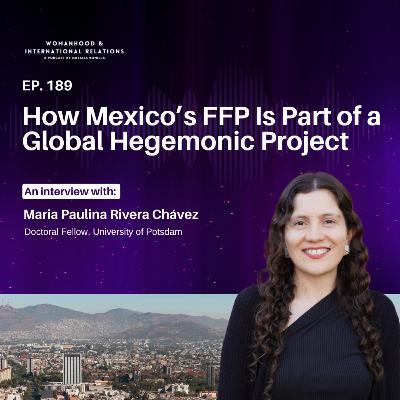
Are Feminist Foreign Policy models building a Global Project? Is it based on a universal “feminist idealism” or a “Western” view of “modernization” to end systemic unequal power and oppressions? How is Mexico's FFP playing a part on this Global Hegemonic Project?
What racial, care and (de)colonial power dynamics are influencing FFP’s models creation and implementation in the Latin America region?
An interview with María Paulina Rivera Chávez, doctoral fellow at the University of Potsdam.
Listen to related episodes:
Ep. 9 Marissa Conway on How Feminist Foreign Policies is Transforming World Affairs
Ep. 47 Isabella Esquivel Ventura on Mexico's FFP
Ep. 130 Alice Ridge and Liz Gill-Atkinson on FFP Research in Australia and the Global South
Ep. 159 Helena Monzón Pérez on 'Ley Monzón' & Prosecuting Femicides in Mexico
Recommended links to this episode:
María Paulina Rivera Chávez - Doctoral Fellow Profile
Feminist Foreign Policy: Coloniality in new clothes?
Seeing through Alterity/Otherness. A Conceptual Approximation from a Postcolonial to a Decolonial Feminist Foreign Policy
🌟Join our podcast newsletter community here.
Have individuals and states outgrown the current international systems? Is the international political system not meant for states to grow unlimited within it or...to grow outside of it?
What if 20th century norms and rules created by international community institutions (and by certain state and non-state actors) were and are limiting humans and states' evolution?
What is the current World Order? Are we already in a "New" World Order? Or are we living through a... World Disorder?
Are modern states and non-state actors, leaders and institutions creating new forms of "order" without sharing values and interest in *agreed* relation?
How comfortable are we with uncertainty and disorder?
Do humans aspire for or resist order? Do humans actually, crave for or are preconditioned to desire, disorder to be the norm?
Join us in this new exploration (with practical exercise!) and follow us on social media @womanhood_ir in LinkedIn, Twitter and Instagram.
Listen to related episodes:
102. The Matrix Trilogy - What Can We Learn From It?
150. Healing Our Inner/Outer Masculine & Feminine Imbalances
172. World Politics Today: BRICS Expansion
175. The Loss of Meaning in the International System
Recommended links:
Anarchy is what States Make of it: The Social Construction of Power Politics
Constructing International Politics
A brief overview of Alexander Wendt's Constructivism
E.H. Carr, Hans J. Morgenthau, and International Law
The New World Disorder
The risk of world disorder
The New World Disorder
China’s New World Order
Decoding Putin and Xi's blueprint for a new world order
Redrawing the global order
How cultures of fear and silence may affect the way post-conflict societies relate to transitional justice and peace processes? What's been the role women have played in the TRRC in The Gambia?
How has the implementation of women-only listening circles and safe spaces helped build trust, support and justice to those who have been excluded, abused or silenced for so long?
An interview with Ereshnee Naidu-Silverman, Senior Director for the Global Transitional Justice Initiative.
Join us in this exploration, follow us on Instagram, Twitter, LinkedIn @womanhood_ir and support our work on Patreon http://patreon.com/womanhoodir
Listen to related episodes:
24. Kimberly Loh on Compassionate Conversations and Conflict Resolution
40. Pauline Stoltz on Transnational Memories & Violent Conflicts in Indonesia
130. How To Become a Tyrant
136. How-To Start A Women's Circle
151. Dr. Luke Moffett on Reparations in Post-Conflict Societies
Recommended readings of this episode:
Inclusive Justice in The Gambia
Global Initiative for Justice, Truth and Reconciliation
International Coalition of Sites of Conscience
From "Gender Sensitive" Transitional Justice to Gender Inclusivity
The Role of Psychosocial Support in Building Healthy, Resilient Communities in Africa
Gambia: Commission Uncovers Ex-Dictator’s Alleged Crimes
Women’s Experiences of Dictatorship in the Gambia
Do states have...emotions? If so, how do they express them? How can the intergroup emotions theory explain whether political decision-making is based on fear, passion, revenge, happiness, grief or hate?
How many domestic and foreign policies are influenced by the suppression or incitement of a specific set of emotions, beliefs, behaviors and actions?
Join us in this exploration, follow us on Instagram, Twitter, LinkedIn @womanhood_ir and be part of our Patreon community https://patreon.com/womanhoodir
Listen to related episodes:
40. Dr. Pauline Stoltz on Transnational Memories & Violent Conflicts in Indonesia
46. Hannah Ruth Dyson on The Deep Feminine
91. Dr. Paul Slovic & Dr. Scott Slovic on the Science Behind the Limits of Compassion
Recommended links of this episode:
Time to Make Psychology a Part of International Relations
The Ultimate Foreign-Policy Dilemma: The Closure Challenge
Why Psychology is a Key Factor of International Relations
Rationality and Psychology in International Politics
Theorizing States’ Emotions
How Statesmen Think: The Psychology of International Politics
The Role of Political Psychology in Diplomacy
Fear in International Relations
Revenge in International Politics
Personality Profiling Analysis
Affective Communities in World Politics
The Passion of World Politics: Propositions on Emotion and Emotional Relationships
Emotions in International Relations
Are we reaching the next era of Feminist Foreign Policies? In response to the Ukraine-Russia conflict, is Sweden’s pioneer formula the “safe” way to go for states in Europe? If so, if not, why?
A commentary on the latest announcement of Germany first ffp model.
Join us in this exploration, follow us on Instagram, Twitter @womanhood_ir and be part of our Patreon community https://patreon.com/womanhoodir
Listen to related episodes:
12. Marissa Conway on How Feminist Foreign Policy Is Transforming World Affairs
47. Isabella Esquivel Ventura on Mexico's Feminist Foreign Policy
133. Alice Ridge and Liz Gill-Atkinson on FFP Research in Australia and the Global South
Recommended links of this episode:
Speech by Foreign Minister Annalena Baerbock at the Conference on Shaping Feminist Foreign Policy
September 12th Conference on Shaping Feminist Foreign Policy
[VIDEO] The Feminist Foreign Policy Summit: Session Five "Netzwerk F Presents: FFP in Germany"
[VIDEO] Make Foreign Policy Feminist: The "Feminist Foreign Policy for Germany" Launch Event.
[PDF] Make Foreign Policy Feminist: The "Feminist Foreign Policy Manifesto for Germany"
Defining Feminist Foreign Policy in Germany’s National Security Strategy
Annalena Baerbock: Germany's first female foreign minister flourishes in a crisis
Feminist foreign policy needs an upgrade
German Feminist Foreign Policy: An Inside-Outside Perspective
A Feminist Foreign Policy for Germany Is Not Enough
What Germany’s turning point means for its feminist foreign policy
From the historic floods in Pakistan to the typhoons and hurricanes in Asia-Pacific and the Caribbean to ongoing humanitarian crises, what are some ways to help? If you can and are able to donate time, energy, resources and money to disaster relief programs and civic organizations providing support to communities, please do. It matters.
Here are lists of organizations providing support to recent and ongoing emergencies:
Flood Relief in Pakistan - A list of organizations created by Sapan
Dominicana Solidaria - A platform of initiatives and organizations providing support to Dominican Republic
TW Thread of Organizations to Help Hurricane Fiona Disaster Relief in Puerto Rico
World Central Kitchen Emergency Food Relief: Pakistan, Dominican Republic, Puerto Rico, Ukraine. Afghanistan
How to help Iranian women
Ways to Help Afghanistan
Supporting Women Survivors in Ethiopia
Ways to Give Refugees International

Can games be truly “apolitical” or should we, as humans, often find a way to project politics into them? How are people using games or sports to find and showcase “power” while, at the same time, depending on external validation to ensure sense of Self? How are governments using games or sports to show superiority or demoralize people from other states and play into a specific imaginary of power? Is chess an inherently racist and sexist game or... made to be one?
A commentary of Netflix's miniseries The Queen's Gambit.
Join our Patreon community here https://patreon.com/womanhoodir
Upcoming Events: Join the next livestreams on Women Leaders, September 19th we will discuss the legacy of Michelle Bachelet and on September 26th leadership lessons from Sanna Marin, subscribe to my Youtube channel here https://www.youtube.com/channel/UC8Mka2pcgd197inmwvGdeXg
Recommended links to this episode:
The Queen’s Gambit: 10 Differences Between the Book and the Netflix Miniseries
Dr. Grande - The Queen’s Gambit Psychological Analysis
History of Chess | From Early Stages to Magnus
Why does white always go first in chess?
Is Chess Inherently Racist?
'The Queen's Gambit' is the latest Netflix series to mishandle its Black characters
The Missed “Magical Negro” Trope in “The Queen’s Gambit”
Fischer v. Spassky: The Cold War on a chessboard
How chess became a pawn in Russia's political war games

How are feminists and feminist movements "framing" their activism? How is globalization and capitalism directly or indirectly affecting the way some ideas, projects and foreign policy models are being legitimized and promoted while others aren't? What role does the flow of theories, laws and strategies from local/international, North/South, Western/Non-Western play in addressing, increasing or maintaining social, racial and economic inequalities?
A first look into Transnational Feminism.
💜 Join us in this exploration and follow us on Instagram, Twitter and Patreon https://patreon.com/womanhoodir
Listen to related episodes:
48. Postcolonial Theory 101
50. Postcolonial Feminism 101 - Which Women's Experiences Do We Know More About?
54. Decolonial Feminism 101
Recommended readings of this episode:
Can the Subaltern Speak?, Gayatri Chakravorty Spivak
Third World Women and the Politics of Feminism & Feminism Without Borders, Chandra Talpade Mohanty
Transnational and Global Feminisms
The Messy Relationship Between Feminisms and Globalizations
Troubling transnational feminism(s): Theorising activist praxis
Transnationalism: current debates and new perspectives
How Do Norms Travel? Theorizing International Women's Rights in Transnational Perspective
Gendered Geographies of Power: Analyzing Gender Across Transnational Spaces
Women Workers and Capitalist Scripts: Ideologies of Domination, Common Interests, and the Politics of Solidarity

The UN Office of the High Commissioner of Human Rights released yesterday its 2022 assessment on the human rights violations committed against the Uyghurs in XUAR. What does the report says about China's domestic policies, power dynamics and treatment of religious and ethnic minorities?
Join us in this exploration, subscribe to our newsletter here, follow us on Instagram and Twitter and support our community in Patreon here: https://www.patreon.com/womanhoodir
Listen to related episodes:
124. Rushan Abbas on Calls of Genocide Against the Uyghurs
112. Devon Cone on COVID-19 Impact on Migration & Humanitarian Crises
81. Feminist Approaches to the Women, Peace and Security Agenda
74. The Masculine/Feminine National Cultures Index
Recommended readings to this episode:
[PDF] Download the OHCHR Assessment of human rights concerns in the Xinjiang Uyghur Autonomous Region, People’s Republic of China
Amnesty International Report “LIKE WE WERE ENEMIES IN A WAR”China’s Mass Internment, Torture and Persecution of Muslims in Xinjiang
Human Rights Watch Report: “Break Their Lineage, Break Their Roots”
Campaign for Uyghurs
What is the 'One China' policy?
China policies could cut millions of Uyghur births in Xinjiang
Foreign Ministry Spokesperson Hua Chunying’s Regular Press Conference on August 4, 2022
Xi Jinping's inspection tour of Xinjiang
China: Xi Jinping visits Xinjiang for first time since Uyghur crackdown
China Opposes Terrorism
The 60th Press Conference of Xinjiang Uygur Autonomous Region on Xinjiang-related Issues in Beijing
Uighurs demand accountability after UN report on China abuses
A look on how much of our understanding of our womanhood experience inside/out is "truly" our own.
Can we break the stigma on people's response to pandemic, humanitarian and climate crisis? Let's explore.
New Episode! 👩🏻💻Today I share with you a reflection on mass media's role on covering trauma, racial injustice and downplaying the rising social & state inequalities around the world.
✨What we're feeding of?
✨Are we aware of the current shift from COVID-19 fearful narratives to "anger", "rage", "fury" taking over the streets in protests?
✨Why framing photos and videos on burning buildings and damage to public property is saying about the value of bodies and freedom of speech?
✨Activist Tamika Mallory said "we learned violence from you", are we aware of what the cycle of violence entails and how can we break free from it? ✨How deep are racial & social wounds elsewhere? How can we know if most mass media focus is Euro-centric, Anglo-centric, Andro-centric? ✨How can we talk about solidarity of nations and the need for a global leadership if this pandemic is showing the cracks in Imperial visions of "spheres of influence"?
✨How long can we continue being fed this cocktail of poisonous views and war journalism narratives that seeks to demonize, downplay and judge the Other... by what it does or what it doesn't do, by what it has and it doesn't have, by who or what it is?
✨Are we really prepared for a change to the status quo or are we ready to go back to our previous ways because uncertainty is "too hard to handle"?
✨How willing are we to unlearn previous and harmful ways and how ready are we to... bridge, build & break free? I hope these questions sparks some more questions within you as it did within me. Looking forward to hear your thoughts, listen in my link in bio💜 . . . #podcast #womenempowerment #womenempoweringwomen #womensupportingwomen #womeninspiringwomen #womenownedbusiness #womenwholift #inspiringwomen #womeninpower #feminism #intersectionalfeminism #intersectionality
5d
Questions and topics on the role actors play in this pandemic, media representations, social inequality and women's visibility and exclusion from health and decision-making processes
Why are hope, kindness, and freedom essential to safeguarding humanity’s future? And how can arts and storytelling serve as powerful tools for social justice and interfaith understanding?In this conversation with journalist, activist and bestselling author Ruchira Gupta, we explore the transformative power of storytelling to bridge divides surrounding interfaith relationships, migration, and systemic violence, central themes in her new novel The Freedom Seeker.We discussed how small acts of kindness can restore our shared humanity in a time when freedoms—of speech, movement, and the press—are increasingly under threat due to armed conflicts, authoritarianism, and the misuse of emerging technologies like AI.Together, we reflected on the role of advocacy through the arts and how both young and adult audiences can draw powerful life lessons from literature to inspire resilience and collective action from grassroots to policymaking levels.Join us in this exploration, follow us on LinkedIn and subscribe to our podcast newsletter community here.Recommended links to this episode:Ruchira Gupta’s Official WebsiteApne Aap Women WorldwideThe Freedom SeekerI kick and I fly Documentary: The Selling of Innocents
Are citizens evolving into fans or merely behaving like it? Does the worship of political figures, celebrities, pop culture or sports idols reflecting a deeper cultural shift in how people engage with democracy and its values?How does the creation and following of idols, and the emotional investment they evoke, affecting the mental health of individuals and collectives?Is the fixation on seemingly superficial cultural phenomenons, such as tv programming, famous celebs or child-like items like dolls mirroring back to us how unsafe and restrictive political discourse and freedom of speech have become?What are the economic ideologies running, advertently or not, behind these figures and the media narratives that sustain them?How and why do "the masses" willingly surrender so much of their power, effectively infantilizing themselves in the process?An interview with Kurt Warner, psychotherapist, LCSW, and author of the book “False Idols: How Diversion is Destroying Democracy”. Listen to related episodes:91. Dr. Paul Slovic & Dr. Scott Slovic on the Science Behind the Limits of Compassion165. Rachel Winny on the Rise of Disinformation & Conflict Escalation190. Dr. William T. Armaline on The Crisis of Human Rights in the Age of Global Capitalism192. Nicole Steward on Radical Self-Care for ChangemakersRecommended links to this episode:Kurt Warner Books Official WebsiteVictory in Every Fall: The Antaeus Approach to Overcome DisabilitiesFalse Idols: How Diversion is Destroying Democracy

Are feminist foreign policy models from the Global South being constrained by unequal power dynamics? To what extent must they conform their design and implementation to norms or expectations set by Global North states in order to be recognized as legitimate? Why some ffps in Latin America are falling for the allure of the “branding” because of a secure hegemonic bet that discourages deep and meaningful structural reforms? What can we learn from Sweden’s FFP model implementation in Bolivia? In what ways do decolonial feminist perspectives from Latin America expose the enduring legacies of colonialism and the presence of a double patriarchy that may shape the current and future adoption of feminist foreign policies in the region? Why does Brazil, under Lula da Silva’s Administration, serve as a compelling example of these tensions and contradictions?A new interview conducted in the Spanish language with Dr. Bruna Soares de Aguiar, Coordenadora de Projetos doObservatório de Política Externa Inclusiva in Brazil and author of the new book Política Externa Feminista como Branding Governista. Listen to related episodes: Ep. 9 Marissa Conway on How Feminist Foreign Policies is Transforming World AffairsEp. 47 Isabella Esquivel Ventura on Mexico's FFPEp. 130 Alice Ridge and Liz Gill-Atkinson on FFP Research in Australia and the Global SouthEp. 149. Kirthi Jayakumar on Anticolonialism in International RelationsEp. 189. María Paulina Rivera Chávez on How Mexico's FFP is Part of a Global ProjectRecommended links to this episode:OPEFI Official WebsitePolítica Externa Feminista como Branding GovernistaBruna Soares de Aguiar: LinkedIn profilePolicy Brief: Only a Label? The Dilemmas of Maintaining A Feminist Foreign Policy (Available in English, Portuguese and Spanish languages)Policy Brief: Feminist Development Policies and the Reform of Global Governance: Challenges and Opportunities (Available in English, Portuguese and Spanish languages)Politicas Externas Feministas en Perspectiva: Tendencias e DebatesSeminario de Politica Externa Feminista Inclusiva en Brasil 🌟Join our podcast newsletter community here.
What challenges and opportunities does AI presents for States and Peoples? How can the data from our online and offline lives be coded and used to support or threaten our livelihoods? What are feminist perspectives to the responsible uses of AI? What social phenomenons caused the heavy reliance on AI and what can we expect or prepare for in the future?A new interview conducted in the Spanish language with Ivana Feldfeber, executive director of Observatorio Data Género and founder of the open justice software AymurAI.Listen to related episodes: 190. Dr. William T. Armaline on The Crisis of Human Rights in the Age of Global Capitalism196. Rebecca Irby on Rethinking Nuclear Deterrence & Youth Action for PeaceRecommended links to this episode:Observatorio Data GéneroAymurAI SoftwareDoing the Feminist Work in AI: Reflections from an AI Project in Latin America Perspectivas Feministas de la Inteligencia Artificial¿La IA es realmente neutral? Una charla sobre poder, género y regulación en América LatinaWebinar “Justicia abierta: un enfoque desde los datos y la Transparencia” a cargo de Ivana Feldfeber
How the significant loss of caregivers, education and financial opportunities alongside the trauma related to war, displacement and pre-existing health conditions has affected many young Sudanese women?In this interview with Wala Mohammed, co-director of Hopes & Actions Foundation and Sadia Kidwai, Advocacy Officer at Women’s Refugee Commission, we examined both the shared and distinct experiences of young Sudanese refugees and displaced women across Egypt, Chad, West Kordofan, and Uganda. Join us in this exploration, follow us on LinkedIn, subscribe to our Substack and subscribe to our podcast newsletter community here.Listen to related episodes: 190. Dr. William T. Armaline on The Crisis of Human Rights in the Age of Global Capitalism193. Devon Cone on USAID Funding Freeze: A Worldwide Setback for Refugee Women194. Melanie Nezer on The Impact of U.S. Immigration Orders on Displaced Women and GirlsRecommended links to this episode:Futures on Hold: How War and Displacement Are Impacting Young Sudanese Women (report)In Her Own Words: Voices of Sudan (report)Overburdened and Under Siege: Women in Sudan's War (webinar)Hate Speech in Sudan: A Driver of Conflict and DisplacementHopes & Actions Foundation Website: https://hopesandactions.org/LinkedIn: https://sd.linkedin.com/company/hopes-actions-foundationInstagram: https://www.instagram.com/hopes.and.actions.foundation/?hl=enWomen’s Refugee Commission Website: https://www.womensrefugeecommission.orgLinkedIn: www.linkedin.com/company/wrcommissionFacebook: https://www.facebook.com/wrcommission/Instagram:https://www.instagram.com/womensrefugeecommission/Threads: https://www.threads.com/@womensrefugeecommissionBlueSky: https://bsky.app/profile/wrcommission.bsky.social
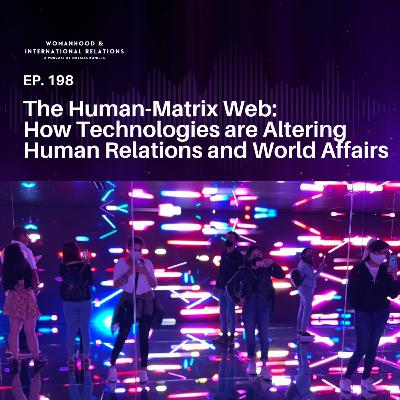
How Are Media, AI and Technologies Altering Human Relations and World Affairs Today? How has our increasing exposure, consumption and engagement with international news throughout the decades changed our perception of ourselves, our relations with others and the current and future state of the world? Is the hyper-mediatization of Politics and International Relations, in this new era of global digital algorithms, new weapons and AI machine learning, fragmenting human connection and eroding Individuals and States’ sense of power and quest for peace and justice?Beyond the perils of manufacturing of consent for conflict and wars and the weaponization of information, are humans (even those in political and economic power positions) willingly becoming utilitarian and transactional versions of themselves to survive the violence in the online and offline world? Is the world today reflecting back to us a Human-Matrix divide?Join us in this exploration, follow us on LinkedIn and subscribe to our podcast newsletter community here. If you want to support our independent work and learn more in community, subscribe to our podcast’s Substack today.Listen to recommended interviews: 26. Kimberly Loh on Compassionate Conversations36. Dr. Roudabeh Kishi on Mapping Political Violence86. Chloé Meulewaeter on Global Military Spending & Demilitarization Efforts91. Dr. Paul Slovic & Dr. Scott Slovic on the Science Behind the Limits of Compassion98. Elaine Briere on How & Why Colonial Powers Want to Control Haiti143. Roundtable: Countering Militarized Masculinities for Feminist Peace 165. Rachel Winny on the Rise of Disinformation & Conflict Escalation180. Dr. L. Ayu Saraswati on Pain, Power and Transnational Feminism190. Dr. William T. Armaline on The Crisis of Human Rights in the Age of Global Capitalism192. Nicole Steward on Radical Self-Care for ChangemakersOther related podcast explorations and film/series reviews: 76. War Journalism's Effect on Us102. The Matrix Trilogy - What Can We Learn From It?130. How to Become a Tyrant: A Gender Lens Doc Review164. The Diplomat: When Does Soft Power Cave In?174.Social Media Warfare Effects On Us182. Our Brand is Crisis - Film ReviewRecommended links for this episode:ACLED Conflict Watchlist 2025ICRC in 2024: Upholding humanity in conflictThe African Spatial Conflict Life Cycle The Arithmetic of Compassion ProjectNumbers and Nerves: Information, Emotion, and Meaning in a World of DataCenter for Information Resilience Pain Generation: Social Media, Feminist Activism, and the Neoliberal SelfieHuman Rights Praxis and the Struggle for SurvivalRadical Self-Care for Helpers, Healers, and ChangemakersCompassionate Conversations: How to Speak and Listen from the Heart
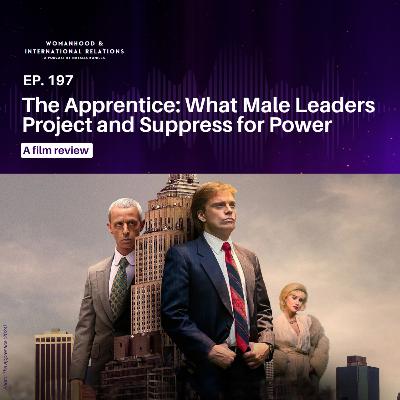
How do masculine understandings of power shape the public personas of male leaders? How do they cultivate masculine energy traits, repressing feminine energy expressions internally but seeking them externally in the forms of bodies, territories, nations or States? How nuanced are the concepts of “strength” and “weakness” in human relations, particularly in leadership and decision-making within domestic and foreign affairs?A gender lens film review of The Apprentice (2024). Join us in this exploration, follow us on LinkedIn and subscribe to our podcast newsletter community here.Listen to related episodes:23. Hegemonic Masculinity and Hegemonic Femininity in World Politics44. Denormalizing the Concept of "Statesmen": A First Look into Masculinities in IR71. The Masculine/Feminine National Cultures Index142. Psychology in International Relations150. Healing Our Inner/Outer Masculine & Feminine Imbalances166. Hypermasculinity & Hyperfemininity on States

Comments

Download from Google Play

Download from App Store
 United States