


 Claim Ownership
Worlding Podcast
Subscribed: 2Played: 19
Subscribe

© Copyright 2021 All rights reserved.
Description
Exploring the relationship of how we are both shaping and being shaped by our surroundings through embodied conversations with artists and thinkers, the Worlding Podcast expands our awareness of our more-than human surroundings and traces interpersonal connections by inviting each guest to recommend an important person for them to be interviewed next, similar to a string figure. Hosted by dance artist Renae Shadler, this show has an organic life of its own and tends to meander in unpredictable and unexpected ways.
Learn more at:
http://renaeshadler.com/worlding
https://www.instagram.com/renae_shadler_
https://www.facebook.com/renaeshadlerandco
Learn more at:
http://renaeshadler.com/worlding
https://www.instagram.com/renae_shadler_
https://www.facebook.com/renaeshadlerandco
33 Episodes
Reverse
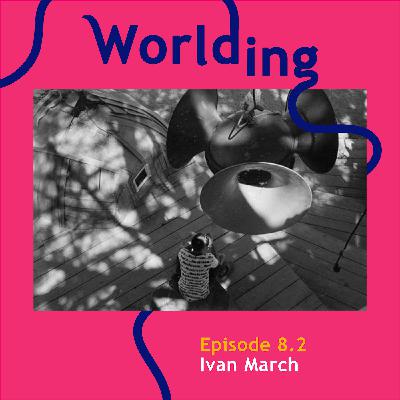
“Everyone is working through something on the dance floor” says Ivan March, a curator, artist and raver who is leading a community house in Greece, and the co-creator of the Waking Life festival in Portugal.
Waking Life is an annual Music Festival for artistic experimentation and collective imagineering of the type of society we could cultivate, if there was freedom to diverge from default reality. In this episode Ivan shares why festival gatherings are such fascinating spaces and how peak experiences can relate to the seasons and weather patterns within our own bodies.
Learn more at: http://renaeshadler.com/worlding
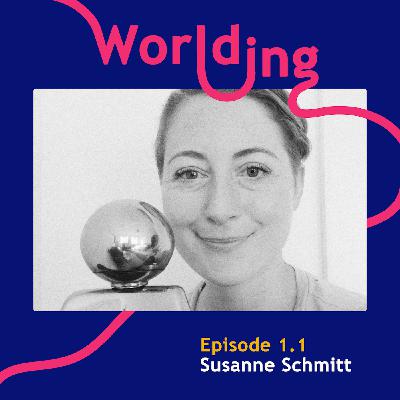
Susanne Schmitt, who works across ethnographic and artistic practices often with a multi species lens and through works situated at Natural History Museums and Botanical Gardens, guides us through her research of more-than human museums and creatively explores what Worlding could be.
Susanne shares her interest in the architecture of museums, their written and unwritten rules and how this choreographs the people that work in them. By playing with the genre of the audio walk, Susanne and her collaborators set out to turn museums into multi species sites by accounting for the very different kinds of species that dwell there and that are represented there.
During the pandemic, when most of us find ourselves refined to our home environments, can we experiment with thinking about our homes as more-than human museums?
Could we even, for example, create a guided tour of our home for a bug that likes to eat trees?
Learn more at: http://renaeshadler.com/worlding
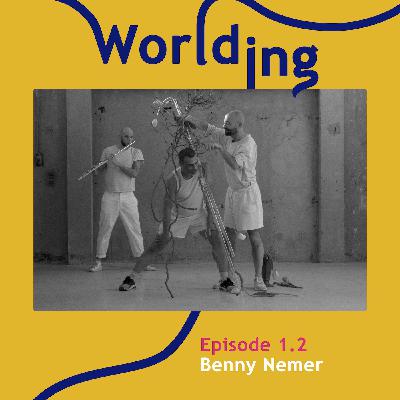
Benny Nemer has always been curious about relationships, especially love relationships, but not exclusively. Benny works as a multidisciplinary artist, diarist and researcher. He came to an interest in kinship through an interest in queerness. Queerness as a method, as an aesthetic and also an intrigue in the way that queers form relationships beyond the kind of reproductive family structures that are valorised and emphasised by dominant western culture.
From there, Benny and Renae meander into more-than human realms by focusing on Benny’s audio guide “Trees Are Fags” (2018) which encourages the listener to find a park, or the garden of their mind to perform a series of choreographed cruising gestures, referring to “the trees that populate those places where men congregate to have sex”.
Learn more at: http://renaeshadler.com/worlding
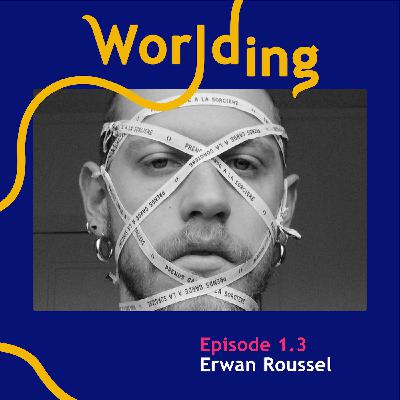
Erwan Roussel explores a queer mythology and/or fantasy that is speculative, that you can dream about, you can invent and can even expand to create your own Pantheon, your own history, your own myth.
Erwan left the binary view of the Christian religion because he felt that there was a huge diversity of expressions that could better represent his queerness. Influenced by the pagan rituals and legends of fairies, witches and goblins that he grew up with in Bretagne (France), Erwan set out to dream about what he wanted to be the heir of, what queer ancestors and saints he could align himself with.
Erwan translates his research into talismanic clothes, designing a series of gender-neutral vests that represent embodied states and emotions, such as shape shifting or sadness. He embellishes the vests with chalk drawings of human body parts that morph into animals and plants, winding in and out of different entities and forming a unique Worlding practice that is entangled within it's more-than human surroundings.
Learn more at http://renaeshadler.com/worlding/
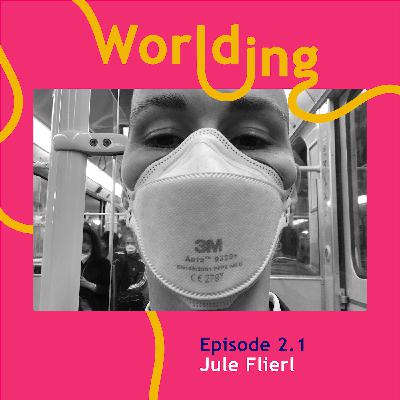
Dance artist Jule Flierl questions how voicing, listening and breathing can be used to bring us into a sensual relationship with our past, present and future surroundings.
Jule shares, for example, how she worked with different temporalities in her solo dance piece “Störlaut” where she reinterpreted the sound dances of Valeska Gert, a German grotesque dancer of the 1920s, in order to create an articulation beyond today’s word capsules.
She then proposes a breathing score for listeners to embody her desire to bring breath, and physical practices more broadly, back into a realm where they become sensory tools, as opposed to their current association as simply a means to transmit the Coronavirus.
Learn more at: http://renaeshadler.com/worlding/
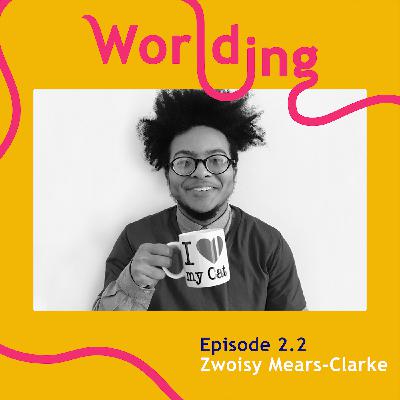
Dance artist Zwoisy Mears-Clarke shares how Worlding intersects with his artistic practice, from exploring our ancestral relation with plants to questioning our interconnection with technology and what that means for the communication of time, rest and activity.
The episode then dips into Zwoisy’s current research with the Herero and Nama people that live in Namibia, and are part of the Diaspora. Zwoisy talks about how speaking intimately to Indigenous people has shifted his understanding of his personal journey of immigration from Jamaica, to the United States and from the United States to Germany.
Zwoisy and Renae discuss the relationship with the land that remains fundamental to the identity and way of life of many Indigenous people. Renae shares a memory with her ‘Aunty Peggy’ (Peggy Rockman Napaljarri), a Warlpiri-speaking indigenous artist from Lajamanu in Australia's Western Desert region, who told her at age five that “we are land and land is us”. The pair consider ways to practice this idea in our daily lives by asking - how can we dissolve the perceived border between land and the human body?
Learn more at: http://renaeshadler.com/worlding/
How can you move, if you are separate pieces?
What needs to happen to initiate and enact a response, a movement?
What needs to be gathered?
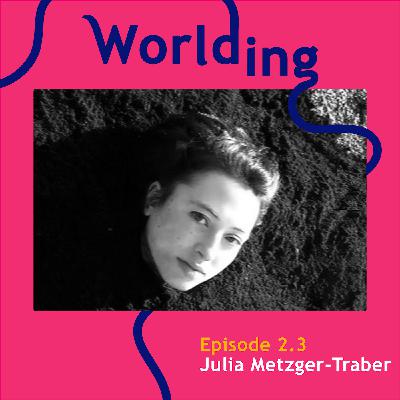
Julia Metzger-Traber is a mother, dance artist and community process facilitator who is based in Virginia (USA) where she works and lives as part of a community project and farm called The Rhizome.
Julia reflects on the African American people who tended the lands that The Rhizome is built on, the people who were enslaved by the British and brought over against their will, the people who are now the deep listening stewards of the land.
Julia and Renae discuss the messy and sometimes even delicious details of reparation work as well as the feminist ethic of ‘response-ability’ which is not so much about imparting duty or moral obligation as it is about cultivating the capacity for response. Response-ability as a relationship, a deep listening and coming into dialogue to be able to then move into response.
Learn more at: http://renaeshadler.com/worlding/
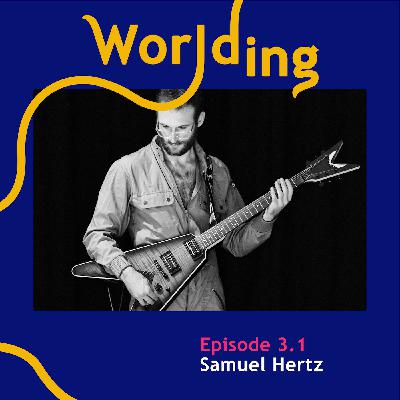
Samuel Hertz is a Berlin-based sound artist and researcher working at intersections of Earth-based sound, sonic sensualities, and climate change. This episode Samuel dives into complexity theory and shares listening practices that enable us to develop a more nuanced understanding of the sonic world. He proposes sound as a metaphor to reveal multiple layers of activity and bring us into a more nuanced understanding of what's happening around us.
Through the lens of complexity we discuss 'care' which Samuel critiques as generally being understood as something similar to stewardship that actually is considered an antiquated concept when dealing with critical ecosystems. He argues that from this perspective care can create power structures which lead humans to believe they are in charge and in a hierarchical position to care over something.
Instead, Samuel proposes caring-with and using complexity as a tool to develop an understanding of how changes within specific ecosystems affect other beings and other materials they are entangled with.
Learn more at: http://renaeshadler.com/worlding/
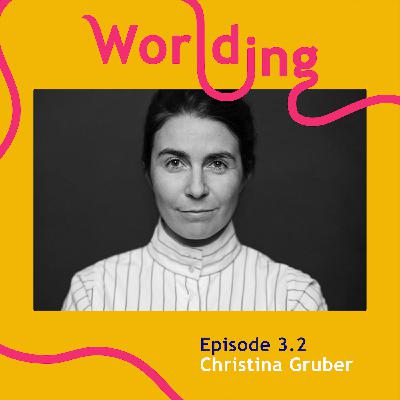
Christina Gruber is an artist and freshwater ecologist, who works at the intersection of art and science. In this episode we focus on her work at the LIFE Sterlet project to repopulate sturgeon in the Danube. Christina shares how the sturgeon, a rare species of fish, got a bit lost in the muddy waters, or we got out of touch. Once an important figure, it’s no coincidence that especially in Austrian history (Christina’s homeland) and in the Folklore of communities nested along large rivers across the world the sturgeon often appears, and having once grown to around five meters in length, Christina has the theory that all the dragon stories are actually ancient sturgeon sightings.
Christina and Renae then discuss how the Worlding practice could bring us more in touch with sturgeons, one example being the use of technological listening devices that enable us to learn with and relate to them, finding out the many ways in which the sturgeons shape us.
Learn more at: http://renaeshadler.com/worlding/
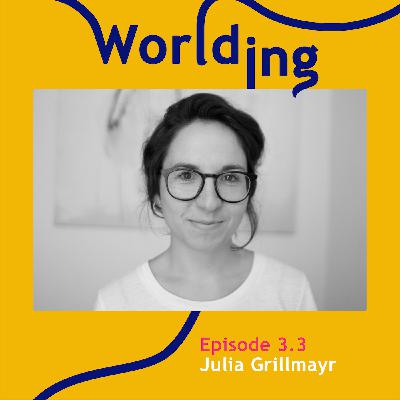
Julia Grillmayr is a cultural studies scholar, journalist and science communicator who spends most of her time in the muddy danubian wetlands. In this episode Julia shares her research into sewage sludge and experience visiting five waste-water treatment plants in Austria in the preparation for “Klärschlamm” (Sewage Sludge), an exhibition at WUK which she co-curated with Eva Seiler in 2020.
For Julia, sewage sludge is an interesting opaque substance that is never pure but instead made up of many different sediments. It is disgusting and unsettling, watering down the boundaries of alive or dead, active or passive, technical or organic, subject or object. It can therefore act as a metaphor for how the human and non-human are entangled in naturecultures - a fusion of nature and culture that recognizes their inseparability in ecological relationships.
Sewage sludge becomes an accomplice in an attempt to conceive a “nonarrogant collaboration with all those in the muddle” (Haraway 2016).
Learn more at: http://renaeshadler.com/worlding/
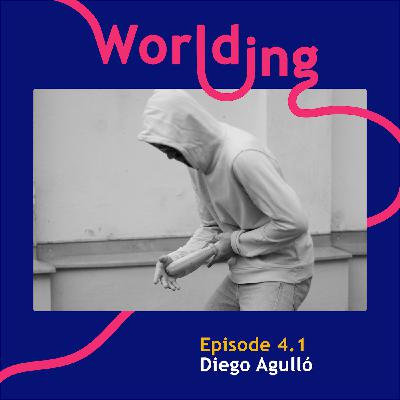
Diego Agulló is an independent researcher and multifaceted artist, creating contexts that continue practicing and investigating the relation between body and the event. Inspired by the term ‘Dilettante’ which literally means to delight one's-self in doing an activity, Diego and Renae attempt to blur the perceived border between what is work and life.
From this guiding principle of pleasure, Diego discusses different practices in which you can create a constant awareness of what you do on a daily basis. He begins by acknowledging that the brain has, in certain cultures, become the dominant organ and in response looks to Qigong and Tai Chi as a means to train other organs and discover what they are capable of. He often trains together with a small wooden stick - a stick that at times even ‘worlds’ him in that subtle moment when one feels that their body is being moved by something else.
Learn more at: http://renaeshadler.com/worlding/
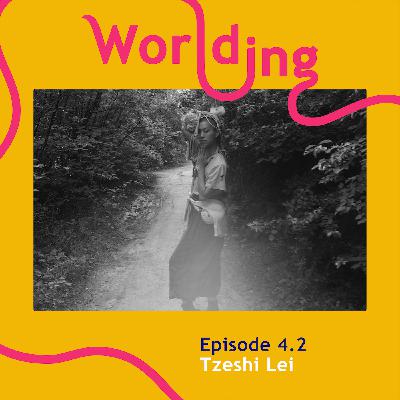
Tzeshi Lei is a Berlin-based dance artist, born and raised in Taiwan, who in this episode shares her research into the complexity of language. Drawing on her personal experience of living and working between Mandarin - a dialect of Chinese, German and English, Tzeshi explores the dimensionality of language which she see’s as a ‘hyperobject’ that it is containing us, while at the same time we are containing the language.
In dialogue with her movement practice which is rooted in Qigong, Tai Chi and Butoh dance, Tzeshi has come to describe language as ‘embodied anatomy’, approaching language as a series of entangled layers, similar to the layers of the body - such as facia, muscles and bones. Tzeshi asks how we can expand the nuances of spaces in between words and information, and therefore expand the many means by which we articulate worlds.
Learn more at: http://renaeshadler.com/worlding/

Tsuki is a dancer and choreographer originally from Australia and now based in Berlin. She is working from a queer feminine perspective and in this episode we dive into her research around deconstructing conditioned ways of being and facilitating spaces of more-than human exchange.
Recorded from a hotel room in Ipatinga (Brazil), Tsuki unravels her personal story of feeling alien in her body and how she changed her name and identity to come closer to her truth. This transition was made in relation to the moon cycle, with ’Tsuki’ in Japanese meaning ‘moon’.
Tsuki now leads Full Moon Performance Rituals in Berlin and is focused on enabling spaces where the art, the community, and the survival can co-exist.
Learn more at: http://renaeshadler.com/worlding/
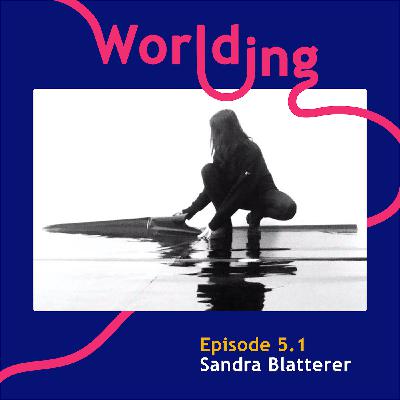
“I invite you for an imaginary night walk in my neighbourhood. We could meet in front of the supermarket, here on my corner, next to the flickering street lamp. I would suggest around 11:00 PM, in the middle of the week - Wednesday. So dress warm and I bring some tea and blankets for us. I also kindly ask you to be silent and aware of your surroundings during the walk.”
Sandra Blatterer is a Berlin based visual artist and lighting designer. In this episode we explore her research into ‘Imaginary Spaces’ created especially in the context of installations and staged performances, but not only. Together we discuss strategies to become more sensitised to the agency of light, asking how it choreographs us?
Learn more at: http://renaeshadler.com/worlding/
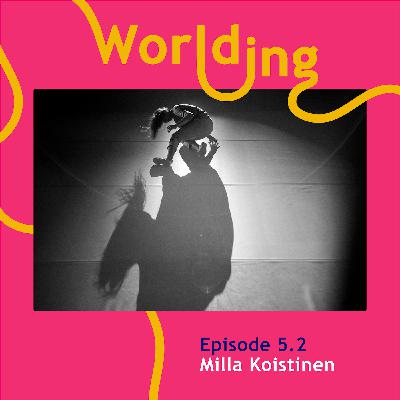
Milla Koistinen creates dance works that often evoke a feeling of spaciousness and calm in the spectator. She was born and raised in a small cabin in the Finnish forest where in winter the main sources of light outside were the moon, stars and Northern Lights and in summer there was so much light that it never got dark. What she noticed was a slow transformation that she applies to her choreographic works, where things shift gradually over time.
In this episode we explore her recent collaborative work "Terrain” - an immersive installation for one visitor at a time and "On a Clear Day" - a dance solo inspired by the artworks of Canadian born painter Agnes Martin. We focus especially on rhythm and understanding how certain worlds can linger inside of us even after we have physically moved on.
To end, Milla guides listeners through a short movement journey inviting us to center our attention on breathing, on listening, on moving and then simply on standing still.
Learn more at: http://renaeshadler.com/worlding/
“On a Clear Day / SCHRUMPF!” > https://www.loudsoft.de/archiv-1/schrumpf-2020-2021/schrumpf-koistinen-on-a-clear-day/
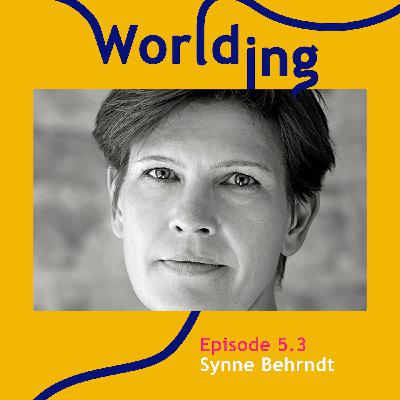
Synne Burnett is a dramaturg and writer working closely with last episode's guest dancer/choreographer Milla Koistinen. In this episode Synne shares her practice of creating spaces where ideas can co-exist, where we can be with our dilemmas and explore things that may at times be both comfortable and uncomfortable. We then discuss how different artists are working with the environment, exploring our relationship to our surroundings through the lens of dramaturgy.
Learn more at: http://renaeshadler.com/worlding
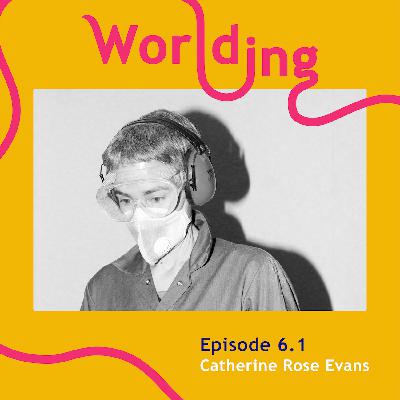
While observing the extension of Berlin’s A100 City Highway that is being tunneled close to her home in Berlin-Neukölln, artist and writer Catherine Rose Evans collected rocks at the site which were glacial erratics deposited there during the ice age. In this episode Catherine shares her interest in geologic time and where this intersects with our own human timescales as found in our bodies, their materiality and our lived histories. Often we think of rocks as stationary, heavy things but this is only due to our perception of time. If one looks at a scale much larger than a human lifespan we can begin to understand that rocks have liquid histories and will one day return to a liquid form.
By researching and experimenting with the effects that different forces - light, weight, balance - have on materials Catherine can gain insight into how these forces likewise apply to us. How human bodies are also materials that are cycling, no different from rocks.
Learn more at: http://renaeshadler.com/worlding

During a recent artist residency on the island of Örö in the Finnish Archipelago writer, artist and researcher Ally Bisshop was overcome by a wash of fatigue. Sensing a pull between the two opposing forces of sleep and desire, she asked how exhaustion could help her to read this ecology with more curiosity, generosity and sensitivity.
Ally felt a tension between ambition and surrendering to her lethargy. She found it was useful to draw on the mythopoeia figures of Eros (desire) and Hypnos (sleep and death) as a device for getting out of the habits of thinking landscape or non human bodies mechanistically and discovered that by thinking through these forgotten figures she could begin to think and move otherwise.
Learn more at: http://renaeshadler.com/worlding
Info on 'Moving across Thresholds' at: http://www.movingacrossthresholds.com/
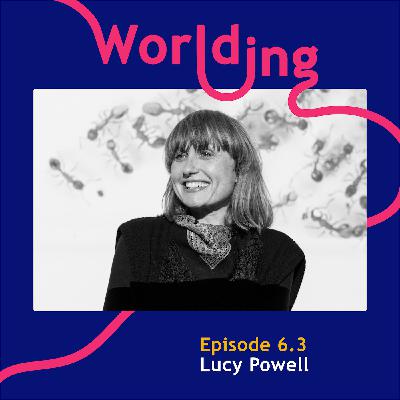
Environmental activist, artist and mindfulness practitioner Lucy Powell shares her process of creating 'Becoming Arboreal', a guided walk through Berlin’s Tiergarten that explores ideas and practices that enable us to dwell more easily in uncertainty, such as spending time with the park’s ancient trees which are rooted to the spot and not able to run away - trees that are literally staying with the trouble. ‘Becoming Arboreal’ draws on mindfulness, the Buddhist history of practicing meditation with and around trees as well as the Thai forest tradition. In times when the world feels increasingly unstable, Lucy looks to trees as companion thinkers asking ‘how to be in the world as it is now?’
Learn more at: http://renaeshadler.com/worlding
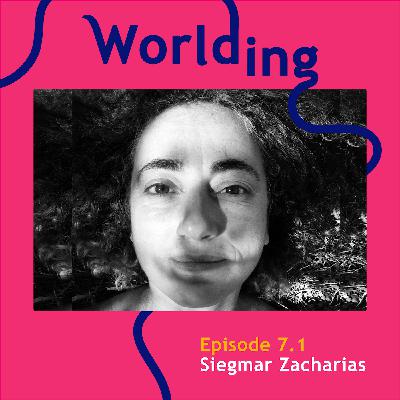
After her sister got diagnosed with an autoimmune illness and unexpectedly died within half a year Siegmar Zacharias, a Berlin-based performance artist and researcher, embarked on a life’s work to create collective and public places for grieving. In this episode, Siegmar shares her research into collective processes of death and dying as well as expanded notions of grief that arise due to climate change and the current mass sixth-extinction.
Drawing on her performance practice and American neuroscientist Stephen Porges’ Polyvagal Theory, Siegmar aims to create spaces where the inter-linking of nervous systems can become sensible and where we can build joyful futures that incorporate the necessary capacity to grieve together.
Learn more at: http://renaeshadler.com/worlding

Comments

Download from Google Play

Download from App Store
 United States