


 Claim Ownership
Your Digital Reputation
Subscribed: 1Played: 5
Subscribe

© Propel Group (Australia) Pty Ltd
Description
Your Digital Reputation features candid conversations with CXOs, board members, and domain experts about how trust is built, tested and scaled in a digital world - hosted by Roger Christie, founder and principal at Propel.
Hosted on Acast. See acast.com/privacy for more information.
86 Episodes
Reverse

Would you say the main thrust of your communications reflects your competence, or character?It's a question Roger Christie puts to leaders in his workshops, and - in this episode - one his guest answers with hard data.Shahar Silbershatz is the co-founder and CEO of Caliber, a stakeholder intelligence firm in Copenhagen that has spent years measuring what actually earns trust for some of the world's biggest brands, including Airbus, Audi, Microsoft and Coca-Cola.His finding is striking, and it holds across years of data: when it comes to driving trust, character beats competence, every time. Innovation, differentiation and even leadership have quietly become "hygiene factors" - the price of entry. Particularly in an AI-generated and synthesised world, what genuinely sets organisations and leaders apart is character (and, above all, integrity - the sense that you do what you say). The catch is that character is far harder to prove, and it demands consistency across every behaviour, and every decision.In this conversation, Shahar and Roger explore why it is easier to be visible than understood, the risks that come from being loud but hollow, and the evidence needed to make decisions with confidence about the best approach leaders and organisations should take today. It's full of practical guidance for anyone weighing up how visible they should be, and how they can build and maintain belief with key stakeholders once seen.TIMESTAMPS03:26 - How reputation forms: awareness versus familiarity06:40 - The hard part: visible versus understood09:15 - Listen first: reputation is what you do, not what you say12:24 - Character beats competence: inside the driver analysis19:44 - Authenticity is not vulnerability, and the loud-but-hollow trap22:11 - When the CEO is the wrong spokesperson24:49 - AI, synthetic content and the authenticity backlash31:11 - Why most people don't link the CEO to the company, and why B2B is differentSUBSCRIBE FOR REGULAR INSIGHTSTo sign up to Roger Christie's regular newsletter, head to: https://www.propelgroup.com.au/subscribeCONNECT WITH ROGER CHRISTIEHave a question, feedback or want to connect with Roger? Head to: https://www.linkedin.com/in/rogerchristie Hosted on Acast. See acast.com/privacy for more information.

For years, leaders have been encouraged to tell better stories. New research from Dr Jacki Johnson now suggests - for some organisations - that may be the most dangerous advice they could act on.Jacki is an author, board director and a former insurance executive and chief executive, including six years leading IAG New Zealand through the Christchurch earthquake recovery. She has chaired the United Nations Environment Programme Finance Initiative and co-founded the Australian Sustainable Finance Initiative. She then pursued a doctorate on a question she needed to answer: how do listed companies actually create value for all stakeholders?The answer does not lie in messaging; it's found in governance.In fact, in her research across the ASX200, of the four archetypes she identified, the group carrying the most risk was one you might least expect: the "strategic storytellers." Those with a strong narrative, but whose communications capability runs ahead of governance.What makes this risk so hard to spot is that it easily happens through drift, not design. Strategy gets set in the boardroom, the narrative takes shape somewhere else, and that narrative is repeatedly shared "by" executives who never held the pen that wrote it. Each handover makes sense, yet the distance between them is where risk compounds. In Jacki's words, these organisations are "one month away from a question being raised by some stakeholder [asking]: 'How real is this?'"This episode of the Your Digital Reputation podcast highlights the importance of alignment between governance and communications, and shows how the "digital mirror" - that reflects a company's cracks to the outside world, long before anything formally shatters - is well worth paying attention to. Tune in now to hear Jacki and host Roger Christie provide a fresh perspective on the risks and rewards to consider online.Jacki's book, When the Mirror Shatters: Moving from Broken Promises to Creating Stakeholder Value, is now available.TIMESTAMPS:00:05:23 - Jacki's own "mirror shattering" moment00:08:09 - The royal commission, and what she had missed00:11:09 - Twelve practices that separate the high stakeholder value companies00:17:06 - Why employees are the first to know00:22:41 - From boardroom strategy to published narrative, and who holds the pen00:31:17 - The chairman's lounge problem00:39:07 - The four archetypes, and what value creators do differently00:45:00 - Why storytelling is not the problemSUBSCRIBE FOR REGULAR INSIGHTSTo sign up to Roger Christie's regular newsletter, head to: https://www.propelgroup.com.au/subscribeCONNECT WITH ROGER CHRISTIEHave a question, feedback or want to connect with Roger? Head to: https://www.linkedin.com/in/rogerchristie Hosted on Acast. See acast.com/privacy for more information.
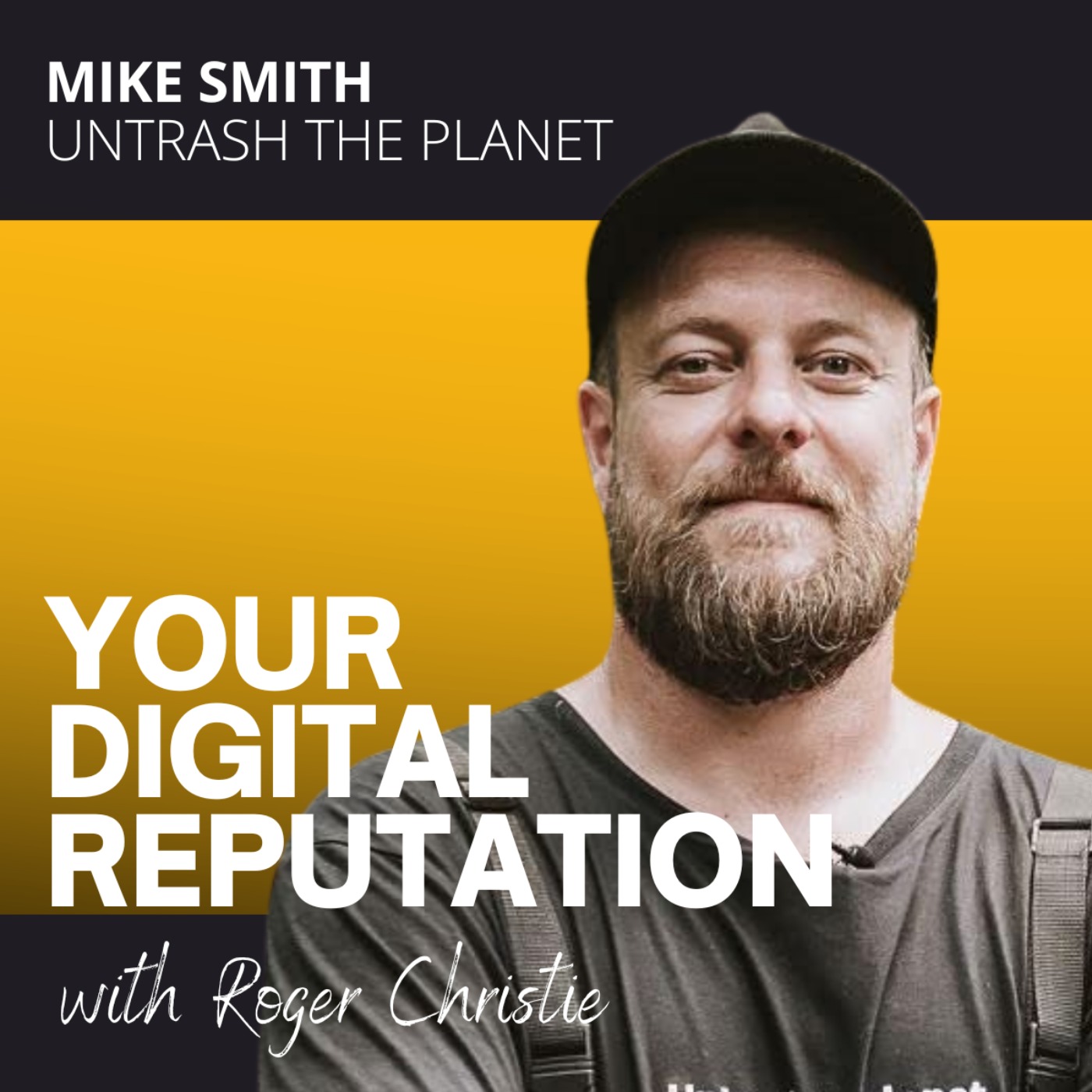
What is your reputation actually worth?Mike Smith built Zero Co from a kernel of an idea in his childhood bedroom into a home-cleaning brand that not only served more than 100,000 Australian households, but also sought to tackle the enormous global problem of single use plastic pollution in the process.He became the public face of one of this country's biggest crowdfunding stories, a regular feature in mainstream and social media feeds, and rode the wave of public support on his mission to remove one billion bottles from our oceans.Only a few years later, he also became - in his own words - one of the biggest startup failures in Australian direct-to-consumer. In 2025, Mike had to wind the company up, telling 3,500 investors their money was largely gone.As he reflects: "We tried this really brave thing that no one in the world had ever tried to do before - and it didn't work."In this episode of Your Digital Reputation, Mike shares something very rare with host Roger Christie: he tells the whole story. The conception, the growth, and the world-first paper-packaging bet that ultimately brought Zero Co undone. He shows enormous courage in explaining what went on behind the scenes, why he went quiet for 12 months, and what he learned about himself in the process. He also explains the raw impact being so active and so visible online had on him as a person. And how his investors, customers, staff and supporters responded when he shared it was all coming to an end.It's an incredibly raw, generous conversation about visibility, vulnerability, burnout and what your own reputation is really worth when everything else is stripped away. As Mike says: "I would love to share some of my journey with people so they don't make the same mistakes that I made."This episode is for anyone who has ever put themselves on the line for something they believed in. TIMESTAMPS:00:02:17 - From a winemaking exit to a beach full of plastic00:06:43 - The supermarket moment that became Zero Co00:10:08 - Becoming the face: Kickstarter and a rocket ship00:14:41 - Why vulnerability built belief00:22:42 - What actually went wrong00:30:01 - Handling it publicly, crumbling privately00:35:27 - What came back: the response to the closing post00:43:07 - Going quiet, and the second actSUBSCRIBE FOR REGULAR INSIGHTSTo sign up to Roger Christie's regular newsletter, head to: https://www.propelgroup.com.au/subscribeCONNECT WITH ROGER CHRISTIEHave a question, feedback or want to connect with Roger? Head to: https://www.linkedin.com/in/rogerchristie Hosted on Acast. See acast.com/privacy for more information.

Leadership belief forms from everything you do, is often decided on when you're not in the room, and is tested whenever your leadership falls under the microscope - any belief is either lacking and exposed, or present and pays dividends.Allison Rossiter has spent her career quietly and consistently building it, and is reaping the benefits today.As she shares on this episode of Your Digital Reputation, her healthcare journey runs from the north of England through Canada, California and now Australia, including as managing director of Roche Diagnostics Australia through the pandemic, CEO of an ASX-listed diagnostics company, and most recently Country President at Novartis. She refers to herself as "courageously authentic". What that means is simpler: she has only ever been one person - in the boardroom, at the kitchen table or over coffee.Ali's career is a lesson in belief. Initially, that belief came from other leaders - when she was tapped on the shoulder, convinced she was about to be fired, and ultimately offered a job she felt unprepared for, she was reminded how someone believed in her before she believed in herself. Everything she has built since is an attempt to do that for others.Because Ali now knows the impact of belief and empowerment. Of encouraging others to believe in their own unique qualities and abilities. And this isn't a "warm and fuzzy" philosophy - it has strong commercial outcomes. When she decided to leave Roche, the business was growing at three times the market.In conversation with host Roger Christie, the two map a chain reaction that shows just why Ali has been so successful: authenticity creates connection, connection creates belief, and belief is what produces performance. You'll hear about the book she has handwritten a message inside for hundreds of employees, the birthday cards she still writes by hand, the lunch bill she couldn't pay, and the feedback she continues to receive about being the most authentic leader many have worked with.Belief might compound quietly, but is obvious when it's needed. This is a conversation about how it gets built.TIMESTAMPS:00:02:18 - The tap on the shoulder that changed everything00:06:34 - Rough diamonds, and what great leadership is actually for00:11:15 - What "courageously authentic" really means00:14:35 - The risk: walking away when you still have a mortgage00:17:29 - The book, the handwritten messages, and a calling card00:25:56 - Birthday cards, a lunch bill, and why nobody else bothers00:32:07 - A pandemic, 1,400 media interactions and awareness with limits00:42:49 - Growing three times the market, while still being human00:44:51 - The mirror test: a message for boards and execsCONNECT WITH ROGER CHRISTIEHave a question, feedback or want to connect with Roger? Head to: https://www.linkedin.com/in/rogerchristie Hosted on Acast. See acast.com/privacy for more information.

For decades, "communication" was largely a one-way flow, with stakeholders on the receiving end. Whether via a press release, internal comms or investor relations - organisations could essentially set a narrative and expect it to land. The model worked.But that world of controlled, one-way communications has been steadily reshaped, first by rolling news, then social, now AI. There's a new world - and a new way - shaping reputation today. And you can't go alone.Laurence Stellings leads RepTrak's Advisory practice across EMEA and APAC, and with the firm's recent Global RepTrak 100 study, he has observed a major shift: reputation is now a multiplayer game - shaped less by the polished messages you control, and more by what your stakeholders say in the wild.In conversation with host Roger Christie on this episode of the Your Digital Reputation podcast, Laurence and Roger explore what this means, and how "multiplayer" runs in two directions at once: externally, as customers, regulators and the public shape your story, and internally, as every employee, top to bottom, brings it to life.With the key learning being not to control what words go out, but to control how clearly you communicate your mission. Get that right, and you can trust stakeholders to carry your ideas in their own language, to their own networks.Laurence shares plenty of great examples to bring this to life: a Finnair cabin crew member who outsold every glossy advert in a two-minute chat; Adidas turning a sub-two-hour marathon into a cultural moment; Barilla pairing pasta with Formula One and al dente Spotify playlists.As AI floods our feeds with sameness, the leaders who earn trust will be the ones who say less, say it consistently, and let real people carry it further than any channel could. Tune in to hear some great ideas and examples that remind us all - the risk of not being believed is far greater than the risk of not being seen today.TIMESTAMPS:00:03:11 - From one-way broadcast to genuine conversation: 30 years of change00:05:00 - What the Global RepTrak 100 reveals this year00:07:56 - Adidas, and why a story has to be worth sharing00:14:30 - Your most trusted voice is on the frontline (the Finnair story)00:21:25 - Barilla: Formula One, heritage and al dente playlists00:27:38 - Reputation "in the wild" - where belief beats polish00:35:00 - Best practice: say less, say it more oftenCONNECT WITH ROGER CHRISTIEHave a question, feedback or want to connect with Roger? Head to: https://www.linkedin.com/in/rogerchristie Hosted on Acast. See acast.com/privacy for more information.

Comments

Download from Google Play

Download from App Store
 United States