


 Claim Ownership
eCommerce Australia
Subscribed: 15Played: 168
Subscribe

© Ryan Martin
Description
Australian eCommerce Podcast - Interviewing Founders, eCommerce Specialists, Leading Australian Marketing Agencies and much more on the eCommerce Australia Podcast.
Australian stories about Australian issues, Shopify experts, SEO experts, Founder Stories, eCommerce Managers. We bring the best talent to the microphone to share their experience, with the sole aim of improving your own eCommerce business.
Host - Ryan Martin, Founder of Remarkable Digital, an eCommerce SEO and AIO agency. (https://www.remarkabledigital.com.au/)
Australian stories about Australian issues, Shopify experts, SEO experts, Founder Stories, eCommerce Managers. We bring the best talent to the microphone to share their experience, with the sole aim of improving your own eCommerce business.
Host - Ryan Martin, Founder of Remarkable Digital, an eCommerce SEO and AIO agency. (https://www.remarkabledigital.com.au/)
145 Episodes
Reverse

Most brands think they know who their best customers are. Then they put their online and in-store data together and get a surprise. Ryan Martin talks with Aaron Luxmoore, Head of Sales and Partnerships at Lexer, about how the platform has grown from a customer data platform (CDP) into an AI customer intelligence layer. Aaron explains why putting ChatGPT or Claude on top of fragmented data just gives you wrong answers faster, and why the same customer can show up as three different people. He also covers why you shouldn't send every customer the same Black Friday discount, the quickest way to turn one-time buyers into repeat customers, and why Lexer doesn't charge per seat. Plus, how a LinkedIn post turned into Friends in Tech, a networking event with an 850-person list.In this episodeFriends in Tech: how one LinkedIn post became an 850-person event list across the east coast, with no sponsors, no pitches and no clients invitedLexer's evolution from CDP to an AI customer intelligence layerThe discover, decide, act, observe and learn loop, and why the platform is now used by CEOs, merchandisers and store teams, not just marketingBringing inventory, margins, store rosters and business context (like store closures) into the dataWhat usually brings a brand to Lexer: "we don't really know our customers", a loyalty program launch, or too many hours lost to spreadsheetsOmnichannel reality check: the customer who spent $2K online and $5K in store, and the "one-time buyers" who've actually bought again in storeAdding third-party data from Experian (likely income, home ownership, parent status)Wrong answers, fast: the problem with putting AI over fragmented data, and the risk of tying everything to one LLMHow one customer with multiple email addresses can look like three different customersBlack Friday: why full-price buyers shouldn't get the same discount as everyone elseLexi as "the brains behind Klaviyo": insight, then strategy, then the segment (around 75% of Lexer clients use Klaviyo)Common objections, and why all-in-one platforms tend to be "jack of all trades, master of none"Build vs buy: why building your own customer data layer usually takes two years and more people than expectedImplementation down from about six months to 6–12 weeksWhy Lexer doesn't charge per seat, and pricing based on the number of customer profilesROI examples: paying for a year's subscription just by turning one-time buyers into repeat buyers, and feeding top-5% audiences into MetaWho buys: head of digital, CMO and CRM manager, and the champions who bring Lexer with them when they change jobsMulti-brand groups: cross-selling across Cotton On, Cotton On Body and TypoWho it's for: medium to large omnichannel retailers, increasingly smaller and e-commerce-only brands, plus hospitality clientsHow to get a free demo using your own Shopify and email data
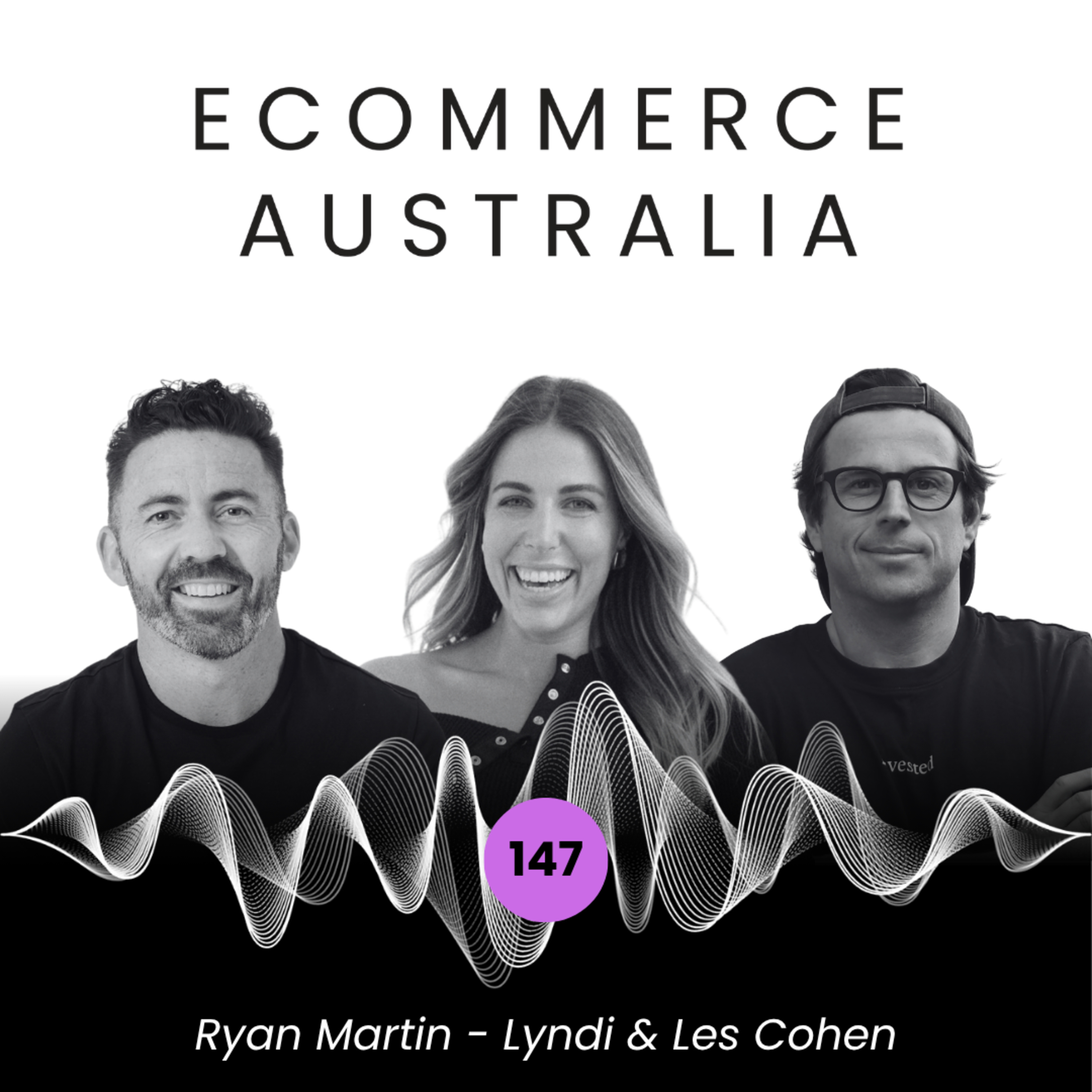
What happens when a dietitian and a lawyer start a swimwear brand? Ryan talks with Lyndi and Les Cohen, the husband-and-wife team behind Fearless Swimwear. Lyndi, known as The Nude Nutritionist, spent 15 years helping women with body image before deciding the swimsuit was a body image problem to solve. They built in public, let their audience pick the brand name, cuts and colours, and launched to a 15,000-strong waitlist. The pre-order sold out in 24 hours for $200K. They also share the $100K sizing mistake that followed, the "magic sizing" that came out of their waitlist data, why they're stepping away from deep Black Friday discounts, and what Lyndi calls the "embarrassment tax" of building on social.About The Host: Ryan Martin is Founder of Remarkable Digital, a specialist eCommerce SEO marketing agency working with Australian Brands. In this episodePacking orders at Thread Together, and a humbling start to the chatWhy a dietitian who specialised in body image decided to start a swimwear brandBuilding an audience by "listening to the data": body image content beat healthy breakfast contentCo-creation: letting the community choose the name, cuts, fabrics and colours, and why 100 poll votes is often enoughA 15,000-woman waitlist, a $200K pre-order that sold out in 24 hours, and going straight to a 3PLTrademarks: buying the "Fearless" name for $3K, and the risk of trademark squatting in ChinaSourcing in China: 36 hours at Intertextile Shanghai, and why you need a swimwear specialist, not a generalistThe $50K tech pack lesson, and hiring a head of product with nearly 30 years in swimwear (including the 2000 Olympics swimsuits)The $100K mistake: gifting all their stock to Thread Together when the sizing came up smallMagic sizing: 49% of their waitlist wore a different size top and bottom, so they built one-pieces with mixed sizingLong torso styles, and designing for a size 12 to 16 instead of scaling up from a size smallUsing Refundid checkout insurance to let customers try at homeCustom fabrics vs cash flow: simplifying to shorten lead times and the cash conversion cycleStock planning with no historical data, air freight, and a seven-month lead time on a sold-out styleBlack Friday: last year's tiered 10–60% discounts, and why this year they're focusing on newness and gift with purchase insteadSwimwear's short selling window (September to December), and why March makes more sense for a saleBeing "ridiculously honest" with customers about strategy changesThe embarrassment tax: why your fails outperform your highlight reel on socialShooting product on real customers with a $4,000 camera instead of professional modelsStaying close to customer feedback as the team growsMentors and inspiration: Shelley Sullivan (MCoBeauty) and Emma GredeLong-form content, brand voice, and being the "chief reminding officer"What's next: a ready-to-wear capsule, the US market, and becoming the most recommended swimsuit brand

What if your customers were your cheapest media channel? Ryan Martin talks with Mike Haywood, Co-founder of BrandPay, about "customer media". BrandPay rewards everyday customers, not influencers, with store credit when they post about brands they already love. Mike explains how a $1-per-like experiment at his AirBnB retreat grew into a world-first build with Meta. He also covers why AI search runs almost entirely on third-party content, and how brands like LSKD now get a new piece of customer content every 33 minutes. On average, the cost per click comes in at about half that of paid media.Mike explains how the idea started. During COVID he ran a hinterland retreat and paid guests $1 per like in wine-cellar credit for posting content. Six months later it was named best holiday home in Australia and featured in Vogue. He also talks about building a world-first integration with Meta, and the psychology that makes customers post (time and effort, not likes). He shares hard numbers on cost per click, spend-back rates and category performance.Why BrandPay separates customer media from UGC and creator contentHow a $1-per-like guest experiment led to a Vogue feature and a new startupBuilding with Meta: a world-first API use case and the challenge of fraud preventionWhy fixed rewards beat per-like rewards: everyday users think in time and effort, not engagementHow the BrandPay wallet works: store credit in Apple Wallet, worth half its value at other brands, with the other half returned to the rewarding brand#ad disclosure, and why customer content doesn't feel like sellingAI search and third-party content: Google lowered its follower threshold for showing third-party content in search from 300k to 35k to 10kThe review flow: 48-hour auto-approval for reels (24 hours for stories), and 98% approval ratesPricing: a 25% fee on top of rewards, with no SaaS or setup feesAttribution: first-degree clicks at about 50% of paid media cost per click, plus the "BrandPay halo effect" measured via Triple WhaleWhy brands with real community (Facebook groups, Klaviyo lists) win first85% of rewards are spent back with the brand, on average within about 5 daysWhich categories perform best: fashion, beauty, skincare, nutrition, pet food, sunnies and furnitureFirst-mover advantage and the "infinite half-life" of third-party contentProduct launches: building customer media groups by postcodeBeyond e-commerce: distributor brands, service businesses, and TikTok coming soon

Cam McNeill spent ten years at Dollar Shave Club — from managing a memberservices team in Sydney to running the entire business outside the US. He boughtthe brand's first Facebook ads in Australia at a $14 CPA, launched Ruggable intothe Australian market, and is now Head of Growth at Beforeyouspeak Coffee,taking a nine-year-old Aussie DTC brand into the States.He was living in a van touring America in 2012 when Dollar Shave Club's $3,500launch video went viral. He rang a mate and said: I wonder how long it'll take toget to Australia.In this episode Cam joins Ryan Martin for a genuinely practical conversationabout cross-border ecommerce — how you know you're ready for a new market, whatthe first six months should actually look like, and why Beforeyouspeak chosethe US largely because of one channel that isn't live here yet.WHAT WE COVER• The signals that tell you a market is ready for you — hiding in your DMs, your customer service inbox and your creator requests (and why it's a two-way street: ask them back)• Why market expansion deserves the same rigour as a product launch, and how to build a forecast you feel 80/20 about• The lowest-cost MVP: finding a beachhead, building a waitlist, and contacting the people who already contacted you• Why Beforeyouspeak shipped from Australia at painful margins — and got to conviction fast because those US subscribers are still with them years later• Setting a six-month horizon with real exit criteria, without making it binary• Whether you have to "conquer" Australia first (and Cam's response to that framing)• New Zealand as the soft-launch market most Aussie brands overlook• Why the US comes down to TikTok Shop — and the real difference between an influencer and a creator who only gets paid on GMV delivered• Subscription in 2026: the Amazon Prime promise, subscription fatigue, and why your owned experience has to be equal to or better• Rising Meta costs, AI-driven attribution, and building creative diversity across well-defined personas• Using AI to shorten the distance to a decision, not to generate more noise• Tech stack: Shopify for multi-market, Recharge, Klaviyo, and the new players innovating inside the inbox• Ryan on Microsoft Clarity and internal site search — the highest-intent, least-watched data on your site• How much AI traffic actually matters yet, zero-click search, and why commercial keywords are still safe• Why AI slop might make great designers more valuable, not less

Nineteen months ago Steph Moore was a nurse with no fashion background, no ecommerce experience and a copy of Adobe Illustrator she'd taught herself after night shifts. Today Hey Sister Scrub Club sells out drops, has a 6,000-strong email list and was runner-up for Rookie of the Year at the SHE-com awards.In this episode Steph walks Ryan through the whole build: cold-contacting manufacturers until one agreed to work from her own prints and measurements, the sample sets that came back with head holes too small to get into, and the decision to order 360 units across six prints on nothing more than gut feel and a few colleagues' opinions.She's unusually open about the parts most founders leave out. August was her biggest month ever. July was her worst — not because demand dropped, but because she sold out of core sizes and had no stock to sell. Her tech stack is Shopify and almost nothing else: no automated flows, no abandoned cart emails, every one of those 6,000 emails written and sent by hand. She bought Klaviyo ages ago and still hasn't set it up.There's also the shipment that arrived soaking wet after a flooded hangar, the drop where half the orders went out with one print on the front and a different one on the back, and the Pink October collection covered in boobs — designed specifically so a patient would ask "have you checked yours?"Plus: why she won't use a 3PL, what she wants her future warehouse to feel like, and the line that explains why the copycats flooding the fun scrubs market don't worry her much.CHAPTERS(00:40) Meet Steph Moore, founder of Hey Sister Scrub Club(01:00) From nursing shifts to Adobe Illustrator all-nighters(02:16) Cold-contacting manufacturers until one said yes(03:00) Sample problems, and the set that finally worked(04:32) The first drop: 360 units and six prints on gut feel(05:14) Where the name "Hey Sister" came from(07:05) Building an Instagram community before there was stock(08:00) Why she chose a pre-order: cash flow and capacity control(11:07) Growth that's been almost entirely organic(13:01) Global expansion and the US tariff roadblock(14:11) Biggest month ever, right after the worst month ever(15:50) Retail Fest, SHE-com, and learning what CAC and ROAS mean(17:45) An honest look at a very lean tech stack(21:04) The next 12 months: going casual with nursing(24:08) The hardest moments, including a shipment that arrived soaked(28:03) The mixed-print mistake and the "keep it, pay it forward" policy(30:17) "You can replicate the product, but you can't replicate the brand"(31:49) The Pink October drop that got people talking(34:10) Becoming "the Peter Alexander of the scrub world"(36:41) What's next for Hey Sister Scrub ClubHEY SISTER SCRUB CLUBREMARKABLE DIGITAL

Comments

Download from Google Play

Download from App Store
 United States