


 Claim Ownership
econGully Marathi Podcast
Subscribed: 3Played: 14
Subscribe

© 2024 Swapnil Karkare
Description
भारतातल्या मुख्य प्रवाहातील माध्यमांमध्ये तर्कशुद्ध चर्चा आणि मराठी माध्यमांमध्ये अर्थशास्त्र विषयाचे कव्हरेज, हे दोन्ही कमीच दिसते. स्वप्निल, चार्टर्ड अकाउंटंट आणि अर्थशास्त्रज्ञ, ला या पॉडकास्टद्वारे हे अंतर कमी करायचे आहे. There is a lack of rational discussion on social issues in mainstream media in India and a dearth of coverage regarding economics in Marathi mainstream media. Swapnil, Chartered Accountant and an economist, wants to plug this gap via this podcast.
184 Episodes
Reverse
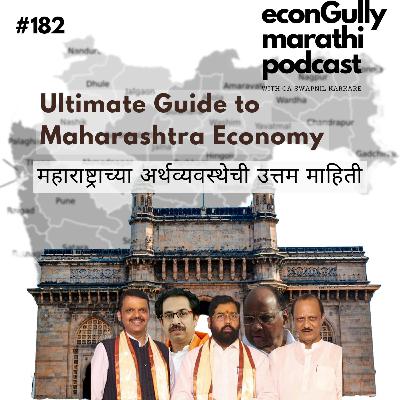
Which are the richest and the poorest districts in Maharashtra? How rich will Maharashtra be if we remove Mumbai's income? How is Maharashtra's economy performing? Have we recovered from Covid?
Let me walk you through Maharashtra's economic analysis with the latest data.
Seldom do we talk about the State's Economy in India. This is my first attempt to uncover the economic data of my birth state - Maharashtra.
This is a special episode as I have also created it in Marathi as well as in English languages. Recommend your friends and colleagues to watch it in English here - https://youtu.be/TAV003bWlgE
महाराष्ट्रातील सर्वात श्रीमंत आणि गरीब जिल्हे कोणते आहेत? मुंबईचे उत्पन्न काढले तर महाराष्ट्र किती श्रीमंत होईल? महाराष्ट्राची अर्थव्यवस्था कशी चालली आहे? आपण कोविडमधून बरे झालो आहोत का?
मी तुम्हाला महाराष्ट्राच्या अद्ययावत आकडेवारीसह आर्थिक विश्लेषणाची माहिती देतो.
भारतातील राज्याच्या अर्थव्यवस्थेबद्दल आपण क्वचितच बोलतो. माझ्या महाराष्ट्राची आर्थिक आकडेवारी उघड करण्याचा हा माझा पहिला प्रयत्न आहे.
हा एक विशेष भाग आहे कारण मी तो मराठी आणि इंग्रजी भाषेतही तयार केला आहे. तुमच्या मित्रांना आणि सहकाऱ्यांना ते इथे इंग्रजीत पाहण्याची शिफारस करा - https://youtu.be/TAV003bWlgE
Sources & Further References:
State GDP Data (pdf)
District GDP Data (pdf)
Economic Survey of Maharashtra FY23 (pdf)
Infrastructure Statistics of Maharashtra FY21 (pdf)
Show your support by buying me some coffee and contributing to the growth of this podcast by clicking here. Thank you. Subscribe to econGully blog.Follow me on X, Instagram, LinkedIn and YouTube.
This is the second part of 70 hours of work on the topic discussed in the previous episode. In this episode, I discuss the history of the working hours of humans. Right from hunter-gatherers till today.
मागील एपिसोडमध्ये चर्चा केलेल्या विषयावरील 70 तासांच्या कामाचा हा दुसरा भाग आहे. या एपिसोडमध्ये, मी मानवाच्या कामाच्या तासांच्या इतिहासावर चर्चा करतो. अगदी शिकारीपासून आजपर्यंत.
Sources and Further References:
Watch English Version of the same in English - 70 hours Work Busted, Swapnil Karkare (YouTube)
Lessons from the foragers, Aeon
Why do we work 9 to 5? The history of the eight-hour workday, CNN Business
The History of Work in India, Lazy Eight Blog
Eight-hour day, Wikipedia
Work Hours and Office Timing in India, IndiaLawOffices
Dr Ambedkar- The Architect of India’s Labor Reforms, News Bharti
Show your support by buying me some coffee and contributing to the growth of this podcast by clicking here. Thank you. Subscribe to econGully blog.Follow me on X, Instagram, LinkedIn and YouTube.
Is Narayana Murthy right in proposing a 70-hour work week? Should we work for 70 hours a week?
नारायण मूर्ती यांनी ७० तासांच्या कामाचा आठवडा प्रस्तावित करणे योग्य आहे का? आम्ही आठवड्यातून 70 तास काम करावे?
Sources and Further References:
70 Hours Work Busted | Evolution of Work | All Work & No Play, Swapnil Karkare, YouTube [Video - Live on 30th Nov 2023]
The TikTok Girl is Right: Modernity and the 9-to-5, Kyla Scanlon
India debate on 70-hour workweek: Illegal or road to greatness?, CNBC
Statistics on working time, ILO
Hours Worked vs. Salaries in OECD Countries, Visual Capitalist
Average monthly salary in India below ₹50,000!, Mint
Show your support by buying me some coffee and contributing to the growth of this podcast by clicking here. Thank you. Subscribe to econGully blog.Follow me on X, Instagram, LinkedIn and YouTube.Episode Image Source: Freepik
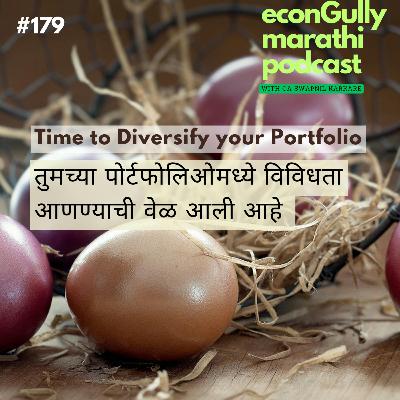
Markets are uncertain. We might see a recession next year. So what to do? The best answer is to diversify. Let us understand how to do it in this episode. I discuss diversification within your total portfolio by adding flavours of gold and alternative investments. I also discuss diversification within equities and mutual fund portfolios.
बाजार अनिश्चित आहेत. आपण पुढील वर्षी मंदी पाहू शकतो. मग काय करायचं? उत्तम उत्तर म्हणजे विविधता आणणे. या एपिसोडमध्ये ते कसे करायचे ते समजून घेऊ. एकूण पोर्टफोलिओमध्ये सोने आणि पर्यायी गुंतवणूक जोडून विविधीकरणावर मी चर्चा केली आहे. इक्विटी आणि म्युच्युअल फंड पोर्टफोलिओमधील वैविध्यतेवर देखील चर्चा केली आहे.
Show your support by buying me some coffee and contributing to the growth of this podcast by clicking here. Thank you. Subscribe to econGully blog.Follow me on X, Instagram, LinkedIn and YouTube.
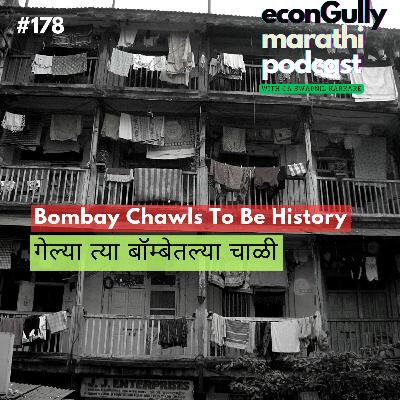
Mumbai, the city once upon a time called Bombay, is undergoing tremendous changes. Good, bad or ugly? Only time can tell us.
Razing chawls is one such change. The history of the city and its chawls is associated with textile mills. Now, those mills don't exist. Tomorrow, chawls won't be there too.
What is the history of these chawls? How did people live there? How did they define the Mumbai spirit? How do we document this history in a more user-friendly way? This episode revolves around these questions.
एके काळी बॉम्बे नावाने प्रसिद्ध असलेले शहर मुंबई मधे सध्या प्रचंड बदल होत आहेत. चांगले, वाईट की गलीच्छ? फक्त वेळच सांगू शकते.
चाळी पाडणे हा असाच एक बदल आहे. शहराचा आणि चाळींचा इतिहास कापड गिरण्यांशी निगडित आहे. आता त्या गिरण्या अस्तित्वात नाहीत. उद्या चाळीही नसतील.
या चाळींचा इतिहास काय आहे? तिथे लोक कसे राहत होते? त्यांनी मुंबई स्पिरिटची व्याख्या कशी केली? आपण हा इतिहास छान पद्धतीने कसा जोपासू शकतो? ह्या प्रश्नांभोवती हा एपिसोड फिरतो.
Sources and Further Reading:
How ‘Chawl’ Tenements Helped Mumbai Become a Megacity, Bloomberg
The Inception And Evolution of Chawls of Mumbai, Re-thinking Future
Image Source: Wikipedia
Show your support by buying me some coffee and contributing to the growth of this podcast by clicking here. Thank you. Subscribe to econGully blog.Follow me on X, Instagram, LinkedIn and YouTube.
Beware of these new cyber frauds or online scams. People lose crores of rupees daily. So, watch yourself - what are you doing online and where are you clicking? In this episode, I list a few online scams in India and how to save yourself.
या नवीन सायबर फसवणूक किंवा ऑनलाइन घोटाळ्यांपासून सावध रहा. लोकांचे दररोज करोडो रुपयांचे नुकसान होत आहे. तर, स्वतःला पहा - तुम्ही ऑनलाइन काय करत आहात आणि कुठे क्लिक करत आहात? या एपिसोडमध्ये, मी भारतातील काही ऑनलाइन घोटाळे आणि स्वतःला कसे वाचवायचे ह्याची माहिती देत आहे.
Show your support by buying me some coffee and contributing to the growth of this podcast by clicking here. Thank you. Subscribe to econGully blog.Follow me on X, Instagram, LinkedIn and YouTube.
Japan = Deflation = Ageing population. This is the most common perception. China's population is also ageing now. Plus, it is also facing deflation. So, will China be the next Japan? But to understand complexities, let us first understand what deflation means.
जपान = डिफ्लेशन = वृद्ध लोकसंख्या. ही सर्वात सामान्य धारणा आहे. चीनची लोकसंख्याही आता वृद्ध होत आहे. शिवाय, ते चलनवाढीचाही सामना करत आहे. तर, चीन पुढील जपान असेल का? पण गुंतागुंत समजून घेण्यासाठी, आधी डिफ्लेशन म्हणजे काय ते समजून घेऊ.
Show your support by buying me some coffee and contributing to the growth of this podcast by clicking here. Thank you. Subscribe to econGully blog.Follow me on X, Instagram, LinkedIn and YouTube.
Is China's economy deteriorating or growing? Or is it stable?
"Beauty lies in the eyes of the beholder." Similarly answering these questions lies in the indicators you choose.
Let us analyse the Chinese economy in simple words.
चीनची अर्थव्यवस्था ढासळत आहे की वाढत आहे? कि स्थिर आहे?
"सौंदर्य हे पाहणाऱ्याच्या डोळ्यात असते." त्याचप्रमाणे या प्रश्नांची उत्तरे तुम्ही निवडलेल्या संकेतकांमध्ये आहेत.
चिनी अर्थव्यवस्थेचे सोप्या शब्दात विश्लेषण करूया.
Sources and Further References:
China’s economy is stabilising, EIU
Is the Chinese economy headed for Japan-style lost decades?, East Asia Forum
China Holiday Data Show Slower-Than-Expected Economy Rebound, Bloomberg
China Comes Under Growing Pressure to Fix the Country’s Housing Market, WSJ
China’s Economic Malaise Was Perfectly Predictable, The Diplomat
China’s economy may be growing faster, but big problems remain, The Economist
Show your support by buying me some coffee and contributing to the growth of this podcast by clicking here. Thank you. Subscribe to econGully blog.Follow me on X, Instagram, LinkedIn and YouTube.
The world has progressed significantly in giving women quality jobs and a better work environment over the last centuries. But the journey is still incomplete. How do women make career choices? How do women decide to start or stop working? What factors promote or restrict such decisions?
Claudia Goldin has researched it all. She bagged the Nobel Prize in Economics this year. Why her work is so important? And why should every woman know Claudia Goldin's work? I explain that in this episode.
गेल्या शतकांमध्ये महिलांना दर्जेदार नोकऱ्या आणि कामाचे चांगले वातावरण देण्यात जगाने लक्षणीय प्रगती केली आहे. पण प्रवास अजूनही अपूर्ण आहे. महिला करिअरची निवड कशी करतात? स्त्रिया काम सुरू करण्याचा किंवा थांबवण्याचा निर्णय कसा घेतात? कोणते घटक अशा निर्णयांना प्रोत्साहन देतात किंवा प्रतिबंधित करतात?
क्लॉडिया गोल्डिनने हे सर्व संशोधन केले आहे. तिला यंदाचा अर्थशास्त्रातील नोबेल पारितोषिक मिळाले. तिचे काम इतके महत्त्वाचे का आहे? आणि प्रत्येक स्त्रीला क्लॉडिया गोल्डिनचे कार्य का माहित असावे? मी या एपिसोडमध्ये ते स्पष्ट करतो.
Sources and Further References:
Claudia Goldin, Wikipedia
History helps us understand gender differences in the labour market, Popular Science Background, nobelprize.org
Ep. 19 – Need More Working Women – महिला आणि रोजगार, econGully Marathi Podcast
Show your support by buying me some coffee and contributing to the growth of this podcast by clicking here. Thank you. Subscribe to econGully blog.Follow me on X, Instagram, LinkedIn and YouTube.

Is China's Belt & Road Initiative (BRI) successful? China has trapped small countries in its debt trap. How? And what is the future? Will the India-Middle East-European Economic Corridor learn from China's experience?
चीनचा बेल्ट अँड रोड इनिशिएटिव्ह (BRI) यशस्वी आहे का? चीनने छोट्या देशांना कर्जाच्या जाळ्यात अडकवले आहे. कसे? आणि भविष्य काय आहे? भारत-मिडल ईस्ट-युरोपियन इकॉनॉमिक कॉरिडॉर चीनच्या अनुभवातून शिकेल का?
Sources and Further References:
How China's "debt traps" actually work, Noah Smith
Show your support by buying me some coffee and contributing to the growth of this podcast by clicking here. Thank you. Subscribe to econGully blog.Follow me on X, Instagram, LinkedIn and YouTube.
Farmers lost more than Rs. 40000 crores due to a government policy. This is about wheat inflation, export bans and much more.
सरकारच्या धोरणामुळे शेतकर्यांचे Rs. 40000 कोटीचे नुकसान झाले. हा एपिसोड गव्हाची महागाई, निर्यात बंदी आणि बरेच काही आहे.
Sources and Further References:
Farmers lost about Rs 40,000 crore due to Centre’s measures to control food inflation, says study, Scroll
Where has India's record wheat and rice output gone?, Mint
Express View on stock limits on wheat: Going backwards, IE
Agri Reforms: Are We On Board?, Swapnil Karkare, econGully Blog
Show your support by buying me some coffee and contributing to the growth of this podcast by clicking here. Thank you. Subscribe to econGully blog.Follow me on X, Instagram, LinkedIn and YouTube.

India's G20 Presidency was special, for sure. But is G20 still relevant? Has it achieved what it has said in the past? And what went wrong with this year's summit?
भारताचे G20 अध्यक्षपद निश्चितच खास होते. पण G20 अजूनही संबंधित आहे का? भूतकाळात जे सांगितले ते साध्य केले आहे का? आणि यंदाच्या परिषदेत काय चुका झाल्या आहेत?
Sources and Further References:
What Is the G20 and What Does It Do?, NYT
Why the G20 Keeps Failing, and Still Matters, NYT
Can India Challenge China for Leadership of the ‘Global South’?, NYT
Explained | Five key takeaways from the roaring success of New Delhi G20 Summit, WION
The G20 summit will be a resounding success for India, The Economist
G20 Summit | New Economic Corridor and Biofuel Alliance: Show or Substance?, The Quint
New Delhi got a makeover for the G20 summit. The city's poor say they were simply erased, Washington Post
How India and the U.S. Succeeded at the G20 Without China’s Xi, Time
Show your support by buying me some coffee and contributing to the growth of this podcast by clicking here. Thank you. Subscribe to econGully blog.Follow me on X, Instagram, LinkedIn and YouTube.
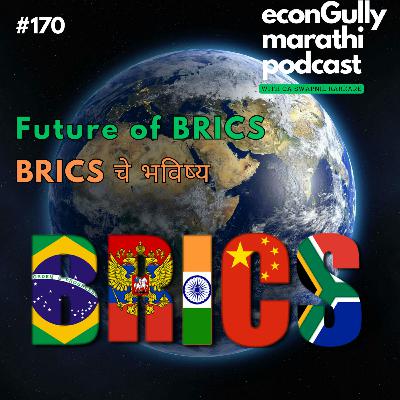
BRICS group consists of Brazil, Russia, India, China and South Africa. It has extended its membership in 2023 and has added six more countries.
Currently, BRICS does not assume a significant role in international economics and geopolitics. But will it strengthen in the near future? You will get some food for thought in this episode.
ब्रिक्स गटात ब्राझील, रशिया, भारत, चीन आणि दक्षिण आफ्रिका यांचा समावेश आहे. त्याने 2023 मध्ये सदस्यत्व वाढवले आहे आणि आणखी सहा देश जोडले आहेत.
सध्या, BRICS आंतरराष्ट्रीय अर्थशास्त्र आणि भू-राजकारणात महत्त्वाची भूमिका घेत नाही. पण नजीकच्या भविष्यात ते बळकट होईल का? या एपिसोडमध्ये तुम्हाला काही विचार करायला मिळेल.
Sources and Further References:
Six Years of GST, DataSpot Podcast, YouTube
BRICS 2.0: Addition of new members will make more room for dialogue, Rajiv Bhatia, Indian Express
Despite imperfections, BRICS-11 will strengthen multipolarity, Deccan Herald
What is a BRICS currency and is the U.S. dollar in trouble?, Reuters
Worldview with Suhasini Haidar | BRICS Summit | What could the group’s expansion mean for India?, The Hindu
How to make Rupee an international currency?
रुपयाला आंतरराष्ट्रीय चलन कसे बनवायचे?
Sources and References:
Report of the Inter-Departmental Group (IDG) on Internationalisation of INR, RBI
It’s Time to Get Real About the Rupee’s Global Role, Andy Mukherjee, Bloomberg
Trade in Indian rupee with Russia shows hiccups in ‘de-dollarisation’ concept, The Tribune
Show your support by buying me some coffee and contributing to the growth of this podcast by clicking here. Thank you. Subscribe to econGully blog.Follow me on X, Instagram, LinkedIn and YouTube.
What will happen to Indian agriculture if it rains less?
पाऊस कमी पडला तर भारतीय शेतीचे काय होईल?
Sources and Further References:
Agriculture: Beyond Rainfall - DataSpot Podcast
CA Podcast: Thinking Beyond - My new podcast
Show your support by buying me some coffee and contributing to the growth of this podcast by clicking here. Thank you. Subscribe to econGully blog.Follow me on Twitter, Instagram, LinkedIn and YouTube.

Dr Sameer Patil is a Senior Fellow at ORF Mumbai. His research focuses on the intersection of technology and national security, including cybersecurity. He worked as Assistant Director in National Security Council Secretariat under the Prime Minister’s Office. He has also participated in several dialogues after the 2008 Mumbai attacks with the US and UK. He is the author of Securing India in the Cyber Era (Routledge, 2022) and has co-edited Moving Forward EU-India Relations: The Significance of the Security Dialogues (Edizioni Nuova Cultura, 2017).
We discussed how India's defence systems have developed since its independence. How is it different from our neighbouring Pakistan? How have things changed post-26/11 Mumbai attacks? What was working in National Security Council Secretariat like? What is the current situation of the India-China relationship?
Our conversation is in Marathi.
Podcast Content:
2:40 - Interview Starts4:03 - Origins of the concept of 'Think-Tank'10:05 - Work of ORF (Observer Research Foundation)10:50 - Sameer's role at ORF12:35 - Various other Indian think tanks working in Defence/Strategic Studies areas14:47 - Interlinkage of Defence Policy and Economics20:52 - What kind of defence system we inherited from the British government and how did the Indian government change it?28:15 - What's the difference between India's and Pakistan's defence systems?31:57 - What triggered the military coup in Pakistan?33:39 - Can India witness a military coup ever? (Hypothetically)36:50 - On the Civil-Military relationship 38:40 - Role of various committees and consultative mechanism 40:31 - Importance of diversity in Indian military 42:50 - Why Nehru created paramilitary forces?47:56 - Sameer's role at National Security Council Secretariat 54:06 - How to connect the dots between various tips by different security agencies and understand patterns of terrorism?57:50 - How much is this similar to what is shown in the movies?59:09 - What changed post-26/11 Mumbai attacks?1:04:20 - Lone-wolf - A new challenge for counter-terrorism!1:07:36 - How to tackle radicalisation? 1:08:50 - Deradicalisation and Counter-radicalisation 1:09:35 - Role of Google's Redirect program1:12:47 - Present geopolitical situation 1:14:20 - Is Sameer optimistic about peaceful new world order? 1:19:40 - 'Realism' in international cooperation 1:21:00 - Polarisation like Cold-War and Emergence of the Third Bloc1:27:43 - India - China Relationship Status1:34:15 - Inviting China to G20 Summit this year at New Delhi1:37:22 - How to study defence policies / strategic studies / public policies?
Follow Sameer -
Twitter - @SameerP_IND - https://twitter.com/SameerP_IND
ORF - https://www.orfonline.org/people-expert/sameer-patil/
Further References:
Sameer's Books: Securing India in the Cyber Era (Routledge, 2022)
Sameer's Article on Civil-Military Relationship discussed in the video
Recommended Course on Public Policy - Takshashila Institution
Show your support by buying me some coffee and contributing to the growth of this podcast by clicking here. Thank you. Subscribe to econGully blog.Follow me on Twitter, Instagram, LinkedIn and YouTube.

Karnataka's new government decided to transfer money to people instead of rice. This is a unique style of Direct Benefit Transfer (DBT) and might be implemented nationwide. What exactly is the scheme? So, will that succeed? Or not?
कर्नाटकच्या नवीन सरकारने तांदळाऐवजी लोकांना पैसे हस्तांतरित करण्याचा निर्णय घेतला. डायरेक्ट बेनिफिट ट्रान्सफर (DBT) ची ही एक अनोखी शैली आहे आणि ती देशभरात लागू केली जाऊ शकते. नेमकी काय योजना आहे? तर, ते यशस्वी होईल का? किंवा नाही?
Sources and Further References:
Karnataka Becomes an Accidental Pioneer of Cash Transfers for Food, The Wire
Show your support by buying me some coffee and contributing to the growth of this podcast by clicking here. Thank you. Subscribe to econGully blog.Follow me on Twitter, Instagram, LinkedIn and YouTube.

Copper is the primary raw material for any industry. In this episode, we will see how copper gets produced, and which factors impact its demand, supply, and prices. How does copper price react to different socio-political and economic factors? Know the basics of copper market in the world through this episode.
कोणत्याही उद्योगासाठी तांबे हा प्राथमिक कच्चा माल आहे. या एपिसोडमध्ये, आपण तांब्याचे उत्पादन कसे होते आणि त्याची मागणी, पुरवठा आणि किंमतींवर कोणते घटक परिणाम करतात ते पाहू. तांब्याची किंमत वेगवेगळ्या सामाजिक-राजकीय आणि आर्थिक घटकांवर कशी प्रतिक्रिया देते? या एपिसोडद्वारे जगातील तांबे बाजाराची मूलभूत माहिती जाणून घ्या.
Sources and Further References:
Copper is unexpectedly getting cheaper, The Economist
What is Copper? A Trader’s Primer to Copper Markets, Daily FX
Copper: Meaning, Price Determinants, Future, Investopedia
The World Copper Factbook 2022, International Copper Study Group
Copper Mine Production, Statista

Why did Tomato prices cross Rs. 100 per kg?
टोमॅटोचे भाव रु100 प्रति किलोच्या वर का गेले?
Sources and Further References:
Weather impact. Vegetable prices go up due to inadequate rains, soaring temperature, The Hindu Business Line
Vegetable prices soar in Andhra Pradesh, tomato touches Rs. 100 mark, Hans India
Consumers feel the heat as vegetable prices soar in Tamil Nadu, The New Indian Express
Storm in vegetable basket, Zee Business
Show your support by buying me some coffee and contributing to the growth of this podcast by clicking here. Thank you. Subscribe to econGully blog.Follow me on Twitter, Instagram, LinkedIn and YouTube.
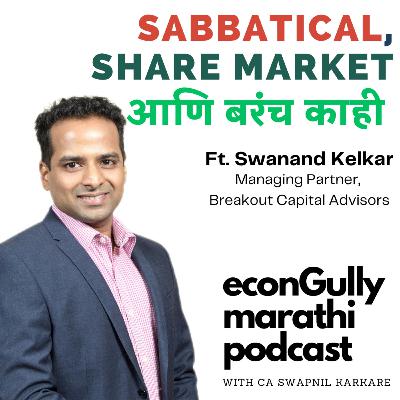
Swanand Kelkar, a rare multi-talent, is a qualified Chartered Accountant, an MBA, a certified yoga instructor, a club cricketer and a film producer. He is a Managing Partner at Breakout Capital Advisors. Before, starting an entrepreneurial journey into investments, he worked at Morgan Stanley. But the most exciting and unique part of his career is the step to go on a sabbatical.
We talked about investing and economics, but we dedicated the first half of this interview to his sabbatical adventures. He explained why he did what he did in that period and also gave a lot of life advice such as goal setting, discipline and much more (who knows - he might even be a motivational speaker after a decade or so).
He has also produced the Marathi movie Fulrani and shared his experiences on and off the movie set.
Our conversation is in Marathi and English.
You can watch the video version on my YouTube Channel.
स्वानंद केळकर, एक दुर्मिळ बहु-प्रतिभा, एक चार्टर्ड अकाउंटंट, एक एमबीए, एक प्रमाणित योग प्रशिक्षक, एक क्लब क्रिकेटर आणि एक चित्रपट निर्माता आहे. तो Breakout Capital Advisors चा Managing Partner आहे. गुंतवणुकीमधे उद्योजकीय प्रवास सुरू करण्यापूर्वी त्यांनी Morgan Stanley येथे काम केले. पण त्याच्या कारकिर्दीचा सर्वात रोमांचक आणि अनोखा भाग म्हणजे सब्बॅटिकलवर जाण्याचा निर्णय.
आम्ही गुंतवणूक आणि अर्थशास्त्र याबद्दल बोललो, परंतु आम्ही या मुलाखतीचा पूर्वार्ध त्याच्या सब्बॅटिकल वर चर्चा केली. त्या काळात त्याने जे केले ते त्याने का केले याचे स्पष्टीकरण दिले आणि goal setting, शिस्त आणि बरेच काही यांसारखे जीवनविषयक सल्लेही दिले (कोणास ठाऊक - तो एक दशकानंतर motivational speaker देखील होऊ शकतो).
त्यांनी फुलराणी या मराठी चित्रपटाची निर्मितीही केली असून चित्रपटाच्या सेटवर आणि बाहेरील अनुभव त्यांनी शेअर केले आहेत.
आमचे संभाषण मराठी आणि इंग्रजीत आहे.
---------------3:10 - Why sabbatical?7:39 - What things did Swanand pursue during his sabbatical? Why did he continue being in the finance world even after that?11:00 - Learned different things from the best trainers18:15 - What was the sabbatical schedule?23:30 - Not being delusional, Goal Setting, Going out of Comfort Zone and Hustle are required even in hobbies28:00 - Reactions by old generations vs. younger generations33:18 - Is Swanand able to pursue all the hobbies after a sabbatical?36:19 - Analysing global and Indian economies43:20 - India stands out amongst many emerging markets44:32 - What are the risks for India's economy?46:05 - On the global slowdown49:13 - Thoughts on unemployment and K-shaped recovery in India52:50 - Why investing in emerging markets is going to be beneficial?57:33 - Sectoral outlook in Indian markets59:26 - Swanand's filmy turn - On film production and What's film production?1:05:04 - Recommendations---------------Recommendations made:Books - 1. Prisoners of Geography (Tim Marshall) - https://amzn.to/3XsWaC02. Building a Second Brain (Tiago Forte) - https://amzn.to/3pmhUmc3. Roller Coaster (Tamal Bandyopadhyay) - https://amzn.to/430GHtL
Movies - 1. Phulrani - Amazon Prime Video - https://tinyurl.com/y83z9pr82. Raat Akeli Hain - Netflix - https://tinyurl.com/dwvddfmr---------------Follow Swanand -Twitter - @Swa_Kel - https://twitter.com/Swa_KelLinkedIn - https://www.linkedin.com/in/swanand-kelkar-2b91975/YouTube - @swanandkelkar3033 - https://www.youtube.com/@swanandkelkar3033---------------
Show your support by buying me some coffee and contributing to the growth of this podcast by clicking here. Thank you. Subscribe to econGully blog.Follow me on Twitter, Instagram, LinkedIn and YouTube.

Comments

Download from Google Play

Download from App Store
 United States