


 Claim Ownership
focal podcast
Subscribed: 0Played: 0
Subscribe
© 2025 Pascal Unger
Description
Pivotal early lessons of today's best startups.
Welcome to the focal podcast where we go deep with some of today's best founders and operators on ONE crucial lessons from their early days.
This podcast is not the usual "highlight reel" startup podcast that goes one inch deep across 20+ topics. Rather, we ask the questions you’d ask if you were sitting across from them. No fluff, just the real, actionable insights you’d get if these founders were mentoring you 1on1.
We cover topics including:
- What worked and why.
- Costly mistakes and how they fixed them.
- Frameworks that truly made a difference.
- Tactics to move faster.
- What they wish they’d known sooner.
- And much more!
"Only a fool learns from their own mistakes. The wise learn from the mistakes of others."
Welcome to the focal podcast where we go deep with some of today's best founders and operators on ONE crucial lessons from their early days.
This podcast is not the usual "highlight reel" startup podcast that goes one inch deep across 20+ topics. Rather, we ask the questions you’d ask if you were sitting across from them. No fluff, just the real, actionable insights you’d get if these founders were mentoring you 1on1.
We cover topics including:
- What worked and why.
- Costly mistakes and how they fixed them.
- Frameworks that truly made a difference.
- Tactics to move faster.
- What they wish they’d known sooner.
- And much more!
"Only a fool learns from their own mistakes. The wise learn from the mistakes of others."
27 Episodes
Reverse
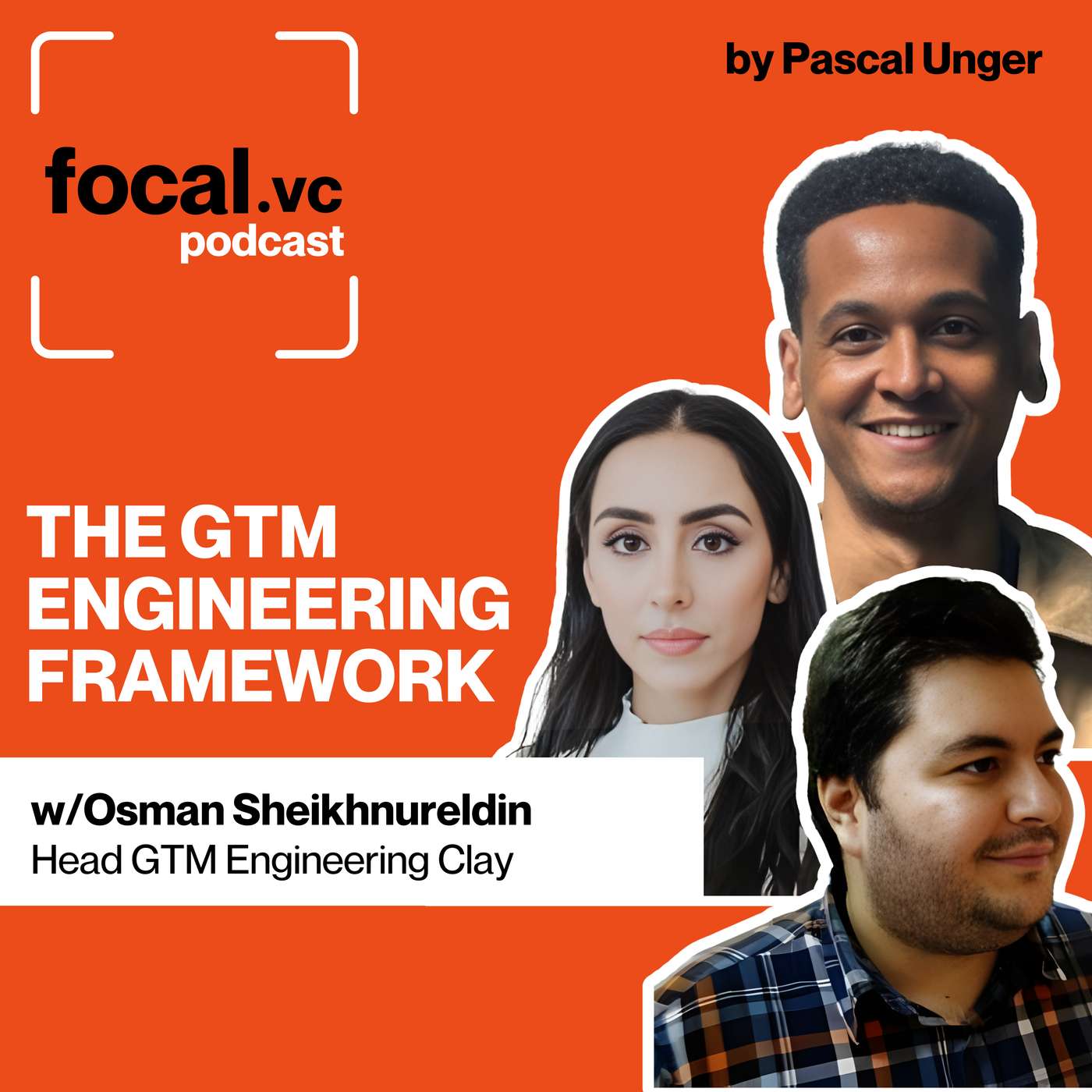
Most founders think GTM engineering is just cold outbound done better. Clay's Head of GTM Engineering Osman Sheikhnureldin reveals why that mindset will cost you months of wasted effort.In this episode, Osman walks us through exactly how to identify your ideal customers at the perfect moment, then demonstrates his framework live with two early-stage founders - showing you can't just wing GTM engineering, but when done right, the results compound.Osman Sheikhnureldin is the Head of GTM Engineering at Clay, the company that invented GTM Engineering. He's helped hundreds of startups transform how they use data and technology to remove growth constraints. Joining him are Nilo Rahmani, Co-founder and CEO of Thoras AI (AI-driven cloud reliability and cost optimization), and Panos Papageorgiou, Co-founder of Keragon (HIPAA-compliant automation platform for healthcare).In Today's Episode We Discuss:01:51 - GTM engineering defined: Solving growth constraints with technology, not headcount02:57 - Why your target list matters more than your message will ever matter04:45 - Ditch static ICPs: The jobs-to-be-done framework that actually works06:53 - The "magic wand" question every founder must answer before building workflows08:49 - The account scoring workflow no human should ever do manually again13:46 - How Clay built an ML model to predict contract value from enrichment data19:18 - Vanta's genius GTM hack using AI screenshots to analyze brand consistency21:30 - European food startup's signal stack: First US hire + ad spend + new landing pages23:06 - Early-stage messaging must be hyper-specific—big company tactics won't work for you26:54 - Founders who lived the pain have an unfair advantage in outbound messaging28:59 - Counterintuitive truth: AI SDRs have failed—human taste matters more than ever31:48 - Why hybrid LLM + human skeleton emails crush pure AI-generated copy34:42 - Voice AI skepticism: Great for extraction, not ready for cold calls37:18 - Three brutal truths: GTM engineering takes months, hard work, and real creativity38:20 - "Earn the right to message someone"—the philosophy behind effective outbound39:24 - Live teardown: Keragon's healthcare GTM using EHR migration as the trigger signal47:08 - Finding EHR signals through PR announcements, patient portals, and RSS feeds55:38 - Live teardown: Thoras AI's challenge—spotting cost-cutting triggers that signal growth01:00:58 - Why "cutting costs" often means a company is scaling, not struggling01:07:32 - Novel signal: Second product launch as the perfect moment to reach infrastructure teams01:13:06 - The biggest misconception: GTM engineering goes far beyond cold outbound
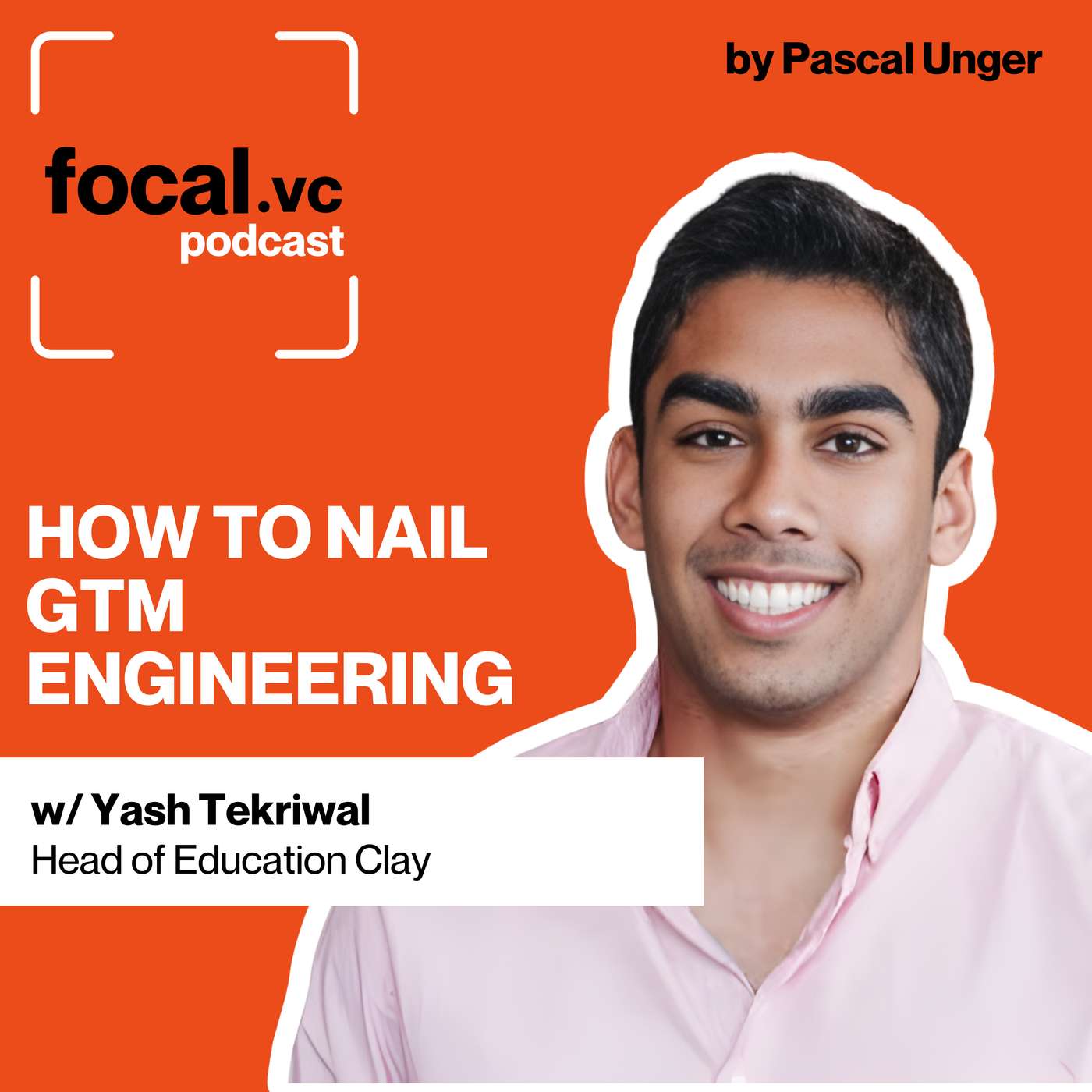
Clay pioneered GTM engineering and went from $1M to $100M in ARR in 2 years. I talked to the person who invented the role of GTM Engineer at Clay.Yash Tekriwal, Clay's first GTM engineer - back when the $3B company was still figuring out what that even meant.What started as one person drowning in too many jobs (RevOps + Sales + BDR + data analyst) has since become a new category that's now reshaping how startups think about go-to-market.You’ll learn:Why RevOps is "maintenance" but GTM engineering is a growth leverThe skills that define a great GTM engineer today (hint: it involves vibe coding)What "treating go-to-market like a product" actually looks like in practiceTwo org models for GTM engineering teams - and which to start with"Automate the manual, but don't automate the important"In Today's Episode We Discuss:01:23 - The origin story of GTM engineering at Clay and why the term is polarizing05:02 - GTM engineer vs RevOps: maintenance function versus growth lever07:31 - Treating go-to-market like a product team, not an individual sport10:42 - Three experiments every GTM team should run on inbound and outbound15:24 - The essential GTM tech stack: CRM, enrichment, sequencing, and what actually matters19:08 - Tools founders should consider when getting started—and the automation trap to avoid22:12 - Zero to $1M: be thrifty on tools and process information manually25:38 - What to look for in your first GTM engineering hire (hint: it's not technical skills)28:43 - Signals that you need to hire a GTM engineer for outbound vs inbound motions31:45 - Scaling past $10M: specialize fast and the hyperscaler dilemma36:01 - Two org models for GTM engineering: centralized hit team vs embedded engineers40:22 - The ideal GTM engineer profile: tinkerers, not traditional engineers43:33 - Why engineers are not the ideal candidates for GTM engineering roles45:19 - Can salespeople become great GTM engineers? The sales hacker archetype47:26 - Resources to learn GTM engineering: Clay University, substacks, YouTube channels, and agencies51:00 - Top three things founders must know about GTM engineering at any stage52:16 - The most creative GTM engineering builds: satellite imagery, hospital capacity, and custom memes56:24 - Personal lessons from scaling at Clay: ego death, pivoting, and balancing maintenance with big bets59:42 - The one thing Yash would change: stop oscillating and let problems become obvious
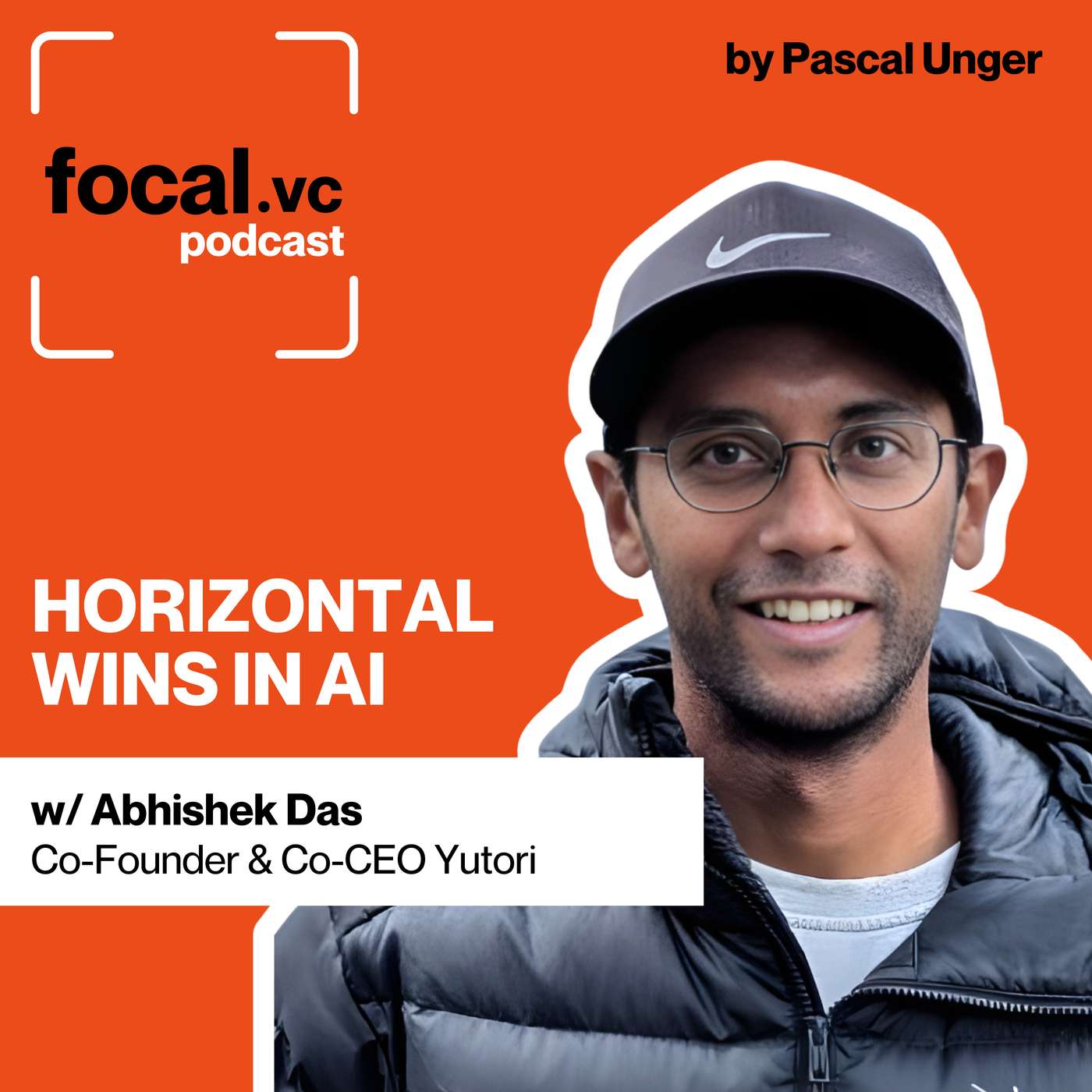
The Horizontal vs Vertical AI Debate: Why This Ex-Meta AI Researcher Is Betting Big on Horizontal Web AgentsShould you build narrow (vertical) or go broad (horizontal) in AI? This episode unpacks why one PhD researcher abandoned his working vertical product to chase a much riskier horizontal bet - and why VCs leaning heavily into vertical AI might be missing something.Abhishek Das is the co-founder and co-CEO of Yutori, which has raised over $15 million from Radical Ventures, Felicis, and prominent angels including Ali Gil, Sarah Guo, Scott Belsky, and Guillermo Rauch. Previously a research scientist at Meta's FAIR lab, Abhishek holds a PhD from Georgia Tech where he pioneered work on AI agents that can see, talk, and act starting in 2016.In Today's Episode We Discuss:00:53 - Why how we interact with the web hasn't changed in three decades and what will break that02:27 - The coming shift from manual browsing to AI assistants performing tasks in the background05:57 - What "agents" actually meant in ML research before the term became overloaded06:14 - Why 90% accuracy per step creates catastrophic failure rates over multi-step workflows08:46 - The behavior pattern humans nail intuitively that machines struggle with: backtracking from errors10:11 - The DoorDash experiment: building an end-to-end food ordering agent that never shipped12:58 - Why training on sinle websites leads to memorization instead of generalization13:03 - The dopamine problem: some tasks users don't want automated15:08 - Why capability-scoped beats website-scoped: the pivot to read-only horizontal agents18:05 - Three criteria that drove the horizontal decision: research, user value, and data strategy24:18 - Scouts API launch: why different channels have different risk appetites for web agents26:30 - Flying close to the sun: how Yutori competes with hyperscalers on horizontal AI30:32 - What VCs should actually test for in horizontal AI teams beyond founder horsepower32:10 - Why three-month roadmaps are the only reasonable planning horizon in AI today33:05 - The dogfooding ritual: every team member rotates through user feedback weekly34:50 - Why research and product can't be siloed and how ideas flow both directions36:03 - The uncomfortable truth: end users don't care about your research breakthroughs37:32 - The Nintendo Switch 2 problem: aggregating individual feedback into systemic fixes39:35 - Reframing web agents as "buyer's agents" that filter the internet on your behalf40:59 - The simulation bet: training agents on cloned websites for high-stakes irreversible actions43:05 - Why initial team skepticism about Scouts' value proposition was completely wrong45:01 - How scout reports contextualize results with reasoning and ingest feedback over time47:52 - The core insight test: where does your instinct lie across research, market, and domain?49:36 - The hiring trap: why preemptively hiring sales leadership to impress VCs backfires51:18 - The 12-year-old advice that still guides him: "Be a sponge when entering a new space"53:05 - Non-negotiables: walking the dog with podcasts and personally reading every user email54:49 - What founders actually need from VCs: direct and timely feedback, not just capital
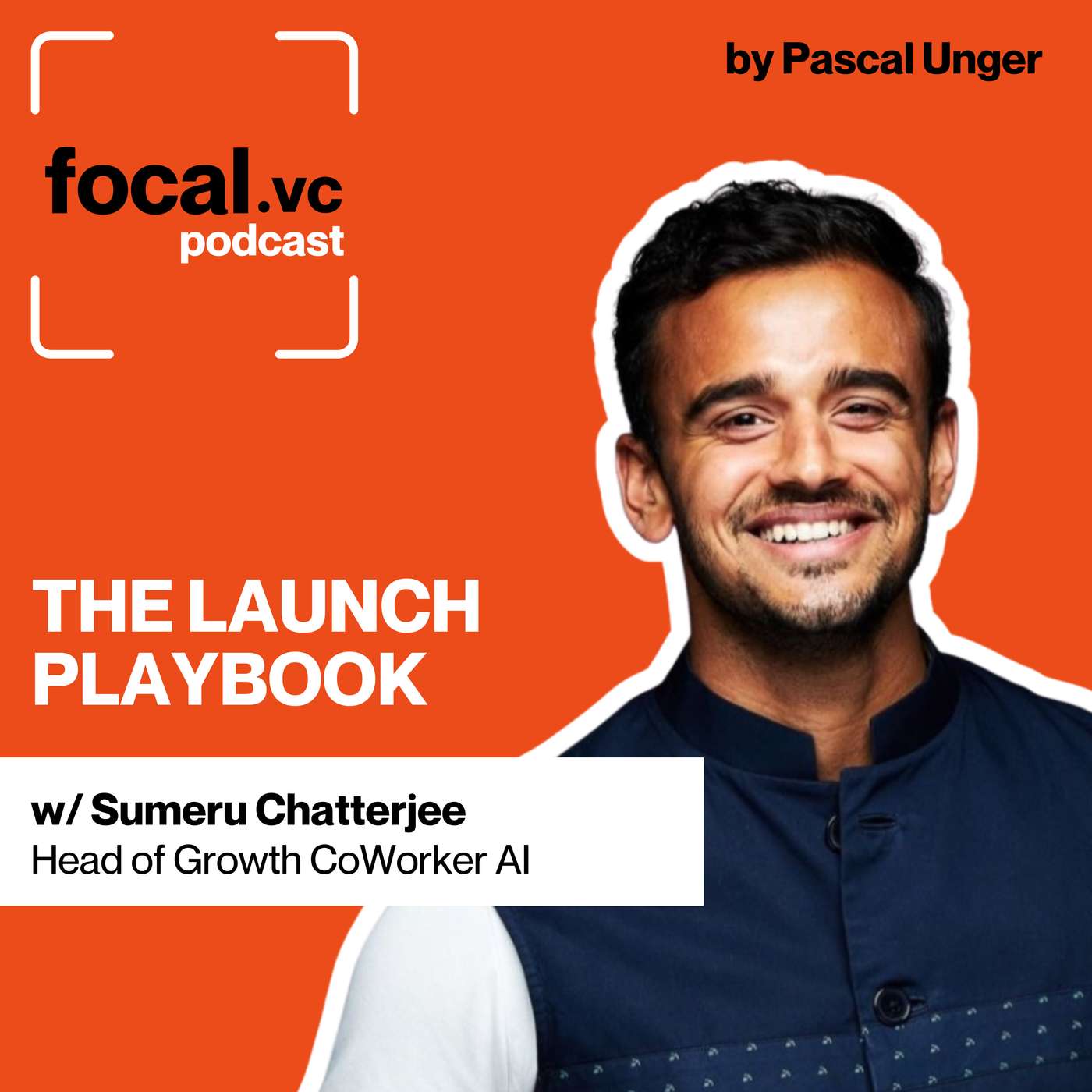
Stop launching into the void and start creating campaigns that actually get attention.Sumeru Chatterjee reveals the exact 10-week playbook he's used to generate millions of impressions at four unicorns, including why most B2B launches fail and how to weaponize your investor network for maximum impact. You'll discover why emotion beats logic in B2B marketing and why treating existing features as "new launches" is the growth hack nobody talks about.Sumeru Chatterjee is Head of Growth at CoWorker AI, the first AI agent for complex work. Previously an early employee at four unicorns and founder of LaunchMob agency, Sumeru orchestrated CoWorker's launch that generated over 1 million impressions in a single day with 75 investors coordinated like a military operation.In Today's Episode We Discuss:03:45 - Mine 20 customer calls for launch gold using AI07:29 - Stop hiring humans: Why fear sells better than features10:23 - The 200 dream customers exercise founders skip14:50 - Find 50 influencers who already own your audience18:05 - Three distribution channels max or you'll fail everywhere20:40 - Everyone claims differentiation but nobody actually commits29:48 - The $20 book that made Hormozi $60 million35:36 - Competitive positioning vs contextual positioning changes everything38:28 - 46 creative concepts: From white papers to doormats44:16 - Product Hunt is dead for B2B launches54:05 - Coworker's investor spreadsheet that drove 1M impressions01:08:44 - Launch every two weeks or become irrelevant01:11:03 - OpenAI launches Slack integration like it's revolutionary01:14:37 - Your 10 employees are connected to 500,000 people01:15:37 - Different is better than better always wins01:18:04 - Master one funnel before attempting anything else
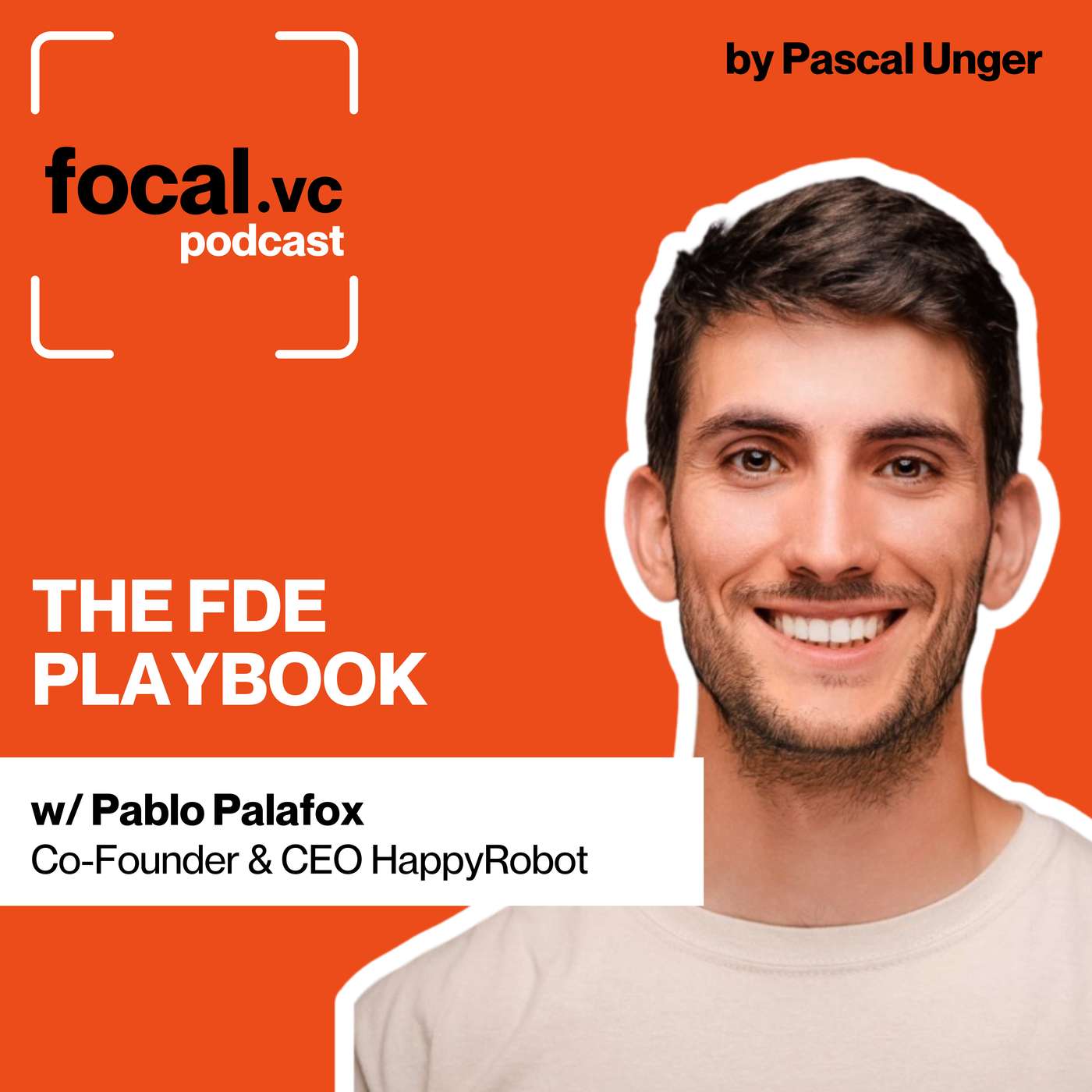
The forward deployed engineer model took Happy Robot from zero to millions in revenue in under 2 years.In this episode, Pablo Palafox reveals exactly how to implement Palantir's FDE motion at a startup - including when to use it, who to hire, and the costly mistakes to avoid. Learn why embedding engineers directly with customers beats traditional sales approaches for complex AI products.Pablo Palafox is the co-founder and CEO of Happy Robot, the AI-native operating system for supply chain and logistics. Prior to Happy Robot, Pablo completed his PhD in computer science and deep learning. Happy Robot has raised over $60M from investors including a16z, YC, and Base10, and serves enterprise customers like DHL.In Today's Episode We Discuss:02:01 - When the CEO realizes they're actually the company's first FDE05:13 - Why embedding with customers beats having a sales pitch09:01 - Stop trying to copy Palantir - build your own FDE playbook13:25 - The critical difference between FDEs and deployment strategists17:19 - How Discord servers led to billion-dollar freight broker clients21:33 - FDEs must become industry insiders, not just tech experts25:46 - When NOT to use the forward deployed engineer model30:55 - The FDE hiring secret: Look for "nerds who can sell"36:35 - Why FDEs need 1-2% equity vs 0.1-0.5% for regular engineers41:49 - An FDE's day: 80% building, 20% with customers onsite47:00 - The $30K to $3M expansion playbook for FDE accounts52:10 - Building FDE "pods" for vertical specialization56:27 - Why waiting to verticalize FDEs was their biggest mistake59:19 - The 10X deployment accelerator most startups forget62:00 - Why FDEs will soon build entire vertical products autonomously64:58 - When to transition from "things that don't scale" to scale67:11 - The one place every vertical AI founder must go immediately

Comments

Download from Google Play

Download from App Store
 United States