



 Claim Ownership
hexdevs
Subscribed: 6Played: 67
Subscribe

© All rights reserved
Description
We Help You Take Your Ruby Developer Career To The Next Level. Hosted by Thiago Araujo and Stefanni Brasil.
41 Episodes
Reverse

Can you tell if a Ruby gem is really thread-safe or not? And how do you fix a seemingly thread-safety issue that can be something else entirely?We had no idea. So we asked Nate Berkopec to help us. Nate is an expert in Ruby performance.The verdict: nuking all shared global mutable state in your Ruby code is a bad idea if you don't know what you're doing!Listen to this episode to learn:- How and why faker-ruby became thread-unsafe, especially for Puma users- Questions to ask yourself when trying to debug thread-safety issues- Shared global mutable state is not always the villain, and is not the source of all thread-safety issues - Nate's "watch-out" list of things that can cause undesired behavior when running multi-threaded Ruby applications: Constants, Class Variables, and Rack Middleware.Episode Notes🔗 Full transcript and links-----A special thanks to Valentino Stoll, nfstern02, and Gregg P for sponsoring hexdevs!Enjoy!

Are you working on Ruby on Rails Applications that are constantly on fire, overwhelmed by technical debt? What if you were building Technical Wealth instead? Learn which tools & strategies to work with legacy code effectively, remove dead code, and leave tech debt behind.Listen to and watch our conversation with M. Scott Ford and learn how to build technical wealth, enjoy working with legacy code, tools, and strategies to remove dead code, and how thrive in a world of makers as a mender.About our guestM. Scott Ford is the Co-Founder & Chief Code Whisperer of Corgibytes, where he has quietly led a software maintenance revolution for the past decade. Where most people find nothing but frustration, shame, and bugs in legacy code, Scott has centered his work around his genuine love of software modernization and helping others use joy, empathy, and technical excellence to make their systems more stable, scalable, and secure.Scott’s ideas have been featured in books such as The Innovation Delusion and as a guest lecturer at Harvard University. Scott is the author of three courses on LinkedIn Learning: Dealing With Legacy Code And Technical Debt, Code Quality, and Clean Coding Practices.He is the host of the podcast Legacy Code Rocks and enjoys helping other menders find a sense of belonging in a world dominated by makers.Episode LinksWatch the interview on YouTubeEpisode Notes and LinksLegacy Code RocksLegacy Code Rocks Slack Group (weekly meetups at 1pm EST on Wednesdays)MenderCon (May 10th, 2023)CorgiBytesScott's LinkedIn profileScott's Twitter profileScott's Github profileHow to Improve Code Quality on a Ruby on Rails ApplicationRuby Code Quality with Ernesto TagwerkerGet to SeniorChapters00:00 intro 01:57 makers vs menders 03:43 menders love improving legacy codebases 05:06 greenfield projects are glamorized 06:30 greenfield-legacy projects 09:07 working with legacy code: tools & strategies 09:53 building technical wealth vs tech debt 14:29 "the big rewrite" never works 18:54 removing redundant code22:56 features not used very often 25:41 static code analysis tools 27:23 charge extra for features used by fewer customers 30:52 find code that is never used 34:09 code audit with feature flags36:07 enforce code quality with tests and CI 39:26 measure code quality over time 41:09 churn, complexity, and CodeClimate score 42:43 bus factor45:59 working with makers 51:24 hanging out with other menders 53:27 follow hexdevs
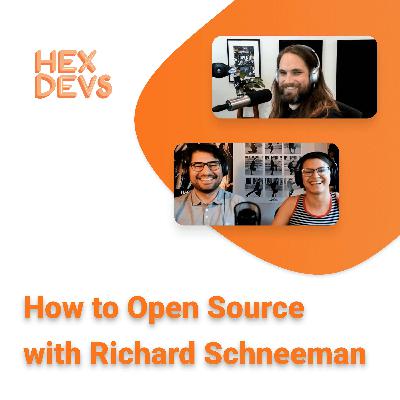
"Be a lurker and start small. Read a PR, try to understand what’s going on. Leave a thumbs up 👍 if you like it. This is a very easy way to get started. And build a habit out of that". -- schneemsHow to Open Source: Learn the secrets of successful contributorsRecently, Richard published the book “How to Open Source: Learn the secrets of successful contributors". The missing handbook will guide you from making your first contribution to building a sustainable practice.Listen to and watch our conversation with Richard Schneeman (@schneems) about the book, and how to go from coder to contributor.Episode LinksGet to SeniorGet to Senior Crash CoursePodcast Interviewschneems.comRichard Schneeman on TwitterHow to Open SourceFearless Change: Learn the secrets of successful contributorsWatch the interview on YouTubeChapters00:00 Intro02:28 say hello to our cat, bob!03:25 what prevents developers from contributing to open source?04:58 the bystander effect06:42 not comfortable contributing to new repo08:30 be a lurker: read a PR and leave a thumbs up10:12 building tiny habits for Open Source11:19 do you really want to contribute to open source?13:53 If you contribute to Open Source, can you skip coding interviews?14:39 do you need a CS degree to contribute to Open Source?15:14 use a fake account or nickname on GitHub16:18 what prevents people from contributing more?17:52 how do you find time to contribute to open source?19:00 how to do open source work as part of my job?21:53 how do you find Open Source projects to contribute to?24:16 how to build a culture of open source at work?27:20 what is CodeTriage & how it works?28:56 writing the book How to Open Source30:07 tips for getting started with open source32:23 workarounds vs fixing bugs upstream34:10 can you get promoted by doing open source work?37:29 open source work and becoming Principal Engineer40:26 making mistakes in public41:57 merging the wrong commit in Ruby on Rails44:39 what if my Pull Request is rejected?50:00 how to build a contribution practice55:14 closing remarks

Are you tired of feeling like an impostor? Do you feel like you've been holding yourself back for too long? That you are missing out on growth opportunities because you don't feel confident enough?We believe you can be happy AND grow in your career. No need to sacrifice one to get the other. But to get there, you need as many tools and support as you can get.In this episode, Amor Muto shares strategies to help you beat Burnout, Fear of Success and Imposter Complex.About our guestAmor Muto is a Certified Professional Coach with a vast knowledge and experience on the imposter complex, leadership and fear of success, especially with Software Developers. He is a tetraplegic entrepreneur with 15+ years of experience. Purpose-driven to make burnout a thing from the past.Show NotesJoin the Waiting List to the next cohort of Get to SeniorUnhappy as a Developer? How Not To Be Miserable with Dr. Randy PatersonSkara.aiGet access to over 400 personal and professional coaches from around the world with Sphere.Guide. Use Code: hexdevs to get 50% off the first month.
"How can I practice my skills so I can code faster?"One way is to design Drill Exercises when learning a new skill. It helps break down the steps and practice them in isolation until you master all of them. Plus, you get instant feedback.Master technical skills faster. Design Drill Exercises and practice deliberately.Listen to this short episode about designing effective technical practice as a self-learner. We also mentioned what we've been reading and listening to lately.Chapters00:00 Intro00:22 What is deliberate practice?01:06 Ultralearning and Drill Exercises01:48 Direct Drills for Technical Practice04:08 Fast Feedback on Learning06:02 Foundational Skills07:13 Practice above your current skill level10:42 Learn Hard Things Faster14:27 Improving your memory15:11 The Feynman Technique18:08 Subtracting and Doing Less21:23 Ask good questions and simplify22:55 EndingLinksJoin the Waiting List to the next cohort of Get to SeniorUltralearning: Accelerate Your Career, Master Hard Skills and Outsmart the CompetitionPerceptual Learning == More Ruby Experts? | RubyConf 2021Moonwalking with Einstein: The Art and Science of Remembering EverythingDo Less - Hidden Brain episode

"I had a huge list of the technical things I needed to learn for this new position and turns out none of them was missing for me to get to Senior. I need to do some leadership work, do more mentoring, and is a matter of time. But now I know what to do and I know what to focus on. And that was really surprising. I don't need to spend hours studying programming" -- Caroline Salib.Are you an experienced software developer and don't know how to get promoted to Senior level? Have you been trying to master one technical skill after the other and still not sure how to make the jump to Senior?In this episode, we talk about the non-obvious skills experienced software developers miss when trying to make the jump to Senior -- and how to get out of the technical trap that is keeping them stuck in the mid-career level.Listen to our conversation with Caroline Salib to learn how she is taking control of her career and being on the path to Senior level.About our guestCaroline is a super talented Ruby Software Developer. She is passionate about code quality, automated tests, and open-source projects. She loves the feeling of fixing broken things and building software that will have value to others.We talked about her experience publishing a gem for the first time, and learning C. We also talked about her “spread” experience as a Software Developer. With more than 10 years of experience, she wasn’t sure what she was missing to become a Senior Software Developer.Carol shares the struggles of changing backgrounds from .NET, to PHP and then to Ruby. And the importance of being kind to ourselves, being comfortable with being uncomfortable, and how to embrace our mistakes.Caroline told us how she is changing the direction of her career. By doing challenging things, taking action, and being the person who chooses to fix the problem instead of complaining about them.Show NotesGet to Senior CohortCaroline Salib TwitterSimpleBlog - Simple ruby blogAre you ready to Get to Senior?Want to become a badass software developer on track to becoming a Senior just like Caroline? We just opened the doors for the next Get to Senior cohort.If you want more support and accountability on your path to Senior, enroll in the next cohort now to start your journey to Senior level.
Often as developers, we believe we are supposed to know everything. Just figure everything by ourselves. As long as we get faster and better at coding, our careers will progress smoothly.But if you ask around, you’ll notice that most people are feeling technically stuck, despite years of experience. If you ask for career advice, people will throw you an endless list of complex technical skills to master.That’s not what you’ll find here.Have you ever reflected on your career goals as a Software Developer? How often do you talk with someone who’s doing the kind of work you want to be doing?Mina Slater is our guest for this episode. Mina decided she will never be stuck. She is always doing things that are uncomfortable and scary, such as communication and leadership skills. Some people call these "soft skills for software developers".With more than a decade of experience with theater management before becoming a Software Developer, Mina has been progressing in her career as she wanted. She even created her own role. In the week this episode was released, she was promoted to Senior Developer!This episode also addresses this fact: no pacing is right or wrong, everyone has their own journey. How do you make sure you are moving forward and not getting stuck on your journey? That’s what this episode is about.You’ll hear Mina using phrases such as “helping my team”, “reflecting on my progress”, “peer-mentoring”, “people skills”. These are clues of how to explore opportunities to grow in your career organically.About Mina SlaterMina Slater is dedicated to using her "superpowers" for good, to connect people and bring them closer together by contributing to meaningful and inclusive products.Since transitioning from a career in theater management by way of Northwestern Coding Bootcamp in April of 2018, she has developed as Engineer and Consultant, with a specific interest in the backend and Ruby On Rails.—Do you feel like you’re too experienced to be a Junior but not enough to be a Senior? Feeling stuck in your career? Don’t know what to do next in your Ruby developer career?Join Get to Senior, a collection of case Study interviews with Ruby developers. Learn from real people. Follow guided exercises to put into practice the strategies from the case studies to map out your Path to Senior. Grab your Get to Senior copy now.Or sign up for the free Get to Senior Crash Course to receive 5 email lessons over the next 2 weeks. Learn how to identify opportunities to work on challenging projects while on the job. Get started now.—★ Episode Notes & Links★ Buy Get to Senior★ Get to Senior Free Email Crash Course
Do you suffer from Slack notification anxiety? On-call schedules and deadlines giving you nightmares? Are your teammates nitpicking your code during code review?Instead of quitting your job out of frustration and having to go through another round of technical interviews, what if you knew how to have a great relationship with your work?Learn how to deal with imposter syndrome, unrealistic deadlines, and stop communicating passive-aggressively today!Communicate effectively with your team and finish the day feeling good about what you've accomplished.Listen to our conversation with Dr. Randy Paterson, a psychologist and author practicing in Vancouver, Canada. He is the author of "The Assertiveness Workbook - How to express your ideas and stand up for yourself at work and in relationships."He taught us effective skills we can use to feel better about our daily jobs as developers. Learn how to tell your manager that the project is running late without being the negative person in the team. And how to deal with conflict without freaking out.Whether you've experienced any of these situations at work or have heard stories about it, it's always good to learn how to communicate better and avoid resentments. Enjoy the episode and share it with a friend or colleague!Sign up for the hexdevs newsletter today and receive exercises, research-based techniques and actionable ideas to help you become an expert developer!Episode links- Full episode Transcript and Show Notes- Save your spot for the hexdevs Software Design Workshop and take the next right step for your career- Dr. Randy Paterson's website- The Assertiveness Workbook - How to express your ideas and stand up for yourself at work and in relationships- Psychology Salon with Dr. Randy Paterson - YouTube channel- First Person Plural: Emotional Intelligence & Beyond podcast
Are you working on Ruby on Rails Applications that are constantly on fire, overwhelmed by technical debt?Instead of being a firefighter, what if you could be a happy programmer again and "Escape the tar pit"?Learn exactly how to measure tech debt and take the right steps to immediately improve code quality!Listen to our conversation with Ernesto Tagwerker (@etagwerker). He is the Founder & CTO at FastRuby.io & Ombu Labs.He and his company are the maintainers of many code quality projects: skunk, rails_stats, metric_fu, and rubycritic, and many other important Ruby gems such as database_cleaner, bundler_leak, and next_rails.He's an expert in upgrading and improving legacy Ruby on Rails applications. He taught us some step-by-step strategies you can follow to quickly measure and improve code quality.Sign up for the hexdevs newsletter today and receive exercises, research-based techniques and actionable ideas to help you become an expert developer!Episode links- Full episode Transcript and Show Notes- Save your spot for the hexdevs Software Design Workshop and take the next right step for your career- Read How to Improve Code Quality on a Ruby on Rails Application- Ernesto Tagwerker on Twitter - Podcast episode about maintaining shoulda_matchers with Gui Vieira- RubyConf 2019 - Escaping The Tar Pit by Ernesto Tagwerker- The Code Quality Challenge - The Mythical Man-Month (book)- Breaking Up the Behemoth by Sandi Metz- Getting Empirical About Refactoring- Code Quality Tools- Makers vs Menders Talk by M. Scott Ford- Surviving Legacy Code Workshop- skunk.fyi (gem)- skunk (gem)- rails_stats (gem)- metric_fu (gem)- rubycritic (gem)
Do you feel frustrated with everything you need to learn as a developer?When you can't learn a simple software development concept, build a simple feature, or find a simple bug, and you feel completely stuck. It's common to think that things will never 'click' for you.Do you know these days when you feel like you're digging yourself into a hole? What if you could use that energy to build up a ladder you can climb instead?What if you had a strategy to get into the flow and focus on doing your best work as part of your coding journey?The Thoughts and Questions from the Unstuck Guide for Developers will help you re-frame your perspective when you’re feeling in a rut on your coding journey.Episode Notes and Free Cheat Sheet
Episode NotesSign up for the hexdevs newsletter
Monica Lent is a software engineer and entrepreneur. She started coding before the age of ten, and haven’t stopped since. After working for more than 10 years in the tech industry as an engineer, tech lead and manager, she decided to quit her job and bootstrap a SaaS company full-time.Show Notes & Transcription

In the previous episode, I shared the details behind shipping Spark your Runway with FIRE. A guide to planning for your financial independence so you can retire early, or build your runway to go full-time on your products, sooner!Today's episode is going to be about sticking to the original plan. Good decisions come from experience. Experience comes from making bad decisions. Mark Twain Show Notes
Brian David Hall is an expert in conversion optimization. He's a software engineer by training, runs his own company, and is the host of the SaaS Experiments Podcast, where he talks to other experts in growth marketing. We talked about the unusual tech jobs he's had that helped him learn other skills beyond coding.You can use your skills in other areas like Marketing and Sales to transition to a tech job instead of throwing away your current expertise. Learning how to code on top of your existing skills will give you superpowers!If you want to transition into a tech job, you can start by solving problems for your current company. By doing this, you'll build a portfolio, get real-world experience, stand out from other candidates that only know how to code but have no experience in other areas. You can also look for a "weird tech job", which is a job that involves coding but is not a developer role at a tech company.You can find the coupon to Brian's new e-book on the Show Notes (link below) plus some highlights and transcripts!Show Notes and Transcript
In the previous episode, I shared why I decided to choose an audience that I belong to: Rails Developers. Recently, I took a small detour from my 30x500 journey. This detour is what I'll be talking more about on this episode!If you want to live a life you've never lived, you've to do things you've never done. Jen Sincero Show Notes
On today's episode I share the data I gathered from my Sales Safari/Painstorming sessions on my audience's watering holes. I also share a personal growth moment during this process. The world as we have created is a process of our thinking. It cannot be changed without changing our thinking. EinsteinLinksShow Notes
Michael Lynch is a software developer and blogger. He used to work as a software engineer at Google, but he decided to quit and now he's a solo founder, and blogs about his experience.He's recently launched the course Hit the Front Page of Hacker News. The course teaches everything he has learned about Hacker News after getting many of his original blog posts to hit the front page. It covers the site's unique culture, how to choose topics, improve your writing, and what to do if your submission fails.We also talked about going solo founder, and his financial independence journey. Highlights00:00 Intro00:41 Who is Michael Lynch?01:58 Hit the Front Page of Hacker News03:04 Courses vs e-books04:00 How many copies were sold05:04 Beta-testing the course before launch day07:19 Financial Independence and becoming an entrepreneur08:16 Financial Independence and travelling09:16 The shock of going back to a normal job11:08 Planning for Financial Independence by building a business12:37 Mr. Money Mustache, the 4% rule and Early Retirement14:16 How much you make vs How much you save14:33 What does he want to do when he retires early?15:12 Life expenses and business expenses15:49 Negotiating a big salary at Google by getting multiple job offers18:30 Financial choices in your 20's and the optimum strategy23:05 A good salary for boring work isn't fun25:56 Bootstrapping is very different than the startup life26:48 Having freedom and control over the direction of your product/business28:40 Prioritizing and evaluating business ideas31:05 How to do market research32:57 Lessons after quitting Google: content strategy, marketing, and distribution36:59 Keep yourself motivated and don't put too much pressure on yourself39:49 Advice to anyone who wants to quit their job and start a business42:36 Final remarksLinks from this episodeShow NotesHit The Front Page of Hacker News CourseMichael Lynch's Site Michael Lynch's TwitterSign up for our newsletter to get the Highlights from our episodes
On today's episode I share why I am resetting my audience and starting again.Links30x500Show NotesMy blog
On today's episode I share some insights from my market research findings and next steps.I am also launching the 5-Day Plant-Based Diet Email Challenge this Saturday, check it out!Links5-Day Plant-Based Diet Email ChallengeShow NotesSales Safari 101 Workshop
Listen to this episode to learn how Preetam Nath and Sankalp Jonna, co-founders of SuperLemon and DelightChat, started and grew a Shopify micro-SaaS to $30,000 monthly recurring revenue and more than 20,000 users.They did all of that by themselves, the team was just Preetam and Sankalp, and Sankalp was the only engineer. As they say on their website, they are "A small team with a big heart".SuperLemon is a WhatsApp plugin for Shopify stores serving over 20k users with 1.5k paying customers. It recently crossed 30k dollars in MRR, and all of this growth happened in about 14 months. They are now building DelightChat, a customer support tool for small and medium-sized direct-to-consumer & e-commerce brands running lean teams, and recently started hiring and growing the team.Highlights:How they did market research before writing any line of code and how being a little "impatient" with growth is a good thing for a founderHow they scaled the app to 20k users with a team of 2 people (1 engineer) by using the Keep It Simple Silly (KISS) principleHow distribution is the most important thing for a micro-SaaS and why they decided to target the Shopify marketplaceHow they prioritize features and make their customers happy while having a very lean teamHow to acquire customers every day for the next yearWhy you should build a business that allows you to have freedom and live a good lifeWe also asked them if they ever received an offer to be acquired or to get VC fundingLinks:DelightChatSuperLemonMicroSaaS GuidePreetam Nath's TwitterSankalp Jonna's TwitterSankalp's engineering blogNotes and Transcript

Comments

Download from Google Play

Download from App Store
 United States