


LETTERS READ
Subscribed: 4Played: 45
Subscribe

© Nancy Sharon Collins
Description
LETTERS READ is a series of readings in which local performers interpret letters and documents written by culturally vital individuals from various times and Louisiana communities presented by stationer, Nancy Sharon Collins, and Antenna. 2025 is the ninth consecutive season.
Productions are free, open to the public, and presented live and as podcasts.
Productions are free, open to the public, and presented live and as podcasts.
48 Episodes
Reverse
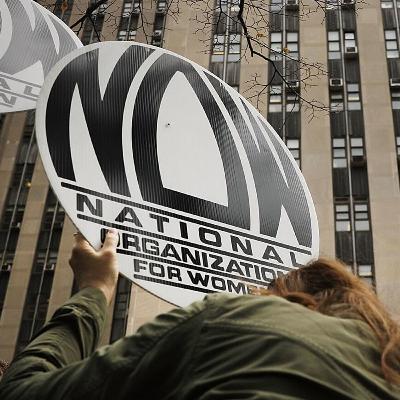
This mini-podcast introduces the 2026 and 10th anniversary season.Listen to this research outtake about how one Louisiana woman decided to take action about the first direct hit to overturn Roe v Wade and destroy abortion rights in the United States. Letters Read director first interviewed Allyn Goff in 2025 for the Terri Bartlett reading. Goff became close to Bartlett as they both worked tirelessly for reproductive rights in Louisiana.Allyn Goff joined NOW, National Organization for Women in 1989 and became president of the Louisiana chapter.In 1989, Webster v. Reproductive Health Services, a United States Supreme Court decision upheld a Missouri law imposing "restrictions on the use of state funds, facilities, and employees in performing, assisting with, or counseling an abortion. The Supreme Court in Webster allowed for states to legislate in an aspect that had previously been thought to be forbidden under Roe v. Wade (1973)." —wikipedia.org
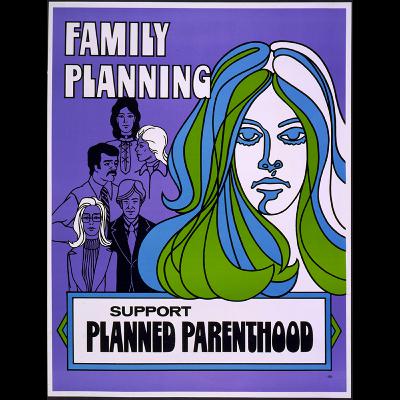
Remembering the Legacy of Terri Bartlett.In 1984, Terri Bartlett moved to New Orleans to found Planned Parenthood Louisiana. For more than a decade thereafter, Bartlett fought tirelessly for reproductive rights and human dignity in this state.This performance endeavors to serve as an inspiring model for grassroots and political activism, justice, and equal rights for all. Watch a video of the live event, HERE.And, watch this brief story about the event on NOLA NPR with Dave Walker and The Museum Goer.
Welcome to the first, full, 2025 Letters Read episode. This program was recorded in two locations. The overlying structure in a studio. The other in a noisy restaurant near Lake Pontchartrain, New Orleans, during lunch. You will be able to hear the difference. Thanks to Steve Czyck who engineered it all together.In this podcast, we meet Angela Breckenridge, PhD educator and Mr. Tedd Walley, cartoon artist, designer, and educator.They were mature adults when they met, fell in love, and married. This is truly a love story. More it is—as the title suggests—about sex and love, gender, and trust through the letters and memories of a cis-gender, normative, monogamous couple in the twenty-first century.References to research material can be found HERE and the previous, Incubator podcast can be found HERE.Antenna is this project's fiscal sponsor. This project is brought to you with major support from Corner Foundation a our very anonymous donation.
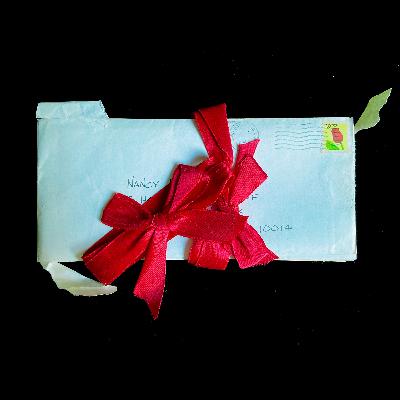
This mini-podcast continues the 2025 season about sex. Today’s reading is about love letters. Inspired by documentation of love, two letters in particular.Moreover this segment focuses on how love works. Like when two people fall for each other. What’s the motivation? Is it simply physical attraction, raw sex appeal? Or is feeling love something more?Listen and learn.
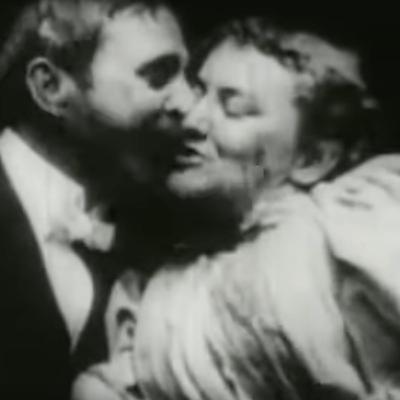
Hello! Welcome to Letters Read. The ongoing series in which letters and written documents about culturally vital individuals from various times and Louisiana communities are interpreted into spoken word performances. These are free, open to the general public, live sometimes, and other podcasts. This is the ninth consecutive season.This season is about sex. The physical activity we engage in for pleasure, sport, and procreation. Part of this investigation is gender and words we use to define how and with whom we have sex. For 2025 Letters Read, the word “sex” is a corporal act, and “gender” a political construct. “Sex”was chosen for being a show-stoppingly blatant topic. In addition to its attention-grabbing quality, thinking about sex can be nuanced. For instance, what kinds of sex are legal and what not? What modes of having sex are socially acceptable? And not? Information for this season is sourced from many institutions including and not exclusive to: the Kinsey Institute website, the Planned Parenthood Gulf Coast organization, the Planned Parenthood archive at Newcomb Institute, and the Historic New Orleans Collection. Additional information is based on recorded interviews with medical professionals, everyday individuals and practitioners of sex and sex-related practices, and members of alternative networks for those outside of official institutions. Listen to this incubator-style, mini-podcast and stay tuned to Letters Read 2025 and the upcoming Sex Cycle of programming.IMAGE: El Sartorio (also El Satario) (1907 or 1912).

This podcast wraps up the 2024 incubator-style programming on the early days of HIV | AIDS.
This series is brought to you in support of the LGBT+ Archives Project of Louisiana.
Most productions in this series are short, mini-podcasts, five to seven minutes long. This podcast takes longer to wrap up a difficult and emotional topic.
It comprises Sims's experience in Los Angeles, ca. 1990s, as director of the second AIDS hospice facility in the country.
Sims talks, in a straightforward manner about AIDS, hospice, and dying. Interjecting levity, and, where appropriate, humor.
The recording was created in two parts. The original interview with Sims was performed by Nancy Sharon Collins, Letters Read director. The second, narrative part is Collins again. The podcasts circles back to other Letters Read subjects Stewart Butler, Noel Twilbeck, and Mark Gonzalez.
Stay tuned to Letters Read for more compelling programming in 2025.

This podcast, and one or two more before year’s end, wrap-up the 2024 incubator-style mini-series on the early days of HIV | AIDS. Brought to you in support of the LGBT+ Archives Project of Louisiana.
The recording is about Pierre Rene “Peter”, as he was known, DeLancey. A sad story with a bittersweet ending. He was queer. At a time when being gay or homosexual or light in one’s loafers was not okay in most polite societies.
Peter's story brings together two previous Letters Read subjects, Stewart Butler of The Faerie Playhouse and Skip Ward. Both produced, and broadcast, at the beginning of the COVID epidemic in 2020.
The featured image is a portrait of Peter from Burt Harter's "Encounters with the Nude Male" self published by Harter in 1997. The image was included in a Doug McCash, Times-Picayune article published June 25, 2002 entitled "The Life and Death of a Painter in Legacy and Limbo".

October 29 at 7:00 pm CDTNewcomb InstituteDiboll Gallery, room 3003rd floor of the Commons43 Newcomb PlaceTulane University campus.
A second reading from the archives of Josephine Louise Newcomb. This one performed, live, at Newcomb Institute.
Emcee and Readers: Nick Slie, Lisa Shattuck, Shadow Angelina Starkey, and Robert Valley
H. Sophie Newcomb Memorial College was established by Josephine Louise Monnier Newcomb (“Jo”) as she was called, 1816 to 1901) as a memorial to her daughter Sophie who died at the age of 15. At a time when women were discouraged from education, an institution devoted to higher learning for women was a revolutionary idea.
Ladies of Mrs. Newcomb’s privileged class were instead taught to have “accomplishments”. Such as parlor entertainments like piano playing and polite conversation. For the lower classes—who had to hire themselves out as domestic help to survive—cooking, cleaning, sewing, nursing, and caregiving for other people’s families were their lot. For them, education, such as it were, was learned scrubbing pots on the job.
Until its post-Katrina consolidation into Tulane University, Newcomb College was a separate, four-year, baccalaureate-giving institution. Entirely – for – women.
Through Josephine Louise Newcomb’s letters, this reading tells that tale. It was created in grateful partnership with Susan Tucker and Beth Willinger. In great part, this presentation relies on their scholarship, insights, and their project of the same name, The Letters of Josephine Louise Newcomb.

From 1981 to 1998, K. (Kenneth) Brad Ott wrote, edited, and published the grassroots Dialogue Newsjournal reporting community activism and activities in New Orleans.
This third mini podcast in the four-part LETTERS READ series is produced in support of LGBT+ Archives Project of Louisiana and New Orleans AIDS MemoryProject. Antenna is LETTERS READ fiscal sponsor.
This podcast is about activism. Independent publishing in the later part of the 20th Century.
At a time when mainstream media would not, The Dialogue Newsjournal published progressive ideas in New Orleans questioning social issues such as: immigration and poverty, police corruption, racism, reproductive rights, gay bashing and AIDS paranoia, that strange new disease plaguing the male gay population, intravenous drug users, sex workers, and marginal members of society country-wide. Until 1982, there wasn’t even a name for the disease later known as HIV|AIDS.
Letters Read is an ongoing series in which local performers interpret letters and written documents about culturally vital individuals from various times and Louisiana communities—focusing on New Orleans. Now in its eighth consecutive season. Performances are free and open to the general public.

Segment 3 in the mini-series about the early days of the New Orleans HIV|AIDS epidemic.
Comprising two recorded clips from an interview with Noel Twilbeck. In the first, Twillbeck explains the origins of NO/AIDS Task Force. Describing the beginning of the HIV|AIDS epidemic. Early 1980s. The second clip refers to a letter. “The Letter”. Notice of the award from HRSA documenting their new status as an FQHC. As Twillbeck explained, “HRSA” is the Bureau of Primary Health Care. A federal institution funding affordable, accessible, and high-quality primary health care to underserved communities. A game-changer for NO/AIDS Task Force which then became Crescent Car.
This series thanks LGBT+ Archives Project of Louisiana, Corner Foundation, and LETTERS READ fiscal sponsor Antenna.

In conjunction with LGBT+ Archives Project of Louisiana, Letters Read brings you this first of four, mini podcasts on the early days of HIV|AIDS.
This segment is based on original source material from the 1990s ACT UP organization, here. These ACT UP New Orleans records, from the second, local itiration, were collected, and stored, by Mark Gonzalez. A loyal and very active member. I thank him for allowing me access to these files and for answering my many many questions about the organization and the arc of the group’s history.
Photo: Early New York City ACT UP demonstration. A nod to the failed relationship between New Orleans ACT UP and the Big City folk.

Allow us to introduce the 2024 mini-series of letters and documents from the early days of HIV|AIDS. A late 20th century crisis. Most of the material is New Orleans in particular, Louisiana, and then the country at large. This mini-series is produced in partnership with the LGBT+ Archives Project of Louisiana and I thank them for their diligence preserving history and for helping in this production.
Each mini launches at noon, Central time, on the following dates and remain available thereafter.
June 6 Mark Gonzalez, protest and ACT UP
Aug 8 Noel Twillbeck and Crescent Care
Oct 3 Brad Ott and underground publishing as activism
Dec 5 Aids Hospice, Pierre Rene “Peter” DeLancey & commentary by Hywel Sims.
This is a gently evolving series subject to change.

Listen to this clip from an interview with Jarret Lofstead whose role it was to wade through, and strategically process, thousands, and thousands, of pages of court documents building the Letters Read narrative for the Jospehine Louise Newcomb readings.
Lofstead is a writer/researcher and producer at The Bend Media + Productions. Whose recent release is the documentary film, George Dureau: New Orleans Artist.
Lofstead spends a fair amount of his career dealing with topics in the humanities. Including social justice and jurisprudince. Two prominent Letters Read themes.
Lofstead was instrumental in bringing information and perspective to the full program, Letters of Josephine Louise Newcomb performed live April 13, 2024, and available here.

Recorded Saturday, April 13 2024 in front of a live audience at Catapult in New Orleans.
Featured Readers:Emcee Chris Kamenstein, Director Nancy Sharon Collins, Shadow Angelina Starkey, and Robert Valley.
H. Sophie Newcomb Memorial College was established by Josephine Louise Monnier Newcomb (“Jo”) as she was called, 1816 to 1901) as a memorial to her daughter Sophie who died at the age of 15. At a time when women were discouraged from education, an institution devoted to higher learning for women was a revolutionary idea.
Ladies of Mrs. Newcomb’s privileged class were instead taught to have “accomplishments”. Such as parlor entertainments like piano playing and polite conversation. For the lower classes—who had to hire themselves out as domestic help to survive—cooking, cleaning, sewing, nursing, and care giving for other people’s families were their lot. For them, education, such as it were, was learned scrubbing pots on the job.
This program heavily relies on Susan Tucker and Beth Willinger, their scholarship, and superb, online, project, The Letters of Josephine Louise Newcomb.
Additional thanks go to writer/researcher Jarret Lofstead and audio producer Steve Gilliland.

This production was created from material collected during the creation of Drugs, Sex, Rock & Roll: A Year of Magic and Wonder. Which coincided with the project’s director/writer’s move back from New York to New Orleans. Quoting from the script, Collins’s observation was that moving home was “kind of like sleeping with an old lover.”
Meanwhile, significant municipal water issues collided in both cities and, in the Middle East.
Audio production is by Steve Chyzyk, Sonic Canvas Studio.
Want to support this compelling series, we'd love you to. Go to https://lettersread.net/donate/.
IMAGE: Henniker, Frederick. Notes, During a Visit to Egypt, Nubia, the Oasis, Mount Sinai, and Jerusalem. London: John Murray, 1823. Shown above is an aquatint fold-out view of Jerusalem “whose precision could let a traveler use it for wayfinding.” —https://www.drawingpalestine.com/jerusalem.htm

Listen to this iteration of an oft-told tale. How easily an innocent out of towner is drawn to the dark side of New Orleans. This specific story, ca. 1985, focuses on one year, one incredibly transformative year. For one man. Emblematic of many lured to the Big Easy, a famously lurid city.
Counter intuitively, this potentially tragic tale resolves itself into a beautiful, tie-dye butterfly. In which a Tulane undergraduate magically emerges going on to a fulfilling queer life and hugely successful, big city, New York City career.
Geoff Munsterman reads as the subject named James, just James. Shadow Angelina Starkey reads as Nancy Sharon Collins, the project director. Historic context has been corroborated by consultant, Royd Anderson. Production was performed by Munsterman and Starkey.

Continuing our New York/New Orleans journey, we bring you the only project Robert Moses ever did in the Crescent City. Locally referred to as the Riverfront Expressway.
Robert Moses, the greatest builder New York has ever known, is so often credited with it. Even though it never happened. As frequently, he is also incorrectly blamed for the Claiborne Expressway. That, horrendously, did.
This podcast is part of the ongoing script development for a fully realized live performance later this year about Moses, his engagement in this project, and the historic outcomes.
The reading is based on primary source research in The Robert Moses Collection at the New York Public Library and Moses’ 1946 Arterial Plan for New Orleans commissioned by the state of Louisiana. Additional information comes from newspaper articles, past and current, hearsay, Facebook, Robert Caro’s The Power Broker, Richard Baumbach and William Borah’s The Second Battle of New Orleans, and Hilary Ballon’s Robert Moses and the Modern City.
For information on the current fight to remove the Claiborne Overpass and links to other resources used for this production, go to lettersread.net/resources.

Introducing Season 7. Letters Read director, stationer, Nancy Sharon Collins talks about this year’s theme: the two very different cities that she loves. And, a lagniappe as they say in south Louisiana. A little something extra to maybe pull at your heartstrings, just a little.
Audio production is by Steve Chyzyk, Sonic Canvas Studio.

Premiering 6:00 pm EDT New Years’ Eve 2022, LEMONS TO LEMONADE. And available here thereafter.
Finishing up the Lady Louisiana Artist series for 2022 is a true lemons to lemonade story. Magen Raine Gladden. Commercial artist. She was born into a hippy dirt road collective along River Road in South Louisiana with a lifetime of health challenges. Now a leader through the lens of workplace equity and inclusivity rights. This podcast goes live on December 31st.
Shadow Angelina Starkey reads as Gladden. Shadow is a Cajun poet and photographer whose family has called New Orleans home since 1727.
Geoff Munsterman—poet, editor, & book artist from Plaquemines Parish now living in New Orleans’ Holy Cross neighborhood—narrates.
Find out more about six full programming seasons at LETTERS READ.
Want to support this compelling series, we'd love you to. Go to https://lettersread.net/donate/.

As our name suggests, Letters Read focuses on letters. Personal and business. From institutional archives and special collections, private and commercial libraries. In addition to letters, in our programming, we read other forms of written correspondence. Like faxes, text messages, emails, and now this collection of letters literally picked up off of New Orleans streets.
Describing these as letters may be a stretch. The best manner of talking about them is as missives. Notes. Notes to self. Lists. To-do lists. Some reading like poetry. Formulas, recipes.
This is one of our incubator presentations. Works in process. Experimental. It is dedicated to Diana, a great lover of poetry. And supporter of this project.
Heartfelt thanks to Bob. You will hear more about him in the podcast.

Comments

Download from Google Play

Download from App Store
 United States