


 Claim Ownership
Growing the Valley
Subscribed: 27Played: 2,113
Subscribe

© Copyright (c) 2018 The Regents of the University of California. All Rights Reserved
Description
This is a podcast that goes over new research and basic information about growing orchard crops in the Central Valley of California
308 Episodes
Reverse

A historically strong El Niño is upon us. The signs are strong that we’ll have a wetter than average winter to look forward to, and there are also indications that it could be an extremely wet or record wet winter. Phoebe and Luke discuss the potential impacts of an extremely wet winter on orchards, from flooding to warmer than average temperatures. Episode transcriptJamie Ott’s article on potential phytophthora concerns this winterDaniel Swain’s climate blogPrevious episodes on phytophthoraPhytophthora research in pistachios (Addresses Orondis in pistachios)Aerial phytophthora outbreak of 2023Previous episode on groundwater rechargeResearch on dormancy and chill accumulation:Testing treatments for low winter chill in walnutsAre we measuring chill incorrectly?Non-structural carbohydrates, dormancy, and bloom of tree nutsOur episode on cover crops 101Starting irrigation by potentially delaying in walnuts and starting earlier in almondsThe views, thoughts, and opinions expressed are the speaker’s own and do not represent the views, thoughts, and opinions of the University of California. The material and information presented here is for general information purposes only. The "University of California" name and all forms and abbreviations are the property of its owner, and its use does not imply endorsement of or opposition to any specific organization, product, or service.Follow us on Twitter! @SacOrchards and @SJVtandvThank you to the Almond, Pistachio, Prune, and Walnut Boards of California for their kind donations. Thank you to Muriel Gordon for the music.

Sam Sandovol Solis shares the 2027 water outlook. Since there’s an extremely high chance that we’ll have a wet winter, he also shares tips for getting ready for floods and aquifer recharge. Episode transcriptFEMA flood mapApply for a groundwater recharge permit, and view the two informational videos mentioned in the episodeThe Board’s contacts: [email protected] for permits and [email protected] for §1242.1. IThe views, thoughts, and opinions expressed are the speaker’s own and do not represent the views, thoughts, and opinions of the University of California. The material and information presented here is for general information purposes only. The "University of California" name and all forms and abbreviations are the property of its owner, and its use does not imply endorsement of or opposition to any specific organization, product, or service.Follow us on Twitter! @SacOrchards and @SJVtandvThank you to the Almond, Pistachio, Prune, and Walnut Boards of California for their kind donations. Thank you to Muriel Gordon for the music.

Winter sanitation is the foundation of navel orangeworm control, however orchard access can be difficult, particularly in wet winters. Houston Wilson, entomology specialist at UC Riverside, is part of a multidisciplinary team looking at sheep grazing in orchards. He has been looking at whether sheep eat mummy nuts, and how well they do it. Episode transcriptThe views, thoughts, and opinions expressed are the speaker’s own and do not represent the views, thoughts, and opinions of the University of California. The material and information presented here is for general information purposes only. The "University of California" name and all forms and abbreviations are the property of its owner, and its use does not imply endorsement of or opposition to any specific organization, product, or service.Follow us on Twitter! @SacOrchards and @SJVtandvThank you to the Almond, Pistachio, Prune, and Walnut Boards of California for their kind donations. Thank you to Muriel Gordon for the music.

Phytophthora infections have become more common in pistachio. Alejandro Hernandez covers the biology of this disease, as well as his research on rootstock susceptibility and the efficacy of new fungicides. Please note that some of these fungicides are not registered for use in pistachio.Episode transcriptMention of a pesticide does not constitute a pesticide recommendation, and mention of specific trade names does not constitute an endorsement. Always follow the pesticide label. Find out more at ipm.ucanr.edu The views, thoughts, and opinions expressed are the speaker’s own and do not represent the views, thoughts, and opinions of the University of California. The material and information presented here is for general information purposes only. The "University of California" name and all forms and abbreviations are the property of its owner, and its use does not imply endorsement of or opposition to any specific organization, product, or service.Follow us on Twitter! @SacOrchards and @SJVtandvThank you to the Almond, Pistachio, Prune, and Walnut Boards of California for their kind donations. Thank you to Muriel Gordon for the music.
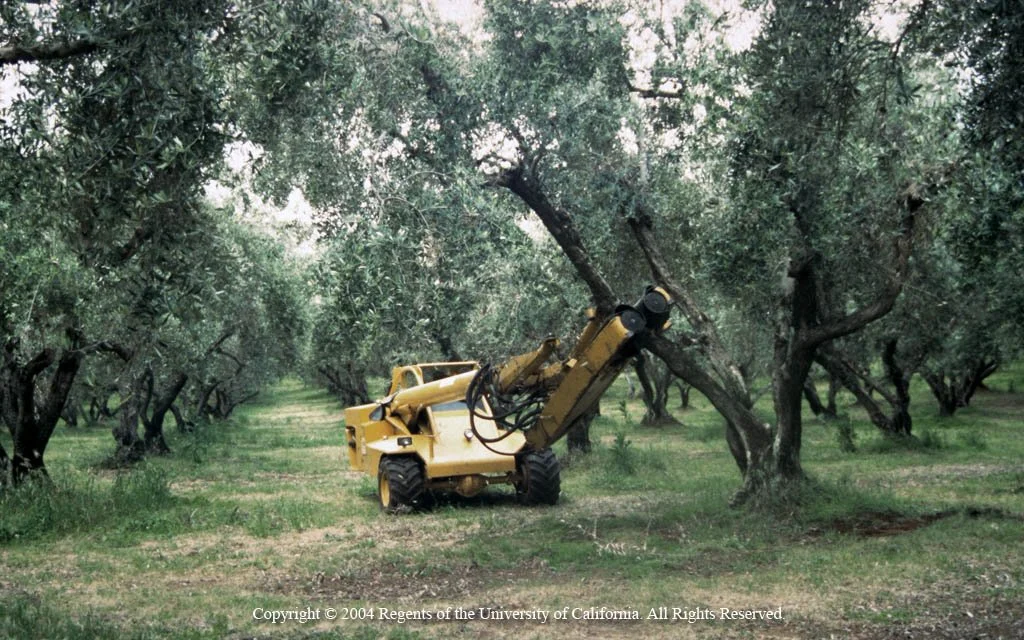
Fruit removal is a serious issue in table olive production, namely because the fruit are harvested before they are ripe. ACC, an ethylene precursor, has the potential to improve fruit removal (please note that the commercial product is not registered in olives yet and cannot legally be used). Becky Wheeler-Dykes, an advisor in Glenn, Colusa, and Tehama Counties, has been examining its efficacy in olives with a team of researchers at UC Davis. She shares some preliminary, and promising results in this week’s episode.Episode transcriptMention of a pesticide does not constitute a pesticide recommendation, and mention of specific trade names does not constitute an endorsement. Always follow the pesticide label. Find out more at ipm.ucanr.eduThe views, thoughts, and opinions expressed are the speaker’s own and do not represent the views, thoughts, and opinions of the University of California. The material and information presented here is for general information purposes only. The "University of California" name and all forms and abbreviations are the property of its owner, and its use does not imply endorsement of or opposition to any specific organization, product, or service.Follow us on Twitter! @SacOrchards and @SJVtandvThank you to the Almond, Pistachio, Prune, and Walnut Boards of California for their kind donations. Thank you to Muriel Gordon for the music.

Comments

Download from Google Play

Download from App Store
 United States