


 Claim Ownership
NextMeta
Subscribed: 5Played: 174
Subscribe

© MetaMedia
Description
Crypto is a wild west - how do you keep up???
I‘ve been here for 8 years, and it‘s only gotten worse! So I interview big brain veterans, in attempts to find the meta.
Join us once a week for talks of onchain economies, decentralized societies and their impact on the real world.
https://linktr.ee/nextmeta
I‘ve been here for 8 years, and it‘s only gotten worse! So I interview big brain veterans, in attempts to find the meta.
Join us once a week for talks of onchain economies, decentralized societies and their impact on the real world.
https://linktr.ee/nextmeta
83 Episodes
Reverse

Penguin slid into the MetaGame and out of his 9-5 thanks to a classic pandemic story including working-from-home and a covid layoff. He found the DAOspace originally by alpha-testing a text-based game called waterdeep. He learned about NFTs and started asking questions, the answers to which hurled him down the rabbit hole of discovery, finding MetaCartel, MetaGame and other online communities. He started as a developer, and never expected that he’d be playing an instrumental piece in building bridges, connecting communities, understanding novel technologies and engaging members.
In this episode we explore Penguin’s entry into the world of DAOs and how that evolved into his participation in 14+ DAOs. We talk about his secrets for organization and success (hint: love and sticky notes play an integral part), web33 technology, democracy, and how to seize opportunities in the cryptospace (by contributing & not worrying about payments).
Some of the topics:
Connecting web3-aligned people with their optimal growth positions
Equalizing opportunities rather than equalizing wealth
24hr days and rapid progress in the crypto space
Community and social interaction in DAOs
Skill Tree mapping
Penguin and Peth discuss the freedom that results from taking ownership over the value you add to the DAOspace, and the collective empowerment created - the work of sovereign developers no longer belongs to their employers, but rather can be used to create value in multiple different networks. They further explore this freedom by acknowledging the opportunity that arises from a super interconnected community full of DM-able rockstars!
The episode concludes with a comforting reminder that while financial gain is nice, having the right reasons to show up to work is everything. “Credit sleep and understand your own limitations. Balancing yourself and having friends you can connect to is just as important as creating the next project. It let’s you sustain and be a person, rather than a machine.”
Resources
Waterdeep
Ethernal
MetaCartel
MetaFactory
Steemit and Justin Sun
Skill Forest Working Group
DAOhaus

Santi Siri, founder of Democracy Earth Foundation, has been working with technologies attempting to advance democracy for over a decade. He began in Argentina with an internet-based political party that was proposing candidates committed to using their power according to the peoples’ interests online. With help from a grant in 2015 from Y Combinator, he started Democracy Earth Foundation, a non-profit building open source & censorship-resistant democracies that can be deployed anywhere with an internet connection. In their research, and out of the need to register voters with unique identities, the Proof of Humanity protocol was born.
Proof of Humanity protocol uses facial registration (i.e. uploading a video/picture) to ensure unique user identity online, while protecting sensitive personal information. In this episode, Peth and Santi discuss the function and reasoning behind the Proof of Humanity protocol, and explore how this can be used as part of online democracy.
Some of the topics
Proof of Humanity using faces as public keys for unique human identification
Kleros justice protocol for settling disputes
Difference between Proof of Humanity and BrightID
Universal Basic Income sustainability
Democratic governance for DAOs
Santi began deep in the world of politics and gained some valuable insights regarding the efficacy of creating change within traditional systems. “In order to become successful in [traditional systems] you have to play under their rules, and it is very likely that you will end up being changed by them. With technology, we can build a new model that makes the old system obsolete.”
The episode concludes with an acknowledgement of the commitment required to make a real difference and quintessential advice for anyone working hard to bring their dreams to life: “Never give up”.
Resources
Democracy Earth
Tedx Talk - The Future of Democracy
Y Combinator
Proof of Humanity
Kleros
BrightID
Yearn Finance
Hammad is a human of MetaGame; a software engineer, a designer, a futurist & a DAOist. Contributor to MetaGame, MetaFactory, Sourcecred & MetaCartel. he began contributing to MetaGame in late 2019. He was our very first serious builder, bringing us Sourcecred, building the first landing page & setting the foundations of the MetaOS. Suffice to say, we owe him a lot.
In this episode we explore Hammad’s personal history; from crafting & trading in Runescape, to turning down Microsoft & his journey into the cryptoverse - along with explorative commentary on how web3 is providing a wealth of opportunity to people worldwide.
Some of the topics
The welcoming nature of the crypto space to newbies
Discord as the current tool for web3 communities
NFTs beyond art
Building “Squad wealth”
Standing on the shoulders of giants & composability in Web3
Peth and Hammad discuss the ways in which crypto is revolutionizing financial systems, community wealth and coordination. They discuss the importance of good coordination and project management, as well as the rapid rate of evolution and the potential that is available because of that.
“Collaborating is more effective as a business strategy than trying to build your own and compete. In web3, you have huge projects and communities that are so powerful because they are collaborating with each other and creating a network of value.”
The episode concludes with a critical assessment of the degenerative side of web3; from gambling in the world’s biggest casino to chasing the “highs” of sourcecred, to buying and selling tokens to maximize profits while disregarding the communities behind them.
Resources
The Economy of Runescape
Squad Wealth
The Defiant - Insane production quality DeFi news
House of Ethereum
House of NFTs
House of DAOs
Ethhub
 2
2Vinay got his start in software engineering, then spent about half his career in defense and energy policy think tanks working on the big “save the world” questions - food, shelter, pandemics, and all the rest of the worst-case scenario planning stuff. Then he decided to get a “real job” and ended up managing the launch of Ethereum back in 2015. Finally, he went on his way to found Mattereum.
The discussion kicks off around the problem of capitalism with being extractive at one end, and polluting at the other end.
How do we produce higher quality of life on a massively reduced environmental footprint?
The 4 Steps of Capitalism
Investment, Production, Consumption & Waste. The first three have been massively optimized, but we're still lacking good data & incentives to optimize the final step and loop it back into step 1. Which is where Mattereum comes into play, linking physical with digital & creating a data trail feeding back the product performance to producers.
Other than closing Capitalism's feedback loop, Mattereum will make second hand markets orders of magnitude more efficient by tying code with law - the real world kind - and allowing the disputes arising in the digital sphere to be solved through insurance or escalated to real world courts.
Armed with data & enabled by efficient second hand markets, we become custodians of assets rather consumers. Because you now expect to eventually sell the things you buy - you stop consuming things and start investing in things; buying higher quality goods & turning from a consumer to an investor.
Some of the topics
Issues with extractive capitalism
Connecting Ethereum to legacy legal systems
Permanent Investment economies
Social Operating Systems
Anarcho-syndicalism
“Consumption is a thing that we cannot afford in a world with a billion starving people. But investment is how we take what we have and turn it into what we need. Everything that we buy ought to be something that generates wealth not just for us, but also for the world. And if we take this mindset of a permanent investment economy rather than a consumption economy, and if we hate losing money because our goods are degrading and being thrown away - pretty soon we won't be producing or buying "cheap" goods that break.
Vinay and Peth then dig into MetaGame
“I think you’ve done really really good work in terms of identifying this kind of a social operating system. You’ve got materials about values, ways of relating to other people, methodology, there’s all this layer, then there’s an economics layer, and the activities layer. So values, economic incentives, and activities layers - similar problem solving capacity to a conventional corporation, but run very strongly on internal markets and a different set of protocols.
[If you say] you know, we’re building software to support anarcho-syndicalist economic democracies, there aren’t many people you can say that to and have their eyes light up, but that is actually what you’re doing and it’s super impressive, it’s really really good.”
Resources:
Simple Critical Infrastructure Maps
Mattereum Fix The World Deck
Mattereum
LA Launchpad and the Space Yurt
Mattereum Shop
The Future of Stuff by Vinay Gupta
What does it take to market the future? Amanda Cassatt, founder of Serotonin and former ConsenSys CMO, shares her tactics that helped build the biggest developer community in crypto and put Ethereum on the map - as
well as her insights from shaping the future of crypto marketing.
Topics:
- From decentralized media to Ethereum and ConsenSys- Early marketing strategies for Ethereum- The evolution of crypto marketing- ICOs to the current VC-dominated landscape- Serotonin's Buffet-like business model- The need for transparent and fair token launches
Links mentionedMint this episode on PODS

What if the future of cities isn't about building bigger metropolises, but creating tight-knit neighborhoods where people actually know each other?
🤔
In this episode, we explore how Cabin is building a "network city", aiming to combat loneliness and the rising costs of living in big cities, to create more fulfilling ways of living in our increasingly disconnected world.
We also talk about:- From remote residencies to thriving local communities- Differences between network cities and network states - The Neighborhood Accelerator program- Potential uses of crypto in local communities, neighborhoods & towns- Community currencies and reciprocity economies- Historical inspirations for building societies
Jon‘s Links
Mint on Pods
NextMeta Linktree
The biggest regulatory threat to crypto is not Gary Gensler and the dreaded SEC. Why? We‘ll let Gabriel tell you all about it. Other than that, he‘ll be talking about upgrading DAOs with BORGs, about the whole suite of tools being built by MetaLeX and about his crypto lawyer
journey of making the traditional legal systems obsolete.
"We can create our own legal structures and we can show to the world that our combinations of tech and agreements are better than anything that existed before."
Wait, WTF are BORGs, you ask? They‘re autonomous legal entities that work alongside DAOs to provide accountability and constrained operation. Overall, GAbriel shares how MetaLeX is building both legal and technical solutions to make crypto and law work together in a cypherpunk way.
"Bitcoin kind of separated money from the state, Ethereum kind of separated finance from the state. I think the third frontier is separating law from the state."
Gabriel also highlights a major regulatory concern in the crypto space that he believes is massively underappreciated: the CFTC's actions against DeFi protocols and the legal implications of cases like Avi Eisenberg's. He emphasizes the importance of creating crypto-native legal structures that preserve the core values of crypto.
"The CFTC has really gone after DeFi protocols over leverage as well as what are called swaps... if all these things are required by law to be intermediated, crypto is
absolutely decimated."
Things discussed:
- Gabriel‘s background in corporate M&A
- Why law can be interesting
- Mattereum's approach to tokenization and legal compliance
- Introduction to MetaLeX and Borgs
- Evolution of decentralized organizations and modularization
- Separation of law and state
- Overview of MetaLeX's current projects
- Discussion of major regulatory concerns - Potential of crypto to create better legal and financial structures
Links: Gabriel‘s links
In this episode, we dive into the evolution of DAO communities and events with Yalor and Stacey. From the early days of MetaCartel, MCON & MetaCamp, to the ambitious vision of MetaCampus, we talk about the importance of in-person gatherings and building the social fabric.
What are MetaCamp and MetaCampus? Why choose Costa Rica for building a Web3 village, and why choose Detroit for MCON III? And most importantly, why investing in relationships might be more valuable than chasing the next
memecoin?
“More financial games are not what will move the world and save us from impending collapse." - Yalor
These are some of the questions and answers discussed.
Overall:
Origins of MCON and MetaCamp
The GM Bus project
Evolution of MetaCartel and its impact on the ecosystem
The concept and development of MetaCampus
The importance of community-building in Web3
Why Detroit as the new location for MCON
Doing conferences differently
The social layer and relationship-building at MetaCamp
Reputation and identity in decentralized networks
The value of in-person gatherings
A significant portion of the episode is dedicated to MetaCamp, an offshoot of MCON that offers a more intimate atmosphere in Costa Rica. The guests explain how this event has evolved into MetaCampus, a permanent facility designed to host various Web3 events and foster
deeper connections within the community. 👀
Throughout the episode, they emphasize the importance of building real relationships and communities, arguing that these connections, rather than financial gains, will be crucial in moving the world forward.
"I think it is around these real relationships and real communities actually forming a container for growth and progress." - Stacey
Yalor‘s & Stacey‘s links
In this episode of NextMeta, we interviewed 0xJustice from the Polygon governance team about DAO design, rganizational efficiency, and a new tokenization mechanism.
0xJustice shares his journey from IT, team management and org design, to getting hyped about DAOs. As opposed to most DAOists, he is less interested in governance and
decentralization - what drew him to DAOs is the idea that they are programmable organizations, which can be made more effective than current day corps.
The conversation covers a wide range of topics, from team topologies to the exciting new Quadratic Accelerator (q/acc) project.
Topics discussed:
0xJustice's background in IT and transition to Web3
Efficient DAO design principles
Team topologies and organizational structure
The Quadratic Accelerator (q/acc) project
Bonding curves and project tokenization
Modern Monetary Theory and its relevance to crypto
Polygon governance and upcoming initiatives
He emphasizes the importance of streamlining teams and eliminating handoffs to increase efficiency and ownership. He also discusses the concept of team topologies and the need for programmable org design in DAOs. He concludes by mentioning the governance hub on Polygon and the
use of governance legos to create flexible and adaptable governance structures.
"It's the programmability that is interesting to me."
In this conversation, peth and 0xJustice discuss Boundaryless, a consultancy media brand that produces research and certification programs on platformification and team topologies - building DAOs since before DAOs.
"If you're not the platform, you're unconsciously operating on someone else's platform."
They also delve into the Quadratic Accelerator (QAC), a project incubated in Giveth that aims to tokenize projects and create a better way to do grants. They explore the concept of token economics, inflation, and the challenges of driving value to tokens.
"The point of DAOs is not governance, that's kind of a side effect... The game is like, what's the mechanism? What's the value accrual mechanism?"
Links:
Mint this podcast on Pods
Justice‘s Most Important Links
Griff Green! An OG regen crypto veteran and a serial founder. From chemical engineering and being one of the first people ever to get a degree in digital currencies, to whitehat hacking The DAO, founding Giveth, Commons Stack, DappNode, a Burning Man camp called Camp
Decentral, etc. etc.
Griff has no lack of projects, but he does have a lack of time - and even still, he found some to come on the NextMeta podcast to talk about Giveth‘s endgame of helping nonprofits bootstrap token economies, their collaboration with Polygon (q/acc) and a few other things he‘s working on.
We go through the evolving landscape of decentralized economies, public goods funding, and the
revolutionary potential of crypto to reshape societal structures.
Topics:
Evolution of Giveth and Commons Stack
Token Engineering Commons
Grant programs misalignment
Quadratic Accelerator (q/acc) program
Bootstrapping token economies
Unicorn.eth wallet for easy and scamless crypto UX
Environmental impact round and Givbacks
Unicorn.eth, DeVouch and Pairwise
Griff Green discussed the value of nonprofits as alternatives to government, emphasizing the role of public goods and the potential for creating systems that recognize their value. Griff explained how bonding curves solve liquidity issues, making them essential for tokenizing smaller
economies and value.
"Nonprofits are actually the free market replacement for governments."
In terms of grant programs, we talked about the flawed system where projects receive tokens, which they have to sell to cover costs, creating a negative cycle. Griff introduced the Quadratic Accelerator (q/acc) program as a potential solution.
The q/acc program allows projects to start their own token economies, collateralized by Matic (or other grant program tokens). Projects gain liquidity and earn fees, while donors get liquid tokens. This system incentivizes projects to
stay within an ecosystem rather than hopping between grant programs.
"I believe we can create an economic model that can appreciate the value of that clean river."
Griff also shared his new wallet project, Unicorn.eth, aimed at improving UX and safety in Web3, DeVouch, a project using Ethereum Attestation Service for people to vouch of projects, and Pairwise, a voting tool that‘s meant to make voting more fun.
With his ultimate aim of replacing traditional government mechanisms with more efficient, decentralized systems - Griff offers insights into mechanisms that could
redefine how we fund and govern our communities. From bonding curves to quadratic funding, and from improving crypto UX to launching sustainable token economies.
"If we want to replace governments, we still need to fund public goods."
Links:
Mint this podcast on Pods
Listen on Apple Podcasts or Spotify
Griff‘s Treasure Chest - most important links
We just got 100% discount on ordering a Gnosis Pay Card
Let me tell you about the Gnosis Card!
The first ever non-custodial crypto Debit card, with your ENS instead of real name written on the card, and running on Gnosis Safe Spend your crypto directly from your onchain wallet, anywhere Visa cards are accepted - which means 80m+ merchants.
Its the easiest offramp and best of all, Gnosis takes 0 transaction fees 👇
The card costs 30€ but you can save your 30€ and get the card for free by using our referral link, in the description.
We‘ve been using the card for 4 months now, and we can almost guarantee you won‘t be disappointed - unless you‘re from the US or Mexico or Brazil or Argentina.
Besides, you got nothing to lose! Remember - you get the card for free with our referral link.
Order it here 👈
discount code is f9d04924bc6d
Cooper Turley, also known as "the music NFTs guy," joins NextMeta to talk about his humble beginnings, ascent, the evolution of crypto, onchain music, memecoins, celebcoins and building a web3 record label.
The meta he keeps going on about is the one of onchain music and the future of artist-fans relationships that keep giving 👀
Topics:
Cooper's journey from music business to crypto back to music
The rise and fall of music NFTs
The role of record labels in Web3
Celebrity tokens and memecoins
Building Coop Records and Sonata
From studying the music business to dropping everything and joining crypto full time from his parents basement, over MetaCartel DAO, dozens of DeFi and NFT projects and back to the music business - Cooper has done it all.
"Crypto is this technology that can empower anyone in the world."
The main piece of advice you can gain from Cooper, is to just follow your interests and create value where you go. Despite not having any technical skills, Cooper found his way, contributed everywhere he went and found himself climbing the ladders fast.
By consistently sharing about his journey and learnings through DAOs, DeFi and NFTs, Cooper rose up in CT fame to gather 150k on Twitter, no small feat.
But more importantly, by consistently learning,
contributing and sharing, Cooper catapulted himself to exactly where he wanted to be - in LA, building his own Web3 record label and helping artists make more $ as well as connect with their fans.
"Be early and be consistent, and good things are going to happen."
Whether you're an onchain enthusiast or a music lover, this episode will help you uncover the evolving landscape of digital assets, artist empowerment, the opportunities of redefining artist-fan relationships and the potential of (non-shitty) celebrity tokens, as well as what it takes to build a successful web3 record label!
Links:
Cooper on twitter
Cooper on Farcaster
Coop Records
Welcome to the very first episode of NextMeta - a merge/rebrand of MetaView & Frontiers of Coordination, along with Realizing MetaGame (newsletter) coming next!
In this episode of NextMeta, peth sits down with David Phelps, co-founder of JokeRace and a prominent figure in the crypto Twitter space. David's candid and humorous takes shed light on the evolving landscape of Web3.
Topics discussed:
- David's background
- The evolution of DAOs
- The "Proto App Thesis"
- Challenges with token-based voting
- The role of social incentives in retaining users beyond financial incentives
- The divide between the crypto-native audience and those who genuinely need decentralized financial solutions
- The importance of scalability, UX improvements like embedded funding, and interoperability in Web3 adoption
- The Proto-App moat
"You lose some moats, but you gain others. And it's quite exciting to think about how that can play out at an application level."
"We need to think about the tech and what is morally good. And the angel on our shoulder is basically telling us that we should ignore financial incentives, that the people in the Philippines who need to make money and are like using these protocols to make money are not the people we should appeal to and that we should somehow be above all of this."
Mentioned projects and links:
JokeRace
Eigenlayer
The Proto-App Thesis
Bello
Warpcast
Monad
Celestia
Intro music by https://audionautix.com

Primavera de Filippi, a legal scholar and researcher, discusses the governance of blockchain technologies and the challenges they pose. She explains the concept of governance by design, which involves embedding governance structures into technological architectures. Primavera also introduces one of her past projects, Plantoids, blockchain-based life forms that replicate and reproduce autonomously.
She highlights the legal questions surrounding these entities and the need for recognition and regulation. Primavera explores the potential of CoordiNations, networks of collectives that mutualize resources and engage in collective action. She emphasizes the importance of fostering cooperation and tackling global problems through decentralized governance.
"A CoordiNation is not a community, a CoordiNation if anything is a community of communities. It's a network of collectives...And so everyone becomes more incentivized to contribute to the whole because they are all intertwined with one another."
In this episode:
- Collaborative economies
- Governance by design
- Plantoids
- Legal recognition and regulation of DAOs
- CoordiNations
The Blockchain and the Law by Primavera de Filippi
Plantoids
DAO Model Law
Coordination
Primavera's CNRS research page
Bergman Klein Center at Harvard
COALA (Coalition of Automated Legal Applications)

In this episode, TokenBrice discusses the challenges and shortcomings of DAO governance. He emphasizes the concept of governance minimization, where automation and incentivization are preferred over relying on governance which can be twisted to serve individual or external needs for profit.
He talks about shortcomings of plutocratic DAOs but also shares his experience as a member of the GHO Liquidity Committee, raising concerns about the selection process for committee members or delegates - and the prevalence of conflicts of interest in DeFi DAO governance landscape with the rise of DAO politicians that aren’t much different to real world politicians.
On the bright side, he talks about transparency & the ability to track funds as significant improvements to governance in the real world - but stands firmly behind the idea of governance minimization. The episode concludes with the introductions of the DeFi Collective, a nonprofit association supporting growth and resilience of DeFi protocols.
Takeaways
Governance minimization & automation
Pitfalls & conflicts of interests in plutocracy & committees
Professionalization of governance
Conflicts of interest
DAOs bleeding money
Transparency and tracking of funds
The DeFi Collective helping DeFi protocols for free
The DeFi Collective
TokeBrice Website
TokenBrice Twitter
Leaving GHO Committee blog post
Aave Runway dashboard
In this episode, we're excited to welcome Sero, a key player in MetaGame, whose unique journey from a high school dropout to a tech and Web3 enthusiast offers a fresh perspective on self-learning, autonomy and the future of decentralized systems.
Sero’s story is not just about overcoming traditional educational hurdles but also about finding his path in the dynamic and often challenging world of freelancing & Web3. His experience with various programming languages, his approach to learning, and his transition into MetaGame showcase a blend of determination, skill, and adaptability.
- Sero’s unconventional educational journey and career experiences.
- How the Odin project and COVID-19 led to a breakthrough in learning
- Entry into the world of crypto through a DeFi project
- Sero’s rank in MetaGame and his perspective on its working environment
- Importance of a product mindset versus an open-source approach
- MetaGame's culture, meritocracy, and financial sustainability
- The role of autonomy & mentorship in personal & professional development
"I always like to learn by myself and kind of be my own leader. It's about not wanting to waste my life... if I want to do something, I try at least. It's a habit that you have to build."
We uncovered layers behind a self-taught tech enthusiast's journey. Sero’s story is a testament to the power of self-motivation, the importance of adapting to changing learning environments, and the potential impact of mentorship. Sero’s insights into MetaGame and the broader tech landscape provide valuable lessons for anyone navigating this dynamic space.
Resources:
The Odin Project
Sero on Twitter
Decentra Talks Podcast
Serotonin Designs Blog

In this episode, we dive in with Trent Van Epps, a non-technical core contributor to Ethereum and the founder of Protocol Guild. Trent shares his journey from studying to be an architect to working at the Ethereum Foundation & founding the Protocol Guild.
Currently serving on the Protocol Support team, overseeing network upgrades & maintenance; Trent highlights the need for non-technical people to make it all gel. He also outlines the decentralized governance & compensation mechanics of the Protocol Guild as well as the criticism he’s faced about it.
"Time weighting is one of the most important aspects because we're able to sidestep a lot of the... things that members are responsible for managing."
Overall, peth & Trent cover everything from the original Mist demo back in 2016 that got them both excited about Ethereum, all the way to the time-weighted compensation inside the Protocol Guild, contributor retention, decentralized protocol development funding, public goods, their favourite applications of Ethereum & their long term hopes for it.
"I think there's still something to build, there's still a lot of work to do to shape this blockchain substrate that we're all constructing together."
Key Topics:
Mist Demo 2016
Architecture to Blockchain Transition
Protocol Guild Initiative
Decentralized Applications & Usecases
Evolving Blockchain Design
Protocol Guild Origins
Funding Model
Resources:
Mist Demo
Ethereum Foundation
Protocol Guild Documentation
EAS (Ethereum Attestation Service)
Protocol Guild Website
Trent Van Epps on Twitter
Optimism Research Forum
SourceCred
Hugi is an Icelandic entrepreneur & technologist involved in participatory political movements & decentralized organizations for over 15 years. He was a founding member of the Swedish Pirate Party, he helped build the participatory festival Borderland & currently works on open source platforms like Open Collective & Cobudget, empowering collaborative communities.
Hugi shares his early experience co-founding the Swedish Pirate Party, one of the first political movements organised as an online swarm. After that, he got involved with the Borderland festival. He saw it as an experimental sandbox for new coordination methods in decentralized decision-making.
Besides putting on the most decentralized festival for thousands of people, people of Borderland also built tools for doing so, one of which became Cobudget - an online tool for decentralized budgeting.
He hopes for more cross-pollination between DAOs & civil society organizations. DAOs can learn governance models from 100-years of experience. On the other hand, DAOs need to start interacting with & prove real-world impact before being taken seriously by the 99%. He suggests people build web3 solutions for civil society needs, as a bridge between the spaces.
“I realized that in a lot of these communities that are running open source software or DAOs, there's not a single person that has any experience from regular civil society organizations, because if they did, they would already have the blueprints in their heads of how this can look, because the blueprints are already there." - Hugi
Key Topics:
Origins of the Swedish Pirate Party & swarm organizing
Borderland festival as a decentralized sandbox
Self-organization and emergent leadership
Advice process for decentralized decision-making
Participatory budgeting with Cobudget
Learning from historic worker cooperatives
Real-world impact and adoption challenges
Bridging web3 and mainstream communities
Technocratic elitism in web3 spaces
Hybridizing DAOs and traditional nonprofits
Resources:
- Hugi Asgeirsson
- Borderland
- Cobudget
- Open Collective
- Swedish Pirate Party
This time we got Stephen Reid - a teacher, technologist and coach who is involved in a variety of projects related to web3, metacrisis, metamodernism, psychedelics & personal development. He has taught numerous courses including Tools for the Regenerative Renaissance, DAOs, Web3, and AI. Currently he is studying for a certificate in machine learning and artificial intelligence from UC Berkeley.
Steven starts by describing his background and interests. He first became interested in metamodernism and the metacrisis around 2016-2017 by listening to thinkers like Daniel Schmachtenberger and Jordan Hall. He sees himself as a bridge builder between different communities like web3 and psychedelics that have more in common philosophically than people realize.
Peth & Stephen discuss the concepts of metamodernism and the metacrisis. The metacrisis examines the common drivers behind global crises like climate change, inequality, and more. It's about systems thinking and understanding how everything is interconnected. Metamodernism focuses more on inner development of individuals with the idea that if more people are self-actualized, it will be easier to address systemic issues.
Stephen shares his insights and experiences, exploring the interconnectedness of global challenges and how understanding underlying generator functions can pave the way to solving multiple crises simultaneously.
Some key ideas covered:
- The multipolar trap - how even good people can be driven to bad things when coordination systems fail. For example, countries not wanting to be the first to decarbonize their economy out of fear they'll fall behind competitively.
- The importance of both inner development and compassion as well as designing better external coordination mechanisms. You need both personal growth and systemic solutions.- Concepts from integral theory & the book Reinventing Organizations - which distribute ownership and decision-making rather than having rigid hierarchies.
- Practices like authentic relating that help groups attune to collective intelligence and make decisions together.
They discuss the challenges of governance in DAOs. Having tokens be fully transferrable often leads to plutocracy, but more experiments are happening with reputation-based voting and other models. The goal is distributing power but avoiding the issues of both "one person one vote" and pure token-based control.
He emphasizes the need for people in the web3 space to focus on how their work really contributes to human thriving, especially with the urgency of interconnected crises. Overall it was a wide-ranging conversation about systemic issues and personal growth.
Metacrisis thinking is joined-up thinking, holistic, and systems thinking. It's about understanding the interventions in any domain and how they can affect other domains. We should create a culture where everyone is aware of the possibility of downstream consequences and takes responsibility for understanding and mitigating them - Steven Reed
Key Topics:
- Systems thinking and the meta-crisis
- Coordination problems like multipolar traps
- Inner development, compassion, and practices
- Distributed ownership models for organizations
- Projects related to the meta-crisis
Resources:
- Metacrisis XYZ
- Reforge the Ring
- Futurecraft residencies
- Metamoderna
- Reinventing Organizations book
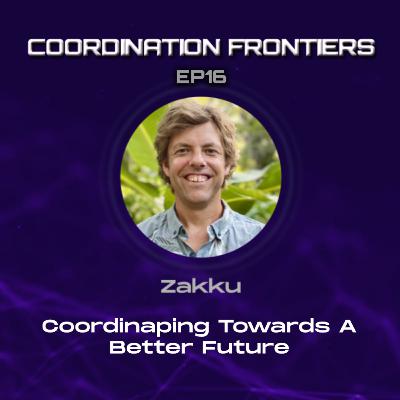
In this episode, we welcome Zakku of Coordinape, a platform for
decentralized compensation where people acknowledge & reward each
other's contributions.
An activist & a coordinator - Zach has a deep background in building, coordinating & advising networks for impact. His path took him to co-founding Converge before his interest in peer-to-peer collaboration led him to explore the potential of crypto, become an early contributor at Yearn & eventually start Coordinape.
Inspired by decentralized compensation on a round table at Converge - Coordinape allows people to write their contributions for evaluation by peers. Each member receives 100 GIVE tokens to allocate to other members based on their contributions, then the funds get divided based on % of total GIVEs each member received.
There’s a lot more to it & Zakku emphasizes the importance of communication & reflection throughout the whole process - but that’s it in a nutshell.
Zach & peth dived into the challenges & opportunities of decentralized collaboration, discussing trade-offs of decentralization & efficiency, highlighting the need for context & cohesive team dynamics before going into the potential of AI to assist us.
They brushed on the difficulties of founding software projects as non-technical people as well as other personal & interpersonal challenges inherent in online collaboration;
In conclusion, Zakku & peth share similar beliefs in the potential of
Web3 to create new systems, build better organizations & address
societal issues.
“Web3 offers the potential to create new systems rather than fighting against the old ones. We have the tools to do things better than default systems."
Some of the topics:
- The launch of CoSoul NFTs in Coorinape
- Experience in activism, coordination & Converge
- Using Coordinape for decentralized compensation
- Challenges & advantages of decentralized collaboration
- Importance of context & communication
- Potential of AI in assisting DAOs
- Future vision of Coordinape
- Potential of Web3 & projects that make Zakku bullish
"We're trying to use technology to solve what is fundamentally a social
problem...difficulties in working this way require self-awareness,
emotional intelligence & open communication."
Resources:
Coordinape
Converge
Impact Networks (book)
How to Build Impact Networks (playbook)
Cabin
Krause House
Quests
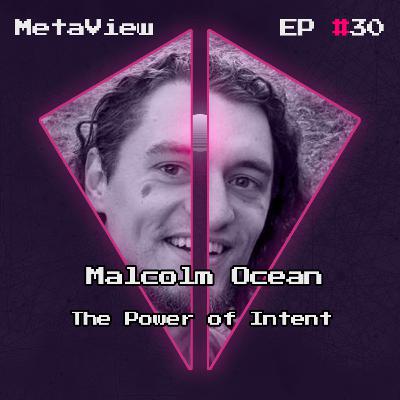
Malcolm & Intentions
In this episode of the MetaView Podcast, we welcome Malcolm Ocean; a goal-setter, developer & a solopreneur who’s been building Intend for the better half of a decade.
Reflecting on his own experience of realizing the power of setting intentions & pursuing values-aligned projects, Malcolm shares his journey of exploring intentionality & his motivation behind starting Intend and how it helps people gain clarity & realize their goals.
His overall idea is that motivation is not something that needs to be forced but simply recognized & channeled, highlighting the importance of understanding what blocks or inhibits motivation.
Why Intend
He primarily built Intend for himself & his friends whom he was helping with goal-setting, but the thing quickly took off to become his primary source of income.
Malcom also explores the differences between Intend, habit-tracking, and to-do apps, noting how Intend focuses on long term goals & fresh daily intentions rather than backlogged tasks or recurring habits. Qualitative reflections instead of metrics.
Like most guests of MetaView, Malcolm emphasizes the importance of playing win-win games & creating collaborative cultures to maximize positive outcomes for everyone involved.
Win-win Games & Self-energizing Teams
Malcolm’s interest stretch far beyond Intend and into team dynamics, consciousness & culture. By showing people how to play better games, he believes that a shift towards collaborative cultures can lead to a more fulfilling and harmonious society.
They go on to explore the idea of self-energizing teams, where individuals find collaborations that align with their own goals & where the motivation becomes effortless.
Highlighting the importance of accountability & the role of financial stakes, the episode concludes with a reflection on the role of clearly set goals & the misconception that monetary incentives are the primary driver of motivation.
"The moment you think you might want to get yourself to do something, you already have motivation to do it. Instead, focus on how to allow yourself to do it."
Some of the topics
Power of intentions
Choosing goals & the importance of deciding what not to do
Recognizing and channeling motivation
Fractal reviews and the satisfaction of tracking progress
Leveraging strengths & collaborations
Self-energizing meta teams & effortless motivation
The role of stakes in goal commitment
The role of money in motivation
Resources:
The Goal-Crafting Intensive - workshop, starting soon
Intend app
Malcolm's Twitter
Intend Philosophy
The Meta-Protocol For Human Trust-Building
A Collaborative Self-Energizing Meta-Team Vision (+two related vision pieces 1, 2)
4min Guided Meditation: Holding And Allowing An Intention
Robert Keegan's book "An Everyone Culture: Becoming a Deliberately Developmental Organization"
Beeminder, StrongLifts, Runkeeper & Notion - apps mentioned

Comments

Download from Google Play

Download from App Store
 United States