


 Claim Ownership
Sermons from St. Sophia, Bellingham, Washington
Subscribed: 8Played: 32
Subscribe

© St. Sophia Orthodox Church
Description
Sunday Homilies from St. Sophia Greek Orthodox Christian Church in Bellingham, Washington.
279 Episodes
Reverse

The Good Samaritan is an icon of Jesus Christ. One who understands this parable will understand the mystery of the Incarnation and the true path to salvation.
St. Paul addresses the Apostle Timothy on how to be an apostle: Learn what the Church teaches. Teach competent people to teach the Gospel. Be soldier-like in your discipline in doing the work of spreading the Gospel. The example of St. Haralambos.
The Context of the parable. What do the symbols of the Parable of the Talents teach us? How did two servants double their "investment"? Why did the one foolish servant completely fail?
Zacchaios is a model of how to hear and respond to the Word of God. What really pleases God: our fellowship with Him.
Our Lord God is good and compassionate. We should never fear to return to Him. We have a God we can admire and love. Gratitude is the reason for the Liturgy. This morning's Gospel passage shows that Repentance is about Two things: 1) Realizing that Jesus is God and has done great things for us, and 2) Return physically to His presence to give thanks. Like the one grateful healed leper, return to Jesus to give thank... making plans to return to be in His physical presence. For Orthodox Christians, this place is in the Church, the Body of Christ, Sunday mornings for Divine Liturgy.
Why do Orthodox Christians call Jesus "the Word"? After His Baptism, Jesus begins his preaching ministry. Jesus saves by words and teachings. He regenerates men's lives by teaching and persuasion. Even his miracles Jesus meant to draw people to his teachings. Jesus' preaching ministry has never ended and never will end, but continues through the ministry of the Church.
Jesus gives a parable about worldly entanglements and lame excuses. We live in a land of exile while anticipating the Heavenly Kingdom promised by Jesus Christ. Jesus entered the land of exile in which we live to draw us to paradise. Do not fall in love with exile. How should Christians live in exile?
Jesus does not "work" on the Sabbath when He healed the woman, but did what God does: He cared for His Creation. God created the Sabbath so that we would remember that He liberates His people from Slavery and that it is the Lord Who makes us "holy." The Divine Liturgy is a call to holy rest.
Bartimeaus, the blind beggar healed by Jesus, shows what pure prayer is like. Jesus heard his pure prayer. The blind man shows us that the model of evangelism is simple: share your story of what Jesus has done for you. Spreading good news bears fruit, as seen in how the blind man's story prepared Zaccheus the tax collector to repent before Jesus.
The concept of "a camel going through the eye of a need" as a metaphor for detachment from the world and a maturing faith. The portal to heaven is a narrow door... but Jesus is "THE Door." Why Jesus objected to being called "Good teacher." Did the ruler consider himself "righteous" because of his accumulated wealth? Did he consider that heaven was guaranteed for him?
The Old Testament context of this parable. How the "Prosperity Gospel" fails when we look at the life and teachings of Christ and His Saints. St. Paul calls Christians to live a "worthy life" in Christ. The Law of Moses was meant to gather a stiff-necked, childish people to make them His "People" awaiting the coming of the Messiah.
What a Shock! God's Power and Grace Radically Heals Those Who Stand In Christ's Presence with Faith. Orthodox Christians understand natural phenomena, but use this understanding to be humble and grow closer to God.
3rd Sunday of Luke.
Homily on the 4th Sunday of Luke. Parable of the Sower. While Jesus provides everything for us, he cannot cultivate hearts for us. Because Jesus respects our free will, he leaves it to each of us to cultivate our spiritual lives.

The very first episode of Saint Sophia Greek Orthodox Church of Bellingham, WA!
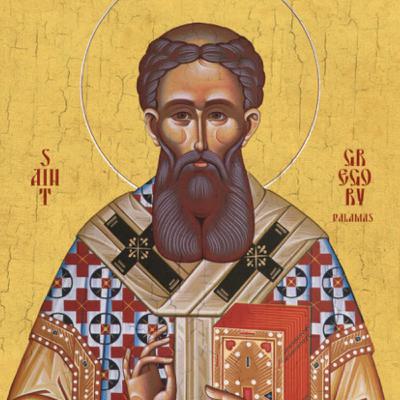
Saint Gregory Palamas, who was from Asia Minor, was from childhood reared in the royal court of Constantinople, where he was instructed in both religious and secular wisdom. Later, while still a youth, he left the imperial court and struggled in asceticism on Mount Athos, and in the Skete at Beroea. He spent some time in Thessalonica being treated for an illness that came from his harsh manner of life. He was present in Constantinople at the Council that was convened in 1341 against Barlaam of Calabria, and at the Council of 1347 against Acindynus, who was of like mind with Barlaam; Barlaam and Acindynus claimed that the grace of God is created. At both these Councils, the Saint contended courageously for the true dogmas of the Church of Christ, teaching in particular that divine grace is not created, but is the uncreated energies of God which are poured forth throughout creation: otherwise it would be impossible, if grace were created, for man to have genuine communion with the uncreated God. In 1347 he was appointed Metropolitan of Thessalonica. He tended his flock in an apostolic manner for some twelve years, and wrote many books and treatises on the most exalted doctrines of our Faith; and having lived for a total of sixty-three years, he reposed in the Lord in 1359.His holy relics are kept in the Cathedral of Thessalonica. A full service was composed for his feast day by the Patriarch Philotheus in 1368, when it was established that his feast be celebrated on this day. Since works without right faith avail nothing, we set Orthodoxy of faith as the foundation of all that we accomplish during the Fast, by celebrating the Triumph of Orthodoxy the Sunday before, and the great defender of the teachings of the holy Fathers today.
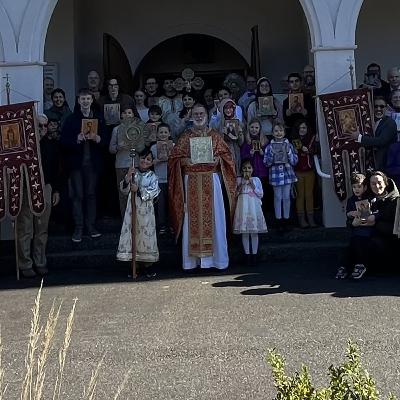
Gospel Reading: John 1:43-51At that time, Jesus decided to go to Galilee. And he found Philip and said to him, "Follow me." Now Philip was from Bethsaida, the city of Andrew and Peter. Philip found Nathanael, and he said to him, "We have found him of whom Moses in the law and also the prophets wrote, Jesus of Nazareth, the son of Joseph." Nathanael said to him, "Can anything good come out of Nazareth?" Philip said to him, "Come and see." Jesus saw Nathanael coming to him, and said of him, "Behold, an Israelite indeed, in whom is no guile!" Nathanael said to him, "How do you know me?" Jesus answered him, "Before Philip called you, when you were under the fig tree, I saw you." Nathanael answered him, "Rabbi, you are the Son of God! You are the King of Israel!" Jesus answered him, "Because I said to you, I saw you under the fig tree, do you believe? You shall see greater things than these." And he said to him, "Truly, truly, I say to you, you will see heaven opened, and the angels of God ascending and descending upon the Son of man."
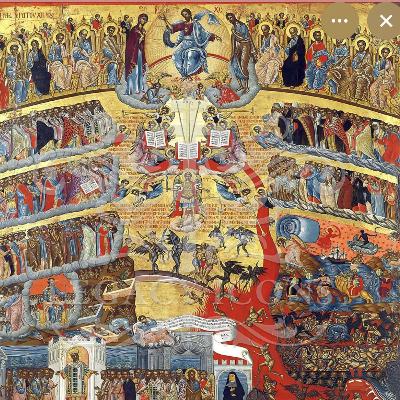
Epistle Reading: St. Paul's First Letter to the Corinthians 8:8-13; 9:1-2Brethren, food will not commend us to God. We are no worse off if we do not eat, and no better off if we do. Only take care lest this liberty of yours somehow become a stumbling block to the weak. For if any one sees you, a man of knowledge, at table in an idol's temple, might he not be encouraged, if his conscience is weak, to eat food offered to idols? And so by your knowledge this weak man is destroyed, the brother for whom Christ died. Thus, sinning against your brethren and wounding their conscience when it is weak, you sin against Christ. Therefore, if food is a cause of my brother's falling, I will never eat meat, lest I cause my brother to fall.Am I not free? Am I not an apostle? Have I not seen Jesus our Lord? Are not you my workmanship in the Lord? If to others I am not an apostle, at least I am to you; for you are the seal of my apostleship in the Lord. Gospel Reading: Matthew 25:31-46The Lord said, "When the Son of man comes in his glory and all the holy angels with him, then he will sit on his glorious throne. Before him will be gathered all the nations, and he will separate them one from another as a shepherd separates the sheep from the goats, and he will place the sheep at his right hand, but the goats at the left. Then the king will say to those at his right hand, 'Come, O blessed of my Father, inherit the kingdom prepared for you from the foundation of the world; for I was hungry and you gave me food, I was thirsty and you gave me drink, I was a stranger and you welcomed me, I was naked and you clothed me, I was sick and you visited me, I was in prison and you came to me.' Then the righteous will answer him, 'Lord, when did we see you hungry and feed you, or thirsty and give you drink? And when did we see you a stranger and welcome you, or naked and clothe you? And when did we see you sick or in prison and visit you?' And the King will answer them, 'Truly, I say to you, as you did it to one of the least of these my brethren, you did it to me.' Then he will say to those at his left hand, 'Depart from me, you cursed, into the eternal fire prepared for the devil and his angels; for I was hungry and you gave me no food, I was thirsty and you gave me no drink, I was a stranger and you did not welcome me, naked and you did not clothe me, sick and in prison and you did not visit me.' Then they also will answer, 'Lord, when did we see you hungry or thirsty or a stranger or naked or sick or in prison, and did not minister to you?' Then he will answer them, 'Truly, I say to you, as you did it not to one of the least of these, you did it not to me.' And they will go away into eternal punishment, but the righteous into eternal life."
Gospel Reading: Luke 15:11-32The Lord said this parable: "There was a man who had two sons; and the younger of them said to his father, 'Father, give me the share of the property that falls to me.' And he divided his living between them. Not many days later, the younger son gathered all he had and took his journey into a far country, and there he squandered his property in loose living. And when he had spent everything, a great famine arose in that country, and he began to be in want. So he went and joined himself to one of the citizens of that country, who sent him into his fields to feed swine. And he would gladly have filled his belly with the pods that the swine ate; and no one gave him anything. But when he came to himself he said, 'How many of my father's hired servants have bread enough and to spare, but I perish here with hunger! I will arise and go to my father, and I will say to him, 'Father, I have sinned against heaven and before you; I am no longer worthy to be called your son; treat me as one of your hired servants.' And he arose and came to his father. But while he was yet at a distance, his father saw him and had compassion, and ran and embraced him and kissed him. And the son said to him, 'Father, I have sinned against heaven and before you; I am no longer worthy to be called your son.' But the father said to his servants, 'Bring quickly the best robe, and put it on him; and put a ring on his hand, and shoes on his feet; and bring the fatted calf and kill it, and let us eat and make merry; for this my son was dead, and is alive again; he was lost, and is found.' And they began to make merry. Now his elder son was in the field; and as he came and drew near to the house, he heard music and dancing. And he called one of the servants and asked what this meant. And he said to him, 'Your brother has come, and your father has killed the fatted calf, because he has received him safe and sound.' But he was angry and refused to go in. His father came out and entreated him, but he answered his father, 'Lo, these many years I have served you, and I never disobeyed your command; yet you never gave me a kid, that I might make merry with my friends. But when this son of yours came, who has devoured your living with harlots, you killed for him the fatted calf!' And he said to him, 'Son, you are always with me, and all that is mine is yours. It was fitting to make merry and be glad, for this your brother was dead, and is alive; he was lost, and is found.'"
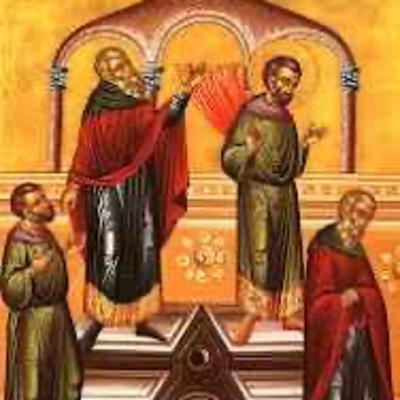
Gospel Reading: Luke 18:10-14The Lord said this parable, "Two men went up into the temple to pray, one a Pharisee and the other a tax collector. The Pharisee stood and prayed thus with himself, 'God, I thank you that I am not like other men, extortioners, unjust, adulterers, or even like this tax collector. I fast twice a week, I give tithes of all that I get.' But the tax collector, standing far off, would not even lift up his eyes to heaven, but beat his breast, saying, 'God, be merciful to me a sinner!' I tell you, this man went down to his house justified rather than the other; for everyone who exalts himself will be humbled, but he who humbles himself will be exalted."

Comments

Download from Google Play

Download from App Store
 United States