


 Claim Ownership
Resus
Subscribed: 7Played: 5
Subscribe

Description
Emergency Medicine
6 Episodes
Reverse
Resuscitation is reaching new limits, with new techniques and technologies giving results that we never thought possible. In Lazarus-like fashion, patients that a few years ago, would have been pronounced deceased, are now leaving hospital to resume their lives, with their families and their work and with very little, if any, deficit. About 8 years…
The post Resuscitation:The Outer limits appeared first on Resus.
Should cardiac arrest patients in asystole be shocked? Is there any advantage to this? What do we know about asystole in cardiac arrest? Patients in asystole are known to have a very poor prognosis, with 0% to 2% surviving to hospital discharge. There is a slightly better prognosis if the rhythm converts spontaneously to a shockable rhythm…
The post Should We Shock Patients in Asystole? appeared first on Resus.
How to Perform Pericardiocentesis Pericardiocentesis is used to treat symptomatic pericardial effusions and cardiac tamponade. It was first described in the 1650’s and since the introduction of the subxiphoid approach in 1911, has been used very successfully, with significant reduction in morbidity and mortality. The use of echocardiography and other guidance techniques have reduced the…
The post Pericardiocentesis appeared first on Resus.
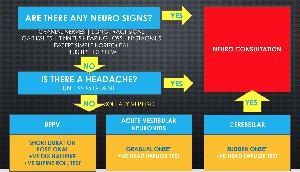
How to Diagnose the Patient with Vertigo in 5 steps This week it’s all about the ‘dizzy’ patient, or that patient with vertigo. I recently spoke at EMCORE Melbourne and went through my step by step approach of sorting, in my mind at least, the potential causes of the ‘dizzy’ patient. Below is a summary…
The post How to Diagnose the Patient with Vertigo in 5 steps appeared first on Resus.
Reading the ECG, is one of the most important skills in Medicine. We are expected to read them expertly and read them quickly. In most cases we have about 20 seconds to recognise that an ECG isn’t normal. That’s why I came up with my own system: “The ECG in 20 Seconds”, because that’s really…
The post How to Read the ECG appeared first on Resus.
I remember the days when we had to reduce hips in the emergency department and I used to have to jump on the bed. Stand there and pull up on the hip with the knee at right angles. In fact I remember, many years ago, working in a small emergency department with one doctor and one nurse overnight because admin refused to put on more staff, and having to give sedation and asking the nurse to hold the bag, whilst I jumped on the bed and pulled the hip back in.
Now that I’m older, I can’t do this any more. But, maybe wisdom allows us to use a different approach. I recently saw this used in the US and loved it.
Remember that the longer the hip has been out, the harder it is to put in. The exception to the rule is the hip that has come out 20 times in the last 2 months. The problem with that hip, is keeping it in. For all other, make sure the patient is well sedated.
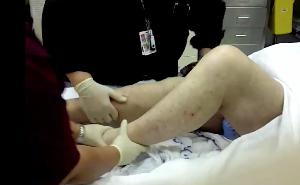
So here is a new technique for putting in hips. I call it the ‘Under/Over lift’. Watch how easily it goes in in this video.
Comments

Download from Google Play

Download from App Store
 United States