


 Claim Ownership
Easy Medical Device Podcast
Subscribed: 265Played: 9,293
Subscribe

© Easy Medical Device Gmbh
Description
My name is Monir El Azzouzi and I am a Medical Device Expert specialized in Quality and Regulatory affairs. And on this podcast I will help you place compliant medical devices on the market. For that I will share with you my knowledge or the one of others through discussion or interviews. I will invite experts in the area to tell you what you can do or the challenges you may encounter.
This podcast is hosted by Podcastics, the easiest platform to create and publish your podcast.
424 Episodes
Reverse

Exploring Artificial Intelligence, Regulatory Strategy, Human Accountability and the Future of Healthcare InnovationArtificial Intelligence is transforming the medical device industry, opening new opportunities for manufacturers, healthcare professionals, and researchers.But as AI becomes increasingly integrated into healthcare technologies and everyday professional activities, important questions remain.Can AI replace human expertise? Who takes responsibility when an AI system makes a mistake? And how can companies introduce AI without compromising safety, quality, or regulatory compliance?During the Tri-national HealthTech Days in Strasbourg, Monir El Azzouzi and Adam participated in a panel discussion exploring these questions alongside representatives from manufacturers, Notified Bodies, and research organizations.Following the panel, they sat down to share their perspectives and reflect on the key challenges facing the healthcare technology industry.Different Perspectives on Artificial IntelligenceOne of the most valuable aspects of the panel discussion was the opportunity to hear from professionals with different backgrounds.Manufacturers, regulatory experts, Notified Bodies, and researchers do not necessarily approach Artificial Intelligence in the same way.Manufacturers are focused on developing innovative products and bringing them to market. Researchers explore new technological possibilities, while regulatory professionals consider safety, performance, evidence, and compliance.Bringing these perspectives together helps develop a broader understanding of both the opportunities and limitations of AI.The discussion also highlighted the need for better guidance and user interfaces to help people understand how AI tools should be configured and used.Can AI Really Replace Medical Device Professionals?One of the central questions discussed during the event was whether AI could eventually replace people working in the medical device industry.AI can already support many activities, including documentation, research, information analysis, and repetitive administrative tasks.However, generating an answer does not necessarily mean that the answer is correct.Medical device companies still need qualified professionals who can understand the information, challenge the results, evaluate the evidence, and make appropriate decisions.This is where the concept of Human-in-the-Loop becomes particularly important.Human experts must remain involved where their expertise and judgment are necessary to ensure the reliability of AI-assisted activities.AI can support your work, but it cannot remove your responsibility for the outcome.Risk Management: Are Disclaimers Enough?AI-enabled medical devices introduce important questions about risk management, particularly when they provide clinical decision support.Some manufacturers may rely on disclaimers or instructions stating that the final decision remains the responsibility of a healthcare professional.But can a disclaimer alone adequately control a risk?The conversation highlights the importance of considering risk reduction through product design before relying on warnings or information for safety.Manufacturers need to understand how their technology will be used in real clinical environments and whether the proposed risk controls are appropriate and effective.Human oversight should be carefully considered as part of the overall risk management strategy rather than treated as an automatic solution to every AI-related risk.Does Every Medical Device Really Need AI?Artificial Intelligence has become a powerful marketing term.Companies increasingly promote their products as AI-powered or AI-driven, but the presence of AI does not automatically make a medical device better.An important question manufacturers should ask is whether Artificial Intelligence provides a meaningful benefit to the intended user.Does it improve clinical performance? Does it reduce workload? Does it address a genuine healthcare problem?Or does it simply introduce additional complexity?For medical device manufacturers, the decision to integrate AI should be driven by the intended purpose, user needs, and expected benefits of the technology.Why Startups Should Consider Regulatory Strategy EarlyA recurring challenge for healthcare technology startups is discovering regulatory requirements too late in the development process.Entrepreneurs may initially focus on building their software, developing new functionalities, attracting investors, or finding potential customers.However, entering the medical device market requires additional considerations.Depending on the product, these can include:Medical device classification.Software development and validation.Cybersecurity requirements.Usability engineering.Risk management.Clinical evidence.Technical Documentation.Discovering these requirements after development can lead to additional testing, unexpected expenses, and delays.For startups operating with limited resources, these challenges can significantly affect the viability of a project.Involving regulatory experts early can help companies avoid costly development mistakes and establish a more realistic path to market.CE Marking Does Not Guarantee ReimbursementAnother important topic discussed during the event was the relationship between regulatory compliance and reimbursement.For many medical device manufacturers, obtaining CE marking represents a major milestone.However, successfully completing the conformity assessment process does not automatically mean that a product will be reimbursed by healthcare systems.Reimbursement involves separate considerations, including health economics, clinical benefits, costs, and the value a technology brings to healthcare organizations and patients.A medical device may meet the applicable requirements for CE marking while still facing difficulties achieving commercial adoption because of reimbursement barriers.This is particularly relevant for digital health technologies, where demonstrating benefits such as time savings and improved workflow efficiency may be important.Aligning Regulatory Strategy with Health Technology AssessmentHealth Technology Assessment (HTA) plays an important role in evaluating the broader value of healthcare technologies.One of the challenges discussed during the conversation was the selection of appropriate clinical comparators.Manufacturers may generate clinical evidence that supports their conformity assessment but later discover that reimbursement decision-makers expect different evidence or comparisons.Addressing these expectations early may help manufacturers design clinical investigations that support multiple objectives.Although reimbursement decisions remain country-specific, better coordination between clinical development, regulatory strategy, and evidence requirements can help companies prepare more effectively.The discussion highlights the importance of considering regulatory compliance, market access, intellectual property, and reimbursement together during product development.The Risks of Overconfidence in AI-Generated ContentAI tools can produce convincing responses, even when the information they provide is incomplete or incorrect.This becomes particularly concerning when AI-generated content is incorporated into regulatory documentation without appropriate verification.An AI system may provide inaccurate information with the same confidence as a correct answer.The conversation also explored the importance of selecting AI models that are appropriate for the intended task and understanding their limitations.For medical device professionals, the principle remains simple:If you cannot understand, explain, or verify an AI-generated conclusion, you should not rely on it blindly.Professional judgment and responsibility remain essential, regardless of how advanced the technology becomes.The Importance of Cross-Industry CollaborationThe Tri-national HealthTech Days also provided an opportunity to explore knowledge sharing across different industries.Healthcare, pharmaceuticals, biotechnology, automotive, and other sectors are facing similar questions about Artificial Intelligence, automation, safety, and technological innovation.Sharing experiences across these industries may help organizations identify useful approaches and avoid unnecessarily duplicating development efforts.However, transferring technologies or methods between sectors requires careful consideration of the specific safety, regulatory, and ethical expectations of each application.Connecting the MedTech Community Across Three CountriesOne of the strengths of the Tri-national HealthTech Days was bringing together professionals from France, Germany, and Switzerland.The event created opportunities for startups, researchers, manufacturers, investors, and regulatory professionals to exchange ideas and build new relationships.For healthcare technology startups, these connections can be valuable when looking for technical expertise, regulatory support, research collaborations, or investment opportunities.Innovation does not happen in isolation.Events like these allow companies to learn from different experiences, discover new opportunities, and build relationships that may support their future development.Continue the Discussion with MedTech Open OfficeArtificial Intelligence and medical device regulation are evolving rapidly, and many professionals have questions about how these developments affect their activities.Through MedTech Open Office, we provide an opportunity for medical device professionals to discuss regulatory challenges, ask questions, and exchange practical insights.Explore our previous sessions and submit your questions directly through the website.Visit: https://medtechopenoffice.com/Final Thoughts: The Future of AI in MedTech Still Needs HumansArtificial Intelligence offers significant opportunities for healthcare innovation and the medical device industry.It ca

How Medical Device Manufacturers Can Prepare Their Teams, Processes, and Documentation for an Unexpected AuditImagine arriving at work and discovering that two Notified Body auditors are already waiting at reception.Your Quality Manager is on holiday.Production is running as usual.The receptionist doesn't know whom to contact, and the person responsible for retrieving Quality Management System records is unavailable.Would your organization know what to do?This scenario highlights an important weakness that can exist even in companies with well-established procedures and experienced employees.A Quality Management System may appear organized on paper, but if the company's audit response depends entirely on one individual, its readiness may be more fragile than expected.In this episode of Medical Device Made Easy, we explore how medical device manufacturers can prepare for unannounced Notified Body audits by establishing clear responsibilities, reliable communication, accessible documentation, and practical response procedures.The objective is simple: build an audit response system that works even when your usual Quality Manager is not available.What Are Notified Body Auditors Actually Looking For?An unannounced audit is not simply an exercise in checking whether procedures exist.Auditors want to understand whether the company's actual working practices are consistent with its documented processes and applicable regulatory requirements.This may involve examining manufacturing activities, product conformity, process controls, records, suppliers, outsourced processes, and relevant sampling or testing activities.Consider a manufacturer producing sterile medical devices.An auditor selects a particular batch and asks the company to demonstrate its complete manufacturing history.The investigation may follow the product through several stages:Components → Manufacturing → Packaging → Sterilization → ReleaseAt each stage, the auditor may ask:Which materials and components were used?Who performed the manufacturing activities?Were the equipment and processes appropriately controlled?Were deviations identified and managed?What records demonstrate the activities performed?Who authorized the product's release?The company must be able to connect its procedures and records to the actual product being evaluated.Having documentation is useful. Being able to demonstrate what happened to a real product is essential.1. People: Establish Clear Responsibilities and BackupsOne of the most important elements of unannounced audit preparation is defining who takes responsibility when auditors arrive.Every manufacturer should consider establishing an internal response structure that includes an Audit Leader and a designated deputy.Depending on the organization, the team may also involve representatives from Quality Assurance, Regulatory Affairs, Manufacturing, Warehouse, document coordination, and Management.However, assigning names to responsibilities is not enough.A deputy must be able to perform the role effectively.For example, appointing a backup Quality Manager provides little value if that person cannot access the necessary documentation or make the decisions required to coordinate the response.It is also important to distinguish between coordinating the audit and explaining operational activities.Quality Assurance may coordinate the response, but process owners should be able to explain their own work.This helps auditors understand how the Quality Management System operates throughout the organization.2. Alert: Make Sure Everyone Knows What to DoAn unannounced audit may begin at reception, not in the Quality Department.That makes reception and security personnel an important part of audit readiness.They should have clear instructions explaining what to do when auditors arrive.An effective internal notification process should identify:The primary contact responsible for responding.A designated deputy.An escalation route if neither person is available.Appropriate telephone or messaging contacts.Supporting email distribution lists.Arrangements covering different shifts, holidays, and absences.A useful question to ask is:If your primary contact doesn't answer, what happens next?If the answer is unclear, the communication process needs attention.Companies may establish internal response targets to evaluate their readiness.For example, they might aim to acknowledge an alert within five minutes, involve the audit coordinator within ten minutes, and retrieve a simple requested record within fifteen minutes.These are examples of internal performance objectives, not regulatory deadlines or permission to delay auditor access.The goal is to establish a response that is organized, prompt, and reliable.3. Rooms: Organize Audit Coordination and Evidence ManagementWhen auditors arrive, the organization needs a practical way to coordinate discussions, retrieve documents, and track requests.One approach is to prepare two working areas.The Front RoomThe front room is used for discussions with auditors, reviewing requested evidence, and coordinating the audit activities.The Back RoomThe back room supports the internal team responsible for retrieving documentation, contacting process owners, and managing outstanding requests.An alternative space should also be considered in case the usual rooms are unavailable.A simple request log can help the team track:What the auditor requested.Who is responsible for providing it.Which requests remain pending.What information has already been supplied.However, coordinating evidence must never become an exercise in hiding or manipulating information.Records should never be backdated, altered, or created retrospectively to improve their appearance during an audit.The purpose of coordination is to provide accurate and complete information efficiently.4. Access: Can Your Team Retrieve the Evidence?A procedure is only useful during an audit if the relevant employees can access it when needed.Imagine that an auditor requests a released batch record.The document exists, but only the absent Quality Manager has permission to open the system.The company now faces an avoidable problem.To prepare effectively, manufacturers should test access to important information, including:Quality Management System procedures.Manufacturing and batch records.Process validation documentation.Supplier and outsourced-process records.Product release information.Relevant testing and inspection results.The deputy should test these systems using their own authorized account rather than relying on another employee's credentials.Physical access is equally important.Manufacturers should consider how auditors will access relevant production areas, including any necessary safety instructions, gowning arrangements, or cleanroom requirements.A logical manufacturing route can help the company organize its response, but auditors must still be able to select relevant areas and activities within the applicable audit scope.Audit readiness means being able to demonstrate the actual work—not simply presenting selected documents.5. Practice: Test the System Before Auditors ArriveThe most effective way to identify weaknesses in an audit response procedure is to test it.A company may have clear instructions and designated backups, but those arrangements should be evaluated under realistic conditions.One useful exercise is a mock unannounced audit in which the usual Audit Leader is deliberately unavailable.The exercise can begin at reception.Can the receptionist identify the correct contact?Does the notification cascade work?Can the deputy coordinate the response?Are operators and supervisors comfortable explaining their activities?Can the team retrieve the complete history of a released production batch?These exercises can reveal practical weaknesses that are not obvious when reviewing procedures.After the exercise, the organization should document the gaps, assign improvement actions, and verify that the changes are effective.Training should also reflect the responsibilities of different employees.Reception staff need to understand notification procedures.Operators need to explain the work they actually perform.Supervisors should understand their processes and supporting records.The objective is not to teach employees scripted answers.It is to help them accurately explain their real activities and demonstrate the evidence supporting them.What Should Happen When Auditors Actually Arrive?When an unannounced audit begins, the organization should follow its established response process.Reception promptly verifies the auditors' identity and contacts the designated representative.The notification cascade begins, and the Audit Leader or deputy assumes responsibility for coordination.Internal support activities can then be organized while facilitating the auditors' access.A brief opening discussion may establish the audit priorities and practical arrangements.From there, process visits and evidence requests begin.For example, an auditor may ask:“Show me this production batch.”The Document Coordinator records the request, the Manufacturing team identifies the relevant information, and the response team tracks the evidence until it is supplied.Throughout the process, employees should focus on accuracy.Consider these two examples.Poor response:“We always do it this way.”Better response:“Here is the instruction I follow, and this is the record showing the check I performed.”Another example involves a missing signature.Poor response:“The signature is missing. I'll add it now.”Better response:“The entry is missing. We need to investigate the issue and assess its potential impact.”An audit should reflect the actual state of the Quality Management System.When employees cannot answer a question, they should explain the limitation and refer it to the appropriate person rather than speculate.After the Audit: Turn Findings into ImprovementsThe audit response does not end when the au
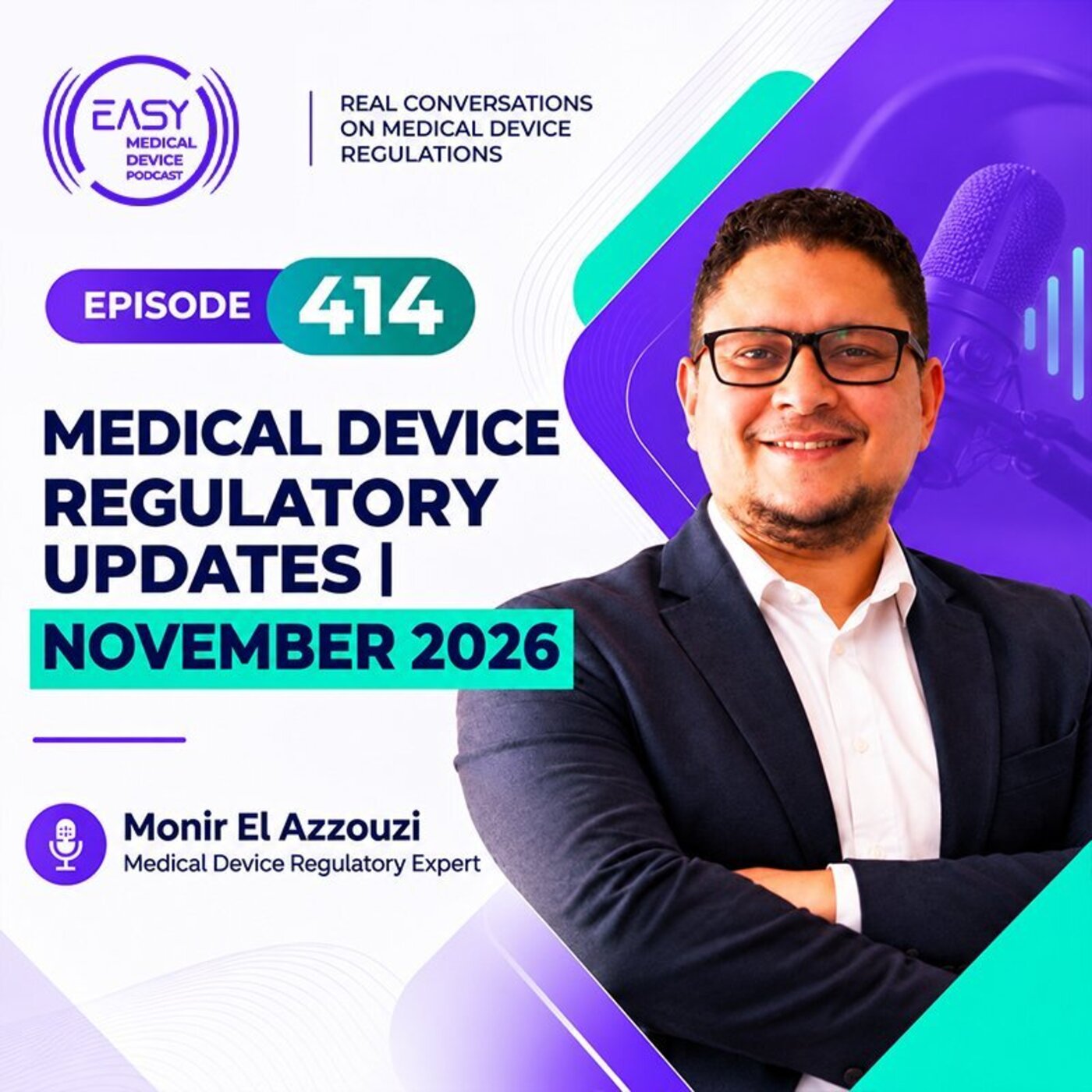
By Easy Medical Device | November 2026November 2026 brings another series of important regulatory developments for the medical device industry.In Europe, manufacturers are facing updated guidance on EUDAMED, IVDR certification, joint scientific consultations, and clinical evidence for orphan IVDs.The United Kingdom has announced significant developments concerning CE marking recognition and the future regulation of artificial intelligence in healthcare.Meanwhile, Switzerland, Canada, China, and the United States are introducing updates that medical device manufacturers and regulatory professionals should follow.In this month's Medical Device Regulatory Update, we review the key announcements and explain why they deserve attention.European Union: EUDAMED, IVDR and Clinical EvidenceEUDAMED: Updated Responsibilities for SSCP and SSP ManagementThe European Commission published MDCG 2026-4 Rev.1 on October 30, 2026, addressing the management of Summaries of Safety and Clinical Performance (SSCP) and Summaries of Safety and Performance (SSP) in EUDAMED following its mandatory use.These documents play an important role in communicating safety and performance information for applicable medical devices and IVDs.The updated position paper is particularly relevant for manufacturers and notified bodies preparing their EUDAMED workflows.Why it matters: Organizations should review the updated guidance to understand the applicable responsibilities for managing and uploading these summaries and ensure that their internal procedures reflect the relevant arrangements.Read the European Commission updateTeam-NB Publishes Version 2 of Its IVDR Certification Process DocumentTeam-NB has released version 2 of its industry consensus document on the IVDR certification process.For IVD manufacturers, understanding the certification journey is essential for planning submissions, preparing documentation, and coordinating activities with notified bodies.The document offers an industry perspective on the certification process and can help manufacturers better understand the stages involved.Why it matters: Manufacturers preparing for IVDR certification should consider this document alongside the applicable legal requirements and official guidance when planning their conformity assessment activities.Read the Team-NB publicationUpdated Guidance on Joint Scientific ConsultationsThe European Commission has published version 4 of the procedural guidance for Joint Scientific Consultations (JSC) concerning medical devices and in vitro diagnostic medical devices.Joint scientific consultations form part of the European health technology assessment framework.They provide a structured process for obtaining scientific advice on aspects of clinical development and evidence generation.Why it matters: Manufacturers considering a joint scientific consultation should review the updated procedural guidance to understand the process and its requirements.Access the European Commission guidanceMDCG 2026-6: Clinical Evidence for Orphan IVDsAnother important development is the publication of MDCG 2026-6, addressing clinical evidence for orphan in vitro diagnostic medical devices.Orphan IVDs can present particular challenges when generating clinical evidence, especially where the relevant patient populations or conditions are uncommon.Manufacturers must consider how to establish appropriate evidence while addressing the specific circumstances of these devices.Why it matters: Companies developing orphan IVDs should review this guidance when planning their performance evaluation and clinical evidence strategies.Read MDCG 2026-6United Kingdom: CE Marking and Artificial IntelligenceUK Confirms Indefinite Recognition of CE-Marked Medical DevicesThe UK government has confirmed the indefinite recognition of CE-marked medical devices.This is an important announcement for manufacturers supplying the UK market and companies planning their future regulatory strategies.However, CE recognition does not eliminate applicable UK-specific requirements.Manufacturers still need to understand the relevant market access obligations and ensure that their devices meet the requirements applicable to their circumstances.Why it matters: Companies selling CE-marked devices in the UK should review the announcement and assess its implications for their market access plans.Read the UK government announcementUK Accepts 44 Recommendations on AI Regulation in HealthcareArtificial intelligence continues to be a major regulatory topic, particularly in healthcare.The UK government has published its response to the National Commission's recommendations on the regulation of AI in healthcare, accepting all 44 recommendations.The response outlines the direction of future regulatory work, with additional consultations and guidance expected.For developers of AI-enabled healthcare technologies, this represents an important policy development.Why it matters: Companies developing or using AI in healthcare should monitor the upcoming consultations and guidance. Acceptance of the recommendations should not be confused with all proposed measures already being legally implemented.Read the government responseSwitzerland: Updated swissdamed GuidanceSwissmedic has updated its operational guidance for swissdamed, Switzerland's medical device database.The guidance supports economic operators working with the system and its actor-related processes.Manufacturers, authorized representatives, importers, and other relevant operators should remain aware of applicable registration and database requirements.Why it matters: Companies operating in the Swiss market should review the updated instructions and ensure that their swissdamed processes remain aligned with current guidance.Swissmedic swissdamed supportA dedicated swissdamed webinar is also scheduled for November 10, 2026.Webinar detailsCanada: Medical Device Establishment Licensing and InspectionsHealth Canada has updated guidance and inspection materials concerning Medical Device Establishment Licences (MDEL).The resources address how Health Canada inspects medical device establishments and include supporting inspection checklists.These materials are relevant for organizations seeking to understand how compliance with establishment-related requirements is assessed.Why it matters: Companies holding or requiring an MDEL should review the inspection guidance and checklists to assess their readiness and identify areas that may need attention.Health Canada inspection guidanceHealth Canada inspection checklistsChina: Revised Medical Device GMP Takes EffectChina's revised Good Manufacturing Practice (GMP) requirements for medical devices took effect on November 1, 2026.This development is relevant for manufacturers operating in China or working with manufacturing partners subject to Chinese medical device requirements.Quality management and manufacturing controls are central to maintaining consistent product quality and regulatory compliance.Why it matters: Affected manufacturers should review the revised requirements and evaluate whether updates to their quality management and manufacturing processes are necessary.Read the NMPA announcementUnited States: FDA Proposes Electronic IDE Submission TemplateThe FDA has published draft guidance concerning an electronic submission template for Investigational Device Exemption (IDE) applications.IDE applications are an important part of the regulatory pathway for certain clinical investigations involving medical devices.The proposed structured electronic approach is relevant for sponsors preparing submissions and planning future clinical investigation activities.Why it matters: Sponsors and regulatory professionals should review the draft guidance and monitor subsequent developments.Because the document is draft guidance, it should not be presented as a finalized mandatory submission requirement.Read the FDA draft guidanceUpcoming Medical Device Industry EventsSeveral industry events are scheduled for November 2026.RAPS AI in Regulatory Conference 2026November 5–6, 2026An event focusing on artificial intelligence and its role in regulatory affairs.Event information6th Qserve Medtech ConferenceNovember 10–12, 2026An opportunity for medical device professionals to explore regulatory and industry topics.Event informationswissdamed WebinarNovember 10, 2026A webinar focused on the Swiss medical device database.Event informationOrganizing an event for medical device professionals?You can register and promote your event for free on Medtechconf.com.Latest Medical Device Made Easy Podcast EpisodesAlongside the regulatory developments, October featured several conversations exploring practical challenges in the medical device industry.AI Is Already Inside Your QMS – But Is It Under Control?Artificial intelligence may already be used within regulated activities, even when companies have not formally introduced it.This episode explores shadow AI, its potential risks, and a practical green, amber, and red approach to controlling AI use proportionately.AI Agents for Your Medical Device Business – Where Do You Start?AI agents can offer opportunities for smaller medical device companies, but getting started does not necessarily require complex infrastructure.This episode discusses practical first steps, identifying suitable use cases, and introducing AI agents into business workflows.Listen to the episodeCan AI Really Write Your Clinical Evaluation Report?Can AI help with clinical literature reviews and Clinical Evaluation Reports?This conversation explores where AI tools can support evidence screening and documentation, and why qualified clinical judgment remains essential.Listen to the episodeWe Didn't Know We Needed to Be a Medical Device – Our Journey to CE MarkingWhat happens when a technology startup discovers that its healthcare solution needs to comply with medical device regulations?Pedro Thomaz from Revert shares the company's journey from

From Virtual Reality Innovation to Medical Device Compliance: The Story of Pedro Thomaz and RevertMany healthcare technology startups begin with a simple objective: develop an innovative solution that addresses a real problem.They focus on technology, product development, customer needs, and demonstrating the value of their solution.But what happens when they discover that entering the healthcare market also means complying with medical device regulations?For a small technology company, that discovery can introduce unexpected challenges involving regulatory requirements, documentation, testing, clinical evidence, costs, and timelines.In this episode of Medical Device Made Easy, Monir El Azzouzi welcomes Pedro Thomaz from Revert, a company developing virtual reality solutions for healthcare.Pedro shares the journey of a small technology company that moved from developing a VR solution to navigating the European medical device regulatory framework.The conversation explores the challenges, decisions, external support, and lessons that shaped the company's path toward CE marking.From a Virtual Reality Idea to a Healthcare SolutionVirtual reality technology offers opportunities to create immersive experiences and explore new applications in healthcare.But developing a technological solution and bringing a regulated medical device to market are two different challenges.Pedro takes us back to the beginning of Revert's journey.How did the original idea emerge? What problem was the company trying to solve? Why did it initially focus on nursing homes?The discussion explores how the company's early experiences influenced the development of its VR solution and its ambitions within the healthcare sector.The Unexpected Discovery: We Needed to Become a Medical Device ManufacturerOne of the defining moments in the company's journey came when it began approaching hospitals.What had started as a technology project now required consideration of medical device regulatory requirements.For a startup without previous experience in this field, the situation raised several important questions.Where should we begin?What requirements apply to our product?How much will compliance cost?Do we have the knowledge and resources to manage this process?The episode explores how Pedro and his team responded to this unexpected challenge and what convinced them to continue.Understanding Medical Device Regulatory RequirementsMoving into the medical device industry requires companies to develop an understanding of their regulatory responsibilities.For technology-focused startups, this may involve unfamiliar concepts such as intended purpose, device classification, risk management, clinical evaluation, Technical Documentation, and conformity assessment.Pedro discusses how the team approached these requirements and what they learned while preparing for compliance.The conversation also explores the challenges of identifying the necessary activities and deciding which responsibilities could realistically be handled internally.Why External Regulatory Support MattersSmall companies rarely have unlimited resources or large regulatory departments.When facing unfamiliar regulatory requirements, working with external specialists can provide valuable support.Pedro explains how Revert identified an external regulatory partner and why the company decided to seek assistance.The discussion examines the division of responsibilities between the internal team and external experts.It also considers an important question for other startups:Would involving regulatory professionals earlier have made the journey easier?For companies entering the medical device industry, understanding when to seek external expertise can be an important part of planning.How Compliance Affects Product DevelopmentBecoming a medical device manufacturer isn't simply about preparing documentation.Regulatory requirements may influence how a product is designed, developed, tested, and evaluated.For Revert, the journey raised questions about the technical and clinical evidence needed to support its VR solution.The episode explores whether the company needed to modify its development approach, perform additional testing, or prepare new documentation.It also examines the role of healthcare professionals in evaluating the technology and supporting its intended medical applications.Managing Costs and Workload as a Small CompanyRegulatory compliance can introduce significant challenges for startups operating with limited financial and human resources.Documentation, testing, external expertise, and regulatory activities all require time and investment.At the same time, the company must continue developing its product, supporting customers, and managing daily business operations.Pedro shares the challenges of balancing these responsibilities and reflects on the activities that required the greatest effort.The conversation offers a practical perspective on how small technology companies can approach regulatory work without the resources of a large medical device manufacturer.The Journey Toward CE Marking and Registration in PortugalAn important milestone in Revert's journey was completing the applicable Class I conformity process and registration activities.Pedro discusses the final stages of preparing the company and its documentation for the European market.The episode also explores Revert's experience with INFARMED, the Portuguese competent authority.Topics include documentation readiness, registration activities, and any questions or challenges encountered during the process.The experience provides a real-world perspective on the steps a small company may need to navigate before placing its medical device on the market.CE Marking Is Not the End of Regulatory ComplianceReaching the market is an important milestone, but it doesn't mean that regulatory responsibilities disappear.Medical device manufacturers must continue to manage their products throughout their lifecycle.This includes maintaining appropriate documentation, monitoring product performance, managing feedback, and addressing relevant regulatory obligations.The conversation explores how Revert approaches ongoing compliance with a small team and what the company learned after entering the market.CE marking is a milestone in the regulatory journey—not the end of it.Preparing for Future GrowthAs healthcare technology companies grow, their regulatory strategies may also need to evolve.New applications, changes to intended purpose, additional clinical evidence, and expansion into new markets can introduce further requirements.Pedro discusses Revert's future ambitions and how the company is considering the regulatory implications of growth.The episode also explores what a move to a higher medical device classification could mean for a small company and the challenges associated with international expansion.Lessons for Other Medical Device StartupsLooking back at the entire journey, Pedro reflects on the challenges that were more difficult than expected and the decisions that helped the company move forward.What would he do differently?Which mistakes could other startups avoid?And what advice would he give to a technology company that is just beginning to explore healthcare applications?These questions are particularly relevant for entrepreneurs who may not yet realize that their product could fall within the scope of medical device regulation.Discover Revert's Virtual Reality SolutionsBeyond the regulatory journey, the episode also introduces Revert's current activities and virtual reality solutions.Pedro discusses the company's approach, the healthcare environments it works with, and potential opportunities for collaboration.Listeners interested in VR applications in healthcare can learn more about the company's technology and the types of partnerships it is seeking.Final Takeaway: Consider Regulatory Requirements EarlyThe journey from an innovative technology idea to a regulated medical device can involve challenges that startups don't initially anticipate.For Revert, developing a virtual reality solution was only part of the story.Understanding regulatory requirements, finding appropriate external support, preparing documentation, managing resources, and navigating the European market-entry process became essential elements of the company's development.The experience highlights an important lesson for healthcare technology entrepreneurs:Don't wait until your product is ready for hospitals to investigate whether it qualifies as a medical device.Understanding regulatory requirements early can help companies make better development decisions, plan resources, and avoid unnecessary surprises.🎙️ In this episode of Medical Device Made Easy, Pedro Thomaz from Revert shares the real-world challenges and lessons behind the company's journey toward CE marking.Because bringing innovation to healthcare requires more than great technology—it also requires a clear path to regulatory compliance.Who is Monir El Azzouzi? Monir El Azzouzi is the founder and CEO of Easy Medical Device a Consulting firm that is supporting Medical Device manufacturers for any Quality and Regulatory affairs activities all over the world. Monir can help you to create your Quality Management System, Technical Documentation or he can also take care of your Clinical Evaluation, Clinical Investigation through his team or partners. Easy Medical Device can also become your Authorized Representative and Independent Importer Service provider for EU, UK and Switzerland. Monir has around 16 years of experience within the Medical Device industry working for small businesses and also big corporate companies. He has now supported around 100 clients to remain compliant on the market. His passion to the Medical Device filed pushed him to create educative contents like, blog, podcast, YouTube videos, LinkedIn Lives where he invites guests who are sharing educative information to his audience. Visit ea

Exploring AI-Assisted Clinical Evaluation with Ethan Drower from CiteMedArtificial Intelligence is changing how medical device companies approach documentation, information management, and regulatory activities.One area attracting increasing attention is Clinical Evaluation.AI-powered tools promise to support literature reviews, organize clinical evidence, generate structured documentation, and potentially reduce the time required to prepare Clinical Evaluation Reports (CERs).But an important question remains:Can AI actually write a Clinical Evaluation Report, or does the process still depend on experienced clinical evaluation professionals?In this episode of Medical Device Made Easy, we welcome Ethan Drower from CiteMed to explore the practical possibilities and limitations of AI-assisted clinical evaluation.The conversation follows the journey from preparing the necessary inputs to reviewing the finished documentation, examining where AI may provide value and where qualified human expertise remains essential.Can Someone Without Clinical Evaluation Experience Use AI to Write a CER?One of the most important questions surrounding AI-assisted clinical evaluation is whether these tools make the process accessible to professionals without specific clinical evaluation experience.Could a QA/RA professional who has never written a Clinical Evaluation Report use AI software to prepare one?And if so, where would they still need guidance?The episode explores the difference between using software to generate documentation and possessing the expertise required to assess its scientific and regulatory adequacy.While AI may assist with certain activities, interpreting clinical evidence, evaluating its relevance, and supporting conclusions require appropriate knowledge and judgment.Preparing the Right Inputs Before Using AIA useful clinical evaluation workflow begins long before opening an AI tool.Manufacturers need to understand the device being evaluated and establish a clear foundation for the evaluation.This includes:Device information and characteristics.Intended purpose and clinical claims.Available clinical evidence.Clinical evaluation strategy.Documentation structure and templates.The discussion also considers how document templates can influence AI-assisted workflows.A clear and consistent structure may support efficient documentation, while poorly designed templates can introduce unnecessary complexity.AI output depends heavily on the quality and organization of the information provided.How Can AI Support Literature Review and Evidence Collection?Literature review is a critical component of clinical evaluation and can involve significant effort.Identifying relevant publications, screening search results, extracting information, and organizing evidence all require time and attention.The episode explores how AI tools may assist with different stages of this process, including literature screening, summarization, and the preparation of evidence tables.However, AI-generated recommendations should not automatically determine which studies are included or excluded.Qualified evaluators must assess the relevance, quality, and applicability of the evidence.The objective is to explore how automation can reduce repetitive work without weakening the scientific foundation of the clinical evaluation.From Clinical Evidence to a Draft Clinical Evaluation ReportOnce relevant evidence has been collected, the next challenge is transforming it into coherent clinical evaluation documentation.AI may help organize information and prepare draft sections, but a Clinical Evaluation Report must do more than summarize publications.It needs to connect the available evidence to the device's intended purpose, clinical claims, safety, and performance.The conversation explores how AI-assisted workflows can support this process while maintaining traceability.Important questions include:Can every significant statement be traced back to its source?Does the available evidence actually support the proposed conclusion?What happens when the evidence is incomplete, conflicting, or insufficient?These questions demonstrate why clinical evaluation remains an evidence-based professional activity rather than simply a documentation exercise.A Convincing AI-Generated CER Is Not Necessarily a Good CERGenerative AI can produce professional-looking documentation.But clear writing and confident conclusions do not automatically demonstrate scientific validity.The episode examines how experienced professionals can evaluate AI-generated reports and identify potential problems.These may include unsupported claims, missing information, inaccurate summaries, inappropriate interpretation of evidence, or conclusions that are not justified by the available data.The quality of a Clinical Evaluation Report depends on the quality of its evidence and reasoning—not simply how well it is written.Appropriate review and approval remain essential parts of the process.Can AI Really Save Time and Resources?Efficiency is one of the main reasons manufacturers are interested in AI-assisted clinical evaluation.But where can meaningful savings actually occur?The discussion explores activities that may benefit from automation, including literature screening, information extraction, evidence organization, and initial drafting.It also considers the work that continues to require significant human effort, such as critical appraisal, interpretation, review, and approval.Another important consideration is whether the benefits differ between preparing a first Clinical Evaluation Report and updating an existing one.For manufacturers evaluating AI tools, the key is to measure practical value rather than assuming that automation will automatically reduce overall costs.Training Teams and Introducing AI into Clinical EvaluationAdopting AI-assisted clinical evaluation involves more than learning how to operate software.Teams need to understand the clinical evaluation process itself, the limitations of the technology, and the controls necessary to maintain reliable documentation.The episode explores how manufacturers can introduce these workflows through manageable pilot projects.It also examines when existing AI tools may be sufficient and when a dedicated platform could provide additional support.For experienced clinical evaluation writers, successful adoption may depend on demonstrating how the technology can complement their expertise rather than attempting to replace their established methods.Discovering CiteMed's ApproachDuring the conversation, Ethan Drower also introduces CiteMed and discusses its approach to supporting clinical evaluation activities.The discussion includes the types of workflows its platform supports, the professionals it is designed for, and the onboarding or training available to customers.This provides an opportunity to understand how dedicated software solutions may fit into existing clinical evaluation processes.Final Takeaway: AI Can Assist, but Clinical Judgment Still MattersArtificial Intelligence has the potential to support clinical evaluation workflows by helping professionals manage information, organize evidence, and prepare documentation more efficiently.However, clinical evaluation cannot be reduced to automatically generating a report.It requires a clear evaluation strategy, appropriate evidence, scientific reasoning, traceability, and qualified review.AI can help write the document. But qualified professionals must ensure that the evidence supports the conclusions.For medical device manufacturers, the opportunity lies in combining the efficiency of AI-assisted tools with the knowledge and judgment of experienced clinical evaluation professionals.🎙️ In this episode of Medical Device Made Easy, Ethan Drower from CiteMed helps explore what that balance could look like in practice.Can AI really write your Clinical Evaluation Report? Discover where technology can help—and where human expertise remains indispensable.Who is Monir El Azzouzi? Monir El Azzouzi is the founder and CEO of Easy Medical Device a Consulting firm that is supporting Medical Device manufacturers for any Quality and Regulatory affairs activities all over the world. Monir can help you to create your Quality Management System, Technical Documentation or he can also take care of your Clinical Evaluation, Clinical Investigation through his team or partners. Easy Medical Device can also become your Authorized Representative and Independent Importer Service provider for EU, UK and Switzerland. Monir has around 16 years of experience within the Medical Device industry working for small businesses and also big corporate companies. He has now supported around 100 clients to remain compliant on the market. His passion to the Medical Device filed pushed him to create educative contents like, blog, podcast, YouTube videos, LinkedIn Lives where he invites guests who are sharing educative information to his audience. Visit easymedicaldevice.com to know more. If you need help implementing QMSR or preparing your teams for FDA inspections, contact: [email protected] Drower's linkedin: https://www.linkedin.com/in/ethandrower/CiteMed: https://citemed.com/podcast-materials/CiteMed's linkedin: https://www.linkedin.com/company/getcitemed/Social Media to followMonir El Azzouzi Linkedin: https://linkedin.com/in/melazzouziTwitter: https://twitter.com/elazzouzimPinterest: https://www.pinterest.com/easymedicaldeviceInstagram: https://www.instagram.com/easymedicaldevice This podcast is hosted by Podcastics, the easiest platform to create and publish your podcast.

Comments

Download from Google Play

Download from App Store
 United States