


 Claim Ownership
Digital HR Leaders with David Green
Subscribed: 549Played: 20,268
Subscribe

© Insight222
Description
In this series, David Green will be speaking to a range of senior HR leaders who are pushing a data-driven and digital HR agenda. There is an increasing need for HR professionals to become more digitally and numerically literate – to acquire the skills necessary to process, produce and leverage digital information to create business value. You'll hear from people leaders who are driving transformation in their organisations on how HR can prepare for the future and what HR leaders need to do to prepare for the Future of Work.
Hosted on Acast. See acast.com/privacy for more information.
321 Episodes
Reverse
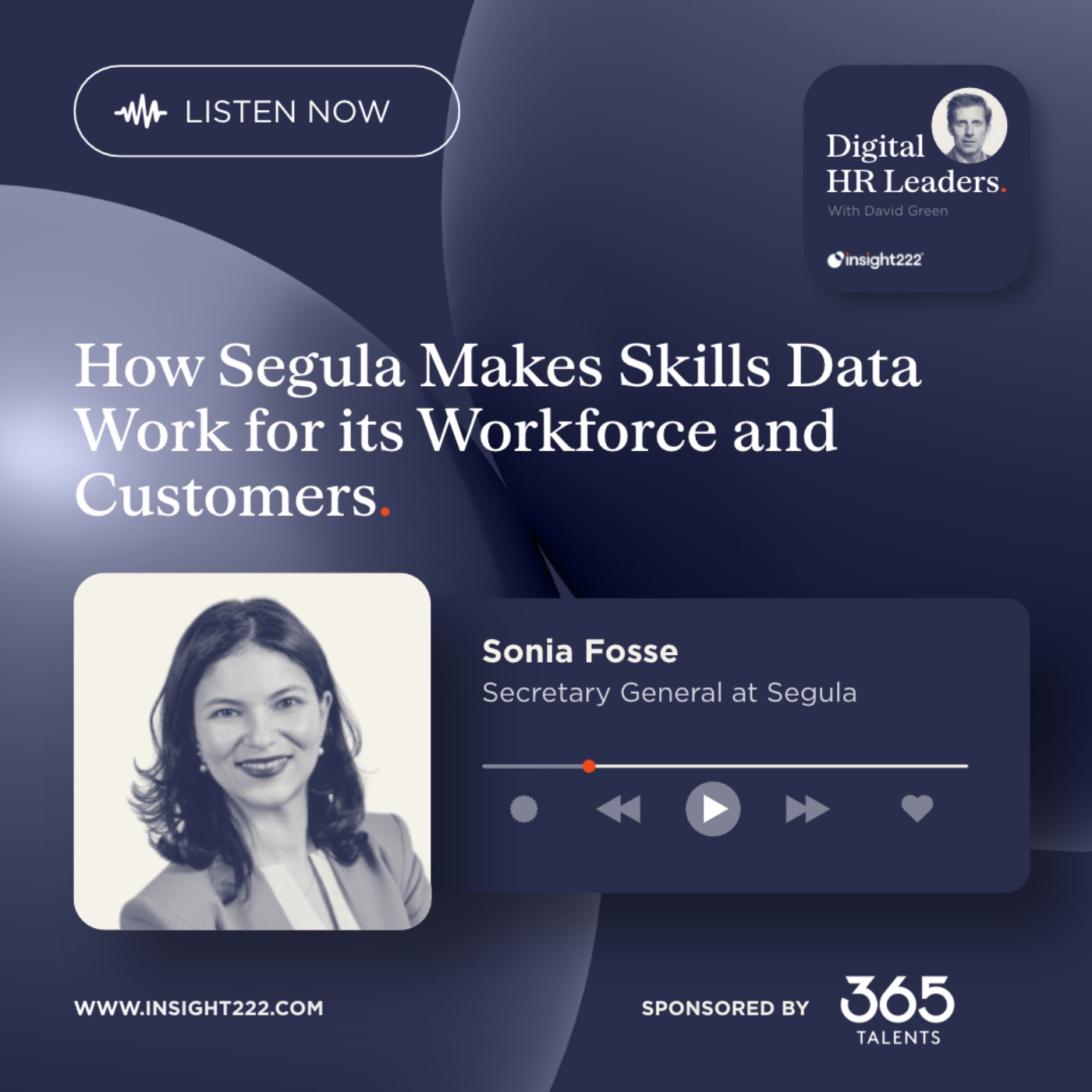
How do you prepare your workforce for what your customers will need next? For Segula Technologies, an engineering company of around 15,000 people across 30 countries, the answer starts with understanding employees’ capabilities in greater detail than their job titles can provide. In this episode of the Digital HR Leaders podcast, David Green is joined by Sonia Fosse, Secretary General at Segula. A mechanical engineer by background, Sonia oversees HR and talent alongside communications, corporate social responsibility, quality, legal and real estate. She explains how these responsibilities come together around a shared priority: helping people develop the expertise that creates value for customers. Sonia shares how Segula combines employee input, manager validation and customer conversations to keep its view of workforce skills current and turn that knowledge into decisions about development, recruitment and redeployment.Together, they discuss:Why Segula built its skills architecture from employee input, supported by corporate oversight, rather than imposing a detailed job catalogue How communication, manager involvement and access to development opportunities encouraged employees to participate How skills profiles stay current through project updates, self-assessment and regular conversations with managers How employee insights and customer discussions reveal changing demand, including skills becoming less relevant in particular markets Practical examples of reskilling around 100 people for battery production and anticipating critical aerospace workforce needs Lessons for HR leaders, including the value of strong pilots and the next steps in career development and communities of expertiseThis episode is sponsored by 365Talents, a Docebo company.Every organisation approaches skills in its own way, so 365Talents designs its talent intelligence solutions to adapt to how each business works. HR teams use them to put skills-based strategies into action more quickly and to see the impact across the whole organisation.Find out more about 365TalentsBuilding or refining your skills strategy? The 2026 Skills Toolkit brings together 14 free HR templates covering every stage of the journey. It includes a business case built for your CFO, a structured framework for comparing vendors, a strategy you can take to the board, and practical tools for day-to-day HR operations and rollout.Get free access to the 2026 Skills ToolkitResources: Segula Technologies Hosted on Acast. See acast.com/privacy for more information.
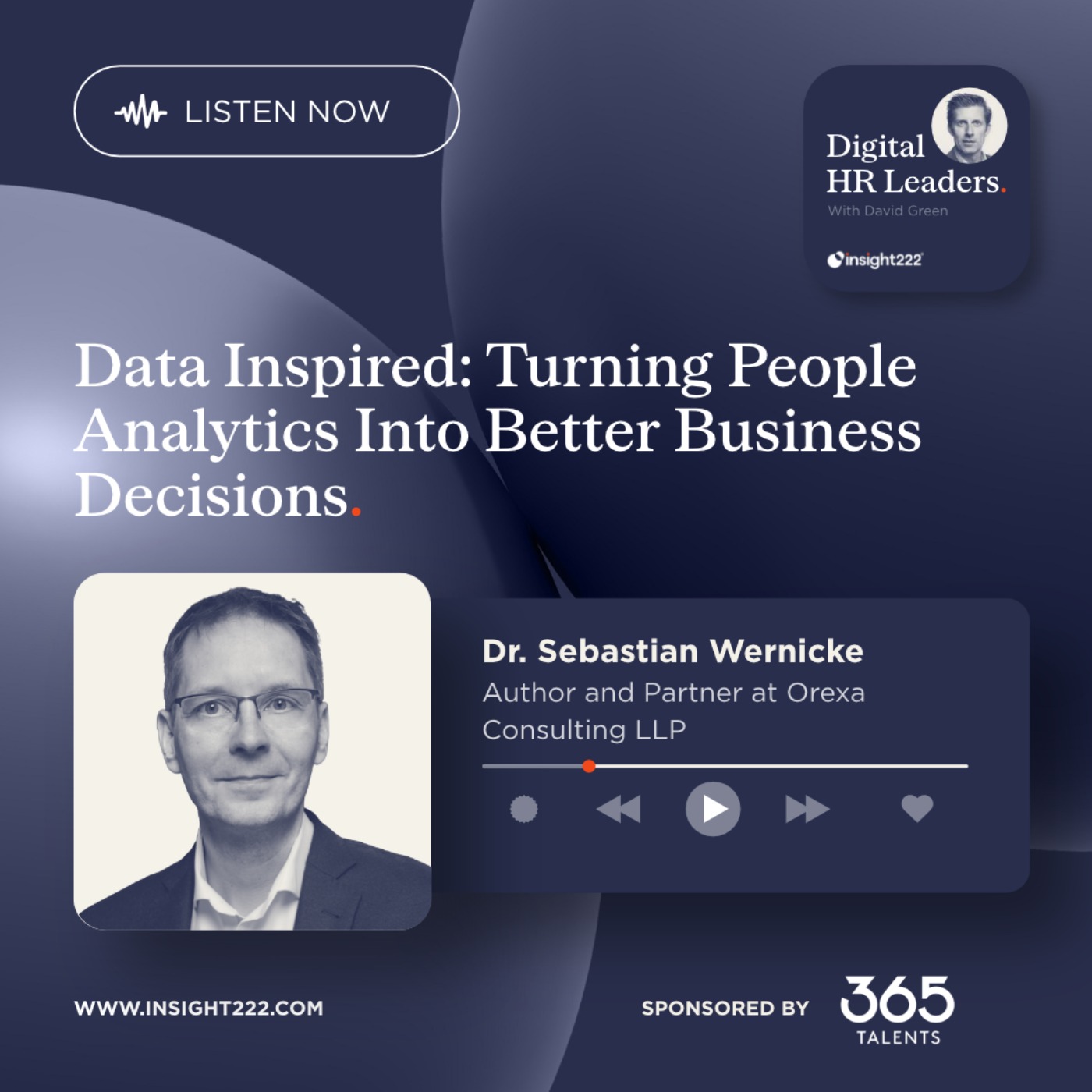
When did the data last change your mind?Organisations have invested heavily in data, dashboards and analytics technology. Yet better information doesn’t automatically lead to better decisions, particularly when it challenges established beliefs or the way things have always been done. In this episode of the Digital HR Leaders podcast, David Green is joined by Sebastian Wernicke,, author of Data Inspired, to explore how organisations can use data to challenge assumptions, identify new possibilities and turn evidence into action. Sebastian has spent almost 20 years helping organisations use data to grow revenue, reduce costs and understand risk. He is a partner at the economics consultancy Oxera, where he leads the data science and AI team. Drawing on his book and consulting experience, Sebastian explains why improving decision-making requires attention to culture, leadership and human behaviour alongside the quality of the data itself.Join them as they discuss: The difference between being data-driven and data-inspired, and why organisations need both Why more data rarely changes minds on its own, and how psychological safety enables people to challenge assumptions What a consistently green dashboard might conceal, and how targets can distort workforce measures How to start with the business challenge, judge whether evidence is sufficient and use targeted experiments to fill gaps Sebastian’s data triangle, and why reducing engagement or performance to a single score can undermine understanding How better decision-making brings HR and technology teams together, and why relationships and critical thinking matter for future workThis episode is sponsored by 365Talents, a Docebo company. Every organisation approaches skills in its own way, so 365Talents designs its talent intelligence solutions to adapt to how each business works. HR teams use them to put skills-based strategies into action more quickly and to see the impact across the whole organisation.Find out more about 365TalentsBuilding or refining your skills strategy? The 2026 Skills Toolkit brings together 14 free HR templates covering every stage of the journey. It includes a business case built for your CFO, a structured framework for comparing vendors, a strategy you can take to the board, and practical tools for day-to-day HR operations and rollout.Get free access to the 2026 Skills ToolkitResources: Data Inspired Oxera Hosted on Acast. See acast.com/privacy for more information.
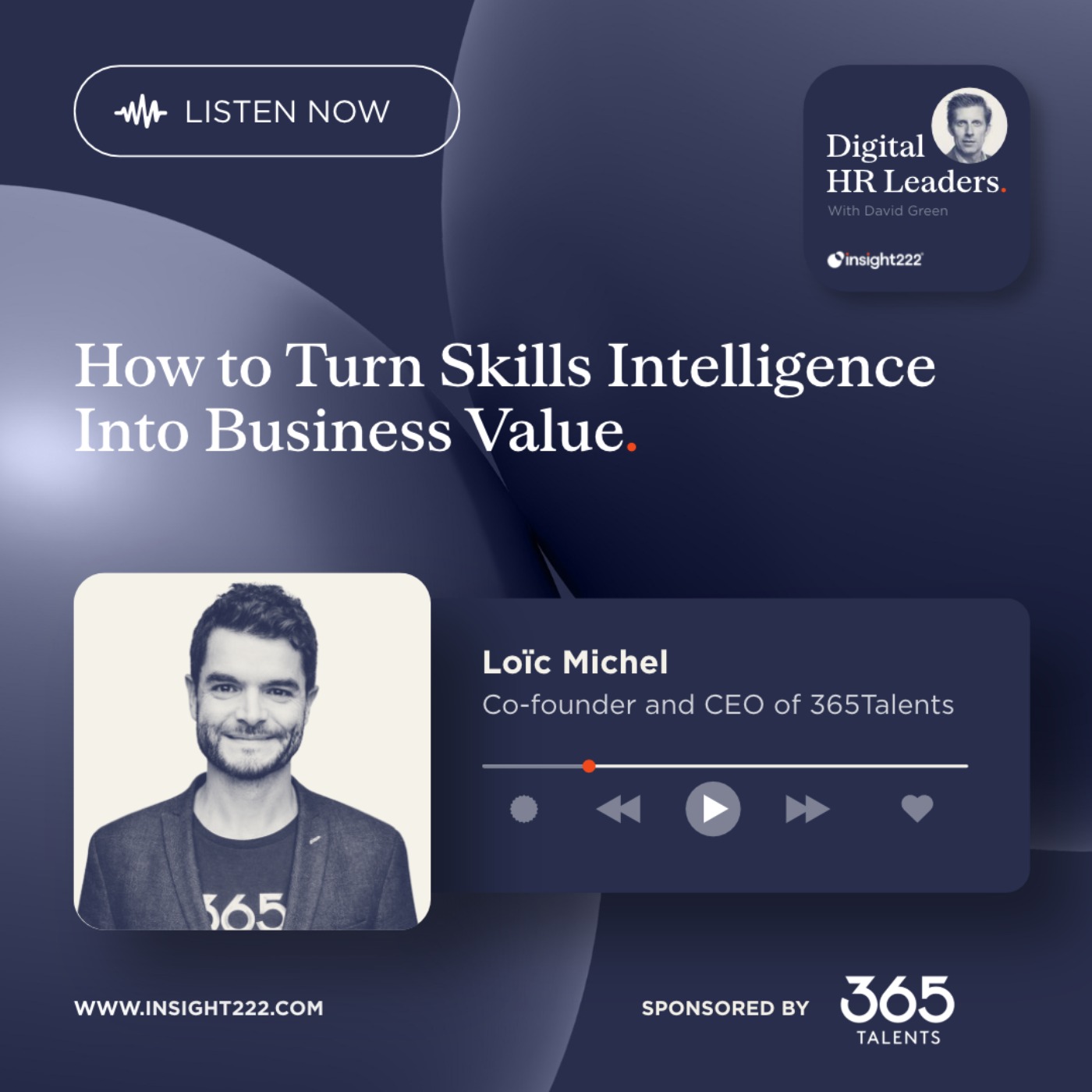
You’ve mapped your workforce’s skills. What changes in the decisions your organisation makes?In this episode of the Digital HR Leaders podcast, David Green welcomes back Loïc Michel, co-founder and CEO of 365Talents, a Docebo company, to explore how organisations can connect skills intelligence, learning and workforce strategy. From closing capability gaps to redeploying talent and reducing reliance on external contractors, they discuss what it takes to make skills data useful in everyday business decisions. They also explore how AI agents could change the work of HR, and why human judgement remains essential.Join them as they discuss:Why learning and skills technology grew up separately, what bringing them together enables How to measure whether capability gaps are closing through a cycle of detecting, developing and assessing skills Why skills initiatives stall at the mapping stage, and how a clear business problem and committed leadership keep them moving How SNCF used skills intelligence to identify internal capabilities and reduce reliance on subcontractors Where AI agents can support learning and career development, and how to keep people in the lead on workforce decisions Why understanding skills and tasks is essential to preparing people for changing jobs and work shared with AI agentsThis episode is sponsored by 365Talents, a Docebo company. Every organisation approaches skills in its own way, so 365Talents designs its talent intelligence solutions to adapt to how each business works. HR teams use them to put skills-based strategies into action more quickly and to see the impact across the whole organisation.Find out more about 365TalentsBuilding or refining your skills strategy? The 2026 Skills Toolkit brings together 14 free HR templates covering every stage of the journey. It includes a business case built for your CFO, a structured framework for comparing vendors, a strategy you can take to the board, and practical tools for day-to-day HR operations and rollout.Get free access to the 2026 Skills Toolkit Resources: 365Talents newsletter 365Talents skills resources Docebo Hosted on Acast. See acast.com/privacy for more information.
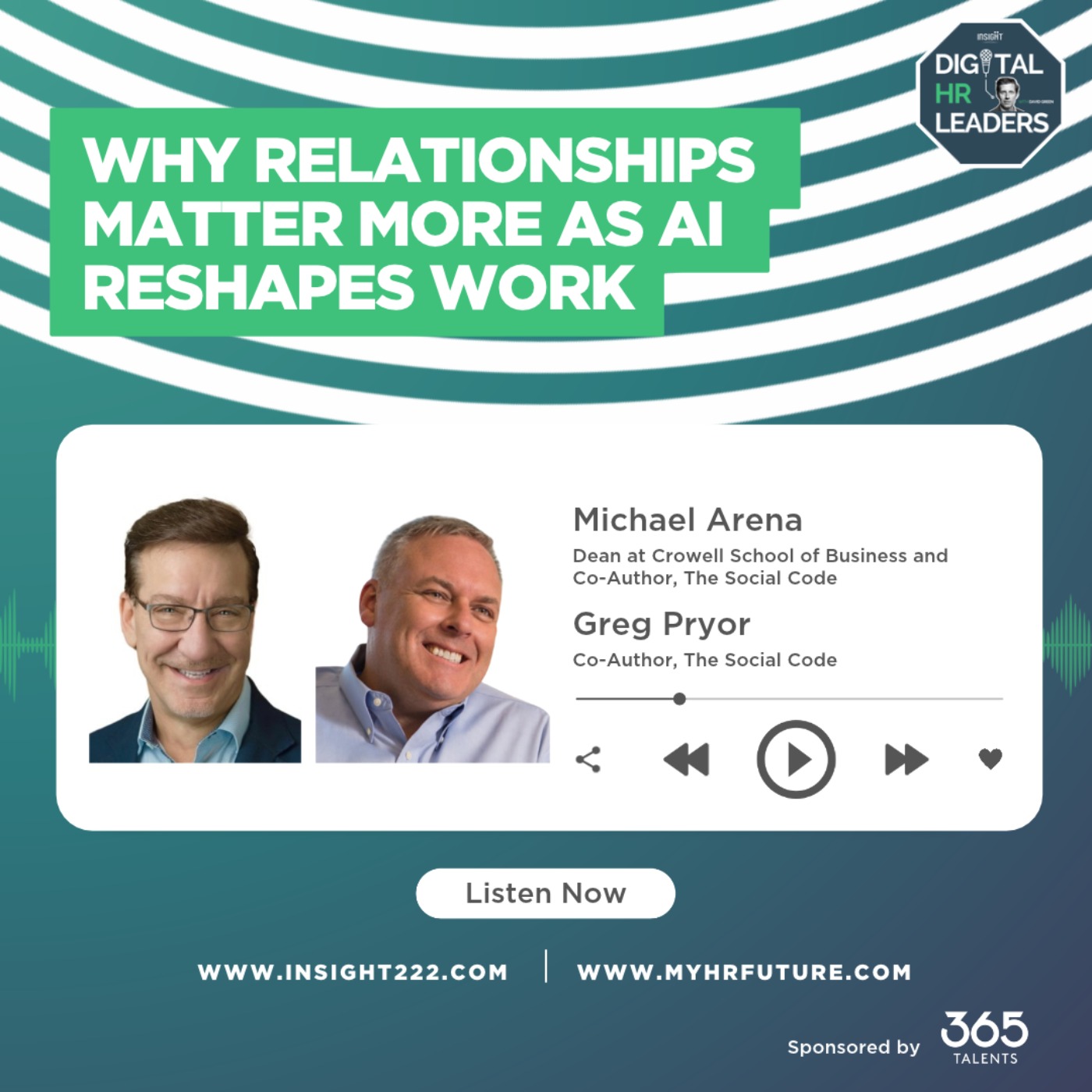
As AI makes knowledge more widely available, are organisations paying enough attention to the relationships that help people put it to work?In this episode of the Digital HR Leaders podcast, David Green is joined by Michael Arena and Greg Pryor, co-founders of the Connected Commons and co-authors of the forthcoming book, The New Social Code: Five Relational Edges That Outperform Algorithms. Drawing on decades of organisational network research and experience leading talent in major organisations, Michael and Greg explore how human connections shape performance, career progression and the ability to turn new ideas into action. Michael is Dean of the Crowell School of Business at Biola University and previously served as Chief Talent Officer at General Motors and VP of Talent at AWS. Greg’s career spans talent leadership and consulting at organisations including Accenture, Workday, Merrill Lynch and Juniper Networks. Together, they make the case for bringing social capital into talent practices alongside skills and experience, helping people build the relationships they need for the work they do today and the responsibilities they may take on tomorrow.Join them as they discuss:Why relationships become more important as AI makes knowledge easier to accessThe five relational edges: opportunity, trust, attention, insight and influenceWhy bigger networks can undermine performance, and how to balance deep trust with broader connectionsHow onboarding can help new joiners build trust and contribute more quicklyHow to recognise collaboration overload and support the people connecting different parts of the organisationWhat networks reveal about future leaders, and practical ways to apply this thinking without sophisticated analyticsThis episode is sponsored by 365Talents, a Docebo company.Every organisation approaches skills in its own way, so 365Talents designs its talent intelligence solutions to adapt to how each business works. HR teams use them to put skills-based strategies into action more quickly and to see the impact across the whole organisation.Find out more about 365TalentsBuilding or refining your skills strategy? The 2026 Skills Toolkit brings together 14 free HR templates covering every stage of the journey. It includes a business case built for your CFO, a structured framework for comparing vendors, a strategy you can take to the board, and practical tools for day-to-day HR operations and rollout.Get free access to the 2026 Skills ToolkitResources: The New Social Code: Five Relational Edges That Outperform Algorithms The New Social Code Compendium Newsletter Hosted on Acast. See acast.com/privacy for more information.
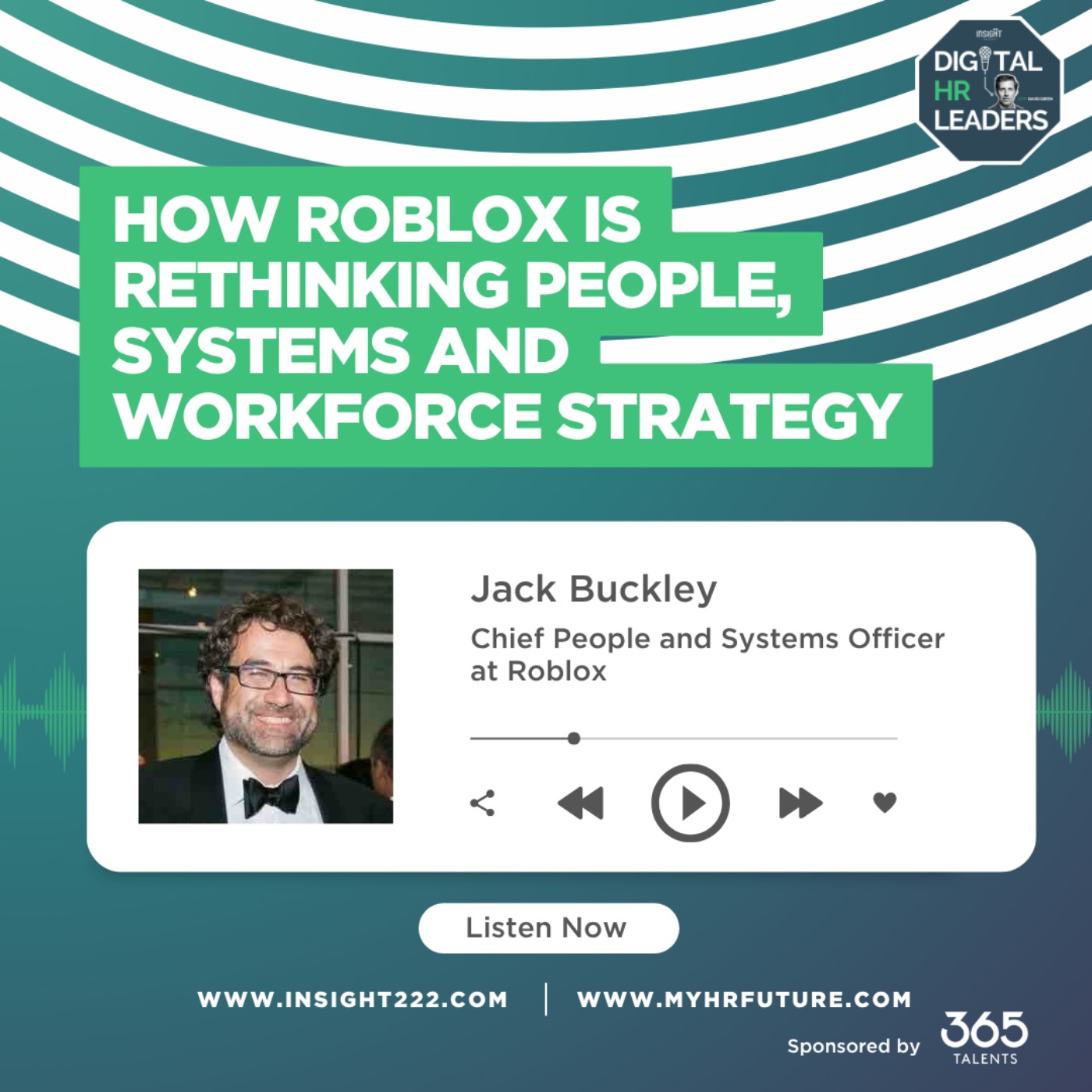
What changes when the people function is designed not as a collection of separate HR processes, but as part of the operating system of the company?In this episode of the Digital HR Leaders podcast, David Green is joined by Jack Buckley, Chief People and Systems Officer at Roblox, to explore how measurement, people analytics, technology and workforce strategy come together inside one of the world’s best-known technology companies. Jack’s career spans the US Navy, academia, applied statistics, large-scale assessment and game-based hiring before leading people and systems at Roblox. That background has shaped a clear philosophy: before organisations make better people decisions, they need to be confident they are measuring the right things, with data they can trust.Join them, as they discuss:Why data quality and measurement should come before advanced analytics Lessons from building a people science and analytics function during hypergrowth Why People and Finance need a shared view of workforce data and planning How the Roblox operating system brings people processes, technology and internal products together When organisations should buy technology, customise it or build their own How AI is reshaping recruiting, assessment, performance, retraining and workforce planning at Roblox Why skills atrophy could become a significant challenge as employees rely more heavily on AI tools How to balance rapid experimentation with rigorous evaluation and governance Why measuring the work and skills people actually use is essential to redesigning work and creating business valueThis episode is sponsored by 365Talents, a Docebo company.Every organisation approaches skills in its own way, so 365Talents designs its talent intelligence solutions to adapt to how each business works. HR teams use them to put skills-based strategies into action more quickly and to see the impact across the whole organisation. Find out more about 365TalentsBuilding or refining your skills strategy? The 2026 Skills Toolkit brings together 14 free HR templates covering every stage of the journey. It includes a business case built for your CFO, a structured framework for comparing vendors, a strategy you can take to the board, and practical tools for day-to-day HR operations and rollout. Get free access to the 2026 Skills Toolkit Resources:Roblox Insight222 People Analytics Trends 2025/26 HR Operating Model for the AI Era Try Roblox's Coding Cookies practice assessment Hosted on Acast. See acast.com/privacy for more information.

Comments

Download from Google Play

Download from App Store
 United States