


 Claim Ownership
Mark and Pete
Subscribed: 8Played: 555
Subscribe

© Mark and Pete
Description
The Mark and Pete Show – where faith, culture, and economics collide in a lively and thought-provoking podcast. Hosted by Mark and Pete this show delivers insightful commentary on social, economic, and religious issues, unpacking how these forces shape our world.
With Mark’s hard-hitting business acumen and Pete’s Christian perspective, every episode provides a dynamic mix of debate, analysis, and humor, offering fresh viewpoints on current affairs. Whether tackling economic trends, cultural shifts, or matters of faith, Mark and Pete bring their unique expertise and engaging banter to the table.
A distinctive feature of each episode is a themed poem, adding a creative and reflective touch to the discussion. Whether you’re interested in Christian thought, global economics, or cultural insights, The Mark and Pete Show delivers sharp, entertaining, and meaningful content.
Join the conversation and explore how faith, finance, and society intertwine in ways you never expected. Subscribe today on your favorite podcast platform for a show that’s bold, intelligent, and refreshingly different!
Become a supporter of this podcast: https://www.spreaker.com/podcast/mark-and-pete--1245374/support.
With Mark’s hard-hitting business acumen and Pete’s Christian perspective, every episode provides a dynamic mix of debate, analysis, and humor, offering fresh viewpoints on current affairs. Whether tackling economic trends, cultural shifts, or matters of faith, Mark and Pete bring their unique expertise and engaging banter to the table.
A distinctive feature of each episode is a themed poem, adding a creative and reflective touch to the discussion. Whether you’re interested in Christian thought, global economics, or cultural insights, The Mark and Pete Show delivers sharp, entertaining, and meaningful content.
Join the conversation and explore how faith, finance, and society intertwine in ways you never expected. Subscribe today on your favorite podcast platform for a show that’s bold, intelligent, and refreshingly different!
Become a supporter of this podcast: https://www.spreaker.com/podcast/mark-and-pete--1245374/support.
622 Episodes
Reverse
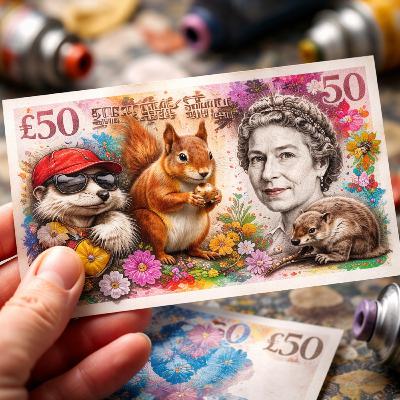
British banknotes could soon feature wildlife instead of famous people, according to discussions about redesigning UK currency and in this Mark and Pete episode we explore the strange logic behind putting animals on banknotes instead of historical figures. The Bank of England redesign debate has sparked arguments about representation, national identity, and whether putting animals like badgers, beavers, or birds on money is really an improvement.In this episode of Mark and Pete, Pete the preacher and Mark the businessman look at the curious suggestion that British banknotes should move away from historic figures and towards wildlife. The intention, apparently, is to avoid controversy and keep everyone happy. But does replacing Churchill with a hedgehog actually solve anything?We also dive into the political comedy surrounding the story. Liberal Democrat leader Ed Davey once famously joked about badgers, while Nigel Farage suggested a beaver for a banknote design — and suddenly British politics starts sounding like a particularly odd nature documentary.Through humour, poetry, and a slightly raised eyebrow, Mark and Pete explore what money actually represents. Is currency meant to celebrate history? National culture? Or is this simply another attempt to remove the human story from public life altogether?Along the way, Pete reflects briefly on the biblical idea of bearing the image of Caesar on a coin, asking whether modern society is slowly trying to erase the idea of legacy, leadership, and human achievement.Expect the usual Mark and Pete format:• A sharp look at the week’s news• Mark’s original poem on the subject• Pete’s biblical reflection• Plenty of dry British humourIf you enjoy thoughtful commentary on UK politics, culture, society, and Christianity, this episode takes a deceptively silly news story and uncovers the bigger cultural question hiding underneath.Subscribe for more episodes of Mark and Pete – witty observations on politics, culture, and faith.

Is the 9-to-5 job dead? In this episode of Mark and Pete we discuss the collapse of traditional working hours, hustle culture, and why modern tech companies are pushing employees far beyond the classic nine-to-five working day. If you’re interested in work culture, work-life balance, productivity, and the future of work, this episode explores why the old working day may be disappearing.In this episode of Mark and Pete, we look at the gradual death of the traditional 9-to-5 working day and the rise of a culture where work never quite stops. For decades the idea was simple: you went to work in the morning, you finished in the late afternoon, and the rest of the day belonged to your life. Increasingly, that boundary has disappeared.We discuss how smartphones, email, and messaging platforms have blurred the line between work and personal life, creating a situation where many employees feel permanently on call. Messages arrive late at night, tasks appear during weekends, and the modern office has quietly migrated into the pocket of every worker.The conversation also touches on the growing pressure inside many technology companies and fast-moving industries, where extremely long hours are often treated as a badge of honour. In some workplaces, employees are expected to stay late, answer messages immediately, and sacrifice personal time in order to keep up with demanding schedules.Along the way we explore whether this culture actually produces better work. Research increasingly suggests that excessive hours often lead to exhaustion, poorer decision-making, and declining productivity. In other words, working longer does not necessarily mean working better.Finally, we reflect on an older idea that predates modern productivity culture entirely: the principle of rest. The biblical tradition of Sabbath recognised thousands of years ago that human beings are not designed for endless labour. The rhythm of work and rest may still offer wisdom for a modern world that rarely seems to switch off.Subscribe to Mark and Pete for thoughtful discussions on culture, faith, news, and modern life.

In this episode of Mark and Pete, we take a look at the bizarre world of the modern art market through the story involving Ant and Dec and a work connected to the elusive street artist Banksy. What began as a celebrity art purchase quickly raised questions about authentication, intermediaries, and whether unauthorised profits had been made along the way.Banksy’s work is famous not just for its striking political imagery but for the mystery surrounding it. His identity remains hidden, his artworks sometimes appear overnight on city walls, and the official process of verifying a genuine Banksy piece involves a small authentication body that determines whether a work is real. In the art market, that decision can mean the difference between a painting being worth millions of pounds or almost nothing at all.During the episode we discuss how the modern art market works, why authenticity matters so much, and why celebrity buyers sometimes find themselves caught in confusing disputes over ownership and provenance. We also explore the strange role of intermediaries in the art world, where dealers, agents, and brokers often stand between the buyer and the artist.The conversation widens into a broader discussion about value, authenticity, and story. Why do people pay enormous sums for art that might look simple or even identical to a copy? The answer, it turns out, has less to do with the paint on the canvas and more to do with the story behind it.Along the way we bring a biblical reflection on authenticity and appearance, asking whether the same principle applies not only to art but also to life.Subscribe for more episodes of Mark and Pete discussing culture, news, faith, and modern society.

In this episode of Mark and Pete, we explore the strange world of feedback culture, from podcast listeners and YouTube comments to the deeper question of how criticism shapes creators. Everyone says they want feedback, but what people usually mean is praise with a slightly different accent.As podcasters ourselves, we’ve learned that feedback can be incredibly useful. Good criticism sharpens ideas, improves episodes, and helps creators grow. But there’s a danger too: when creators chase approval instead of truth, the content slowly drifts. Shows begin by saying something interesting and gradually become whatever the algorithm seems to reward.In this conversation we look at the psychology of feedback, the difference between constructive criticism and internet noise, and why creators need a thicker skin than most people realise. Not every comment deserves equal weight, and not every critic actually understands the subject they’re criticising.We also talk about the deeper issue behind feedback: identity. If your sense of worth depends on audience approval, then the internet will eventually drive you mad. One week everyone agrees with you. The next week they absolutely don’t.Along the way we bring in a biblical perspective from Proverbs about wise correction and faithful criticism, asking how ancient wisdom might help modern creators survive the comment section.If you enjoy thoughtful discussion about media, culture, faith, podcasts, and modern life, you’ll enjoy this episode of Mark and Pete.Subscribe for more conversations on culture, news, faith, and commentary.

Are the Ten Commandments still relevant today, or does modern society think it can update them? In this episode of Mark & Pete, we explore why the Ten Commandments, biblical morality, and Christian ethics still shape Western civilisation and why many people now believe they should be rewritten for the modern age.Across politics, culture, and social media, there is growing talk of rewriting moral rules to fit modern values. Some commentators suggest humanity needs a new set of commandments – updated for climate change, technology, and social trends. But can the Ten Commandments from the Bible really be replaced, or are they more foundational than we realise?In this conversation we examine the history of the Ten Commandments in Christianity, their influence on law and culture, and the deeper reason they still provoke debate thousands of years after Moses received them on Mount Sinai. From “You shall not murder” to “You shall not steal,” these commandments have shaped moral thinking in the West for centuries.The episode also looks at a modern question: if society believes it can improve on biblical law, what replaces it? Are moral rules now decided by governments, cultural trends, or popular opinion?Along the way we discuss Christian theology, biblical authority, moral law, and the role of faith in public life, asking whether modern society is abandoning ancient wisdom too quickly. The Ten Commandments were never meant to be merely historical artefacts. They were intended as a guide for human life before God.Whether you are interested in Christian apologetics, theology, culture, ethics, or the influence of the Bible on Western society, this episode explores why the Ten Commandments continue to provoke debate in the modern world.Subscribe for thoughtful discussions on faith, culture, politics, and biblical wisdom delivered with clear reasoning and a touch of dry British humour.Keywords:Ten Commandments relevance today, updating the Ten Commandments, Christian morality modern society, biblical ethics debate, Ten Commandments Christianity, Bible moral law, Mount Sinai commandments, Christian apologetics culture, Mark and Pete podcast, faith and culture commentary

In this episode of Mark & Pete, we explore a fascinating development in modern science: how mathematical models are helping scientists identify genetic material that could dramatically improve the resilience of global food crops.Researchers are increasingly using advanced mathematics, computational biology, and genetic analysis to pinpoint the specific genes responsible for drought tolerance, disease resistance, and environmental adaptability in crops such as wheat, rice, and maize. The goal is simple but crucial: strengthen the world’s food supply in the face of climate change, population growth, and unpredictable agricultural conditions.But this technological breakthrough raises bigger questions. When mathematics begins guiding genetic discovery, are we witnessing the next great leap in agricultural science—or are we stepping into a new era where humanity attempts to redesign the natural world?In this episode we unpack how mathematical modelling, genetics, and agricultural science intersect, and why this approach is rapidly becoming one of the most powerful tools in modern crop research. From predictive algorithms that identify useful genetic traits to data-driven plant breeding, the science behind food security is becoming increasingly mathematical.At the same time, we ask an important cultural and philosophical question: what does stewardship of creation look like in an age of genetic precision? The Bible speaks of humanity being placed in the garden “to work it and keep it.” Does modern genetic science fulfil that mandate—or challenge it?This conversation brings together science, ethics, agriculture, and faith, offering a thoughtful look at how technological innovation intersects with biblical ideas about stewardship, responsibility, and wisdom.If you are interested in food security, agricultural science, genetics, biotechnology, climate resilience, and the Christian perspective on science, this episode provides a clear and engaging discussion of one of the most important developments shaping the future of global food production.Keywords:crop resilience genetics, mathematical models genetics, food crop resilience science, agricultural genetics research, genetic material crops, drought resistant crops research, crop breeding algorithms, biotechnology agriculture, global food security science, mathematics in biology, computational genetics agriculture, Christian perspective on science, stewardship of creation agriculture

Mark & Pete examine the recent Green Party by-election victory and the allegations of cheating that have followed. When a party built on moral language, environmental responsibility, and political reform faces claims of rule-breaking, the questions go far deeper than one local result.Did the Green Party win fairly? What evidence has emerged regarding alleged electoral irregularities? And what does this controversy reveal about the current state of UK politics?We break down the by-election result, the reported voting concerns, and why democratic integrity matters more than partisan loyalty. This isn’t about left versus right. It’s about trust, transparency, and whether political movements can live up to the ethical standards they publicly demand of others.From ballot handling procedures to broader questions about election oversight, we explore how fragile public confidence becomes when rules appear optional. If the evidence stands, what consequences should follow? And if it doesn’t, what damage has already been done?Beyond the headlines, we consider a deeper issue: can environmental activism maintain credibility without moral consistency? The Bible speaks bluntly about “dishonest scales.” What might that ancient principle say about modern by-elections?If you care about UK democracy, electoral law, political accountability, and the intersection of faith and public life, this episode offers thoughtful analysis without hysteria.Subscribe for weekly Christian commentary on politics, culture, economics, and moral clarity — delivered with reasoned argument and dry British humour.Keywords:Green Party by-election, Green Party cheating allegations, UK by-election results, election fraud UK, electoral integrity Britain, political accountability, British politics analysis, Christian political commentary, Mark and Pete podcast, democracy and trust, ballot irregularities UK, Proverbs dishonest scales, faith and politics UK

When authority wobbles, everyone feels it.In this episode of Mark & Pete, we examine the troubling case of a teacher reported to have been under the influence of alcohol while teaching — slurred speech, disorder in the classroom, and a profession once synonymous with stability suddenly looking fragile.This is not a tabloid pile-on. It’s a deeper conversation about professionalism, standards, burnout, and what happens when the adults in the room are no longer steady.Teaching in the UK has become increasingly pressured: behaviour challenges, retention crises, administrative overload, safeguarding responsibilities, and public scrutiny. When a teacher crosses the line into intoxication while on duty, it raises uncomfortable but necessary questions. Is this personal moral failure? A symptom of systemic strain? Or part of a wider cultural erosion of self-control and accountability?We discuss:Teacher conduct and the Teaching Regulation AgencyProfessional standards in UK schoolsBurnout and alcohol misuse trendsClassroom authority and behavioural collapseThe difference between compassion and lowered expectationsFrom a Christian perspective, we explore Ephesians 5:18 — “Do not be drunk with wine… but be filled with the Spirit.” Sobriety is not merely a private virtue; it is a public responsibility when others depend on your clarity.There is room for mercy. There must be support for those struggling. But standards matter. Authority matters. Children need grown-ups who are present, clear-minded, and trustworthy.Expect calm commentary, cultural analysis, original poetry from Mark, and a steady biblical reflection from Pete.Because someone is always learning from the example set at the front of the room.Faith. Culture. Calm commentary.#MarkAndPete #EducationCrisis #TeacherStandards #UKSchools #ProfessionalConduct #ChristianPerspective

Has Britain entered a new ice age — or is it simply Tuesday in Cornwall?In this episode of Mark & Pete, we examine reports that Cardinham in Cornwall has experienced around 50 consecutive days of measurable rainfall, with nearby Liscombe on Exmoor also recording persistent winter deluges. Northern Ireland has likewise seen one of its wettest Januarys in recent memory. The wellies are weary. The umbrellas are questioning their calling.But what does it actually mean?We explore UK Met Office data, regional rainfall trends, and the difference between weather events and long-term climate patterns. Is this evidence of global cooling? Climate collapse? Or just Britain doing what Britain has historically done — namely, rain with commitment?We discuss:Cardinham and Liscombe rainfall recordsNorthern Ireland’s unusually wet JanuaryThe science of winter precipitation in the UKClimate change vs short-term variabilityWhy human memory is spectacularly unreliable when it comes to weatherAlong the way, we ask a bigger cultural question: why do we turn meteorology into theology? Every storm becomes a sign. Every cold snap becomes a thesis. And every puddle becomes proof of something ideological.With Mark’s original poetry and Pete’s biblical reflection from Ecclesiastes, this episode offers calm commentary in a climate of overreaction.Because rivers have always run into the sea. And Britain has always been damp.Faith. Culture. Calm commentary — even when the forecast is dramatic.#MarkAndPete #Cornwall #Cardinham #Liscombe #NorthernIreland #UKWeather #ClimateDebate #BritishNews #MetOffice #ChristianPerspective

What happens when royalty meets reality?In this episode of Mark & Pete, we examine the ongoing reputational crisis surrounding Prince Andrew and what it means for the British monarchy in the age of scrutiny. From the infamous BBC Newsnight interview to the fallout from associations with Jeffrey Epstein, we explore how scandal, privilege, and public accountability collide at the highest levels of national symbolism.This is not tabloid gossip. It’s a serious conversation about institutional trust, moral responsibility, and whether inherited authority can survive modern transparency. Can a monarchy built on continuity endure when confidence is shaken? Does stepping back from public duties resolve the issue — or simply freeze it in polite constitutional embarrassment?We also ask the deeper question: what does Scripture say about leadership, integrity, and repentance? Because crowns may be hereditary, but character never is.Expect calm commentary, a few raised eyebrows, and the sort of dry reflection that Britain specialises in when things become awkward.Topics include:Prince Andrew and the Epstein controversyThe Newsnight interview and public reactionRoyal accountability and constitutional symbolismReputation vs repentanceThe future of the modern monarchyFeaturing Mark’s original poetry and Pete’s biblical reflections.
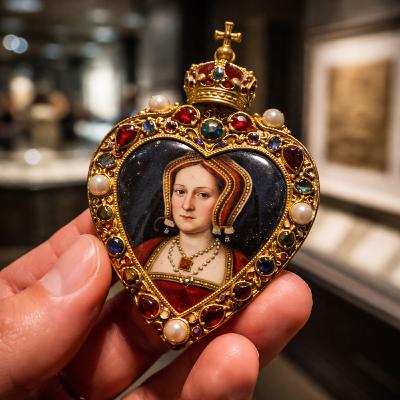
A pendant linked to Catherine of Aragon has reportedly been discovered — and it’s more than just Tudor jewellery. It’s a window into one of the most dramatic marriages in English history, the break with Rome, and the personal cost of power.In this episode of Mark and Pete, we explore the significance of a newly identified Tudor pendant associated with Henry VIII’s first wife, Catherine of Aragon. Was it a romantic gift? A royal emblem? A symbol of legitimacy? Or a silent witness to the collapse of a marriage that changed the course of England forever?Catherine of Aragon was not merely a discarded queen. She was a Spanish princess, daughter of Ferdinand and Isabella, regent of England during Henry’s campaigns, and a woman of formidable intelligence and deep Catholic faith. Her refusal to accept Henry’s annulment triggered the English Reformation and the establishment of the Church of England under royal supremacy.We examine how Henry VIII used Scripture to justify his desire for a male heir, how the Tudor court turned marriage into political theatre, and how Catherine’s dignity in exile reshaped the moral narrative of the Reformation. The discovery of a Catherine of Aragon pendant invites fresh discussion about Tudor history, royal authority, marriage, conscience, and the abuse of power.With Mark’s poetic reflections and Pete’s Christian commentary, this episode asks: what happens when rulers bend truth to serve appetite? And what does this Tudor drama teach modern Britain about covenant, leadership, and integrity?This is history, faith, politics, and cultural reflection — all wrapped in one small piece of gold.Topics include: Catherine of Aragon pendant, Henry VIII marriage crisis, Tudor England, English Reformation, Church of England origins, royal divorce, Catholic vs Protestant history, biblical marriage, power and conscience, British history podcast.
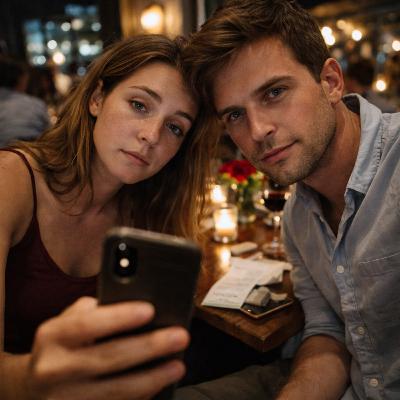
Is Valentine’s Day still romantic… or has modern culture quietly fallen out of love?In this episode of Mark and Pete, we take a sharp look at Valentine’s Day in 2026 and ask whether Western society is still capable of real romance. From overpriced roses and restaurant panic bookings to dating apps and “situationships,” love increasingly feels like a performance rather than a commitment.But beneath the chocolate hearts and Instagram posts lies a deeper question: are people actually dating less?We examine the growing body of research pointing to a modern “sex recession,” declining marriage rates, delayed relationships, and rising loneliness among young adults. Why are Gen Z and millennials reporting less dating experience, less sexual activity, and less long-term partnership than previous generations? Is technology to blame? Has dating app culture turned romance into online shopping? Or have we simply become afraid of commitment?We explore how modern expectations—shaped by social media, pornography, and endless digital comparison—may be eroding trust between men and women. In a world of infinite options, no one feels chosen. In a culture obsessed with independence, fewer people feel secure enough to commit.At the same time, the longing for love hasn’t disappeared. People still want to be known, valued, and chosen. So why does Valentine’s Day feel increasingly awkward, commercial, or hollow?With Mark’s reflective poetry and Pete’s Christian perspective, this episode examines what the Bible says about covenant love, sacrifice, and commitment in contrast to today’s consumer-driven approach to romance. Is love just chemistry and feelings, or is it something deeper—something worth defending?Topics include: Valentine’s Day, modern dating crisis, declining marriage rates, Gen Z relationships, loneliness epidemic, dating apps, commitment culture, Christian worldview on love, covenant marriage, cultural decline.

Should Britain move to a shorter working week? Would a three-day or four-day week make us healthier, more productive, and less miserable… or is it just the final stage of national decline dressed up as “wellbeing”?In this episode of Mark and Pete, we dive into the growing push for a reduced working week, inspired by countries like the Netherlands, where people seem to work fewer hours, take more time off, and still manage to run a nation that functions better than ours. Meanwhile, Britain clings to its proud tradition of overworking, underproducing, and pretending that exhaustion is a personality trait.We explore the real evidence behind four-day week trials, productivity studies, and why cutting hours can sometimes increase output. Spoiler: when people have less time, they waste less time. Fewer pointless meetings. Less email theatre. Less corporate box-ticking. More actual work.But we also ask the harder questions. Is the shorter working week only realistic for office workers with laptops and “hybrid schedules”? What about nurses, builders, shop staff, delivery drivers, and everyone else who can’t simply log off and call it self-care? Is this reform… or just another perk for the middle class?We also tackle the cultural side of it: if people had more free time, would they invest it into family life, church, community, and rest? Or would we simply spend the extra days doomscrolling, ordering takeaway, and watching Netflix until we forget what day it is?With Mark’s trademark poetry and Pete’s Christian perspective, this episode asks whether the West needs fewer working hours… or whether it needs a deeper recovery: a return to purpose, discipline, and Sabbath-shaped living.Keywords: shorter working week, four-day week UK, Dutch work culture, productivity, burnout, work-life balance, modern Britain, cultural decline, Christian commentary, Sabbath rest.

Britain has reached a strange new milestone in the cost of living crisis: even doing the laundry is becoming unaffordable. In this episode of Mark and Pete, we look at the growing reality of laundry poverty in the UK, where rising energy bills, detergent prices, and laundrette costs are pushing more people to wash less, dry less, and quietly compromise on basic hygiene.At first glance it sounds like a minor inconvenience, even a slightly comic headline. But beneath the surface it reveals something far more serious: a nation where ordinary life is becoming harder, more stressful, and increasingly stripped of dignity. When families can’t afford to run the washing machine or tumble dryer, it doesn’t just mean wearing yesterday’s shirt. It means damp clothes hanging indoors, mould creeping into flats, asthma and respiratory problems worsening, and children turning up to school embarrassed, anxious, and vulnerable to bullying.We explore how energy policy, inflation, housing conditions, and low wages are colliding to create a new kind of hidden hardship. This isn’t Victorian poverty with chimneys and soot. It’s modern poverty with smart meters, condensation, and the constant low-grade fear of the next bill. Many people are now relying on cold washes, skipping bedding loads, re-wearing clothes longer, and using deodorant as an economic strategy.Mark brings his poetic take on Britain’s damp decline, while Pete offers the deeper Christian perspective: why dignity matters, why the ordinary needs of daily life are not trivial, and why a society that cannot keep its people warm and clean is a society in serious moral and spiritual trouble. We also touch on the biblical principle that compassion must be practical, not theoretical, and ask what role the church should play in noticing these quieter forms of suffering.Sharp analysis, British humour, and uncomfortable truth—welcome to the UK, where cleanliness is becoming a luxury.z
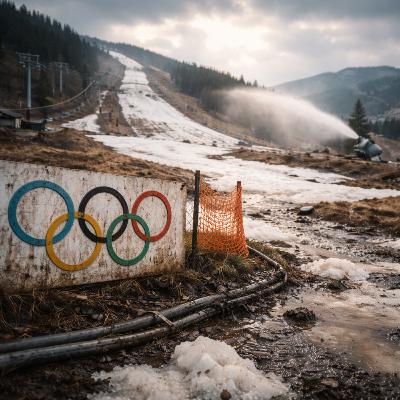
The Winter Olympics are facing an awkward little problem: winter is increasingly unreliable. In this episode of Mark and Pete, we explore the growing concern that the Winter Games may not have a long-term future, thanks to warming temperatures, shrinking snow seasons, and the rising cost of staging a global sporting spectacle in an era where snow has become a luxury item.It’s a story that sounds absurd at first, almost like satire. How can the Winter Olympics exist without winter? Yet the facts are stacking up. Fewer countries are willing or able to host the Games, and even traditional alpine venues are struggling with shorter snow seasons, higher freezing lines, and the increasing dependence on artificial snow. Ski slopes once famous for natural snowfall are now being kept alive with snow cannons, refrigerated tracks, and industrial-scale infrastructure that feels less like sport and more like an engineering project.We discuss how climate change, economics, and modern bureaucracy are colliding in real time. Hosting the Olympics is already ruinously expensive, and now the basic requirement of snow is no longer guaranteed. Could the Games be forced into a permanent rotation between only a handful of cold-weather nations? Could indoor mega-domes become the future of winter sport? Or will the Olympics simply shrink, retreating into something smaller, more regional, and less grand?Along the way, Mark brings his poetic take on the disappearing season, while Pete offers a Christian worldview perspective, asking what it says about modern civilisation that we increasingly live in a synthetic world of manufactured experiences. Even nature itself is being replaced with artificial substitutes, while the organisers insist everything is “sustainable.”Sharp commentary, British humour, cultural reflection, and a touch of theological realism—this is The Winter (Olympics) of Discontent.

Is Keir Starmer already on his last legs, or is he exactly the kind of leader modern Britain deserves: bland, managerial, and strangely unkillable? In this episode of Mark and Pete, we take a sharp (and mildly sarcastic) look at the Prime Minister’s growing credibility problem, and ask whether Labour is quietly heading toward another internal panic.Starmer was sold as the competent adult in the room, the calm lawyer who would restore order after years of political circus. But instead of Churchillian grit, we’ve been given something closer to a Human Resources memo with a haircut. He’s cautious, polished, and relentlessly careful… yet the country feels like it’s wobbling on the edge of something much darker than “policy disagreements.”We explore why Starmer increasingly gives off the impression of a leader who is not steering events, but reacting to them. Is he trapped between factions inside Labour, trying to keep the activist wing happy while reassuring the wider public? Is he losing the confidence of working-class voters who once formed Labour’s backbone? Or is he simply the latest example of what Hannah Arendt called “the banality of evil”: a technocratic, bureaucratic type of leadership that isn’t flamboyantly wicked, but quietly hollow?Mark brings his usual poetic fire, while Pete brings a Christian worldview lens, asking the deeper question: can a nation survive on management language alone? Because Britain doesn’t just need competence. It needs conviction, truth, moral courage, and a sense of purpose bigger than economic spreadsheets and government slogans.Along the way we touch on Labour party dynamics, leadership alternatives, media narratives, public mood, and why so many people feel politically homeless in the UK today. If Starmer falls, what replaces him? And if he survives, what does that say about the state of British democracy?Sharp analysis, dark humour, and a Bible verse to keep us honest. Welcome back to Mark and Pete.

Driverless cars are coming to London — and not in a distant sci-fi future sense. Real streets, real traffic, real pedestrians stepping into the road while staring lovingly into their phones. With Waymo preparing autonomous vehicle rollouts, the capital may soon become one of the biggest live experiments in artificial intelligence transport ever attempted in the UK.In this episode of Mark and Pete, we explore what the arrival of self-driving cars really means, beyond the glossy headlines. Are autonomous vehicles genuinely safer than human drivers? What happens when algorithms replace judgement? And who is responsible when a driverless car makes the wrong decision — the passenger, the programmer, the manufacturer, or the invisible data model trained on millions of previous journeys?We look at the deeper cultural shift behind automation: convenience slowly eroding competence, responsibility being outsourced, and society drifting into a world where humans stop making decisions because machines make them faster. Driverless cars aren’t just a transport change. They’re a philosophical change.Mark and Pete also discuss how technology subtly reshapes morality. When accountability becomes unclear, the temptation is to blame “the system” rather than face human agency. From a biblical perspective, this matters: Scripture assumes responsibility, wisdom, and conscious choices — not passive surrender to machinery.With humour, realism, and a long-view Christian lens, this episode asks the bigger question: in a world where cars drive themselves, are we still awake enough to know where we’re going?

2026 marks an extraordinary milestone: 100 years since the invention of television, the glowing box that quietly reshaped modern civilisation while we were busy eating microwave dinners and arguing over the remote control.In this episode of Mark and Pete, we explore how television didn’t merely entertain us, but fundamentally changed how we think, how we relate, how we worship, and how we understand truth itself. From the first experimental broadcasts in the 1920s to the rise of mass media empires, TV turned politics into theatre, news into narrative, and public life into performance.But the real transformation wasn’t technical. It was psychological. Television trained whole generations to sit, watch, absorb, and react emotionally — without reflection, conversation, or accountability. It altered childhood, shortened attention spans, and created a culture where image often matters more than argument, and personality more than principle.Mark and Pete discuss the surprising social consequences of television: the decline of shared national culture, the rise of celebrity authority, the erosion of silence, and the way entertainment values crept into every institution — including the Church.With biblical insight and a wry British realism, they ask an uncomfortable question: did television simply show us the world, or did it teach us how to see the world? And have we become so accustomed to being spectators that we’ve forgotten how to live as participants?A thoughtful, humorous, and slightly unsettling look at the century-long experiment that changed everything — and may still be changing us more than we realise.

Are we really on the brink of World War Three — or are we simply being herded into panic by a media economy that thrives on fear?In this episode of Mark and Pete, we take a clear-eyed, historically grounded look at rising tensions between the United States and Iran, with Donald Trump once again looming large in the background of global affairs. Missile tests, proxy conflicts, sanctions, and strong rhetoric are all familiar features of this long-running geopolitical drama — but familiarity doesn’t stop headlines from screaming “WW3” at the slightest provocation.Rather than joining the chorus of alarm, Mark and Pete ask harder questions. How often has the world stood closer to catastrophe than we realise? Why does modern media benefit from amplifying fear? And why does Trump’s loud, unpredictable style often coincide with a surprising reluctance to start new wars?Drawing on Cold War history, biblical theology, and cultural analysis, this episode challenges the assumption that conflict automatically means collapse. Jesus warned about wars and rumours of wars — not as countdown clocks, but as features of a fallen world where power constantly jostles for position.For Christians, the call is neither denial nor doom-scrolling, but calm discernment. History is noisy. God is not absent. And panic has never been a spiritual gift.A sober, thoughtful conversation for anyone tired of being told the end is always five minutes away.

A statistic quietly slipped into the news, and it landed with more cultural weight than most headlines.Robbie Williams now has sixteen UK number-one albums — more than The Beatles. For some, it’s a curiosity. For others, a mild heresy. But in this episode of Mark and Pete, we argue it’s neither scandal nor joke. It’s a diagnosis.This isn’t a debate about musical quality. It’s about how modern culture works. The Beatles belonged to an era of disruption, risk, and genuine artistic rupture. Robbie Williams belongs to an age of loyalty, legacy, and perfectly managed familiarity. One changed the weather. The other mastered the climate that followed.We explore how the music industry shifted from innovation to consolidation, from revolution to reunion tours, and from cultural shock to emotional reassurance. Album charts now measure not what is new, but what is trusted — and that tells us something about ourselves.There’s a biblical undercurrent too: the temptation to romanticise the past, to mistake memory for meaning, and to substitute nostalgia for hope. Ecclesiastes warns us not to ask why former days were better — not because the question is impolite, but because it blinds us to the work still required now.

Comments

Download from Google Play

Download from App Store
 United States