


 Claim Ownership
Shape the System
Subscribed: 9Played: 191
Subscribe

℗ & © 2025 Shape the System
Description
Find and tell the stories that inspire more people to rethink the way the world works. We interview people from all over the world who are changing our systems.. this might be food, energy, finance, education, health, environment, charitable.. anything really. They may be involved as founders or CEOs or providers to the specific vertical. The ventures they operate may be non-profit or for profit but they will have found a way to create success, sustainability and impact.
114 Episodes
Reverse

About the GuestAnya Cheng is the founder and CEO of Taelor, a Silicon Valley–based men’s clothing rental service that pairs professional stylists with AI and turns customer feedback into insight for fashion brands. Before co-founding Taelor with Phoebe Tan, Anya spent around 15 years building digital products for some of the world’s largest consumer companies. At Meta she helped build Facebook and Instagram Shopping. At eBay she was head of product, launching new businesses across the US, Latin America, Africa and Asia. As head of product at Target she helped open its Silicon Valley tech office, and as a senior director at McDonald’s she was in charge of everything digital, from in-store ordering kiosks and digital menu boards to the drive-thru, the mobile app and food delivery. Originally from Taiwan, Anya has grown Taelor to more than 100 brand partners, partnerships with the New York Yankees and Coffee Meets Bagel, and recognition in Inc.’s 2025 Best in Business awards.Episode SummaryWhat if the most valuable thing a clothing company could collect wasn’t the sale at the till, but what happens after you get dressed? That question sits at the centre of Taelor. In this episode of Shape the System, host Vincent Turner talks with founder and CEO Anya Cheng about a men’s clothing rental service that doubles as a data engine for the fashion industry, and why the two halves of the business make each other stronger.Anya’s starting point was personal. Leading large teams at Meta, and feeling like an imposter, she wanted to dress in a way that projected confidence. She had no interest in fashion itself. Subscription boxes required her to buy from every shipment, and rental sites asked her to scroll through tens of thousands of garments. That led to her realisation: most fashion companies are designed for people who love fashion, not for people who simply want to be ready for their day.The consumer offer is simple. For around US$100 a month, members receive six garments chosen by AI and professional stylists. They wear them, send them back without washing them, and receive the next lot, so there’s no shopping and no laundry. What members give back is feedback, and because Taelor knows who they are and where they wore each outfit, that feedback comes with context. It might be a founder heading to a conference, a Boston lawyer on a date night, or a man whose size medium now sits an inch short at the belly.That context is the gap Anya sees in today’s AI. Models know what people review, click and buy online, but almost nothing about what happens in the physical world once the parcel arrives. The fashion industry badly needs that knowledge. By Anya’s figures, around 40% of most brands’ inventory goes unsold. That’s roughly US$300 billion of stock in a US$1.8 trillion market, in an industry she says accounts for around 10% of global carbon emissions. The main cause is that brands forecast next year’s demand from last year’s sales. Taelor’s feedback is specific enough to act on: the second button falls off after five washes, or the fabric doesn’t stretch enough for bigger, active American customers. Anya contrasts that with the one-star “too big” reviews she saw as head of product at Target, which never said which size, which body shape or after how many washes. She says brands using Taelor’s data have seen sell-through improve by around 20%.The brand stories show how this works in practice. A Los Angeles label that had only ever sold through wholesale found out which hoodie fabric was its real hit, and began using it across its range. FINE, a Taiwanese manufacturer that produces for global athletic brands, launched its own label in the US. It learned that its single-material, easily recyclable fabric wasn’t stretchy enough for the market, and it changed course. Dutch brand R2 Amsterdam faced new European rules against destroying unsold stock, so it used Taelor to rent that inventory to American customers and test a new market at the same time. Many of these suppliers have since become customers of Taelor’s AI agent, which lets them query benchmark data across brands without needing an engineer.Vincent draws out a theme that runs through the whole conversation: the gap between what the customer is buying and what the system achieves. Taelor’s members aren’t paying for sustainability. They want to close the deal, win the job or land the second date. One member wore a dolphin-print shirt to a conference and found it opened conversations. Another reluctantly wore a blazer to dinner, and it ended up around his date’s shoulders on a chilly walk home. Anya describes Taelor as the gadget guy behind the superhero. Yet the model quietly delivers environmental outcomes. Like an airport rental car fleet, garments are sold before they wear out, on average after about three rentals and at around 50% off, through dynamic pricing. Inc. highlighted exactly this when recognising Taelor: it had brought secondhand clothing to busy men who would never set foot in a thrift store. Brands are paid through revenue share, so a durable garment keeps earning. At the end of its life, a piece goes to resale, repurposing and recycling partners.Looking ahead, Anya sees Taelor as a one-stop shop on both sides. For members, that means proactive AI that connects to a calendar and prepares the week ahead, plus expansion into shoes, accessories and gifting. For brands, it means a full product journey. AI helps decide what to make, small sample runs are rented to real customers for feedback within two weeks before mass production, and the platform provides a home for whatever doesn’t sell. She’s also in talks with AI labs that need proprietary real-world data, and believes the data business could one day match the consumer business at much higher margins. She points to Nuuly, Urban Outfitters’ women’s rental service, as proof the consumer model can scale profitably.The episode closes on the human side of the work. Anya describes a US government official posted in Southeast Asia who always rents for the opposite season, a father dressing to win custody of his two children, and a customer with cancer who says a new outfit makes him feel alive. Against those stories sits the relentless pace of Silicon Valley, and Anya’s way of coping with it: swapping “I should” for “I would like to.” That small shift, she says, is how she ended up partnering with the New York Yankees and Coffee Meets Bagel.Key TakeawaysForecasting from last year’s sales is a structural flaw. Most fashion brands predict demand from historical sales. Anya says that leaves around 40% of inventory unsold, roughly US$300 billion worth, because last year’s bestseller tends to become next year’s markdown.Rental captures data that retail never sees. Taelor knows each member’s body shape, occupation and occasion, and how many times each garment has been washed. That makes its feedback precise enough for brands to act on, and Anya says it has lifted brands’ sell-through by around 20%.Lead with the outcome the customer actually wants. Members are paying to close deals, land jobs and get second dates, not to reduce waste. The environmental benefits are real, but they ride on a proposition built around confidence and convenience.Rental can be a gateway to secondhand. Like a rental car fleet, garments are typically sold before they show wear, on average after about three rentals and at around 50% off. That gives busy men a route into pre-owned clothing without visiting a thrift store.Unsold stock becomes an asset, and so does the data. Through revenue share, brands earn back their wholesale price, and often more from durable pieces, while gaining exposure and feedback. They can also test small sample runs with real customers before committing to mass production. AI labs are now interested in the same physical-world data.Notable Quotes“Last year’s bestseller is pretty much next year’s markdowns. So using historical sales numbers is a horrible idea, but that’s what the $1.8 trillion market is still doing today.” — Anya Cheng“AI knows what people review, click and buy on the internet, but it knows nothing about the physical world.” — Anya Cheng“We can tell the manufacturers and the brands: after your clothes are washed five times, the second button falls off. That’s very actionable insight.” — Anya Cheng“We are not really selling clothes. We are selling the chance to succeed. We are selling peace of mind.” — Anya Cheng“The more you say ‘I should’, the more you are blaming yourself. Now I say, ‘I would like to.’” — Anya ChengResourcesExperience effortless style with rental and personal styling services:Taelor: Get 10 DAYS FREE TRIAL your first month of men's clothing subscription.Use code: ANYAFREE10Sign up at: https://taelor.style/pages/membership - pick monthly planGive the gift of time, convenience, and effortless style: Taelor Gift Cards: Get 15% OFFUse code: PODCASTGIFTPurchase at: https://taelor.style/products/menswear-rental-gift-card
Shape the System is an independent podcast with support from KPMG High Growth Ventures More about KPMG High Growth VenturesScale up for success. We’re here for that.We navigate founders and their teams to the services they need to reach their next milestone. From startup to scale and beyond. No matter where you are right now, we’ll get you the help you need to drive your business forward. We help founders fully realise their potential, as well as the potential of their team and their business, by connecting them to the expertise, skills and resources they need at every stage of their growth journey.Our extensive experience in partnering with evolving businesses means that we can provide you with tailored support as well as independent and practical insights. Whether you are looking to refine your strategy, establish your operations, prepare for a capital raise, expand abroad or simply comply with regulatory requirements, we are here to help.Links:Website: About (highgrowthven
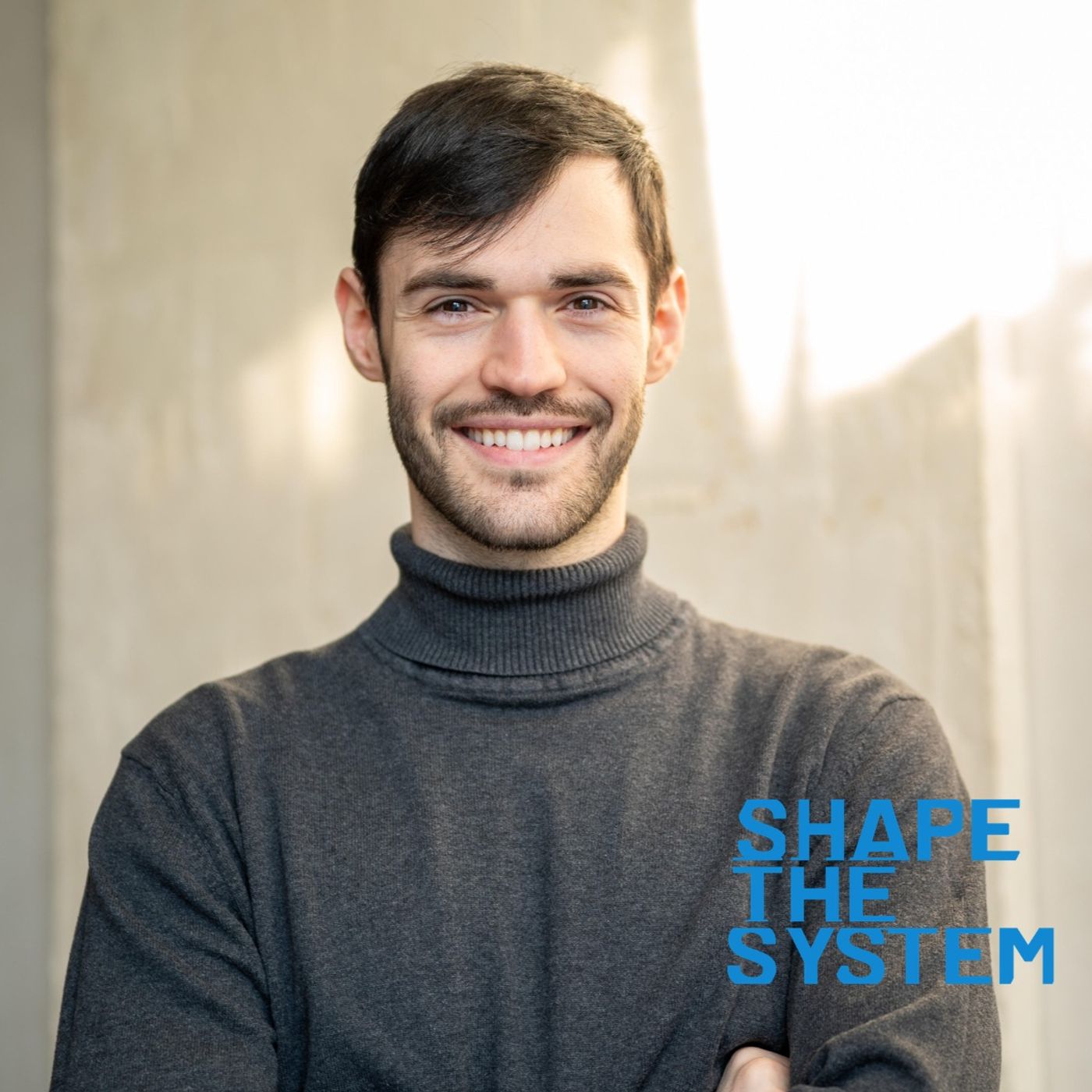
About the GuestAri Kimmelfeld is the founder and CEO of Commonplace, a New York–based marketplace for buying and selling bulky, high-value secondhand goods (fitness equipment, hot tubs, appliances, furniture and more) with inspection, payments, delivery and warranties built in. A lifelong secondhand shopper who was buying and selling snacks at summer camp at the age of eight, Ari studied accounting before joining a management consulting firm. There he first did due diligence on businesses that private equity firms were looking to buy, then spent most of his time helping Fortune 100 companies build corporate-backed ventures across product, engineering and go-to-market. Commonplace began during the pandemic as a two-button website for secondhand Pelotons. In under three years it has grown into a managed marketplace with more than 3,000 trained drivers across the United States.Episode SummaryEveryone has a Facebook Marketplace horror story. Commonplace has a sign in its office asking people to share theirs, and the team takes it out onto the street to collect them. In this episode of Shape the System, host Vincent Turner speaks with founder and CEO Ari Kimmelfeld about why buying and selling big secondhand items is still so painful. They also cover what it takes to make a used fridge or hot tub as easy to buy as a new one.The idea grew out of a pandemic-era glut. Locked-down Americans bought Pelotons in droves, and once gyms reopened many of those bikes became very expensive clothes racks. Ari is a keen cyclist. He bought one secondhand, took a cab to collect it, hauled it down five or six flights of stairs, and got it home with the resistance broken. He saw an opening and put up a website called Trade My Spin with exactly two buttons: buy a Peloton, sell a Peloton. Google picked it up, and tens of thousands of sellers from across the US submitted bikes. The business sold them for US$499, roughly 75% off retail, with delivery, a warranty, and the shoes, mat and weights included. Ari isn’t a developer. He admits the stripped-back first version was born of necessity, but it worked because the demand was already there.Ari is clear about where existing platforms succeed and where they fall short. Local marketplaces like Craigslist and Facebook Marketplace work well in big cities with deep inventory. Shipping-based platforms like eBay suit smaller items such as collectibles or podcast gear. Both break down over long distances, with physically large goods, and when an item’s value is high but the buyer can’t inspect it first. The consequences are real. A seller might pay a few hundred dollars for junk removal on a fridge, or US$600–700 just to move a hot tub, even when the item has most of its working life left. Meanwhile, buyers face cash-only deals, no financing, no warranty and the job of organising movers themselves. As Ari puts it, there’s simply no “connecting the dots” between someone’s unwanted fridge and the person about to buy one new.Commonplace’s answer is to rebuild the experience of buying new, layer by layer, around used goods. All payments run through the platform. Buyers reserve an item for US$1 and pay nothing until it’s delivered and installed. Before pickup, sellers refresh their photos, videos and description for the buyer to approve. A driver then carries out a 30–50-point inspection on collection, and the buyer can even FaceTime in to watch. If the item doesn’t match the listing, it stays put and the buyer isn’t charged. Drivers complete category-specific training courses and quizzes, and they unlock more technical categories, such as connecting a hot tub’s electrics, as they upskill. Every purchase comes with a free two-month parts warranty, and there’s an optional 12-month parts-and-labour warranty for big-ticket items. For hot tubs, Commonplace has even layered in the electrician, plumber and concrete pad that a new-tub dealer would arrange. Buyers save around 65% off retail on average.The economics are simple. Sellers pay a 20% fee in about 95% of categories, rising to 30% for jobs like swim spas that need a crane. Delivery is free within 100 miles (about 160 km), and nationwide shipping is available, with a treadmill from New York to Los Angeles costing around US$1,100. Add-on revenue comes from accessories, warranties, a “Store to Sell” service that collects items from people who are moving within 48 hours and sells them later, and paid promotion that pushes listings out to other platforms. Sellers also set a floor price up front, and any offer above it is accepted automatically, which ends the endless back-and-forth of “is this still available?”. On growth, Ari’s approach is to show up wherever buyers already shop. Vincent compares it to Airbnb’s early days on Craigslist. Gyms and med spas have started listing equipment, but the focus remains on peer-to-peer consumer sales, with Canada next, then Europe, then Australia.The conversation closes on the personal. The name Commonplace came from Ari’s wife, whom he describes as effectively a co-founder, after earlier names Trade My Spin and Trade My Stuff. It reflects his ambition for secondhand to become a mainstream shopping channel, the way ordering on Amazon became an alternative to going to the store. Raised Orthodox Jewish and still religious, Ari treats that future as inevitable, and he says this helps him take the bad days in his stride, like the dropped hot tub or the treadmill that arrives broken. His favourite part of the job is the creative freedom of building quickly. He describes a donation portal for the New York City Fire Department, which has no budget for gym equipment, that the team built in about two hours. His least favourite is the operational complexity, which only multiplies as the platform grows.Key TakeawaysSecondhand marketplaces fail on distance, size and value without inspection. Local platforms work in big cities and shipping platforms work for small items, but large, expensive goods far from the buyer fall through the gap.Buyers weigh the whole experience, not just the product. Buying new includes delivery, installation, card payment, financing and a warranty. Without these, even a 65% discount struggles to compete, so Commonplace adds each one back.Holding payment until delivery removes scam risk. Buyers reserve with US$1 and pay only once the item is installed. Drivers won’t collect anything that fails inspection or doesn’t match its listing.A trained, tiered driver network is the operational core. More than 3,000 vetted drivers complete category-specific training, file detailed inspection reports, and unlock higher-skill categories as they upskill.Distribution means showing up where buyers already look. Commonplace syndicates listings to Facebook Marketplace, Craigslist, Google Shopping, ChatGPT Shopping, Klarna and OfferUp. According to Ari, promoted listings are around four times more likely to sell, and sellers pay 2.5–4% of the listing price for this.Fast, cheap building changes what gets prioritised. Work that once took weeks or months of developer time now takes hours. That lets a non-technical founder say yes to opportunities like the FDNY partnership on the spot.Notable Quotes“It really breaks down, I think, when there are long distances involved, when the items are very large. And then the third thing is when the value is high relative to the lack of proof or inspection.” — Ari Kimmelfeld“Every single transaction goes through Commonplace, which is why I say it is impossible to be scammed on Commonplace.” — Ari Kimmelfeld“That’s really how we built each category — thinking, if I’m a consumer looking to buy a used hot tub, what are my hesitations? Why wouldn’t I buy it used? And why would I pay three times more to go buy it new?” — Ari Kimmelfeld“You just want to buy the damn thing. Can’t there be a buy now button?” — Ari Kimmelfeld“When it is an actual shopping channel, it’ll be commonplace.” — Ari Kimmelfeld“Showing up to work, I kind of feel like I’m playing with Legos, and that is such a blessing.” — Ari Kimmelfeld“The more transactions you have, the more problems you have. But that’s business — problems are opportunities in disguise.” — Ari KimmelfeldResourcesCommonplaceListener offer: Use code SHAPETHESYSTEM500 for US$500 off your first order on Commonplace. Limited to one use per person, valid until 13 January 2027.
Shape the System is an independent podcast with support from KPMG High Growth Ventures More about KPMG High Growth VenturesScale up for success. We’re here for that.We navigate founders and their teams to the services they need to reach their next milestone. From startup to scale and beyond. No matter where you are right now, we’ll get you the help you need to drive your business forward. We help founders fully realise their potential, as well as the potential of their team and their business, by connecting them to the expertise, skills and resources they need at every stage of their growth journey.Our extensive experience in partnering with evolving businesses means that we can provide you with tailored support as well as independent and practical insights. Whether you are looking to refine your strategy, establish your operations, prepare for a capital raise, expand abroad or simply comply with regulatory requirements, we are here to help.Links:Website: About (highgrowthventures.com.au)LinkedIn: https://www.linkedin.com/showcase/kpmg-enterprise-high-growth-ventures/Contacts: [email protected]

About the Guest
Dr. Chris DeArmitt FIMMM FRSC CChem is an independent polymer scientist, author, and founder of the Plastics Research Council — a nonprofit where he and professors from around the world work entirely unpaid to review and share peer-reviewed science on plastics. A specialist in polymer additives and fillers whose clients have included Apple and companies across multiple continents, Chris has spent over seven years and roughly a thousand hours annually reading thousands of studies on plastics, the environment, and human health. His findings are published in two freely available books and endorsed by toxicologists, medical doctors, and professors who have checked the science and found no errors.
Episode Summary
What do you actually know about plastics — and where did that knowledge come from? That's the question Dr. Chris DeArmitt puts to every audience he speaks to, and the answer is almost always the same: the media. In this episode of Shape the System, host Vincent Turner sits down with Chris for a wide-ranging, evidence-first conversation about one of the most misunderstood materials on the planet. The result is an episode that will challenge most of what you think you know — not through opinion, but through peer-reviewed science.
Chris opens by reframing the scale of the problem. Plastics represent just half a percent of all materials and waste we produce. Replacing them with paper, metal, or glass would require roughly double the fossil fuel — not less — because those alternatives demand far more energy to manufacture. And despite the ubiquitous image of a turtle tangled in a plastic bag, Chris recounts successfully pushing the BBC to retract a photoshopped image of exactly that scenario, which he argues has never occurred in nature. The famous "floating island of plastic the size of Texas"? Undetectable by satellite, and contradicted by decades of ocean monitoring data showing a vessel must sail 100,000 miles — four times around the planet — to find a single piece of plastic bag.
On microplastics, Chris is equally direct. Our lifetime ingestion of plastic particles amounts to roughly 0.015 grams over 70 years — a hundred million times below the no-observable-adverse-effect level established in over 2,000 studies spanning 60 years. The WWF's claim that we eat a credit card's worth of plastic each week, he notes, has been refuted by multiple independent studies — and remains on their website regardless. Meanwhile, the most common end-of-life options for plastic — landfill, incineration for energy recovery, or mechanical recycling — are all scientifically defensible, with recycling reducing environmental impact by a further 70% on top of plastic's already lowest-in-class baseline across 93% of applications studied.
Looking forward, Chris draws a clear line between innovations with evidence and those without. Plant-based versions of existing polymers like polyethylene and polypropylene — chemically identical to their fossil fuel counterparts, recyclable in the same streams, with decades of safety data — represent a credible path. Novel biopolymers like PLA, PHA, and seaweed-derived plastics, by contrast, lack life cycle evidence that they reduce environmental impact, regardless of how appealing they sound. The most unsexy innovation he highlights may also be the most significant: down-gauging, the continuous industry-wide effort to use less material to do the same job. A PET bottle that weighed 25 grams a generation ago now weighs around 8 grams — a 60% reduction in material, achieved quietly, without a press release.
Key Takeaways
Plastics account for just 0.5% of materials and waste, and replacing them with paper, metal, or glass would roughly double fossil fuel usage — making plastic bans scientifically counterproductive by every life cycle study ever conducted.
Our lifetime ingestion of microplastic particles is approximately 0.015 grams — a hundred million times below the established safe threshold — and no study in 60 years of research has documented a health effect from plastic particles at real-world doses.
Plastic has the lowest environmental impact in 93% of applications studied, even without recycling; adding recycling reduces that impact by a further 70%, but the material is already net-positive before any recycling takes place.
Litter is caused by litterers, not manufacturers — scientific studies comparing tourist beaches to remote beaches confirm litter originates from people on the beach, and post-bag-ban studies in Maine, Washington State, and New Jersey all found increased environmental impact and increased plastic sales following the bans.
Plant-based polyethylene and polypropylene exist today and are identical in performance and recyclability to fossil fuel-derived versions — a more credible near-term innovation than novel biopolymers, which currently lack life cycle evidence of reduced environmental impact.
Notable Quotes
"Everything you know about plastics comes from a source that you don't trust. Maybe it's time to put that aside for 10 minutes and just consider what scientists say about it." — Dr. Chris DeArmitt
"Plastic is actually net fossil fuel and carbon dioxide negative because they make cars lighter, they make airplanes lighter, they reduce food waste, and they insulate your homes." — Dr. Chris DeArmitt
"The World Wildlife Fund tells us that we eat a credit card a week of microplastic. Science says that would take 20,000 years to do." — Dr. Chris DeArmitt
"People think that because it's synthetic, it's like completely alien and different, and it really isn't. There's no property of polymers which is really different to anything natural." — Dr. Chris DeArmitt
"The people with the most passion are doing the most harm because they didn't check the facts before they went off. They're like an unguided missile — they've got a big warhead but no guidance system." — Dr. Chris DeArmitt
Resources
Plastics Research Council
Shape the System is an independent podcast with support from KPMG High Growth Ventures
More about KPMG High Growth Ventures
Scale up for success. We’re here for that.
We navigate founders and their teams to the services they need to reach their next milestone.
From startup to scale and beyond. No matter where you are right now, we’ll get you the help you need to drive your business forward. We help founders fully realise their potential, as well as the potential of their team and their business, by connecting them to the expertise, skills and resources they need at every stage of their growth journey.
Our extensive experience in partnering with evolving businesses means that we can provide you with tailored support as well as independent and practical insights.
Whether you are looking to refine your strategy, establish your operations, prepare for a capital raise, expand abroad or simply comply with regulatory requirements, we are here to help.
Links:
Website: About (highgrowthventures.com.au)
LinkedIn: https://www.linkedin.com/showcase/kpmg-enterprise-high-growth-ventures/
Contacts: [email protected]
Shape the System is an independent podcast with support from KPMG High Growth Ventures More about KPMG High Growth VenturesScale up for success. We’re here for that.We navigate founders and their teams to the services they need to reach their next milestone. From startup to scale and beyond. No matter where you are right now, we’ll get you the help you need to drive your business forward. We help founders fully realise their potential, as well as the potential of their team and their business, by connecting them to the expertise, skills and resources they need at every stage of their growth journey.Our extensive experience in partnering with evolving businesses means that we can provide you with tailored support as well as independent and practical insights. Whether you are looking to refine your strategy, establish your operations, prepare for a capital raise, expand abroad or simply comply with regulatory requirements, we are here to help.Links:Website: About (highgrowthventures.com.au)LinkedIn: https://www.linkedin.com/showcase/kpmg-enterprise-high-growth-ventures/Contacts: [email protected]

About the Guest
Carly Hunt is the Head of Strategic Partnerships of Showerkap, a UK-based water technology company tackling excessive water consumption in the hospitality sector. With over 20 years in hotel management — latterly focused on energy, waste, and water reduction programmes — Carly brings rare operational depth to the sustainability challenge she's now helping to solve. Her academic background in sustainable tourism (the subject of her university dissertation) makes her return to this space something of a full-circle moment.
Episode Summary
Water scarcity might not be the first thing that comes to mind when you book a hotel room, but it probably should be. In this episode of Shape the System, host Vincent Turner sits down with Carly Hunt, Head of Strategic Partnerships of Showerkap, to explore how the hospitality industry is one of the heaviest — and least scrutinised — consumers of fresh water on the planet. Hotels can use up to eight times more water than local residents, with individual rooms consuming as much as 1,500 litres per day. Meanwhile, the UK's Environment Agency is forecasting a potential shortfall of 1.4 billion litres per day by 2030, rising to 5 billion by 2050. The numbers are stark, and Carly makes the case that demand reduction — not just supply management — has to be part of the answer.
Carly's entry into this space came through two decades of hotel management, where she discovered that energy and waste were relatively easy to monitor and reduce, but water was almost impossible to measure at any meaningful resolution. That gap led her to Showerkap, the brainchild of inventor Steve Harding, which combines three elements that have never previously been integrated in the water sector: fixture-level IoT monitoring across an entire building, a cloud-based analytics platform, and a novel shower fade timer that delivers a real-time behavioural nudge — without restricting flow.
The pilot results, run across one floor of the Sandman Hotel at Gatwick Airport, were striking. Prior to the intervention, guests were showering for 35 minutes or more — consuming around 245 litres per session. After the shower fade timer was introduced (set to seven minutes), average shower duration across the 20-room eco-floor dropped to just three minutes and 20 seconds. Overall water usage fell by 58%, energy use by 14%, and the projected saving across the full hotel is approximately 2.7 million litres per year. Of the guests who stayed across nearly a year of the pilot, only three declined to participate in the eco-floor — a participation rate that Carly and Vincent calculate at roughly 99%.
The commercial case is deliberately straightforward: Showerkap is targeting a two-year payback period, meaning hotels can effectively finance the installation against the savings it generates. Beyond the headline water and energy savings, the technology surfaces hidden operational value — the Sandman pilot uncovered hot water circulation issues throughout the building and enabled early detection of Legionella risk. The go-to-market strategy currently leans on pilots and case studies to build trust in a space where water has historically been undervalued, with an eye toward expansion into the Mediterranean, MENA, and other water-scarce markets. An upcoming back-of-house research piece, potentially in partnership with the Sustainable Hospitality Alliance, is expected to extend Showerkap's evidence base well beyond the bathroom.
Key Takeaways
Hotels use up to eight times more water per person than local residents, with some rooms consuming up to 1,500 litres per day — making demand reduction in hospitality a high-leverage intervention.
Showerkap's pilot at the Sandman Hotel, Gatwick, achieved a 58% reduction in shower water usage and cut energy consumption by 14%, with average shower times dropping from 35+ minutes to under three and a half minutes.
The technology's payback period is approximately two years, making it financeable against projected savings — a critical threshold for hotel procurement teams weighing up an unfamiliar category.
Behavioural nudges, not flow restrictions, drive the results: the shower fade timer gives guests a gentle cue and the option to continue, yet the vast majority choose to reduce — suggesting most water waste is habitual rather than intentional.
Showers account for over 50% of hotel bathroom water use, but the IoT platform also surfaces back-of-house inefficiencies in kitchens, laundry, and plumbing systems — unlocking operational and maintenance savings beyond the guest experience.
Notable Quotes
"Water is one of the most vital resources on earth. And we all know that. And we rarely treat it that way because we automatically run a tap and it's there." — Carly Hunt
"Reducing showers by just a couple of minutes can save 20 litres. And if those small actions become millions, then think of the impact that would have." — Carly Hunt
"We always say that water intrinsically is linked to everything. We can't do anything without water." — Carly Hunt
"We don't want to force anyone to change, because that doesn't work. You have to effectively give them the tools to actually do it themselves." — Carly Hunt
Resources
Showerkap
Sustainable Hospitality Alliance (mentioned in episode)
Shape the System is an independent podcast with support from KPMG High Growth Ventures More about KPMG High Growth VenturesScale up for success. We’re here for that.We navigate founders and their teams to the services they need to reach their next milestone. From startup to scale and beyond. No matter where you are right now, we’ll get you the help you need to drive your business forward. We help founders fully realise their potential, as well as the potential of their team and their business, by connecting them to the expertise, skills and resources they need at every stage of their growth journey.Our extensive experience in partnering with evolving businesses means that we can provide you with tailored support as well as independent and practical insights. Whether you are looking to refine your strategy, establish your operations, prepare for a capital raise, expand abroad or simply comply with regulatory requirements, we are here to help.Links:Website: About (highgrowthventures.com.au)LinkedIn: https://www.linkedin.com/showcase/kpmg-enterprise-high-growth-ventures/Contacts: [email protected]

About the Guest
Lewis Dunnigan is the CEO and co-founder of Bygen, an Australian deep-tech company reimagining how activated carbon is produced. Lewis came to the problem through his PhD research at the University of Adelaide, where he and his team recognised the commercial potential of their work and spun out the company. He brings both the scientific depth of an academic researcher and the commercial pragmatism of a founder who has already shipped product to customers on multiple continents.
Episode Summary
Activated carbon is one of the most widely used industrial materials on the planet — and one of the least talked about. It filters your drinking water, treats industrial gas emissions, recovers gold from ore, remediates contaminated land, and even plays a role in pharmaceutical processing and energy storage. In this episode of Shape the System, host Vincent Turner sits down with Lewis Dunnigan, CEO of Bygen, to unpack what activated carbon actually is, why the way it's currently made is both costly and environmentally damaging, and how Bygen's production technology is changing the equation.
At its core, activated carbon is a highly porous solid material — visually indistinguishable from barbecue charcoal — but with a surface area so vast that a single teaspoon contains the equivalent of a football field. That porosity is what makes it such a powerful filtration medium: contaminants in liquids and gases are physically attracted to and trapped by the densely bonded carbon atoms inside. The problem is that making it the conventional way requires heating raw materials to around 1,000 degrees Celsius using fossil fuels like LPG or diesel — a process that is both expensive and carbon-intensive. The two dominant global feedstocks, coal and coconut shell, each carry their own environmental and social baggage.
Bygen's core innovation integrates the two-stage production process — charcoal production and activation — into a single system that generates excess heat rather than consuming it. By combining both steps and developing alternative activation chemistries that operate at lower temperatures, Bygen has effectively eliminated the largest operating cost in conventional activated carbon manufacturing: the external energy input. The result is a cleaner, cheaper production process that uses sustainable feedstocks — including almond, walnut, and hazelnut shells, as well as wood — sourced locally to wherever the plant is built. Bygen already has a plant running on walnut shells in Northern California, and a truck was loading activated carbon for a water treatment plant during the recording of this episode.
The company operates a licensing model, partnering with feedstock owners — such as large nut-processing or cracking facilities — who gain a way to convert a low-value byproduct (selling for perhaps $30–40 per tonne as cattle feed) into a high-value product worth around $4,000 per tonne. For end users like water treatment plants, Bygen competes not on price against cheap Chinese coal-based imports, but on quality, reliability, and service. The North Star is 200,000 tonnes of activated carbon produced annually using Bygen's technology — roughly 5% of the current global market of around 4 million tonnes per year — requiring five new project deployments per year and approximately 1 million tonnes of feedstock. The next 12 months are focused on building the team and capital base to make that deployment rate a reality.
Key Takeaways
One teaspoon of activated carbon contains the surface area of a football field — that extraordinary porosity is what makes it effective at trapping contaminants in water, gases, and industrial processes across a huge range of industries.
Conventional activated carbon production burns fossil fuels at 1,000°C, making it both expensive and carbon-intensive; Bygen's integrated process generates excess heat rather than requiring external fuel, cutting the major cost driver and eliminating associated emissions.
Bygen's licensing model locates plants at the source of feedstock — nut-cracking facilities, forestry byproduct sites — turning a low-value waste stream worth ~$30–40/tonne into an activated carbon product worth ~$4,000/tonne.
The global activated carbon market is approximately 4 million tonnes per year, with Bygen targeting 5% of that (200,000 tonnes) via five plant deployments annually across the US, Europe, and Southeast Asia.
Australia currently sends almost all spent activated carbon to landfill — unlike the US and Europe where regeneration (restoring used carbon to a near-virgin state) is standard — a gap Bygen is actively working to close.
Notable Quotes
"Despite these great use cases, the way that it's been made for the last hundred plus years is very, very harmful to the environment. And it's also very expensive." — Lewis Dunnigan
"The production method basically generates excess heat rather than requiring lots of additional energy input. And that basically means that we completely eliminate that major cost of conventional producers." — Lewis Dunnigan
"We don't really want to get involved in a pricing war. We can focus really on quality, on reliability, on customer service — and that's basically how we break into the market." — Lewis Dunnigan
"Australia has such an amazing research background that is so poorly translated into commercial outcomes. Being able to be one of the companies that can help show that is possible brings us all a lot of satisfaction." — Lewis Dunnigan
"There's no point working 18-hour days if you're not applying it in the right way. If you can apply your time based on your experience and your knowledge more effectively, you don't need to do that." — Lewis Dunnigan
Resources
Bygen
Shape the System is an independent podcast with support from KPMG High Growth Ventures More about KPMG High Growth VenturesScale up for success. We’re here for that.We navigate founders and their teams to the services they need to reach their next milestone. From startup to scale and beyond. No matter where you are right now, we’ll get you the help you need to drive your business forward. We help founders fully realise their potential, as well as the potential of their team and their business, by connecting them to the expertise, skills and resources they need at every stage of their growth journey.Our extensive experience in partnering with evolving businesses means that we can provide you with tailored support as well as independent and practical insights. Whether you are looking to refine your strategy, establish your operations, prepare for a capital raise, expand abroad or simply comply with regulatory requirements, we are here to help.Links:Website: About (highgrowthventures.com.au)LinkedIn: https://www.linkedin.com/showcase/kpmg-enterprise-high-growth-ventures/Contacts: [email protected]

Comments

Download from Google Play

Download from App Store
 United States