


 Claim Ownership
Fiduciary Investors Series
Subscribed: 2Played: 9
Subscribe

© 2026 Amanda White
Description
Through conversations with academics and asset owners, the Fiduciary Investors Podcast Series is a forward looking examination of the changing dynamics in the global economy, what a sustainable recovery looks like and how investors are positioning their portfolios.
The much-loved events, the Fiduciary Investors Symposiums, act as an advocate for fiduciary capitalism and the power of asset owners to change the nature of the investment industry, including addressing principal/agent and fee problems, stabilising financial markets, and directing capital for the betterment of society and the environment. Like the event series, the podcast series, tackles the challenges long-term investors face in an environment of disruption, and challenges investors to look differently at how they make decisions and allocate capital.
The much-loved events, the Fiduciary Investors Symposiums, act as an advocate for fiduciary capitalism and the power of asset owners to change the nature of the investment industry, including addressing principal/agent and fee problems, stabilising financial markets, and directing capital for the betterment of society and the environment. Like the event series, the podcast series, tackles the challenges long-term investors face in an environment of disruption, and challenges investors to look differently at how they make decisions and allocate capital.
46 Episodes
Reverse
Institutional investors pride themselves on taking a long-term approach, yet when it comes to public and private equity, they often apply very different standards. While private equity managers are afforded a decade or more to deliver returns, public equity managers can find themselves under pressure after just three years of underperformance.But Aziz Hamzaogullari, chief investment officer of Loomis Sayles’ growth equity strategies, argues this double standard is increasingly difficult to justify. He points to evidence that private equity has underperformed public market benchmarks since 2010, despite its historical reputation for superior returns. He also questions whether the perceived lower volatility of private markets is an illusion created by infrequent valuations, while rising leverage and increased competition for deals are putting further pressure on returns.In a conversation with Top1000funds.com Hamzaogullari examines why investors apply different time horizons to public and private equity, the risks of constantly hiring and firing managers based on short-term performance, and why greater selectivity is essential across both asset classes. He also explores the AI investment boom, arguing that while the technology will be transformational, only a handful of companies are likely to emerge as sustainable long-term winners.
Artificial intelligence has the potential to transform how people work, access information and participate in democracy, but its rapid advancement is raising urgent questions about governance, political influence and human control.Andrew Hall, Davies Family Professor of Political Economy at Stanford Graduate School of Business, warned that as AI becomes increasingly embedded in society, its political biases, access to reliable information and potential for manipulation could have profound implications for democratic institutions.Drawing on research into how AI models provide political advice, Hall argued that stronger evaluation and accountability will be essential to ensuring the technology empowers individuals rather than undermining their independence.In this live recording from the Fiduciary Investors Symposium at Stanford University in September 2026, Hall examines the opportunities and risks of AI, the governance challenges facing policymakers and how society can preserve freedom in an increasingly AI-driven world.
The real promise of the total portfolio approach is not simply greater flexibility in choosing investments, but the ability to dynamically manage risk as market conditions change.Nobel Prize-winning economist Myron Scholes, the Frank E. Buck Professor of Finance, Emeritus, at Stanford Graduate School of Business, argued that institutional investors focus too heavily on selectivity and average returns, when managing downside risk can be critical to improving compound returns over time.“Every period matters. There’s no long run. The long run is made of a sequence of short runs,” Scholes said, arguing that investors should dynamically adjust their risk budgets and preserve capacity to deploy capital when markets are under stress.In this live recording from the Fiduciary Investors Symposium at Stanford University in September 2026, Scholes explores risk, drawdowns and why dynamic risk management should sit at the heart of the total portfolio approach.
Artificial intelligence is entering a new era, moving beyond systems that simply answer questions to agents capable of carrying out complex tasks and taking actions over extended periods.Jack Clark, co-founder and head of public benefit at Anthropic, said the shift from chat to agents brings enormous opportunities, from greater economic efficiency to accelerating scientific discovery, but also creates a new generation of safety and governance challenges.Clark said AI could dramatically multiply the effectiveness of scientists, describing its potential to accelerate scientific progress as “maybe the biggest deal of the century”.In this live recording from the Fiduciary Investors Symposium at Stanford University in September 2026, Clark explores the rapid evolution of AI, agentic systems, safety and alignment, and what could come next as the technology becomes increasingly capable.
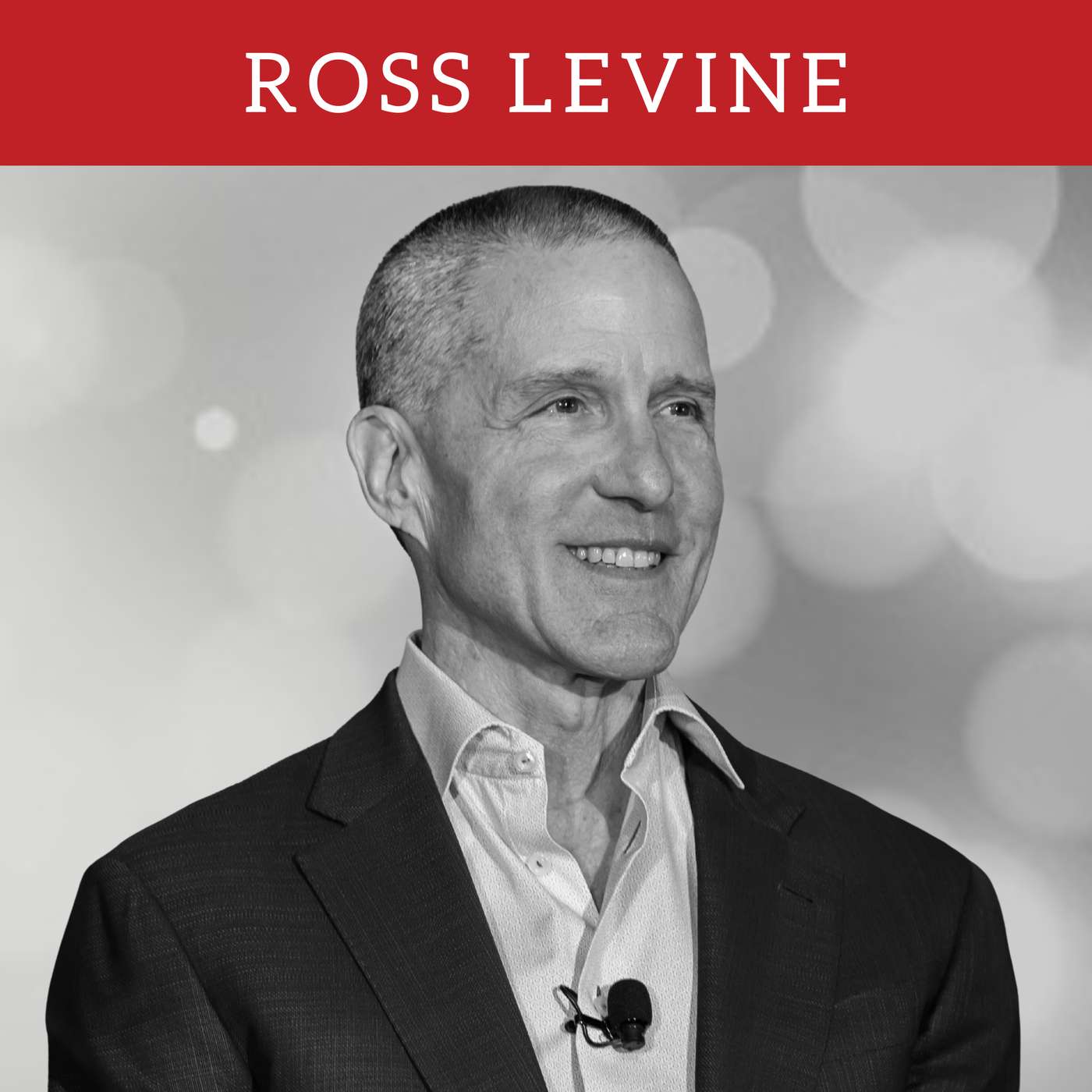
The risks building in the US financial system may not come from a single dramatic policy decision, but from the quiet accumulation of individually defensible changes that together encourage excessive risk-taking.That was the warning from Stanford University economist Ross Levine, who said a series of regulatory and supervisory changes in the US are expanding explicit and implicit government backstops while weakening the mechanisms designed to constrain risk-taking.In this live recording from the Fiduciary Investors Symposium, hosted by Top1000funds.com at Stanford University in September 2026, Levine examines the “quiet accumulation” of risk across the US financial system and what it could mean for institutional investors.

Comments

Download from Google Play

Download from App Store
 United States