


JIMD Podcasts
Subscribed: 35Played: 2,276
Subscribe

© All rights reserved
Description
JIMD Podcasts is home to the Journal of Inherited Metabolic Disease podcast and the JIMD Shortcast. We're also proud to showcase Metabolic Mysteries and the new Footprints in IMD podcast.
257 Episodes
Reverse
A rare disorder, a surprisingly basic biological question, and a paper that revisits what GLYCTK actually does. Jörn Oliver Sass joins the podcast to discuss D-glyceric aciduria, mitochondrial localization of D-glycerate kinase, and why getting the fundamentals right still matters.
Human D-Glycerate Kinase, Encoded by GLYCTK and Deficient in D-Glyceric Aciduria, Is a Mitochondrial Enzyme
Anne Korwitz-Reichelt, et al
https://doi.org/10.1002/jimd.70119
Dr Rory J. Tinker discusses diagnostic delay in mitochondrial disease, showing that most delays occur before clinical suspicion, despite canonical features being documented years earlier. The study highlights opportunities to shorten the diagnostic odyssey through earlier recognition and informatics approaches.
Drivers of Diagnostic Delay in Mitochondrial Disease: Missed Recognition of Canonical Features
Rory J. Tinker, et al
https://doi.org/10.1002/jmd2.70068
mRNA therapy is emerging as a serious therapeutic platform for liver inherited metabolic diseases. In this episode, James Nurse speaks with Sonam Gurung and Julien Baruteau about their JIMD paper exploring how mRNA can be used for protein replacement, how lipid nanoparticles help target the liver, and where this approach may complement gene therapy, transplantation and standard care. A clear look at a rapidly evolving field.
Delivering the Message: Translating mRNA Therapy for Liver Inherited Metabolic Diseases
Sonam Gurung, et al
https://doi.org/10.1002/jimd.70078
Dr Aaron B. Bowen explores epilepsy and EEG features in succinate dehydrogenase (complex II) deficiency, focusing on refractory epilepsy and the presence of RHADS, an EEG pattern more commonly associated with POLG-related disease, and what this means for diagnosis and differential thinking in mitochondrial disorders.
Epilepsy Phenotype and EEG Finding of Rhythmic High-Amplitude Delta With Superimposed Spikes (RHADS) in Succinate Dehydrogenase Deficiency
Aaron B. Bowen, et al
https://doi.org/10.1002/jmd2.70072
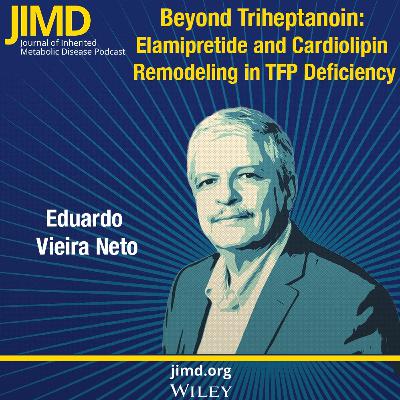
We talk with Eduardo Vieira Neto about elamipretide in mitochondrial trifunctional protein deficiency and the emerging role of cardiolipin remodeling beyond classic fatty-acid oxidation. Could this offer an add-on approach for complications that triheptanoin doesn’t fully address?
Elamipretide Improves Mitochondrial Function in Mitochondrial Trifunctional Protein-Deficient Mice and Human Fibroblasts
Eduardo Vieira Neto, et al
https://doi.org/10.1002/jimd.70132
Dr Molly Crenshaw shares a powerful neonatal case of treatable molybdenum cofactor deficiency, where rapid biochemical diagnosis preceded molecular confirmation—but the infant deteriorated before disease-altering therapy could be started. This Shortcast highlights the critical value of urgent biochemical testing, evolving therapies, and the narrowing window for intervention in severe neonatal metabolic disease.
Treatable Neonatal Molybdenum Cofactor Deficiency: Rapid Demise Despite Rapid Biochemical Diagnosis
Molly M. Crenshaw, et al
First published: 11 January 2026 https://doi.org/10.1002/jmd2.70061

A systems-level exploration of methylmalonic aciduria using personalized genome-scale metabolic models. Featuring Almut Heinken, Vito Zanotelli, and Jean-Louis Guéant, discussing fibroblast transcriptomics, TCA cycle anaplerosis, heme biosynthesis flux, and the promise of multi-omics-guided precision medicine.
In this Shortcast, Sophie Manoy summarises a newly reported case of holocarboxylase synthetase deficiency presenting with neonatal cholestatic liver disease. This is only the second such case described and highlights a possible genotype–phenotype correlation that broadens the recognised clinical spectrum of this rare but treatable disorder.
Holocarboxylase Synthetase Deficiency: A Second Case Report With Neonatal Cholestatic Liver Disease
Sophie Manoy, et al
https://doi.org/10.1002/jmd2.70051

Supplement prescribing in primary mitochondrial disease is almost universal, yet highly individualised, stepwise, and non-uniform across regions and phenotypes, with real potential for tissue and pill-burden harm. This podcast features Dr Julia Neugebauer and Professor Shamima Rahman exploring findings of a recent MetabERN survey looking at what informs when clinicians start, monitor, and sometimes stop enzymes and co-factors, and how global registry and natural-history data may guide the field forward.
Current global vitamin and cofactor prescribing practices for primary mitochondrial diseases: Results of a European reference network survey
Julia Neugebauer, et al
https://doi.org/10.1002/jimd.12805
And the editorial discussed:
Should the "mitochondrial cocktail" be a default option? An opinion
Peter W Stacpoole, Stephen D Cederbaum
https://doi.org/10.1016/j.ymgme.2025.109264
In this Shortcast, Dr Herodes Guzman discusses a striking case series of patients with GSDIa who developed fulminant metabolic crisis with persistent lactic acidosis despite correction of hypoglycaemia, raising concern for secondary mitochondrial dysfunction. He explores how these observations challenge conventional management and suggest a future role for mitochondrial-directed surveillance and therapies in GSD care.
Retrospective Case Series of Fulminant Metabolic Crisis in GSDIA: Persistent Lactic Acidosis Despite Correction of Hypoglycemia May Reflect Secondary Mitochondrial Dysfunction
Herodes Guzman, et al
https://doi.org/10.1002/jmd2.70059
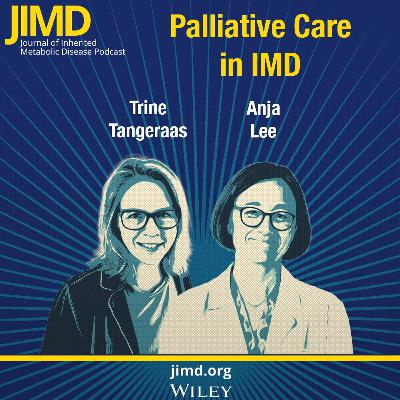
Only around 18% of inherited metabolic diseases have disease-specific treatments, yet palliative care remains strikingly underused. In this episode, Anja Lee and Trine Tangeraas discuss a pan-European survey exploring access, barriers, and how earlier integration of palliative care can transform support for people living with IMDs.
Palliative Care for Children and Adults With Inherited Metabolic Disease in Europe: An Underutilised Service for Supportive Treatment and Care
Anja Lee, et al
https://doi.org/10.1002/jimd.70095
Merve Yoldaş Çelik reviews pediatric cell trafficking disorders, a genetically diverse group that can mimic mitochondrial, lysosomal, and glycosylation disease. Using a 14-patient case series (including two novel variants), she highlights shared multisystem patterns and practical gene-specific clues to support a mechanism-based diagnostic approach.
A Multisystem Perspective of Pediatric Cell Trafficking Disorders: Within the Cells, Beneath the Signs
Merve Yoldaş Çelik, et al
https://doi.org/10.1002/jmd2.70053
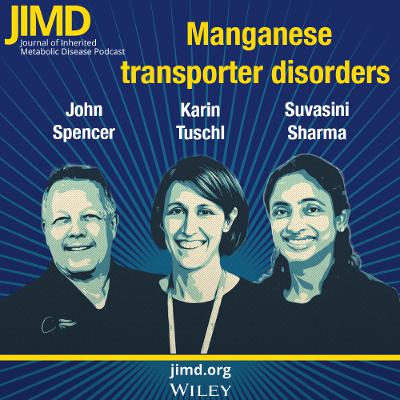
In this episode of the JIMD Podcast, we explore manganese transporter disorders with Dr Karin Tuschl, Dr Suvasini Sharma and Prof John Spencer, covering clinical red flags, MRI clues, EDTA chelation, and the urgent search for safer, oral treatments for hypermanganesemia with dystonia.
Consensus of Expert Opinion for the Diagnosis and Management of Hypermanganesaemia With Dystonia 1 and 2
Sherry Fang, et al
https://doi.org/10.1002/jimd.70031
Removal of Toxic Metabolites—Chelation: Manganese Disorders
Hendrik Vogt, et al
https://doi.org/10.1002/jimd.70107
Dr Jeremy Clark unpacks why leukodystrophy caused by biallelic HMBS variants does not respond to liver transplantation or hepatically targeted therapies, pointing instead to CNS-driven porphyrin toxicity and a need for entirely new management approaches.
Liver Transplantation and Other Hepatically Directed Therapies Do Not Change the Biochemical Phenotype nor Halt Progression of Leukodystrophy due to Biallelic HMBS Variants: A Case Report
Jeremy Clark, et al
https://doi.org/10.1002/jmd2.70056
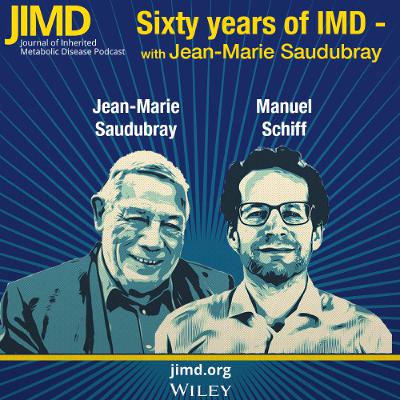
Join us for a rare conversation with Professors Jean-Marie Saudubray and Manuel Schiff as they reflect on six decades of progress in inherited metabolic diseases, from the earliest chromatograms to the dawn of genomic medicine. This episode explores the discoveries, collaborations, and human stories that shaped the field and continue to guide its future.
A Brief History of Inherited Metabolic Diseases: A Personal 60 Years Clinical Flashback
Jean-Marie Saudubray, Manuel Schiff
https://doi.org/10.1002/jimd.70063
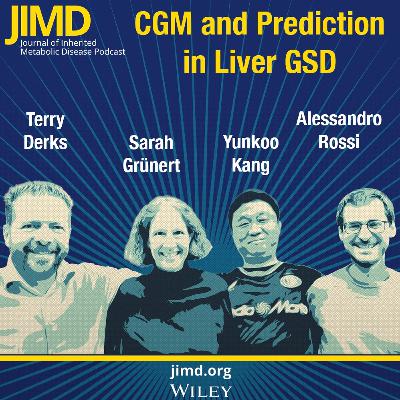
In this episode of the JIMD Podcast, Terry G. J. Derks, Alessandro Rossi, Sarah C. Grünert and Yunkoo Kang talk about the evolving role of continuous glucose monitoring (CGM) in liver glycogen storage diseases. The conversation spans international consensus on CGM use and an exciting deep-learning approach to predicting hypoglycaemia, pointing towards more personalised and preventive care for people living with GSD.
State of the Art and Consensus Statements by Healthcare Providers, Patients, and Caregivers on Continuous Glucose Monitoring in Liver Glycogen Storage Diseases
Terry G. J. Derks, et al
https://doi.org/10.1002/jimd.70040 and
A deep learning approach for blood glucose monitoring and hypoglycemia prediction in glycogen storage disease
Ji Seung Ryu, et al
https://www.nature.com/articles/s41598-025-97391-8
A child with severe developmental delay and an early-onset tumour sets the stage for a remarkable case of genetic investigation. In this episode, Sally Ann Lynch and Alfonso D’Alessio uncover how functional testing transformed an uncertain variant into a key diagnostic insight.
Read the article: https://doi.org/10.1002/ajmg.a.64275
Krista Casazza talks about validating key biomarkers in Niemann-Pick type C and why they are essential for future clinical trials and regulatory approval. The discussion focuses on emerging candidates such as 24-hydroxycholesterol, neurofilament light chain, and calbindin-D, alongside the urgent need for data harmonisation and collaboration across the NPC community.
Biomarker Validation in NPC1: Foundations for Clinical Trials and Regulatory Alignment
Krista Casazza, et al
https://doi.org/10.1002/jimd.70075
In this JIMD Shortcast, Allyson Terrell and Katie Sapp explore the real-world challenges of newborn screening for lysosomal storage disorders, based on a survey of healthcare professionals working at the front line of implementation. The study highlights the limitations of single-tier screening, the value of multi-tier testing, and the growing importance of multidisciplinary collaboration to improve diagnostic clarity and patient outcomes.
Exploratory Study on the Challenges of Newborn Screening for Lysosomal Storage Disorders Emphasizes the Need for Multitier Testing and Collaborative Approaches to Management
A. Terrell, et al
https://doi.org/10.1002/jmd2.70027
A nationwide CTX study, a critical treatment window, and a conversation with the lead author. Dr Tanyel Zübarioğlu joins the JIMD Podcast to unpack the long-term impact of CDCA therapy and why timing matters more than ever.
Long-Term Outcomes of Chenodeoxycholic Acid Therapy for Cerebrotendinous Xanthomatosis: A Nationwide Study on Prognostic Factors and Treatment Tanyel Zubarioglu, et al
https://doi.org/10.1002/jimd.70069
Editorial Comment to Regulatory News
Carla E. M. Hollak, Natalja Bouwhuis
https://doi.org/10.1002/jimd.70071

Comments

Download from Google Play

Download from App Store
 United States