


 Claim Ownership
This Commerce Life
Subscribed: 17Played: 233
Subscribe

Description
A Canadian Podcast, focused on Canadian brands, determined to talk about Canadian success stories.
We are retail educators and experts, teaching Canadian businesses how to build, grow, and scale in retail. As industry connectors, Kenny & Phil bring decades of experience as buyers, sales strategists, and marketers into delivering practical, actionable education grounded in real-world application.
We are retail educators and experts, teaching Canadian businesses how to build, grow, and scale in retail. As industry connectors, Kenny & Phil bring decades of experience as buyers, sales strategists, and marketers into delivering practical, actionable education grounded in real-world application.
497 Episodes
Reverse
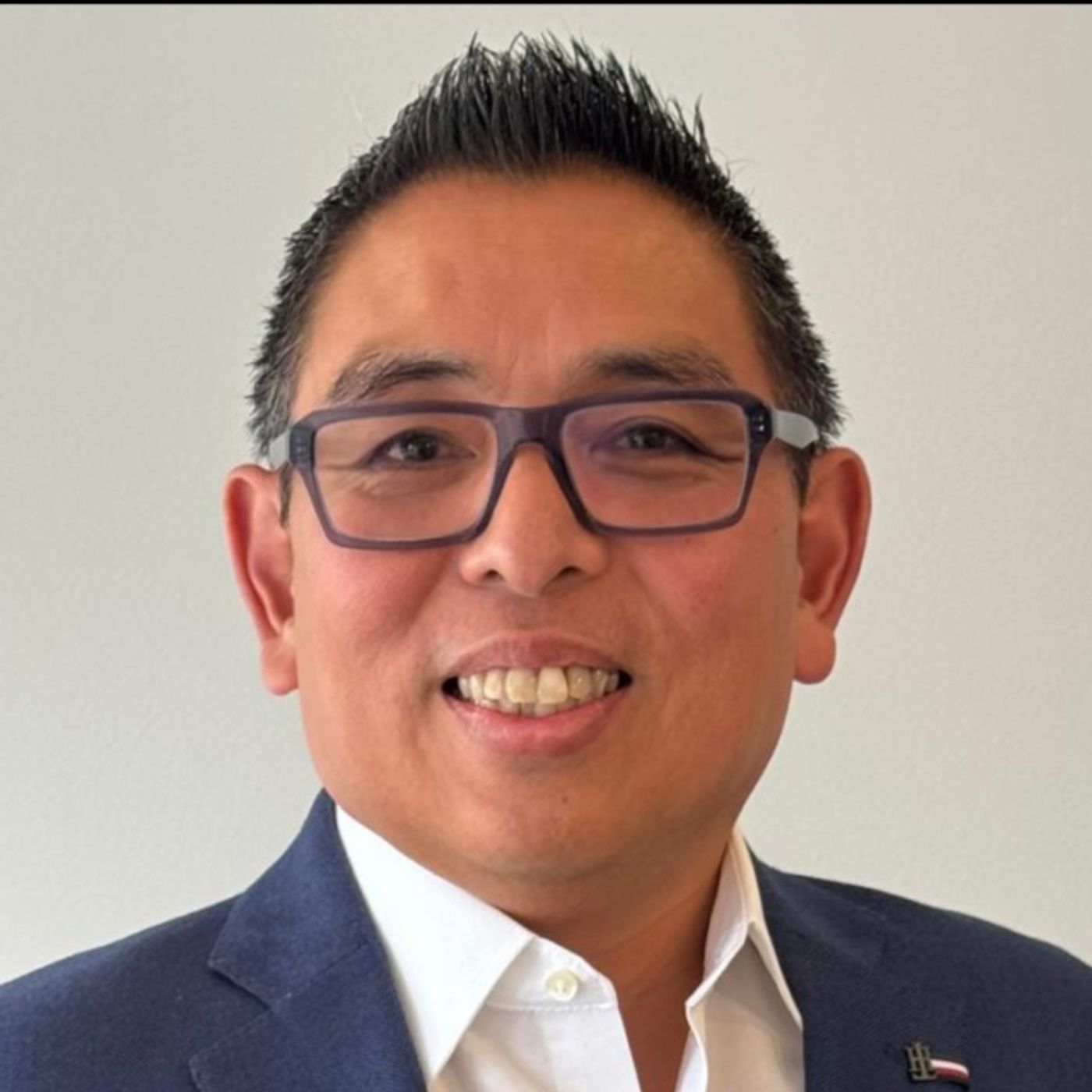
With the Canada–U.S. trade war pushing brands to rethink where their product goes, Mexico has quietly become one of the biggest openings in Canadian CPG. Former Bed Bath & Beyond Mexico CEO Steve Sotto joins Phil and Kenny to break down how Canadian brands actually get in — and where most of them get stuck.Fresh off touring Mexico City retail together in June, the crew digs into the channel Canadians keep overlooking: thriving department stores like Liverpool and El Palacio de Hierro, in a market where Canada's own department stores (The Bay, Sears, Eatons) have all but vanished. If you've got a premium product and you're only thinking Walmart and Chedraui, you're missing a huge slice of Mexican consumerism.Then it gets practical. Steve walks through the two halves of exporting — the commercial side (getting on shelf) and the logistics side (getting into the country legally) — and why the second one is where brands blow it. Cofepris registration, NOM numbers, product classification, custom brokers, bonded warehouses: miss a step and your shipment sits at port racking up penalties, no matter how perfect your labels are.The throughline: Mexico is a sign-off market, not a complaints-based one like Canada. Someone authorized has to clear your product before it moves. Get the process right and, as Steve puts it, whatever's hot in Canada tends to be hot in Mexico within three months.Find Steve and his logistics group at www.prelex.mx. Exploring an export move? Reach Phil and Kenny at [email protected] this episode:Why Mexico's department stores (Liverpool, El Palacio de Hierro) are the channel Canadian brands keep missingCommercial vs. logistics: why landing product in-country is the easy partCofepris, NOM numbers, and the classification wall that strands shipments at portWhy Mexico requires a sign-off, and Canada only reacts to complaintsReading the Mexican consumer — and the trade-war window that's open right now

Kids won't drink water — but they'll chase the bright, fun stuff. Laura Chiodola built Electric Kids to hijack that impulse for good.After 20 years building Tealish, Laura saw the same problem every parent knows: sports drinks and TikTok-hyped brands own the kids' beverage space, while the "healthy" options are either boring water or clinical rehydration products. Electric Kids is her answer — a clean-label kids' electrolyte stick pack with coconut water powder as the first ingredient, natural colour from spirulina and beetroot, and a salt level formulated for kids' bodies, not adults'.In this episode, Laura, Phil, and Kenny get into why packaging that appeals to kids (not moms) is the real unlock, how a product can be a "vehicle" to get more water into a kid's day, and why the brand that wins a loyal audience in one category doesn't automatically win the next one. It's a sharp look at category creation, clean-label positioning, and building for both the buyer (parents) and the user (kids) at once.Find Electric Kids at getelectrik.com and on shelf at Healthy Planet. Find Laura here: https://www.linkedin.com/in/laura-chodola-6324bb16/

Retail veteran Peter Chapman has spent 20 years teaching brands what buyers actually want to hear — and it's rarely another pitch about how great your product is.
After 19 years at Loblaw running fresh merchandising across Atlantic Canada, Peter went out on his own in 2008 to help suppliers build real relationships with retailers. On this episode he sits down with Phil and Kenny to unpack what separates the brands that get on shelf from the ones that get shown the door.
The conversation digs into why "walking the store" is a non-negotiable part of the job, how store staff are the industry's most underused source of intel, and why understanding a retailer's economics beats fighting them. Peter also shares why frozen and refrigerated have quietly become the categories to watch, and how a wave of Canadian-first sentiment is reshaping what brands should be leading with — at home and in export markets.
Find Peter at SKUfood.com, where he's published a weekly industry newsletter for 347 straight Fridays, and connect with him on LinkedIn.
In this episode:
From a 1983 grocery job to 19 years at Loblaw to going solo in 2008
Why buyers want a plan, not a "look what I've got" pitch
Walking the whole store (not your own set) to find where you really fit
Store staff and cashiers as underrated sources of real-world sales insight
The shift toward frozen, refrigerated, and Canadian-made products

Elbows up — but make it strategic. Phil and Kenny break down what the latest US tariff escalation actually means for Canadian food, beverage, and CPG brands.
This one's raw and unscripted. The guys air out the frustration, then get clinical: how founders should be stress-testing their US ambitions, why "buy Canadian" is more than a slogan right now, and how to hunt for opportunity instead of just moaning about the mess.
They dig into the case for looking beyond the border — Mexico, Europe, Asia, and the I-5 corridor as its own set of regional markets — and why parking your US plan doesn't mean blowing it up. Plus a rundown of the food & beverage associations and buy-local programs across BC, Alberta, Manitoba, Ontario, and Atlantic Canada that brands can tap for peanuts.
If you're a Canadian brand, tell the world you're Canadian — people are asking, and not just here at home.
In this episode:
Why the guys are angry — and why they're choosing to move past it
"Buy Canadian" when you can, and being real about when you can't
Rethinking the US: sizing, packaging, COGS, and market viability
Looking past the border — Mexico, Europe, Asia, and regional plays
The provincial food & bev associations and buy-local programs worth joining
This Commerce Life is Canada's longest-running commerce podcast, hosted by Phil Chang and Kenny Vannucci.

Meet Colin Christensen, the entrepreneur who turned "mushrooms and chocolate" into a fast-growing Canadian functional food brand — and made it taste like chocolate, not sand.
MyCAO (a mashup of mycelia + cacao) started almost by accident. Hired as CEO of a psilocybin company waiting on regulation, Colin needed a revenue stream and stumbled into the functional mushroom space. A conversation with a high-end Edmonton chocolatier flipped his original "Canadian MUD/WTR" idea on its head — and four months later, MyCAO was making revenue.
In this episode, Colin walks Phil and Kenny through the real formulation challenge behind the brand: getting a full, effective gram of a single mushroom species into every button without the gritty, sandy texture that plagues most mushroom products. The team leaned on renowned herbalist Robert Rogers, sourced full-spectrum mushrooms from a GMP-grade Canadian grower, and paired everything with Valrhona dark chocolate. The result is a functional dose you'd actually want to eat.
It's a sharp look at building a differentiated CPG brand in a crowded wellness category — where dose, quality, and format are the whole game.
Find Colin Christensen (CEO) on LinkedIn: https://www.linkedin.com/in/colinchristensen/
MyCAO: https://mycao.ca/

Comments

Download from Google Play

Download from App Store
 United States