


 Claim Ownership
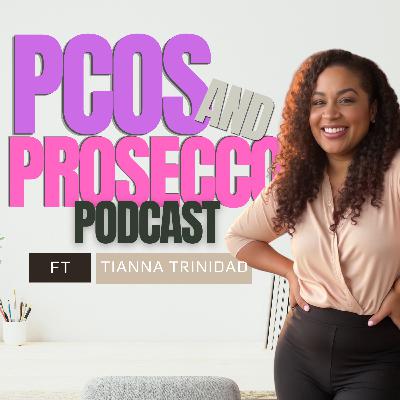
PMOS and Prosecco
Subscribed: 8Played: 53
Subscribe

© Tianna Trinidad @ Love Served Warm
Description
PMOS and Prosecco is the podcast for women tired of disconnected answers about their periods, hormones, metabolism, fertility, pregnancy, and emotional health. Hosted by Tianna Trinidad, RN and founder of the PMOS Fertility GPS, each episode helps you understand what your symptoms, cycle signs, labs, and fertility plan may be missing. Through honest conversations, expert interviews, and practical education, you’ll learn to connect the dots, ask better questions, and make informed decisions about your body and care. Pour the Prosecco...we have a lot to talk about.
86 Episodes
Reverse

What if the way we talk about our bodies in front of our daughters becomes the voice they eventually hear inside their own heads?In this episode of PMOS and Prosecco, Tianna sits down with board-certified pediatrician, mom, and author Dr. Whitney Casares for a conversation about body confidence, generational body shame, puberty, diet culture, and what it actually means to raise girls who understand their bodies.Because telling our daughters they’re beautiful isn’t enough if they watch us criticize our stomachs, celebrate weight loss, avoid pictures, or constantly try to make ourselves smaller.Tianna and Dr. Casares explore how these messages can follow girls from childhood into adulthood—and why that matters even more when puberty, irregular periods, PCOS, fertility struggles, or pregnancy enter the picture.They discuss:• How body shame gets passed down without anyone directly criticizing a child• What to say when your daughter asks, “Am I fat?” or says she hates her stomach• Why body literacy may matter more than teaching girls to simply “love their bodies”• How to repair when your child hears you criticize your own appearance• Why girls should understand periods, hormones, puberty, and reproductive health before something feels “wrong”• The difference between wanting an easier life for your daughter and teaching her that having a body like yours would be unfortunate• How parents can protect body autonomy during medical appointments—especially for neurodivergent and special-needs children• What PCOS, infertility, and years of body criticism can teach women to believe about their worthThis conversation is bigger than body positivity.It’s about raising girls who can notice what their bodies are telling them without automatically turning that information into judgment about who they are.Dr. Whitney Casares is the author of Raising Body Confident Kids, available wherever books are sold.Follow PMOS and Prosecco for more honest conversations about PCOS, fertility, motherhood, women’s health, and everything we were never taught about our bodies.

You’re getting your period every month. You’re tracking ovulation. You’re timing sex. So why are you still not pregnant?In this episode of PMOS & Prosecco, Tianna Trinidad, RN and PCOS Hormone & Ovulation Specialist, breaks down one woman’s PCOS fertility story—and the cycle pattern hiding behind her “regular” periods.Her period came every month, but once we looked beyond the bleeding and examined what was happening after suspected ovulation, we discovered her luteal phase was only about 8 days. Over the next 90 days, that pattern shifted to around 12 days, and later in our work together, she got the positive pregnancy test she had been hoping for.We’re talking about:• PCOS, ovulation and regular periods• What your luteal phase can tell you about your cycle• Why a positive OPK does not tell the entire ovulation story• Cervical mucus, progesterone and fertility tracking• Why “normal” fertility labs may not answer the question you actually have• What to look at when you’re doing everything “right” but still not getting pregnant• How to recognize repeating fertility patterns without obsessing over every symptomIf you have PCOS and you’re trying to conceive naturally, especially if you keep hearing that everything looks “normal” while pregnancy still isn’t happening, this podcast is for you.PMOS & Prosecco goes beyond basic fertility advice and asks the questions women with PCOS are often left trying to figure out alone.Follow PMOS & Prosecco now so you don’t miss the next episode: Brown Spotting 5–8 Days After Suspected Ovulation With PCOS: 4 Questions I’d Ask Before Calling It “Normal.”And if this episode sounds like somebody you know, send it to her and tell her: “Girl. I think Tianna is talking about us again.” 😂
You changed your diet, lost the weight and finally got your period back.Everybody celebrated. They praised your progress and made pregnancy sound like it should be waiting right around the corner.Then another month passed, the pregnancy test was negative and nobody had prepared you for what happens when you do everything you were told—but the baby still does not come.In the final episode of this series, Tianna explains why weight loss and a returning period can represent meaningful PCOS progress without answering every fertility question.Changes in nutrition, movement, body weight and metabolic health may support blood sugar, energy, cycle regularity and other important health markers. Getting your period back is a real win. A shorter, more predictable cycle is a real win.The problem begins when visible progress is treated like proof that the entire reproductive process corrected itself along the way.Did ovulation become more consistent? Did the spotting change? Did the time between suspected ovulation and your next period improve? Did your medication response change? Has your partner been evaluated? Are other appropriate medical questions still unanswered?Those questions do not erase your progress. They help you understand what the progress answered—and what it did not.Tianna also shares her personal experience of losing more than 60 pounds, getting her period back and reversing prediabetes. She explains how easily supporting your health can become another performance when you begin believing that eating perfectly enough, becoming small enough or controlling your body hard enough will make it owe you a baby.Why weight loss and more regular periods can be meaningful without being the complete fertility solutionWhy getting a period does not independently confirm consistent ovulationHow “just keep doing what you’re doing” can become an incomplete fertility planWhy progress and unanswered fertility questions can exist togetherHow diet culture and weight shame affect women trying to conceive with PCOSWhy partner testing and broader medical evaluation may still matterWhy your fertility strategy cannot be reduced to your weight, one symptom or one laboratory resultYou did not fail because your baby was not waiting on the other side of the weight loss.Your body is not a failed project because one intervention did not answer every fertility question.During the private PCOS Fertility GPS™ Assessment, Tianna organizes your cycle history, medication, bleeding, OPKs, symptoms and what happened before and after suspected ovulation. Together, you identify what appears clear, where the pattern raises questions and what deserves your attention next.Book your PCOS Fertility GPS™ Assessment:
You saw clear, slippery, egg-white cervical mucus and immediately assumed your body had completed the whole ovulation assignment.Baby, your body may have turned in one page—and you already started planning the graduation party.In this episode, Tianna shares the fertility-tracking mistake she made during her own PCOS journey: allowing one exciting fertility sign to write the story for her entire cycle.Egg-white cervical mucus can be useful information. It may be consistent with hormonal changes that often happen as ovulation approaches and may signal that a fertile window is opening.What it cannot independently do is confirm that an egg was released, identify the exact day ovulation occurred, explain what happened afterward or promise that pregnancy should happen.Tianna explains why seeing fertile cervical mucus and later receiving a negative pregnancy test does not mean your body lied to you. The mucus was real. Your body was doing something. The mistake was assigning that sign more certainty than it could carry alone.Instead of asking only whether the mucus appeared, Tianna teaches you to consider whether the rest of the pattern agrees with what you decided that mucus meant.What egg-white cervical mucus may tell you about your fertile windowWhy fertile-looking mucus does not independently confirm ovulationHow hope can influence the way you interpret fertility signsWhy cervical mucus, OPKs, spotting and your next period must be considered togetherHow one promising sign can prematurely end the investigationWhy collecting more data does not always solve an interpretation problemHow Build, Surge and Hold create context around the entire sequenceYou do not need to throw away useful fertility information or turn every bathroom trip into another clinical assignment.Let the mucus be information.Just stop asking it to confirm ovulation, explain the rest of your cycle and promise a pregnancy all by itself.During the private PCOS Fertility GPS™ Assessment, Tianna looks at what was happening during Build, what appeared around Surge and what your cycle showed afterward during Hold. This helps you stop making fertility decisions from one exciting sign while the rest of the month may be telling a more complicated story.Book your PCOS Fertility GPS™ Assessment:
They ran a few tests, told you everything looked normal and somehow that became the end of the investigation.Meanwhile, you are still not pregnant, your cycle still makes no sense and nobody has clearly explained whether you are ovulating consistently—but congratulations, your number landed inside a box on the laboratory report.In this episode, Tianna explains why a normal laboratory result can be accurate and reassuring without answering your entire fertility question.A thyroid result may give your provider useful information about your thyroid. A progesterone result may help answer a specific question depending on when and why it was ordered. But one number cannot independently explain long PCOS cycles, multiple positive OPKs, early spotting, repeated negative pregnancy tests or why your current plan has not produced the change you expected.Tianna also discusses why test timing matters. A standard Cycle Day 21 progesterone test may not offer the context you expected when your cycle lasts 38, 45 or 52 days and you did not see a positive OPK until much later.Cycle Day 21 is not a magical appointment your ovaries are required to attend.Instead of asking only whether a result was “good” or “bad,” Tianna teaches you how to ask what the test was meant to evaluate, whether it was timed according to your actual cycle and what the next step will be if the result is normal but pregnancy still is not happening.What exact question was this test intended to answer?Was this test timed according to my actual cycle?What is our next step if this result is normal but pregnancy still is not happening?Why “normal” is not automatically a complete fertility explanationHow laboratory reference ranges differ from full-cycle interpretationWhy the purpose and timing of a fertility test matterHow irregular PCOS cycles may affect the context of certain timed testsWhat to ask before leaving another appointment without a clear next stepHow to organize your cycle information before speaking with your providerWhy advocating for clarity does not make you a difficult patientNormal may be an accurate laboratory result.It is not automatically a complete fertility plan.During the private PCOS Fertility GPS™ Assessment, Tianna places your existing laboratory results beside your bleeding, OPKs, symptoms, medication response and cycle timing. This helps identify where you still need clarity and which questions should return to the healthcare professional managing your testing and treatment.Book your PCOS Fertility GPS™ Assessment:

Comments

Download from Google Play

Download from App Store
 United States