


 Claim Ownership
Cleaning Up: Leadership in an Age of Climate Change
Subscribed: 631Played: 45,748
Subscribe

© 2026 Cleaning Up
Description
Once a week, Michael Liebreich and Bryony Worthington have a conversation with a leader in clean energy, mobility, climate finance or sustainable development. Informative, inspiring and fun!
314 Episodes
Reverse

Indonesia is facing a defining question: can it continue to grow its economy while making the shift towards a greener future? In this episode of Cleaning Up, guest host Marie Cheong speaks with Sandiaga Uno, chair of Mutuagung Lestari International and former Deputy Governor of Jakarta and Minister of Tourism, about Indonesia’s potential to become a major player in the green economy, and why the country’s natural resources, growing energy needs and entrepreneurial ecosystem could create significant opportunities for climate solutions and investment.They explore whether green investing could be the next major growth opportunity, why the economics need to stack up, and how moving beyond the idea of a “green premium” towards “green discounts” could make sustainable business models more competitive. From the challenge of moving away from coal while meeting rising energy demand, to the potential of carbon credits and nature-based solutions, the conversation looks at what it will take to turn Indonesia’s green potential into real economic and environmental value and what investors should consider before taking the plunge.Topics covered in this episode:Indonesia’s green growth potentialGreen investing’s next growth cycleGreen premiums vs. green discountsPolitics and the energy transitionMoving beyond coalCarbon credits and nature-based solutionsTurning green potential into profitsWhat green investors should look forLeadership Circle:Cleaning Up is proud to be supported by its Leadership Circle. The members are Actis, Alcazar Energy, Arup, Climate Imperative Foundation, Copenhagen Infrastructure Partners, Cygnum Capital, Davidson Kempner, EcoPragma Capital, EDP, Eurelectric, KKR, Mitsubishi Heavy Industries, National Grid, Octopus Energy, Quadrature Climate Foundation, Schneider Electric, SDCL and Wärtsilä. For more information on the Leadership Circle, please visit cleaningup.live.LinksSandiaga Uno’s bio: https://www.linkedin.com/in/sandiaga-salahuddin-uno-7803b642a/ Saratoga: https://saratoga-investama.com/Sandiaga’s article for the Center for International Relations and Sustainable Development: https://cirsd.org/horizon-article/from-rebuilding-to-refining-2/ Mutuagung Lestari Tbk (MUTU): https://mutucertification.com/en/ Subscribe to the Cleaning Up Newsletter: https://cleaninguppod.substack.com Acronyms:MUTU: Mutuagung Lestari InternationalJETP: Just Energy Transition Partnership SBY: Susilo Bambang Yudhoyono, previous President of IndonesiaChapters00:00 Intro00:51 About Indonesia13:03 Saratoga’s Evolution20:47 Green Discounts26:18 Energy Transition32:08 Rising Energy Demand37:14 Growth and Policy43:23 Carbon Credits52:33 Nature-Based Solutions55:21 Climate Investing01:02:31 Outro

One of the biggest questions when it comes to the brutal and drawn-out Russia-Ukraine war is how it can be brought to an end, and crucially, could it ever be replaced by a stable peace? To understand this, we have to ask not just where we are now, but how we got here.For episode 03 of our Deep Dive Ukraine, Michael Liebreich is in Kyiv with John E. Herbst, Senior Director of the Atlantic Council’s Eurasia Centre and former US Ambassador to Ukraine, to explore the origins of the Russia-Ukraine conflict, the chance for a stable peace, Russia and Ukraine’s vulnerabilities, and the role of NATO. They also examine the changing US approach to military support and negotiations, and the risks of a peace deal that forces Ukraine to surrender territory.Topics covered in this episode:Why Putin invaded UkraineUkraine’s strikes on Russian oil infrastructureNATO expansion and Russian aggressionThe legacy of the Orange RevolutionThe cracks in Putin’s regimeTrump’s shifting approach to peaceThe risks of territorial concessionsCan Russia’s regime collapse?Links:John E. Herbst’s bio: https://www.atlanticcouncil.org/expert/john-e-herbst/Atlantic Council Eurasia Center: https://www.atlanticcouncil.org/programs/eurasia-center Michael’s Substack on Ukraine striking Russian oil refineries: https://mliebreich.substack.com/p/why-ukraine-should-keep-striking Subscribe to our newsletter: https://cleaninguppod.substack.com MAP - Membership Action PlanFSB - Federal Security Service (Russia)Leadership Circle:Cleaning Up is proud to be supported by its Leadership Circle. The members are Actis, Alcazar Energy, Arup, Climate Imperative Foundation, Copenhagen Infrastructure Partners, Cygnum Capital, Davidson Kempner, EcoPragma Capital, EDP, Eurelectric, KKR, Mitsubishi Heavy Industries, National Grid, Octopus Energy, Quadrature Climate Foundation, Schneider Electric, SDCL and Wärtsilä. For more information on the Leadership Circle, please visit cleaningup.live.Chapters:00:00 Intro02:15 The Orange Revolution06:45 Putin’s Ambitions11:00 NATO and Ukraine16:30 US Policy Shifts22:00 Ukraine’s Oil Strikes26:00 Sanctions Hit Russia29:00 Cracks in Putin’s Regime36:00 Ukraine’s Winter39:00 Paths to Peace44:27 Outro
 1
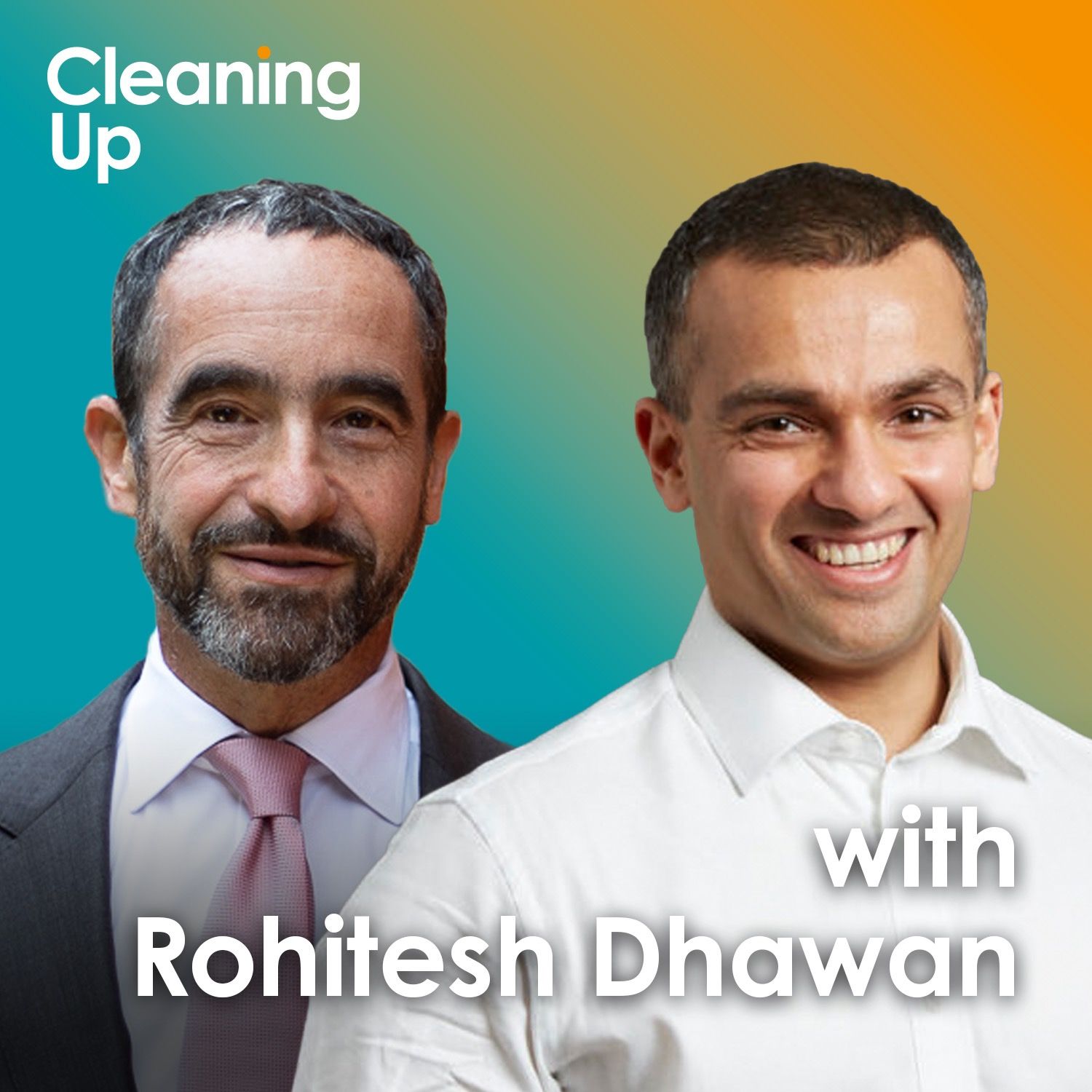
The world needs more metals than ever before, but can the mining industry deliver the resources responsibly? The energy transition depends on the mining industry, yet the sector faces hard questions over coal, carbon emissions, environmental damage and the rights of the communities whose land and resources it extracts.This week on Cleaning Up, Michael Liebreich puts those questions directly to Rohitesh ‘Ro’ Dhawan, President and CEO of the International Council on Mining and Metals (ICMM). Can mining companies credibly commit to net-zero 2050 while continuing to produce coal? Are they taking sufficient responsibility for the emissions generated by the products they sell? And can voluntary industry standards deliver meaningful accountability, or is the industry being trusted to police itself?Michael and Ro also touch on Indigenous consent, the lengthy process of permitting new mines, the economics of mineral processing and the challenge of electrifying some of the world’s largest machines.Topics covered:Responsible mining and global standardsMining's role in the energy transitionCoal production and Scope 3 emissionsTailings dams and industrial safetyIndigenous rights and community consentFaster permitting without weaker safeguardsAfrica's mineral wealth and value chainsElectrifying giant mining trucksChina's dominance in mineral refiningAI, automation and smarter extractionLeadership Circle:Cleaning Up is proud to be supported by its Leadership Circle. The members are Actis, Alcazar Energy, Arup, Climate Imperative Foundation, Copenhagen Infrastructure Partners, Cygnum Capital, Davidson Kempner, EcoPragma Capital, EDP, Eurelectric, KKR, Mitsubishi Heavy Industries, National Grid, Octopus Energy, Quadrature Climate Foundation, Schneider Electric, SDCL and Wärtsilä. For more information on the Leadership Circle, please visit cleaningup.live.Links:Rohitesh Dhawan’s bio: https://www.linkedin.com/in/rohiteshdhawan/ ICMM: https://www.icmm.com/ Mining Indaba 2027: https://miningindaba.com/ Mark Cutifani on Cleaning Up: https://www.youtube.com/watch?v=P50A_NfgE2A Subscribe to the Cleaning Up newsletter: https://cleaninguppod.substack.com/ Acronyms:NGO: Non-Governmental Organisation PRI: Principles for Responsible InvestmentESG: Environmental, Social, and GovernanceR&D: Research and Development GFRP: Glass Fibre Reinforced PolymerChapters:00:00 Intro04:12 ICMM's Role09:38 Tailings Dam Safety13:01 Investor Accountability16:13 Global Mining Standards22:47 Coal and Emissions31:20 Permitting New Mines38:17 Who Benefits from Mining?42:04 Smelting Economics47:38 Moving Up Value Chains51:29 Electrifying Mine Equipment56:06 Mining Technology Breakthroughs01:01:12 Outro

Can you make energy investments work in a country at war? Since Russia’s full-scale invasion in 2022, repeated attacks on Ukraine’s energy infrastructure have devastated its power system. By spring 2024, the country’s dispatchable generating capacity had fallen from 38 GW before the war to just 12 GW, leaving electricity in short supply and heating disrupted for many households.For this week’s Deep Dive Ukraine, Michael Liebreich is in Kyiv speaking to Andrii Gerus, Chair of the Ukrainian Parliament's Committee on Energy, Housing and Utility Services, and Dmytro Boroday, Partner at Horizon Capital, about the race to rebuild Ukraine's energy infrastructure, and the capital needed to make it happen.They examine how Ukraine is attracting international investors into wind, solar and battery storage, why distributed generation makes commercial as well as strategic sense, and how political risk insurance and development finance institutions are helping unlock projects. They also discuss the regulatory reforms needed to attract private capital, the challenge of corruption, and the potential for Ukraine to export electricity to neighbouring European markets.Topics covered in this episode:Ukraine's energy system under attackThe shift to distributed generationWhy renewables strengthen energy resilienceWhat winter is like to live throughFinancing energy projects during warWar risk insurance for private investorsAttracting international capital into UkraineUkraine's future in European electricity marketsLeadership Circle:Cleaning Up is proud to be supported by its Leadership Circle. The members are Actis, Alcazar Energy, Arup, Climate Imperative Foundation, Copenhagen Infrastructure Partners, Cygnum Capital, Davidson Kempner, EcoPragma Capital, EDP, Eurelectric, KKR, Mitsubishi Heavy Industries, National Grid, Octopus Energy, Quadrature Climate Foundation, Schneider Electric, SDCL and Wärtsilä. For more information on the Leadership Circle, please visit cleaningup.live.Links:Andrii Gerus’ bio: https://forumkyiv.org/en/speakers/andrii-gerusDmytro Boroday’s bio: https://www.linkedin.com/in/dmitryboroday/Horizon Capital: https://horizoncapital.com.ua/ European Energy Community fund: https://www.energy-community.org/Ukraine/Fund/overview.html Subscribe to our newsletter: https://cleaninguppod.substack.com/ Acronyms:CHP: Combined Heat and PowerTSO: Transmission System Operator DSO: Distribution System OperatorsIRR: Internal Rate of ReturnIC: Investment CommitteeGP: General PartnerLP: Limited PartnerEBRD: European Bank for Reconstruction DevelopmentIFC: International Finance CorporationDFI: Direct Foreign InvestmentPPA: Power Purchasing Agreement BESS: Battery Energy Storage SystemMIGA: Multilateral Investment Guarantee AgencyChapters:0:00 Intro 1:06 Ukraine's Energy Crisis3:29 Soviet Energy System6:46 War Damage10:09 Distributed Energy13:31 Attracting Investors17:03 War Risk Insurance21:19 Corruption and Reform27:04 Investing in Reconstruction35:16 Financing New Renewables41:03 Investing During War47:26 Insurance Against War51:26 Invitation To Investors 53:58 Outro

The world is facing a new era of geopolitical instability, rising energy costs and declining development finance. For many countries, access to reliable, affordable energy is no longer just an economic priority, it is a question of security.Recorded in New York during the United Nations General Assembly and Climate Week, this episode of Cleaning Up sees guest host Ana Rovzar, Chief of Staff at the Global Renewables Alliance, speak with Alexander De Croo, former Prime Minister of Belgium and now Administrator of the United Nations Development Programme (UNDP).They explore how renewable energy can reduce dependence on volatile fossil fuel markets, how decentralised energy systems can strengthen resilience, and what Ukraine’s experience reveals about protecting critical energy infrastructure. The conversation also examines how to attract investment in grids and clean energy, the decline in development assistance, and AI’s potential to accelerate progress.Topics covered in this episode:Energy security as national securityRenewables and fossil fuel dependenceFinancing the global energy transitionUkraine's decentralised energy reconstructionWhy grids are holding back progressDe-risking investment in emerging marketsTurning climate targets into actionAI's potential to accelerate developmentLeadership Circle:Cleaning Up is proud to be supported by its Leadership Circle. The members are Actis, Alcazar Energy, Arup, Climate Imperative Foundation, Copenhagen Infrastructure Partners, Cygnum Capital, Davidson Kempner, EcoPragma Capital, EDP, Eurelectric, KKR, Mitsubishi Heavy Industries, National Grid, Octopus Energy, Quadrature Climate Foundation, Schneider Electric, SDCL and Wärtsilä. For more information on the Leadership Circle, please visit cleaningup.live.Links:Alexander De Croo’s bio: https://www.linkedin.com/in/alexanderdecroo/ Ana Rovzar’s bio: https://www.linkedin.com/in/ana-rovzar-2546b149/ Achim Steiner on Cleaning Up: https://www.youtube.com/watch?v=2prrV1dPSUI Subscribe to our newsletter: https://cleaninguppod.substack.com/ Michael Liebreich’s Pragmatic Climate Reset: https://about.bnef.com/insights/clean-energy/liebreich-the-pragmatic-climate-reset-part-i/Acronyms:UNDP: United Nations Development ProgrammeUNGA: United Nations General AssemblyUNEP: United Nations Environmental ProgrammeODA: Official Development AssistanceSDG: Sustainable Development GoalOECD: Organisation for Economic Co-operation and DevelopmentChapters:00:00 Intro04:56 UNDP’s Mission07:11 Rethinking Development14:19 Energy Security17:39 Grids and Resilience25:52 From Ambition to Action28:23 Financing the Transition36:44 Development and Security41:27 De-risking Investment45:05 UN Funding50:06 AI and Development57:03 Outro

Comments

Download from Google Play

Download from App Store
 United States