


 Claim Ownership
Wealth Actually
Subscribed: 19Played: 210
Subscribe

© 2025 Wealth Actually LLC
Description
Covering the issues that affect business, entrepreneurship, wealth, trusteeship and culture.
214 Episodes
Reverse
DAVID PAKMAN — political commentator, YouTube host, and author of the new book Pay Attention — joins me to talk about Algorithms, AI, and the Attention Economy. We break down how attention became the core commodity of the modern economy, why algorithms reward outrage over nuance, and what happens when AI starts cloning creators without their consent.
David walks through the real story of “The Daniel Carter Show,” a YouTube channel that used AI voice-cloning to impersonate him and was algorithmically recommended to his own audience. From there, the conversation covers why right-wing messaging has a structural advantage on algorithmic platforms, what “behavioral surplus” means and how platforms monetize it, and the media-literacy habits families should be teaching the next generation before handing over unrestricted social media access.
https://youtu.be/RTy2vuw7oe8
We also discuss anonymity and accountability online, why the “calm middle” is checking out of social media, and a simple “media diet” framework for staying informed without getting consumed.
https://www.amazon.com/Pay-Attention-Algorithms-Suppressing-Rewiring/dp/0063569809/
https://open.spotify.com/episode/3ti3d6FvXAmgwqX1h4pMQQ?si=x8cwV2-DQNewJJX9yM6Vpw
Themes
Why attention is the defining commodity of the digital economy
How “rented ground” platforms (YouTube, TikTok, podcasts) shape what creators can say
The real story behind an AI deepfake impersonating David Pakman
“Behavioral surplus”: how platforms monetize what you don’t even realize about yourself
A practical media-diet framework — and how to talk to kids and aging parents about safe media use
AI’s Impact on Video
Timestamped Show Notes / Chapters
00:00 — Cold open: “You just have to learn how to play the game” — David on the political right’s platform advantage
00:15 — Wealth Actually intro & disclaimer
00:40 — Introducing David Pakman and today’s topic: algorithms, attention, and responsible media consumption
00:59 — David’s new book Pay Attention: why he wrote it and the “confessional” behind-the-curtain angle
02:38 — Attention as the “lingua franca” of the modern economy
03:25 — Creating content on “rented ground”: YouTube, TikTok, and podcasting platforms as landlords with no clear lease
04:44 — How Facebook’s shift from chronological feeds to algorithmic “For You” feeds rewired the entire incentive system
06:36 — Why boring-but-important topics (like housing policy) need an emotional hook to break through
07:37 — What the political right does better on these platforms — and why it’s about style, not substance
08:01 — The COVID vaccine messaging case study: fear and scapegoating vs. accurate-but-boring nuance
10:10 — From the traditional GOP to the “Trump party”: the John McCain/POW moment as an inflection point
11:05 — The pre-Trump roots of modern right-wing messaging (AM/low-power FM religious radio, Rush Limbaugh) — and the recent press-corps ban of CNN, Politico, and MSNBC from the White House briefing room
12:08 — Why the “calm middle” checks out of social media, and how outrage drives engagement
12:40 — The trap of over-weighting vocal-minority feedback: “98% of my Twitter replies are anti-social screeds”
14:29 — Online anonymity, accountability, and Jonathan Haidt’s real-identity proposal
14:55 — David’s own experiment: requiring a real email address cut toxic messages by 95–99%
16:10 — AI and deepfakes: the danger of synthetic content built on real people’s data and personalities
16:44 — The “Daniel Carter Show”: how an AI voice clone of David was algorithmically pushed to his own audience
18:59 — “Behavioral surplus” — how platforms monetize the gap between what you say and how you actually behave
21:31 — David’s media-diet “food pyramid”: proactive, vetted sources as the staple; algorithmic scrolling as junk food
24:09 — Advising families and next generations on safer, smarter media habits
25:17 — David’s own household rules on kids, screens, and delaying unrestricted social media access
27:12 — The financial-literacy parallel: media literacy as a life skill that should be taught early
27:58 — The media-literacy pyramid — and the Pew Research finding that most Americans (across party lines) struggle to tell fact from opinion
29:10 — The AI risk multiplier: outsourcing critical thinking to algorithms
29:32 — Where to find Pay Attention and follow David Pakman
30:19 — Closing thanks
Transcript
[00:00] “So I actually think that from a political standpoint, if what people are trying to do is use these platforms to get the ideas they believe in out, you just have to learn how to play the game. I don’t think there really is any other solution on the political side.” — David Pakman
[00:15] [Show Intro] Welcome back to the Wealth Actually podcast, the show that features experts, entrepreneurs, and commentators that will give you the right knowledge, planning, and guidance so you can preserve your assets and enjoy your wealth. Learn more and subscribe today at WealthActually.com. This podcast is for educational and entertainment purposes. It is not investment, legal, or tax advice. It does not represent the opinions of the employers of the host or guests. David Pakman has a multimillion person following and an outsized presence with his online political talk show. He knows a lot about how the algorithms work across platforms like YouTube. We’re gonna talk a lot about that and also how to responsibly consume media in this day and age
[00:56] Frazer Rice: David Pakman, thanks for coming on.
[00:58] David Pakman: Thank you.
[00:59] Frazer Rice: You’ve got a new book out. Pay Attention. By the time this podcast launches, it will be fully out and about on Amazon and wherever else everybody gets books. Tell us a little bit, just briefly, from the book writing process, your major voice in media, and what got you writing on this topic?
[01:18] David Pakman: Well, there’s a confessional aspect to the book — just kind of explaining the compromises as a content creator that I have to make. And I say “have to” in the context of, if I want this to be my full-time job, if I wanna succeed at it, there are compromises that have to be made, as is the case in most jobs. So one aspect of the book is kind of pulling back the curtain a little bit. The other aspect is about best practices at the individual level, when so much of what we come to believe is true — and sometimes isn’t — is mediated by these digital platforms that are algorithmically delivering content in a way that is not impartial. It’s so important to understand why we are fed the things we are fed rather than other things, as a starting point for having conversations about what we want the world to look like. And then I also have a political interest in this — as someone on the political left, I think the political right naturally benefits from the way these algorithms work, not because of anything special they’ve done, but from their communication style. So if the political left wants to succeed — which I think it does, at least it claims to — it has to better learn how to conduct itself on these platforms. We’ll dive into that in a second.
[02:38] Frazer Rice: One thing in your book — and I think generally that you talk about — is the commodity of attention, and how that has become really the lingua franca of the modern economy. Maybe dive into that a little bit about why that has become the case.
[02:55] David Pakman: Tell me from which perspective do you want me to talk about it? ‘Cause that could go in a bunch of directions.
[03:00] Frazer Rice: Well, I think the main thing is to say: if people are sort of used to oil or plastics or gold being a commodity, the idea of attention really driving, in many ways, economic decisions or allocation decisions around productivity — that seems to be something that’s a little bit more nuanced in the last, certainly five years, but maybe even back the last 10 or 15.
[03:25] David Pakman: Well, I think that conversation kind of starts with understanding incentives. I create content on what I describe as “rented ground” — YouTube, TikTok, podcasting platforms — all of these platforms are basically lending me space, for as long as it’s at their pleasure to do so, to publish my content. And they’re landlords that don’t really give me a clear lease that tells me what I’m allowed to do and expected to do. I kind of have to figure it out by doing it. Their incentive is to keep users on the platform as long as possible — the longer users are there, the more money the platform makes. So when we look at the content we get from these platforms, it’s not because the content is true that we’re shown it. It’s not because the content makes society better or makes us better citizens. We’re shown the content that the algorithm determines is most likely to keep us on the platform. That’s really the starting point. One of the critical changes: I don’t know how early you were on Facebook, but at the start, when I was in college, if you were friends with 20 people, your home feed was a chronological feed of what your friends posted. Very simple — if you looked on Saturday, went back Sunday and scrolled, at some point you’d hit the last thing you saw Saturday, and you were kind of done. There was a clear break point — “okay, I’m caught up, I’m getting off Facebook.” That’s a real problem for a platform that wants to keep you on there as long as possible. So eventually Facebook and Twitter switched to an algorithmically recommended feed. TikTok calls it the “For You” page, and it’s just the default. What that does is show you content not in chronological order, but based on what keeps you watching.
[05:52] Frazer Rice: At a much, much smaller scale than you do, I get frustrated oftentimes saying, I’m putting out things that I think are interesting and good that get a good response from a narrow set of people. But if I were Sydney Sweeney or a dancing bear and able to proliferate content in those terms, I’m
What happens to your voice, image and online accounts after you die? In this episode of Wealth Actually, I welcome back NATALIA PARKER and TATYANA THURSTON of DEXIT to discuss digital identity and estate planning in the age of AI.
https://youtu.be/MdnUcekE-08
The issue is bigger than recovering a password. An executor may have to decide whether to keep a book on sale, preserve a podcast, close a social media account or respond to an AI-generated version of the person who died. Those decisions can put income, reputation and family wishes in conflict.
We discuss how to build a digital-asset inventory, document instructions for online accounts, protect against deepfake scams and think through the use of your name, image, likeness and voice. The practical question: does your estate plan give the next person enough information to make these decisions?
What we cover
Digital estate planning: Why books, podcasts, photographs, recordings and online accounts belong in the planning conversation.
Instructions, not just an inventory: What an executor needs to know about the assets, the platforms and what you want done with each account.
Deepfake fraud: Why a familiar face or voice should not replace verification when money or sensitive information is involved.
AI after death: The questions raised by avatars, simulated social media activity and the reuse of a person’s creative work.
Fiduciary judgment: How executors and trustees may have to weigh commercial value against reputation and the emotional impact on a family.
A technology component: Why Natalia and Tatyana argue that technology planning belongs alongside wealth, tax and estate planning.
Episode timestamps
Timestamps refer to the supplied episode audio, including the opening preview and introduction.
00:00 Preview and introduction00:52 Why AI belongs in the estate-planning conversation03:36 Name, image and likeness beyond celebrities04:56 Platform access, ownership and closing accounts06:54 Deepfake fraud and verifying money transfers08:48 Building a digital defense strategy10:22 Digital-asset inventories and consent to AI recreation13:15 Facebook, posthumous posting and the ethics of AI15:46 Avatar businesses and the digital afterlife18:50 Robin Williams and restrictions on likeness21:02 Executors, trustees and the emotional cost to families23:10 Adding a technology component to the estate plan23:53 Where to find DEXIT and closing thoughts
About the guests
Natalia Parker and Tatyana Thurston are the co-founders of DEXIT, a digital succession-planning business. DEXIT works with clients, wealth advisors and estate planners on plans for online assets and accounts. (DEXIT founder profile; DEXIT)
Resources and related episodes
DEXIT: Learn about the guests’ work at dexitplan.com.
Our earlier conversation: Digital Assets Estate Planning with Natalia Parker and Tatyana Thurston covers digital inheritance, account access and planning for executors.
Related Wealth Actually episode: Technology and Estate Planning explores digital tools for estate-planning work.
Questions from the episode
What should a digital-asset inventory include?
In this conversation, we discuss online accounts, publishing platforms, books, podcasts, images, recordings and intellectual property. The emphasis is on pairing the inventory with instructions about what should be preserved, closed or considered for continued use.
What should I decide about an AI version of myself?
The guests suggest documenting whether you want your voice, image or recordings used to recreate you digitally after death. They also discuss the tension between those wishes, an executor’s decisions and the family’s reaction to the result.
Why is this an issue for people who are not celebrities?
Our discussion includes family photographs, personal accounts, recordings and unpublished creative work. Their importance may be emotional rather than commercial, which is why the conversation extends beyond celebrity estates.
What is the first planning conversation to have?
Start with what exists, what matters to you and what you want done with it. The next question is who will have to carry out those instructions and whether they have a usable roadmap.
Clarification on the Meta discussion
The opening preview and the discussion around 13:15 refer to Meta’s patent for simulating a user’s social media activity, including after death. In February 2026, a Meta spokesperson told Business Insider, “We have no plans to move forward with this example”; the report distinguishes the patent from a decision to implement the technology. (Business Insider)
The transcript below preserves the conversation as recorded. This clarification is separate from the speakers’ remarks.
Transcript
This transcript has been lightly edited for readability, removing filler words and repeated starts while preserving the substance of the conversation. Speaker timestamps are approximate navigation aids; examples and legal or technical statements reflect the discussion, not independently verified advice.
[00:00] Tatyana Thurston: Facebook in 2060, they’ll have way more deceased user accounts than live user accounts. And Facebook needs to monetize that. It takes up space in their servers, and they’ve actually recently patented the right to use the content that has been posted by deceased users. And they will be reposting as if they were still around.
[00:26] Announcer: Welcome back to the Wealth Actually podcast, the show that features experts, entrepreneurs, and commentators that will give you the right knowledge, planning, and guidance so you can preserve your assets and enjoy your wealth. Learn more and subscribe today at wealthactually.com. This podcast is for educational and entertainment purposes. It is not investment, legal, nor tax advice. It does not represent the opinions of the employers of the host or the guests.
[00:52] Frazer Rice: Natalia, Tatyana, welcome back.
[00:54] Natalia Parker: Thank you for having us.
[00:55] Tatyana Thurston: Thanks for having us.
[00:56] Frazer Rice: Well, our last discussion actually engendered a lot of feedback from people who, if they were stuck in the executor role or in the trustee role, I thought it was very helpful in terms of laying out the roles and responsibilities and what you have to do to keep yourself and the estates safe. I thought we’d talk a little bit today about the intersection of technology, which hits close to home to me. I’m a big user of AI and really helped move things along for clients that way. But for me, I have a lot of IP as well.
[01:29] Frazer Rice: I’ve got podcasts, I’ve got books, I’ve got all sorts of images, et cetera. And there’s an AI component to some of that as well. Maybe take us through a little bit about how you think about preparing someone who has to preside over somebody else’s IP, their name, image, likeness, and that type of thing as a broader scope of issues as they get prepared going on this journey.
[01:57] Natalia Parker: Yes. First of all, yes, you do have a lot. And right now, your executors will have to know which platforms you’re using. And they have to know what you would like to do with those accounts. Do you want to keep your book open for readers and keep collecting money? Do you want your podcast to stop podcasting? Everything has to be written down somewhere. And then you have to have a plan for each one of them. We had a case where we had to close their Amazon book account. That was difficult because there were several authors.
[02:37] Frazer Rice: Oh, yikes. So a lot of cooks in the kitchen, and all of them have an opinion on what they want to do with it.
[02:45] Natalia Parker: Yes. So that’s where the DEXIT plan comes in.
[02:52] Frazer Rice: In terms of getting your arms around what it means to have digital assets nowadays, a lot of people, we talked before about social media accounts, images, maybe even voice recordings, et cetera, that may not be commercial, but they’re personal and important to them. And as we all know, AI is using every bit of data to train their LLMs and all the other things that they have at play to make their AI agents more effective. What is the state of the art as far as either using or protecting your own digital presence if you don’t want to be a part of AI, or how do you responsibly be engaged with it?
[03:36] Tatyana Thurston: I think it depends on where the name, image, and likeness is being used and in what capacity. For example, we have kids today as young as in high school, and they have a social media presence. They’re gaining followers in their teens, and maybe their goal is to be a professional football player. All those platforms hold their data and their videos and their name. And maybe they’re making money from it even at a young age.
[04:07] Tatyana Thurston: So even estate planning isn’t just for folks who are older. It could even start as early as young kids because they’re on platforms. Those are platforms which are public. The public platforms is a ripe source for scammers to take your name, image, and likeness and capitalize it in another way. So there’s a source of truth that some people are trying to do, especially celebrities. A lot of celebrities now are actually creating avatars of themselves so that the true representation of themselves is on record. It’s actually really interesting, but that’s part of preserving their digital presence online.
[04:56] Frazer Rice: And to circle back a little bit to what we were talking about in the previous episode, when you’re intersecting with these platforms, usually the social media platforms, the Facebooks, the Twitters, the Instagrams, et cetera. Step one, obviously, is to catalog exactly where you are, which is its own full-time job in many ways. But then what exactly do you have on there? It’s images, it’s quotes, it’s things like that. How do you intersect with these companies to not only get the terms of service figured out and get things pointed in the right dir
Fire the Whole Investment Team: Meb Faber on 250 Years of American Compounding and Why CalPERS Can’t Beat a 60/40 allocation
https://youtu.be/9lBYkG4J2sY
A dollar invested in the U.S. stock market in 1800 is worth roughly $200 million today, and Meb Faber says the giant pension funds paid to beat that kind of compounding usually can’t. In this episode of Wealth Actually, Frazer Rice talks with Meb Faber, co-founder and CIO of Cambria Investment Management and host of The Meb Faber Show, about his new coffee-table book Investing in America: The Rise of a 250-Year Bull Market, the shareholder yield thesis behind Cambria’s ETF lineup, and his long-running public campaign arguing that CalPERS and other giant institutional pools routinely fail to beat a simple, low-cost buy-and-hold portfolio.
https://open.spotify.com/episode/4WmnPm3GN8jwQtJuCVV9XG?si=nLLcz8y8RSuydORA5_ZHGQ
Key Takeaways
America is, in Faber’s words, the greatest compounding machine in history. He puts a dollar invested in U.S. stocks in 1800 at roughly $200 million today — a number he uses to reframe how clients should think about staying invested through wars, depressions, and pandemics.
The book’s origin story starts with meme stocks. Faber says COVID pulled a new generation of retail investors into the market through gamified trading apps, and he wanted to hand them a historically grounded alternative to day-trading and zero-day options.
Diversification is older than the country itself. Faber traces the concept back to 15th- and 16th-century joint-stock voyages — the Mayflower and the Virginia Company among them — where spreading capital across many risky expeditions let “merchant adventurers” survive when any single ship was lost.
Shareholder yield, not dividend yield, is Cambria’s core factor. Since the S&P 500’s dividend yield now sits near an all-time low of 1.04%, Faber argues the real signal is cash dividends plus net buybacks — net of the dilution from stock-based compensation that quietly erodes shareholders’ ownership every year.
Faber’s CalPERS critique boils down to one line: “the returns are not bad, they’re just not good.” He’s built an entire body of work, including Cambria’s ENDW endowment-style ETF, arguing that giant pools with virtually unlimited access to managers still can’t consistently beat a disciplined global 60/40.
Complexity is often the enemy, not the edge. Faber contrasts investing with almost every other field of expertise: hiring the best doctor or coach nearly always helps, but hiring the most sophisticated (and expensive) money manager frequently doesn’t.
Illiquidity has a way of showing up at the worst possible time. Faber points to endowments getting caught upside down in 2008–2009 and to more recent leveraged blowups as the same lesson repeating: over-lever a portfolio and you’re out of chips at the poker table.
The real accountability gap is career incentives, not investment theory. Faber contrasts Yale, which gets a pass for strong long-term results, with Harvard’s endowment, which he says has underperformed for two decades without anyone losing their job over it — a dynamic he says maps directly onto UHNW family governance.
Timestamps
[00:00] Cold open — CalPERS CIOs vs. UK prime ministers
[00:29] Show open and disclaimer
[00:54] Welcome: Meb Faber, Cambria, and the new book
[02:07] The $76 price tag and the 1776 joke
[03:13] Genesis of Investing in America: COVID, meme stocks, and joint-stock voyages
[06:33] The most surprising find: Ben Franklin’s “Mind Your Business” motto
[09:09] Argentina vs. the U.S. — what actually drove American exceptionalism
[12:47] Cambria today: the shareholder yield thesis
[17:46] Why politicians target buybacks instead of stock-based comp
[20:54] The CalPERS critique begins
[21:34] The Ivy Portfolio, the ENDW endowment ETF, and year-one results
[25:45] The Nevada pension comparison and the liquidity-complexity pushback
[26:56] Institutional blowups, Harvard’s endowment dysfunction, and misaligned incentives
[29:36] The “anti-Switzerland of asset management” bit
[31:16] Close: where to find Meb, Cambria, and the book
Pull Quotes
“No, no, no, no, Frazer — it is $76, in honor of 1776.” — Meb Faber
“A dollar would be worth roughly $200 million today… despite wars and depressions and pandemics and everything else terrible that’s happened in the history of the world, this relentless compounding is such a fun story.” — Meb Faber
“There are dividend funds in the U.S. today… whose actual dividend yield is lower than their management fee. A negative net dividend yield — an astonishing statistic in 2026.” — Meb Faber
“Who’s had more turnover in the past 10 years — CalPERS CIOs or UK prime ministers? Both totally dysfunctional. I think CalPERS has a slight edge, but it’s close.” — Meb Faber
“I’m the anti-Switzerland of asset management.” — Meb Faber
About the Guest
Meb Faber is co-founder, CEO, and Chief Investment Officer of Cambria Investment Management, an independent, privately owned advisory firm built around quantitative asset management and alternative investment strategies (BusinessWire). He hosts The Meb Faber Show, one of the most widely followed investing podcasts, and is the author of eight books, including The Ivy Portfolio, Global Asset Allocation, Global Value, Shareholder Yield, and now Investing in America: The Rise of a 250-Year Bull Market — his first coffee-table book, released to coincide with the U.S. semiquincentennial (Curzio Research). Proceeds from the book go to charities that fund investment accounts for Americans born in the country. A ninth book, The Awesome Portfolio, is slated for release on September 8, 2026 (Meb Faber on X).
Contact Meb Faber & Cambria
Cambria Investment Management: cambriainvestments.com
Cambria Funds: cambriafunds.com
Meb’s blog, podcast & research: mebfaber.com
The Meb Faber Show: themebfabershow.com
Twitter/X: @MebFaber
Book — Investing in America: available on Amazon, Barnes & Noble, and signed via Pages bookstore in Manhattan Beach, CA (Acquirer’s Multiple)
Cambria Funds Mentioned
Shareholder Yield suite (SYLD, FYLD, EYLD, plus small-cap and large-cap variants) — cash dividends plus net buybacks plus net debt reduction, divided by market cap (MarketWatch)
GVAL — Global Value ETF screening the cheapest quartile of roughly 45 country markets by long-term valuation (Cambria — GVAL)
TAIL / FAIL — U.S. and global ex-U.S. tail-risk ETFs pairing short-term Treasuries with a rolling ladder of out-of-the-money S&P 500 puts (Cambria — TAIL)
Trinity Portfolio (TRTY) — roughly half buy-and-hold, half trend-following across a basket of other Cambria funds (Cambria — Trinity Portfolio)
ENDW — Cambria’s endowment-style ETF, discussed on the show as roughly $150–180 million at launch and referenced later in conversation as having grown toward roughly $5 billion in assets with more than 100,000 investors (MebFaber.com)
The CalPERS Critique — Further Reading
9 Institutions Can’t Beat a Basic Buy-and-Hold Allocation — MebFaber.com
How California’s $450B Pension Fund Misses the Basics of Investing — YouTube
Should a Robot Be Managing CalPERS’ Portfolio? — MebFaber.com, 2015
Index Funds vs. Ivy League — MarketWatch/Barron’s Streetwise
CalPERS: America’s Misled and Misleading Pension Leader — Retired Public Employees Association
CalPERS Section II Performance Tables (2026) — CalPERS.ca.gov
Reducing the Noise of AI Investing – FrazerRice.com
Frequently Asked Questions
How much would a dollar invested in the U.S. stock market in 1800 be worth today?Meb Faber says roughly $200 million, using the figure to illustrate how relentless compounding has powered through wars, depressions, and pandemics over the country’s history. It’s an illustrative, back-of-envelope estimate rather than a precise index calculation, since standardized stock indexes didn’t exist in 1800.
Why is Meb Faber’s new book priced at $76?It’s a nod to 1776 and the country’s founding, timed to the U.S. semiquincentennial. All proceeds go to charities that fund investment accounts for Americans born in the country.
What is shareholder yield, and how is it different from dividend yield?Shareholder yield is cash dividends plus net stock buybacks (net of new share issuance, particularly from stock-based compensation), divided by market cap. Faber argues it captures real capital return to shareholders better than dividend yield alone, especially now that the S&P 500’s dividend yield sits near an all-time low of about 1.04% and share buybacks have outpaced dividends every year since the late 1990s.
What is Meb Faber’s argument against CalPERS and other large pension funds?Faber’s recurring claim is “the returns are not bad, they’re just not good” — that giant institutional pools with access to virtually any manager on the planet still fail to consistently beat a simple, low-cost, diversified buy-and-hold portfolio, once fees and complexity are accounted for. Cambria launched an endowment-style ETF (ENDW) partly to make this a live, ongoing comparison rather than a hypothetical one.
What is Cambria’s endowment-style ETF and how does it compare to institutions like CalPERS?ENDW replicates a Yale/Swensen-style endowment allocation — global stocks, global bonds, and real assets like gold, TIPS, and REITs — in a low-cost ETF with an all-in expense under 25 basis points. Faber uses it as a running, real-time benchmark against actual endowment and pension performance reported each fiscal year.
Why does Meb Faber say complexity is often the enemy in investing?Unlike most fields, where more resources and the best available experts reliably produce better outcomes, Faber argues that in investing, more complexity and more access to exotic managers frequently doesn’t translate into better returns net of fees — and often just adds cost and illiquidity risk.
What lesson does Meb Faber draw from institutional blowups and the 2008–2009 crisis?Endowments that mark their portfolios only
When the Title Changes but the Authority Doesn’t: Family Business Succession with Paul Edelman
Most family business succession plans fail not because the legal structure is wrong, but because authority never actually moves. In this episode of Wealth Actually, Frazer Rice talks with Paul Edelman, PhD of Edelman & Associates about how to tell the difference between a real handoff and a cosmetic one. Edelman unbundles succession into six separate questions, explains the three behavioral tells that reveal who is really in charge, draws a hard line between a legitimate safeguard and an open-ended veto, and makes the case that agreement from a family is not the same thing as ownership of a decision.
https://youtu.be/p2KCsftvM74
Key Takeaways
Succession is not one decision — it is at least six. Who gets the economic benefit of ownership, who votes the shares, who appoints and removes directors, who runs operations, who receives what information, and who retains informal influence after formal authority ends.
Watch behavior, not titles. Compensation changes and org charts are easy to read and easy to fake. How decisions actually get made — and whether they get reversed — is the real signal.
Three tells that authority hasn’t moved: the next management layer still routes real decisions to the founder; the successor has never had a disputed call stand; and in a genuine crisis, the founder is the one who walks into the room.
Speed is not the test. A five-year transition can be disciplined development; a six-month transition can be denial with a deadline. The test is whether milestones and readiness criteria are observable and stable, or whether the goalposts keep moving.
“Not ready” is not a concern — it is a placeholder. If a founder cannot restate it in specific, testable terms, the obstacle is emotional rather than substantive, and it needs a different path.
Advisor impatience often masquerades as clarity. When you catch yourself thinking “why can’t they just do this,” ask whose timeline is actually being served — the family’s, or your need to close the file.
A safeguard is bounded; a veto is not. Reserve specific extraordinary decisions with defined scope, thresholds, triggers, evidence, and duration. “The successor is in charge unless the founder feels uncomfortable” is an undefined operational veto.
Agreement is not ownership. A family can be outvoted and formally agree while owning nothing. Ownership comes from having weighed the trade-offs and the implications of each option in the room.
Timestamps
[00:00] Cold open — why “he’s just not ready” is untestable
[01:05] Welcome: founders at the sell-or-transfer crossroads
[01:48] Unbundling succession into six separate questions
[02:23] Running a diagnostic on where the founder actually is
[03:00] Watch behavior, not titles — and what the CFO tells you
[04:00] Decision reversals and the second-guessing test
[05:00] The crisis test: who owns the emergency
[05:36] Fast handoff vs. staged succession and prolonged ambiguity
[06:10] Milestones that show it’s working — and goalposts that keep moving
[08:00] Inside vs. outside successors and family dynamics
[08:54] Competing heirs and the outside CEO as bridge or avoidance
[09:47] Reading resistance: making “not ready” addressable
[11:10] The advisory ecosystem’s frustration with stalled progress
[12:16] Whose timeline is being served?
[13:31] Push, pause, or reframe — the art and science of advising
[15:00] When to change the forum, the decision rights, or bring in a facilitator
[15:36] Safeguards vs. vetoes and the trap doors founders build
[17:37] Board composition: independence vs. familiarity
[20:00] Restructuring boards to create seats for new expertise
[20:54] Income-dependent family members vs. growth-minded owners
[21:34] Agreement is not ownership: dividends vs. reinvestment
[23:31] Matching complexity to the outcomes you need
[25:00] Communicating decisions to people who weren’t in the room
[25:26] How to reach Paul Edelman
[25:46] The Edelman–Shenkman trilogy for estate planning attorneys
[29:19] Close
Pull Quotes
“If the CFO briefs the new successor CEO and then confirms things with Dad, then the org chart is not telling the real story.” — Paul Edelman
“To have authority when things are going well is fine. But the person who owns the crisis is the one who’s really owning the leadership.” — Paul Edelman
“A safeguard should be limited, explicit, and connected to some extraordinary risk. A veto is an ongoing ability to stop or reverse any old ordinary decision.” — Paul Edelman
“Just because there’s an agreement in name doesn’t mean there’s ownership of the decision.” — Paul Edelman
About the Guest
Paul Edelman, PhD is a coach, facilitator, and mentor at Edelman & Associates, where he works with family enterprise and family office leaders on decisions that cannot be delegated. He holds a PhD in developmental psychology from Harvard University and a BS in physics from MIT, and serves as faculty at The UHNW Institute and the Bertarelli Institute for Family Entrepreneurship at Babson College.
Contact Paul Edelman
Email: [email protected]
Website: edelmancoaching.com (contact form on site)
LinkedIn: linkedin.com/in/pauledelman
The Edelman & Shenkman Trilogy
Paul and Martin M. “Marty” Shenkman, CPA, MBA, JD, PFS, AEP (Distinguished), of Shenkman Tietz, have written a three-part series aimed at estate planning attorneys:
Simplicity and its trade-offs — When Clients Ask for a Simple Estate Plan, WealthManagement.com / Trusts & Estates, July 8, 2026.
The language of estate planning conversations — published in Steve Leimberg’s LISI Estate Planning Newsletter (subscriber archive).
Beneficiary education — forthcoming October 2026, expected in Estate Planning.
Paul’s running author archive: wealthmanagement.com/author/paul-edelman
More from Paul Edelman
Approval Is Not Ownership: Helping Family Office Investment Decisions Hold Under Pressure — Family Wealth Report, July 1, 2026
How Families Can Override Emotions to Make Better Judgments — Family Business Magazine, April 9, 2026
Lessons For Families And Their Advisors From A Hit TV Series — Family Wealth Report, February 24, 2026
Stronger Family Bonds and Better Strategic Decisions — FFI Practitioner, January 20, 2026
Frequently Asked Questions
What are the six questions a family business succession decision should be broken into?Who receives the economic benefit of ownership; who votes the shares; who appoints and removes directors; who runs the company operationally; who receives what information; and who continues to hold influence after formal authority ends. Bundling these into a single “handoff” decision is what creates ambiguity.
How can you tell whether authority has really transferred to a successor?Watch three behaviors. First, where the next management layer goes for real decisions — employees are excellent at reading where power actually lives. Second, whether the successor has ever made a call the founder disagreed with and had it stand. Third, the crisis test: when a covenant breaks or a key employee leaves, who walks into the room and who gets briefed afterward.
Is a fast succession better than a gradual one?Speed itself is not the test. A five-year transition can represent disciplined development, and a six-month transition can be avoidance followed by an arbitrary deadline. What matters is whether responsibility moves against observable milestones, whether the successor learns from outcomes instead of being rescued, and whether readiness criteria stay fixed rather than shifting each time the successor advances.
What is the difference between a safeguard and a veto?A safeguard is limited, explicit, and tied to extraordinary risk — selling the company, debt above a threshold, issuing new equity, changing core strategy, or related-party transactions — with defined scope, thresholds, process, duration, trigger, evidence, and who decides. A veto is an ongoing ability to stop or reverse ordinary decisions. If the founder can intervene whenever they feel uncomfortable, that is an undefined operational veto.
How should advisors handle their own frustration with a stalled family?Notice that impatience often feels like clarity. When you think “I see exactly what they need to do, why can’t they just do it,” that is often the moment to slow down and ask whose timeline is being served — whether the ambiguity is genuinely damaging the company, or whether the recommendation mainly closes the case and relieves the advisor’s discomfort with uncertainty.
What makes an independent director genuinely independent in a family company?The ability to exercise business judgment and fiduciary duty free from undue family influence or loyalty to a particular branch. A director who is the founder’s golfing buddy or tied to one family faction will struggle to deliver the value independence is supposed to provide.
Why isn’t agreement good enough?Because agreement in name is not ownership. A family branch can be outvoted, formally accept the outcome, and still feel no responsibility for it. Ownership comes from working through the trade-offs — what each option makes better and worse — so participants can say they helped weigh the considerations even if the result was not their first choice.
Full Transcript
[00:00] Paul Edelman: The resistance often takes the form of some sort of concern that is stated like, for example, the most general concern that people will say is, well, he or she, the likely successor, is just not ready. But that phrase “not ready” is at a very high level of generality. It’s not specific enough to be testable or to be capable of being satisfied. So the challenge is to work with the founder to help them express their concern in terms that are actually addressable.
[00:36] Announcer: Welcome back to the Wealth Actually podcast, the show that features experts, entrepreneurs, and commentators that will give you the right knowledge, planning, and
Choosing a Trustee: Why Naming Your Kid May Be a Mistake — Marguerite Lorenz
Short answer: Naming your child as trustee, executor, or agent under your power of attorney is the default choice for most American families — and it is frequently the wrong one. In this episode of Wealth Actually, host Frazer Rice talks with California Licensed Professional Fiduciary and Master Certified Independent Trustee Marguerite Lorenz about why roughly two-thirds of American adults still have no estate plan, why the job of a trustee is far more intimate and technical than families expect, and how to decide between a family trustee, a bank or trust company, and an independent professional trustee.
https://youtu.be/56bzuORe8YI
Episode Overview: Who Will Actually Run Your Plan?
Most estate planning conversations stop at the documents. Marguerite Lorenz argues the documents are the easy part. The hard part is staffing — deciding who steps in when you can no longer make new decisions, and whether that person can absorb the technical, financial, and emotional weight of the job.
Lorenz has served as trustee, executor, agent under power of attorney for finance, and agent for health care for hundreds of families since 2003. She is the author of three books — Luck or Control? The Life-Improving Power of Estate Planning, How to Be a Successful 90-Year-Old, and the newly updated Ethics for Trustees 2.0 — and she is Vice-Chair of the Independent Trustee Alliance.
Her framing line, and the one that should stick with every listener:
“If you don’t get your estate plan done, you’re suing your family. You’re making them go to court. And who would want to make anyone else go to court?”— Marguerite Lorenz
This is the second time Marguerite has joined the show. Her first appearance covered the mechanics of individual trusteeship: EP.75 — Individual Trusteeship with Marguerite Lorenz.
Key Takeaways
•Only about a third of American adults have any written estate plan — and Lorenz argues half of those plans would not actually function when needed.
•Professionals are barely better than the public. When Lorenz polls rooms of attorneys, CPAs, and financial advisors, roughly one-third raise their hands for a complete, up-to-date, ready-to-go plan.
•The trustee role is intimate, not administrative. A trustee sees your paperwork, your bills, your medications, and your bedroom. “Who is going to be the first person in your bedroom when you are no longer able to make new decisions?”
•Incapacity, not death, is the long tail. Many people live for five or six years unable to make new decisions. The trustee’s job often runs during your lifetime, not just after it.
•A professional trustee can be temporary. Lorenz recounts stepping in for a client during cancer treatment, providing a full accounting, and stepping back down when he recovered — then serving again after his death. Would your child step back down?
•Estate planning is about preferences, not predictions. “Our power in estate planning is not prediction, it’s setting our preferences” — and preferences can only be set while you are competent.
•Quality of life belongs in the plan. Not just tax, legal, and financial terms — but how you want to live, where you want to live, and what small things matter (for Lorenz, an international selection of dark chocolate).
•Digital assets are now a core trustee problem. Phones, social accounts, and daily transactions all require someone with access and authority.
•A will does nothing while you are alive. “The will doesn’t operate at all if you go to the hospital and you haven’t granted authority to anyone.”
•Cost is usually overestimated. Both an estate plan and an independent professional trustee typically cost far less than probate court.
•Revisit every five years. Calendar a five-year check-in with your attorney to review law changes, marriages, divorces, births, and deaths.
Chapters and Timestamps
•[00:00] Cold open: “If you don’t get your estate plan done, you’re suing your family.”
•[00:32] Welcome back — introducing Marguerite Lorenz, California trustee and author
•[01:14] Luck or Control? — why fear keeps families from finishing an estate plan
•[02:22] What a full-time trustee actually sees: trustee, executor, agent for finance, agent for health care
•[03:49] Why families default to naming a child — and where that breaks down
•[05:00] The skill set nobody screens for: negotiation, calm, empathy, and grief
•[05:40] Case study: serving as temporary trustee through a client’s cancer treatment — and stepping back down
•[07:51] Why even attorneys need their own attorney: nobody is objective about their own circumstances
•[09:09] The five-year estate plan check-in as a life milestone
•[09:39] How to Be a Successful 90-Year-Old — living well to the very end
•[10:20] The “black box” problem: privacy, dignity, and care in your own home
•[11:54] Preferences over predictions — planning for your future vulnerable self
•[13:40] Rewriting an advance health care directive after hundreds of hospital bedsides
•[16:13] The statistics: only a third of adults — and only a third of professionals — are actually ready
•[17:47] Frazer’s challenge to advisors: you can’t advise well if you aren’t practicing what you preach
•[18:22] The first question in Luck or Control?: “Hey professional, do you have your estate plan done?”
•[19:21] Ethics for Trustees 2.0 — what’s new in the updated audio and PDF edition
•[20:27] Family trustee vs. bank trustee vs. independent professional trustee
•[21:52] The looming crisis: the great wealth transfer, incapacity, and digital assets
•[24:54] Documenting the “why” behind hard trustee decisions
•[25:23] Probate courts overrun, bioethics committees, and next-of-kin defaults
•[26:54] Where to find the books, the podcast, and the Independent Trustee Alliance directory
About the Guest: Marguerite Lorenz, MCIT, CLPF
Marguerite Lorenz is a California Licensed Professional Fiduciary (CLPF #319) and a Master Certified Independent Trustee (MCIT). She has served as Trustee, Executor, Agent for Finance, and Agent for Health Care for more than 200 families since 2003 as managing partner of Lorenz Private Trustees. Marguerite is Vice-Chair of the Board of the Independent Trustee Alliance, past Chair of the California Professional Fiduciaries Bureau Advisory Committee, and host of the Plan For This podcast. She is the author of Luck or Control? The Life-Improving Power of Estate Planning, How to Be a Successful 90-Year-Old, and Ethics for Trustees 2.0.
About the Host: Frazer Rice
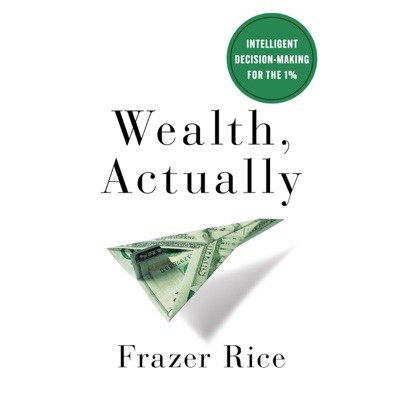
Frazer Rice is the author of Wealth, Actually: Intelligent Decision-Making for the 1% and host of the Wealth Actually podcast, where he interviews experts, entrepreneurs, and commentators on preserving assets and enjoying wealth.
Resources and Links Mentioned
•PlanForThis.com — Marguerite’s books, the Plan For This podcast, and a free First Steps toolkit. Ethics for Trustees 2.0 is now exclusive to this site (audio + PDF bundled with purchase).
•TrusteeAlliance.com — the Independent Trustee Alliance directory for locating certified independent trustees by state.
•Marguerite Lorenz on LinkedIn
•California Professional Fiduciaries Bureau — state licensing for professional fiduciaries
•Related episode: EP.75 — Individual Trusteeship with Marguerite Lorenz
•Related episode: What If You Are Named in a Will or Trust?
Frequently Asked Questions
Should I name my child as trustee?
Not automatically. A child understands the family but may lack the technical skill to handle tax, legal, financial, and medical decisions — and may be grieving or in conflict with siblings at the exact moment judgment is required. Marguerite Lorenz notes that a trustee must be a good negotiator, stay calm under pressure, set aside personal feelings, and enforce rules the grantor set. She also raises a test most families never consider: if you recover, would your child voluntarily step back down and hand you a full accounting?
What is the difference between a family trustee, a corporate trustee, and an independent trustee?
A family trustee is a relative or friend serving in a personal capacity, usually unpaid and untrained. A corporate trustee is a bank or trust company with institutional infrastructure, minimum account sizes, and staff turnover. An independent professional trustee is a licensed or certified individual — like a California Licensed Professional Fiduciary — who serves full-time, carries a succession plan, and can often be engaged at a lower cost than families expect. The Independent Trustee Alliance maintains a national directory of independent trustees.
What does a trustee actually do while I am still alive?
A trustee acting during incapacity manages assets, accounts for every dollar, handles taxation, pays bills, coordinates care, and increasingly manages digital assets such as phone-based transactions and social media accounts. Lorenz emphasizes that many people live for five or six years unable to make new decisions, so the trustee’s lifetime role is often longer and more demanding than the post-death administration.
How often should I update my estate plan?
Roughly every five years, or sooner after a major life event such as marriage, divorce, birth, death, a liquidity event, or a change in tax law. Lorenz recommends putting a five-year reminder in your phone to call your attorney and ask what has changed in the law and in your life.
What happens if I go to the hospital without an estate plan?
The hospital and its bioethics committee will do the best they can and will look for next of kin to make decisions for you — potentially people with whom you have never discussed your personal wishes. A will does not help here, because a will only operates after death. Financial and health care powers of attorney are what grant someone authority while you are alive.
Is an estate plan expensive?
Usually less than people assume, and materially less than probate court. Lorenz makes the same point about professional tr

Comments

Download from Google Play

Download from App Store
 United States