


 Claim Ownership
CAR WASH Podcasts
Subscribed: 94Played: 5,272
Subscribe

© 868329
Description
CAR WASH PODCASTS by the International Carwash Association deliver real-world stories, business insights and proven strategies from leaders inside and beyond the car wash industry. Whether you're an owner, operator, manager, or investor, each episode offers practical takeaways to grow your business. Tune in for trend analysis, expert conversations, and inspiration from top voices in today’s car wash industry.
331 Episodes
Reverse
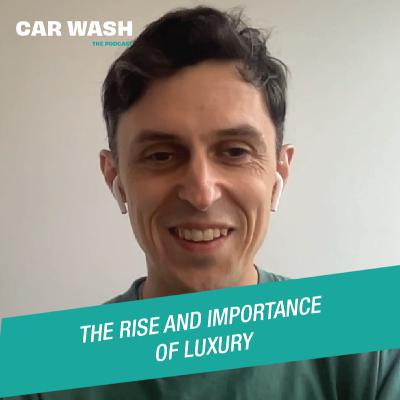
In this episode, host Matt DeWolf sits down with Jack Stratton, a Retail Trend Spotter, to discuss the evolving landscape of customer expectations and how businesses can adapt to stay ahead. But first, what exactly is a retail trend spotter? Jack breaks it down—explaining how he uses a combination of qualitative and quantitative data to identify fundamental shifts in consumer behavior that businesses can apply to their everyday operations.
Key Insights:
• Luxury Expectations of Modern Customers
Stratton identifies a major trend in today’s consumer behavior: customers are increasingly expecting luxury experiences, even if it means splurging on things they may not be able to afford. He refers to this as the polarized customer—someone who is willing to pay for premium experiences, regardless of their financial status.
• The Power of Subscription Services
Learn the key to successful subscription models and how customers are now purchasing these services both online and in-store. Jack emphasizes the importance of being available across all channels and touchpoints—the key to driving consistent, positive customer interactions.
To connect with Jack Stratton, you can find him on LinkedIn via Insider Trends: https://www.linkedin.com/company/insider-trends/

In this episode of Car Wash Exchange, Rich DiPaolo talks with John Briggs, author of Take Breaks, Work Better, about why taking intentional breaks can actually make business owners and employees more productive. John challenges the “hustle culture” mindset that equates long hours with productivity and explains how structured recovery can improve focus, profitability, employee retention and performance. He also shares his 3.3 Rule and practical ways car wash owners can apply the approach—from line workers to entrepreneurs and growing multi-location operations.• Busy doesn’t always mean productive. John challenges the belief that working longer and harder automatically produces better results. • Breaks are a productivity strategy. The brain naturally cycles between focus and distraction, and intentional breaks allow people to return with greater focus. • The 3.3 Rule: Work for up to three hours, followed by a 30% recovery break. For line workers, • Pay employees for their breaks. Research discussed in the episode found that additional break time did not reduce productivity—and providing paid breaks may help improve retention. • Take the first break yourself. John encourages owners to schedule a real break during the day rather than waiting until everything on the to-do list is finished. • Audit your time. Track what you're actually doing and identify lower-level tasks that can be delegated, freeing owners and key employees to focus on higher-value work. • Measure outcomes, not just activity. For car washes, metrics such as memberships, membership close rates, errors and employee retention may be more meaningful than simply measuring cars per hour. • Deadlines create focus. “All human performance works to a deadline.” Creating intentional limits around work time can help people focus on what really needs to get done. • The approach can work during growth. John says the process works whether a company has 20 employees or 290 because the human brain still needs recovery. • Try it as an experiment. Owners who are skeptical can start with a pilot program and measure the results.(1:43) John talks about his inspiration for his book Take Breaks – Work Better(3:23) What’s the biggest myth about productivity that owners buy into – and it actually works against them?(4:58) How does knowing when not to work…work in a business that never stops? Learn why taking breaks is of paramount importance to line workers.(11:56) What’s the 3.3 Rule?(12:58) How do you sell this approach to someone who is paid by the shift and not the outcome?(15:05) What’s the first break entrepreneurs should take and what’s stopping them from taking it?(18:46) How do you measure implementing this idea?(21:55) What’s one piece of advice can John provide to encourage owners to try this approach?(23:45) “All human performance works to a deadline”! Learn what this is and what it means!(25:36) How does John’s process work in a fast growth structure/culture?(29:08) Is John seeing more owners trying this process?

In this episode of Car Wash Exchange, host Rich DiPaolo talks with Keith Lutz, CEO of Kleen-Rite and an ICA Board member, about the resurgence of the self-serve car wash market. Keith explains what is driving new investment, how self-serve operators can compete with express washes, and why professionalism, reinvestment and operationalexcellence are creating new opportunities in the segment. They also discuss Kleen-Rite’s approach to supply-chain challenges, company culture and recentacquisition· The self-serve segment is benefiting from the overall growth and professionalization of the car wash industry, attracting both new and existinginvestors. · Self-serve can offer an attractive investment model because it generally requires less capital and fewer employees than an express tunnel. · Operators shouldn't fear competition from express washes. Instead, they should focus on making their own locations inviting, reliable, well-maintained and easy to use.· Reinvestment matters. Equipment, appearance, curb appeal and operational excellence can make a major difference in a location's ability to compete. · Membership and club programs aren't limited to express washes; self-serve and in-bay automatic operators can also use them to create value and encourage repeat customers. · The supply-chain disruptions of the past several years reinforced the importance of investing in inventory, distribution and infrastructure to maintain continuityfor customers. · Kleen-Rite is balancing its family-business legacy with growth by investing in its people, technology, distribution and professional management while staying grounded in its mission and values. · Keith sees continued opportunity across all car wash models, with the industry's growing focus on professionalism and operational excellence benefitingoperators across the board. The self-serve car wash segment is experiencing a resurgence, attracting newinvestors and renewed interest from longtime operators. In this episode of Car Wash Exchange, Rich DiPaolo sits down with Keith Lutz, CEO of Kleen-Rite and an ICA Board member, to explore what’s behind that growth and what it means for the future of the industry. Keith shares insights on competing with express washes, creating value for customers, reinvesting in existing locations andrunning a self-serve business with greater professionalism and operational excellence. He also discusses Kleen-Rite’s lessons from recent supply-chain challenges, maintaining its family-business culture and the strategy behind its recent acquisitions.(:56) Keith and Rich will talk about theresurgence of the self-serve car wash market.(1:58) Keith talks about the factorsthat are influencing the self-serve segment.(4:51) Keith talks about the types ofinvestors are coming to the self-serve market(9:33) How can a self-serve operatorremain competitive with the larger car washes?(13:57) What can a self-serve locationdo to offer the same value as a membership?(17:56) What lessons has Kleen Ritetaken from the current industry…and has the industry normalized?(21:44) How does Kleen Rite balancepreserving a legacy culture with market demands?(23:56) What gaps and capabilities isKleen Rite looking for in their recent acquisitions?(26:38) What excited Keith most aboutthe Car Wash industry?JoinICA: https://www.carwash.org/join-ica

As Benny's Car Wash celebrates its 75th anniversary, ICA Editor-in-Chief Rich DePaolo sits down with Justin Alford, CEO of Benny's Car Wash and Past President of the International Carwash Association, for an insightful conversation about the evolution of the car wash industry. Justin reflects on the key themes emerging from The Car Wash Show 2026, including the rapid adoption of artificial intelligence, the changing investment landscape, rising construction costs, and the continued importance of independent operators.Drawing on three generations of family leadership, Justin explains why people—not technology or profits—remain the foundation of Benny's success. He shares the remarkable history of Benny's, discusses the company's newest location in Baker, Louisiana, celebrates his father Ben Alford's induction into the Baton Rouge Business Report Hall of Fame, and offers thoughtful advice for operators navigating today's increasingly complex marketplace. The conversation concludes with Justin's passionate support for the International Carwash Association and its critical role in protecting and advancing the industry. Key Takeaways:Benny's Car Wash celebrates its 75th anniversary in 2026, marking three generations of family ownership and leadership. Artificial intelligence is becoming an everyday business tool, helping operators improve reporting, decision-making, hiring, and operational efficiency. Rising construction costs have dramatically increased the financial risk of developing new car wash locations. Independent operators continue to play a vital role in the industry despite the growth of private equity and regional chains. Exceptional customer service, consistent wash quality, and employee care remain the biggest competitive advantages for smaller operators. Episode Notes: In this episode, Rich DePaolo sits down with Benny's CEO Justin Alford, a third-generation operator and Past President of the International Carwash Association, to discuss the company's remarkable legacy and the future of the professional car wash industry. From artificial intelligence and rising construction costs to the challenges facing independent operators, Justin shares practical insights gained from decades in the business. He also reflects on Benny's newest location in Baker, Louisiana, honors his father Ben Alford's leadership, and explains why putting people first has been the foundation of Benny's success for three generations—and why it will continue to drive the company forward for years to come. (1:11) Join ICA Editor-In-Chief Rich DePaolo as he chats with a Past ICA President – now CEO of Benny’s Car Wash - Justin Alford.(1:45) Celebrating 75 years in Business – Benny’s is a mainstay in the industry. Justin talks about his personal takeaways from the recent 2026 Car Wash Show(4:45) What topics do operators discuss when they meet at a show like Car Wash?(6:44) How about the costs to build/run a new wash?(7:54) How would Justin describe the current start of the car wash industry?(10:35) Is this still a good industry for the smaller washes and how do they compete with the larger-regional companies?(13:02) Richard Enning was just inducted into the 2026 Car Wash Hall of Fame. Justin talks about why he was such a worthy honoree.(16:43) What did it take to hit the 75-year milestone? What will it take for another 75 years? Justin shares the family history and that of Benny’s.(19:32) Justin talks about his father Ben Alford – his 2026 induction into Business Report Hall of Fame and what he wants people to know about his dad!(20:59) Justin talks about Benny’s new location in Baker, LA.(25:15) What special plans do they have for the 75th Anniversary celebration?(26:40) And how about those LSU Tigers?!(28:32) Justin’s final words in support of the ICA!

The car wash industry is evolving rapidly, but according to Jeff Pavone, Founding Partner of Amplify Capital Group, and Chris Jenks, Amplify Partner and CEO, the fundamentals have never been stronger. While higher interest rates and changes in private credit have lengthened deal timelines, investor appetite remains strong, with nearly half a billion dollars in Amplify-led transactions completed during the first half of the year alone. They also discuss why successful operators are shifting their focus from rapid expansion to operational excellence, disciplined growth, and long-term value creation.Key TakeawaysAmplify puts operators first. The firm's mission is to level the playing field by representing operators' interests while helping them maximize long-term business value through education, strategic guidance, and fair transactions. The market hasn't slowed—it has matured. Transactions are still happening at a significant pace, but buyers are conducting deeper due diligence and taking a more disciplined approach to acquisitions. Operational excellence is now the primary driver of value. Investors are rewarding businesses with strong operations rather than simply large numbers of locations. Membership programs continue to prove resilient. Subscription customers remain highly loyal, helping operators weather economic uncertainty and softer retail traffic. Industry consolidation is accelerating. The largest operators are expanding strategically by strengthening existing markets instead of pursuing growth solely for scale. Independent operators can still thrive. Community involvement, exceptional customer experience, and differentiated service give smaller operators advantages that larger chains often cannot replicate. Artificial intelligence is becoming a practical business tool. AI can automate reporting, analyze operational data, identify trends, and free management teams to spend more time improving customer experience. Good data leads to better decisions. Understanding KPIs, customer behavior, and operational performance is becoming increasingly important for both growth and future business valuation. The outlook remains optimistic. Despite economic uncertainty, Jeff and Chris believe the industry is entering another active period of investment, acquisitions, and long-term growth for well-run operators.(:23)Kendra Johnson sits down at ICA Headquarters with Jeff Pavone, Founding Partner of Amplify Capital Group and Chris Jenks, Amplify Partner and CEO(2:09) Jeff talks about the “why” of Amplify.(2:43) Chris Talks about operator first vs. opportunity first(3:57) People say the market has slowed down. Jeff talks about this point of view and what’s surprised him most in the market this year.(6:54) With the movement in the credit shift – Kendra asked about the appetite for investment.(8:38) Jeff identifies one of the biggest lessons learned(9:52) Chris talks about value creation and his biggest surprise and new tunnels vs. reloads(12:30) Operational excellence – who is Jeff keeping his eye on? And, why he thinks we’re at the single best time of alignment between buyers and sellers.(16:50) Are some of the regions coming up surprising Jeff?(18:22) What are retail customers telling us today that they weren’t telling us a year ago?(20:33) What are the things popping up that make Jeff so optimistic about the car wash industry?(23:11) Chris talks about what shifts he’s seeing that might be a signal for things to come.(24:00) What about fragmentation?(26:36) How does a smaller site operator succeed?(28:31) How can companies use AI to be more successful?(33:33) Jeff talks about what “good” looks like.(32:26) Crystal ball ideas from both Jeff and Chris…let’s look forward.(35:02) And Chris adds…as far as activity in the next year…”buckle up”!(32:12) Both Jeff and Chris address the amount and accuracy of information…and how Amplify helps people learn what’s meaningful.

Comments

Download from Google Play

Download from App Store
 United States