


Healthy Spaces
Subscribed: 105,722Played: 230,187
Subscribe

© 2025 Trane Technologies. All Rights Reserved.
Description
Welcome to the Healthy Spaces podcast, where we explore how climate technology and innovation are transforming the spaces where we live, work, learn, and play. This season, we’ll explore how technology and AI can drive business growth, and help the planet breathe a little bit easier.
54 Episodes
Reverse
As AI and electrification drive up demand, can the grid keep pace? Electricity demand is climbing, and AI and electrification are a big part of why. Global demand is set to rise almost 4% through 2027, more than all the energy Japan uses in a year. Much of the world’s grid is decades old, so meeting that demand means maintaining and modernizing what we have, not just building more. It also raises a sharper question: do we keep chasing supply, or get better at managing demand? We hear from Dr. Sarah Kapnick, Global Head of Climate Advisory at J.P. Morgan. She explores the scale of investment the grid needs, why energy resilience is now a national security issue, where the funding will come from, and why efficiency and software can be put to work faster than new physical capacity. Then we speak with Karin De Bondt, Senior Vice President and Chief Strategy Officer at Trane Technologies. She makes the case for managing demand as much as supply, pointing to the energy wasted inside buildings, and covers efficient systems, right-sizing with data, AI building management through BrainBox, and putting waste heat back to use across an ecosystem. Together, Kapnick and De Bondt reframe the grid challenge. The answer isn’t only to build more. It’s to maintain and modernize what exists, and to treat demand as part of the solution. As Kapnick puts it, the cheapest energy is the energy you never have to build, and many of the tools to save it are ready now. >>> Watch the episode on YouTube: https://youtu.be/islmWheljFM EPISODE CHAPTERS 00:00 Introduction - The grid under pressure 00:50 The investment the grid needs 02:00 Why aging infrastructure is the real problem 03:40 How energy resilience became national security 06:00 Who pays for grid modernization? 07:30 The cheapest energy is the one you don’t build 09:00 Planning for threats we can’t see yet 11:20 From increasing supply to managing demand 12:20 The 30% of building energy we waste 14:00 Right-sizing systems with data 17:00 Using AI to cut energy use 18:40 Real savings: the Dollar Tree example 20:00 Rethinking waste heat 22:40 Battery storage and the next horizon LEARN MORE Trane Technologies Website [https://www.tranetechnologies.com/] Healthy Spaces YouTube [https://www.youtube.com/@TraneTechnologies/playlists] Scott Tew [https://www.tranetechnologies.com/en/index/blog/author/scott-tew.html] Dominique Silva [https://www.tranetechnologies.com/en/index/blog/author/dominique-silva.html] Karin De Bondt [https://www.tranetechnologies.com/en/index/company/leadership/karin-de-bondt.html] Dr. Sarah Kapnick [https://www.linkedin.com/in/sarah-kapnick-7850b9b/] ABOUT HEALTHY SPACES Healthy Spaces, a podcast by Trane Technologies, brings together engineers, innovators, and industry leaders for bold conversations at the frontier of sustainable technology. In Season 6, we zero in on the moment when innovation becomes infrastructure - when breakthroughs move beyond the lab and start transforming industries. From pioneering AI research and next-generation data center cooling to climate-resilient cities and pathways to decarbonization, each episode explores the innovations at the cutting-edge of sustainable technology. Designed for leaders, builders, and anyone with a stake in the future of sustainable technology, the series offers a front-row seat to the ideas and innovations shaping what comes next. The challenges are real. The solutions are being built now.
 2
If AI is changing how technical work gets done, what skills will set people apart? For years, degrees and credentials have been the main signal that someone is ready for a job. As AI takes on the technical tasks, from statistical analysis to troubleshooting, employers are looking for the skills machines can't copy: judgment, collaboration, and the ability to read a situation. That shift is opening more careers for people and changing how companies hire and train. We hear from Joseph Fuller, Professor of Management Practice at Harvard Business School and a leader of its Future of Work project. He explores how AI is widening the range of candidates for jobs that once required specific credentials, why social skills and what he calls contextual intelligence matter more as that happens, and how degree inflation and work-based learning are reshaping the path into a career. Marlon Jones, Technician Experience Leader at the Trane Technologies Advanced Technology Training Center in North Carolina, takes us into the field. Drawing on a 26-year HVAC career that began as a residential apprentice, he reflects on a trade where capability has always mattered more than a diploma, how AI is changing the way technicians prepare and train, and the human skills it can't replace. Together, Fuller and Jones reframe a conversation that tends to focus on what AI takes away. As the work changes, human capability matters more, not less. The people best placed are the ones who keep learning, apply judgment, communicate well and adapt, whatever qualifications they started with. EPISODE CHAPTERS 00:00 Introduction - Why skills matter more than credentials 01:10 How AI is widening who gets hired 02:00 The social skills machines can’t replicate 04:40 Why AI raises the floor on expertise 05:20 Contextual intelligence and the eager intern 08:20 What degree inflation really means 11:00 Work-based learning and avoiding mismatches 15:20 Meet Marlon Jones, 26 years in HVAC 16:50 What drew him to the trade 18:10 Why skilled trades were never about a degree 19:40 A senior technician in your pocket 20:40 The skills that make a great technician 22:50 How AI is changing life in the field 24:10 Training the next generation with AI 25:20 What AI can’t teach: critical thinking and empathy 26:40 What’s changed, and what hasn’t 28:00 A great technician plus a great AI tool 28:40 The hopeful case for the future of work LEARN MORE How AI Can Accelerate Sustainability | Trane Technologies [https://www.tranetechnologies.com/en/index/blog/solutions-innovation/ai-may-be-our-most-powerful-sustainability-ally.html] Mairéad Magner: Talent Equation Podcast | Trane Technologies [https://www.tranetechnologies.com/en/index/blog/in-the-news/talent-equation-podcast-mairead-magner.html] Trane Technologies Website [https://www.tranetechnologies.com/] Healthy Spaces YouTube [https://www.youtube.com/@TraneTechnologies/playlists] Harvard Business School Managing the Future of Work Podcast [https://www.hbs.edu/managing-the-future-of-work/podcast] Scott Tew [https://www.tranetechnologies.com/en/index/blog/author/scott-tew.html] Dominique Silva [https://www.tranetechnologies.com/en/index/blog/author/dominique-silva.html] Marlon Jones [https://www.linkedin.com/in/marlon-jones-sr-5b7a89105/] Prof. Joseph B. Fuller [https://www.hbs.edu/faculty/Pages/profile.aspx?facId=123284]
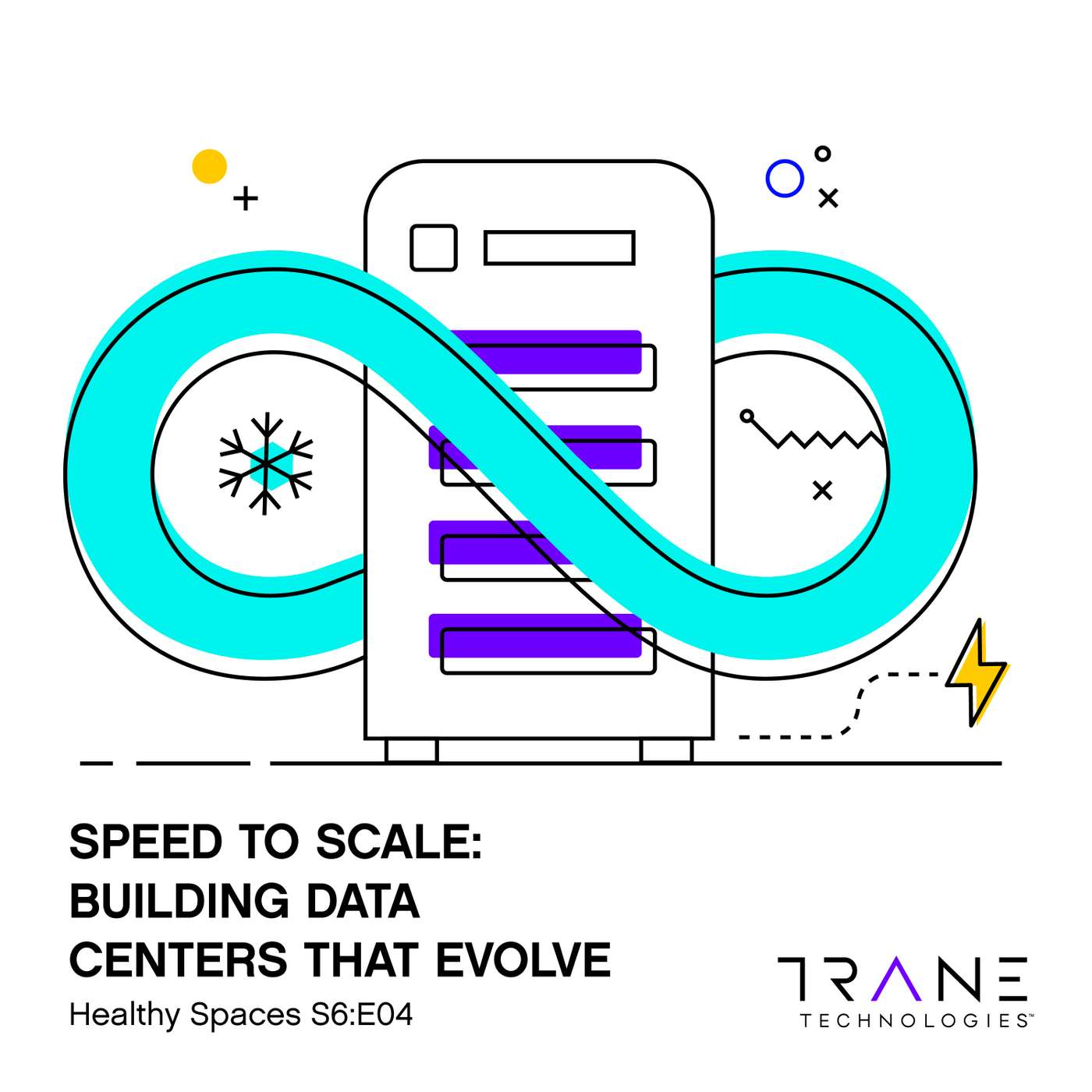
Data centers are being built at unprecedented speed and scale, but the bar for sustainability and reliability must keep pace with that rapid growth. Advanced compute is driving extraordinary demand for new data center capacity, pushing projects to expand as deployment timelines shrink. As these centers are built, the technology inside them keeps evolving, so engineers need to do more than just think faster. They need to rethink how teams design, manufacture, test and deploy at scale. In this episode, Mike Welch, Chief Technology Officer at Aligned Data Centers, joins Mauro Atalla, Chief Technology and Sustainability Officer at Trane Technologies, to explore how the industry is responding to this change. They discuss why partnership is essential to pushing innovation without sacrificing reliability, how hybrid cooling and waterless heat rejection are changing data center design and why systems thinking becomes more important than ever as technology, workloads and requirements continue evolving while projects are underway. They also look ahead to the data centers of the future. From higher-temperature cooling and opportunities to reuse waste heat, to greater participation in grid support, new technologies are creating opportunities to make data centers more efficient, resilient and beneficial to society. Scaling means thinking beyond the technology, considering how companies engage with the communities where they operate and building the workforce needed to support increasingly intricate infrastructure. Together, Mauro and Mike reveal why speed to scale is about more than moving quickly. It means building flexibility into infrastructure before ground is even broken, and finding ways for performance, sustainability and business value to advance together. >>> Watch this episode on YouTube: https://youtu.be/dJwTGr9gLdw EPISODE CHAPTERS 00:00 Introduction - Building for speed and scale 00:57 The growing scale of data center demand 02:14 Why data center development is like chess 04:34 Innovating without sacrifice 07:58 How hybrid cooling is changing data centers 08:57 How data centers can support grid resilience 11:18 Building flexibility in from the beginning 12:22 The next generation of data centers 14:40 Looking towards the people and communities around data centers LINKS How Data Centers Are Becoming Energy Hubs Through Intelligent Thermal Management - Blog [https://trane.eu/uk/about-trane/blog-post.html?Id=51]Power in Numbers: The Critical Role of Equipment Array Orchestration in Modern Data Centers - Article [https://www.datacenterfrontier.com/sponsored/article/55313099/trane-power-in-numbers-the-critical-role-of-equipment-teaming-in-modern-data-centers]Sustainability in Action: The Aalsmeer Energy Hub - Blog [https://www.tranetechnologies.com/en/index/blog/customer-stories/the-aalsmeer-energy-hub.html]Sustainable Data Center Solutions for Cape Augusta Digital Properties - Case Study [https://www.trane.com/commercial/north-america/us/en/about-us/newsroom/case-studies/data-centers/sibley-textile-mill.html]Trane Technologies Website [https://www.tranetechnologies.com/en/index.html]Healthy Spaces YouTube [https://www.youtube.com/@TraneTechnologies/playlists]About the Hosts:Dominique Silva is Marketing Leader for EMEA at Trane Technologies, where she leads marketing strategy focusing on sustainable technologies and business growth. She’s a mechanical engineer by training and has held roles across product management, brand management, and enterprise innovation, including the launch of new heat pump product lines in Europe and leading Operation Possible, an employee-driven innovation program designed to develop solutions to sustainability challenges. Scott Tew is Global Head and VP of Sustainability Strategy at Trane Technologies, where he leads initiatives focused on energy efficiency, emissions reduction, and the adoption of sustainable technologies. He also leads the Center for Energy Efficiency & Sustainability (CEES) and helped develop the company’s 2030 Sustainability Commitments, including the Gigaton Challenge.About Healthy Spaces:Healthy Spaces is a podcast by Trane Technologies where experts and disruptors explore how climate technology and innovation are transforming the spaces where we live, work, learn and play. This season, our hosts explore how to build for the future when the technology continues to change, speaking with engineers, researchers, investors, and leaders shaping the future of energy, climate resilience, and sustainability. Listen and subscribe to Healthy Spaces on your favorite podcast platforms.
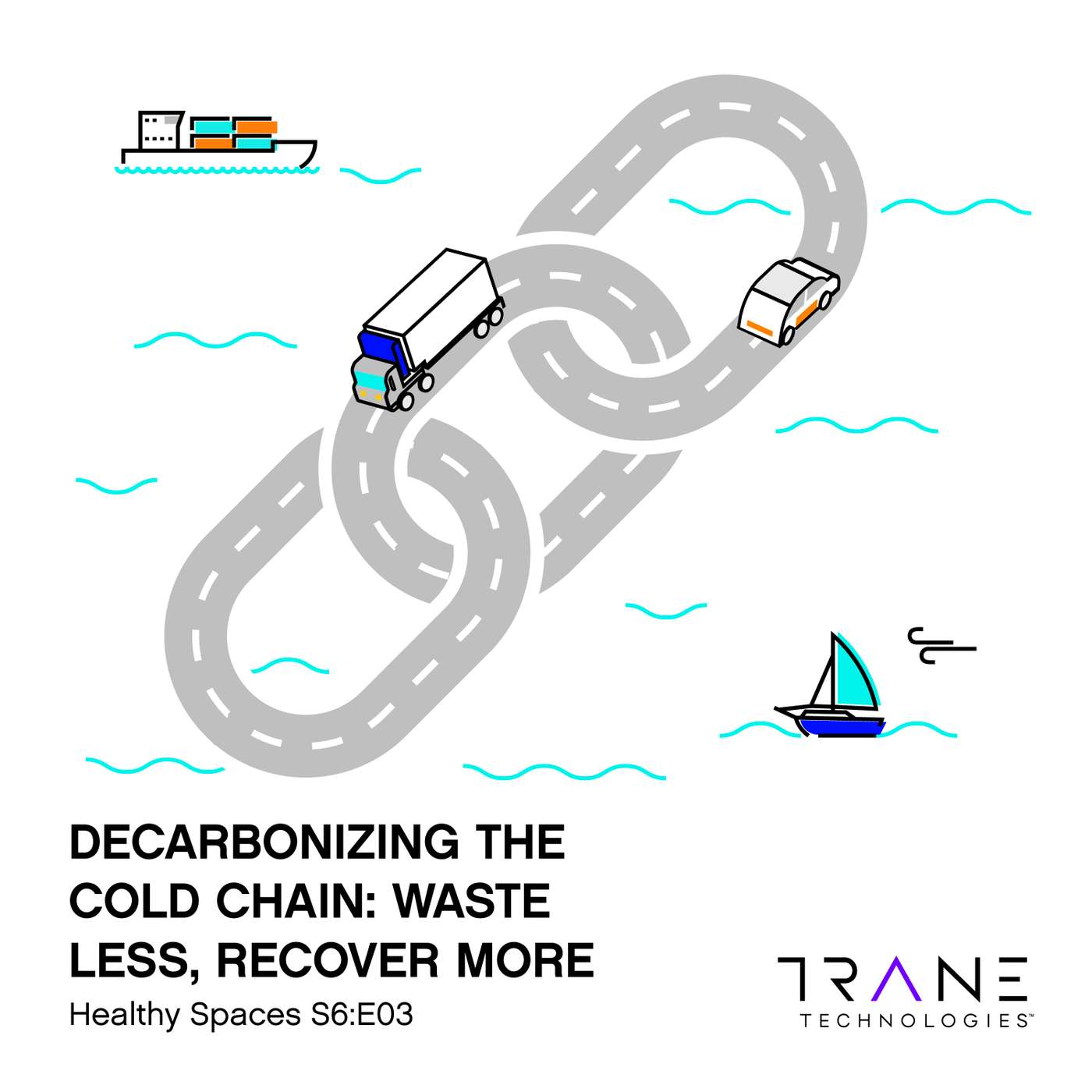
How do we decarbonize the chain that keeps the world's food fresh? Fresh food can travel for days or weeks, moving through farms, warehouses, ships, trucks, supermarkets and finally our homes. Much of it has to stay at the right temperature the whole way to stay safe to eat. That network of refrigerated storage and transport is the cold chain. It runs almost entirely on diesel, and demand for it keeps growing. Dr Liz Goodwin, Director of Food Loss and Waste at the World Resources Institute, sets the scale of the problem. Up to 40% of the food the world produces is lost or wasted. She explains why adding more refrigeration can't fix that on its own: a cold chain only works where there are formal markets, real demand and the skills to run it. Her point frames the rest of the episode. Better refrigeration matters, but only as part of a wider system. Then Claudio Zanframundo, President of Thermo King EMEA & APAC, takes us inside the technology that keeps the cold chain moving. He explains why maintaining temperature across a long, multi-stage journey is so difficult, and how digital tracking and AI now help operators protect the load and run more efficiently. He describes how energy recovery captures power a moving trailer would otherwise lose and uses it to run the refrigeration. He looks at what EU decarbonization targets ask of the industry, and whether today's technology can meet them. And he closes on what it takes beyond the equipment to keep a cold chain running: service, infrastructure and skilled people. Together, Liz and Claudio make the case that the biggest gains are in what the system already holds: the food it loses and the energy it wastes. Recovering those, with the right regulation and the people to run the network, is how the cold chain grows and gets cleaner at the same time. >>> Watch the episode on YouTube: https://youtu.be/3dsfSnD2Q-g EPISODE CHAPTERS 00:00 Introduction - The hidden chapter from farm to table 01:07 How large is the food waste problem? 03:17 Why more cold chain isn’t always the answer 05:01 Why households are a major source of food waste 08:13 What COVID taught us about reducing 10:13 Building a sustainable food system takes everyone 12:58 Why refrigeration alone isn’t enough 14:00 The complexity of the food chain 18:50 How digital tracking reduces waste 20:53 Where AI fits into the cold chain 23:43 Recovering otherwise wasted energy 30:54 Transforming the cold chain as a system LEARN MORE Sustainability Reports | Trane Technologies [https://www.tranetechnologies.com/en/index/sustainability/sustainability-reports.html] The Global Benefits of Reducing Food Waste — and How to Do It | World Resources Institute [https://www.wri.org/insights/reducing-food-loss-and-food-waste] Mitigating Food Loss | Trane Technologies [https://www.tranetechnologies.com/en/index/blog/sustainability-leadership/mitigating-food-loss-with-a-smarter-cold-chain.html] World Resources Institute [https://www.wri.org/] Scott Tew [https://www.tranetechnologies.com/en/index/blog/author/scott-tew.html] Dominique Silva [https://www.tranetechnologies.com/en/index/blog/author/dominique-silva.html] Dr. Liz Goodwin OBE [https://www.wri.org/profile/liz-goodwin] Claudio Zanframundo [https://www.linkedin.com/in/claudio-zanframundo-13101975-/] ABOUT HEALTHY SPACES Healthy Spaces, a podcast by Trane Technologies, brings together engineers, innovators, and industry leaders for bold conversations at the frontier of sustainable technology. In Season 6, we zero in on the moment when innovation becomes infrastructure - when breakthroughs move beyond the lab and start transforming industries. From pioneering AI research and next-generation data center cooling, to climate-resilient cities and pathways to decarbonization, each episode explores the innovations at the cutting-edge of sustainable technology. Designed for leaders, builders, and anyone with a stake in the future of sustainable technology, the series offers a front-row seat to the ideas and innovations shaping what comes next. The challenges are real. The solutions are being built now.
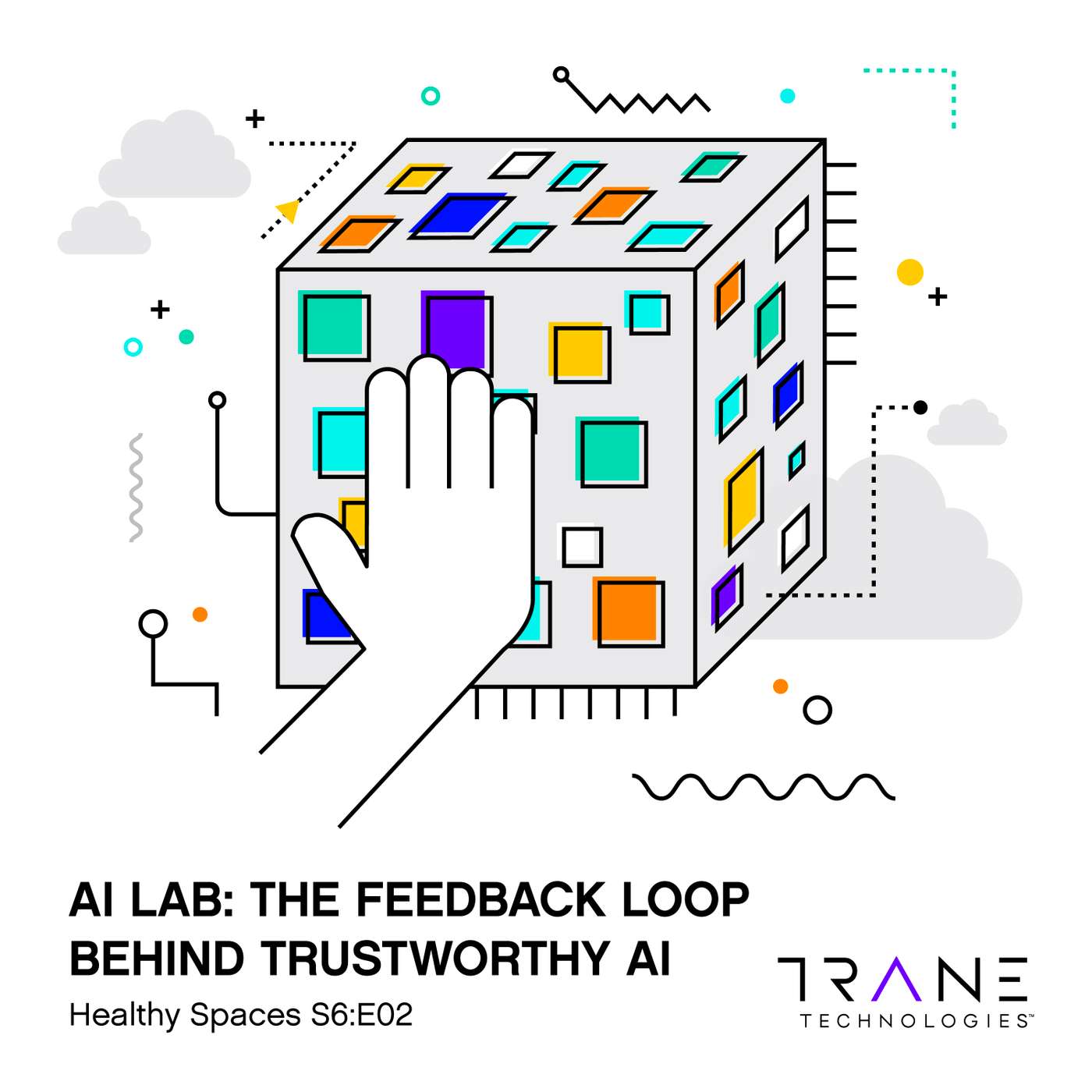
How do you build AI that can be trusted in the real world? For AI to move from research into practical applications, the lab and the field need to work together. Real-world deployment creates new insights for researchers, while research and testing help strengthen the technologies being put to work. In this episode, we explore how that continuous feedback loop can make trust a foundation for responsible AI development and deployment. We hear from Foutse Khomh, Vice President of Research and Innovation, Polytechnique Montréal, about what it takes to build trustworthy AI. He explores how researchers and industry can work together to understand how AI systems behave, identify their limitations, test them in realistic conditions, and develop the safeguards and controls needed for reliable deployment. He explains why ongoing collaboration between the lab and the field is essential to continually improving AI systems. Riaz Raihan, Chief Digital Officer at Trane Technologies, takes us inside the BrainBox AI Trane Technologies AI Lab in Montreal, where researchers, engineers, product managers and building experts are developing practical AI applications for the HVAC industry. He discusses how the AI Lab connects research with real-world deployment, from autonomous building controls to new approaches to optimizing chilled-water systems, and how Trane approaches trust through security by design, compliance and partnerships. Together, they show how the ongoing exchange between research and real-world application can help build AI that is trustworthy, responsible, and capable of delivering measurable value. EPISODE CHAPTERS 00:00 Introduction - Building trust in AI 01:00 What makes AI trustworthy? 02:15 Understanding AI’s weaknesses 03:45 Testing AI for the real world 05:48 Building trust without overtrusting AI 07:45 The Swiss cheese approach to trustworthy AI 09:06 Why the lab and field need each other 12:15 Inside the BrainBox AI Trane Technologies AI Lab 15:09 From research to real-world products 16:00 Inside the AI Lab: From Aria to autonomous controls 18:45 Bringing AI to the water side of HVAC 20:18 The triangle of trust 21:51 What makes AI commercially successful? 23:57 Can AI solve the problems it creates? 27:00 From research to real-world impact > Watch this episode on Youtube: https://youtu.be/3O_pCe0bTjY?si=5tbEfxaPWEdkgZxW LEARN MORE Trane Technologies Website [https://www.tranetechnologies.com/] Scott Tew [https://www.tranetechnologies.com/en/index/blog/author/scott-tew.html] Dominique Silva [https://www.tranetechnologies.com/en/index/blog/author/dominique-silva.html] Riaz Raihan [https://www.tranetechnologies.com/en/index/company/leadership/riaz-raihan.html] Foutse Khomh [https://www.polymtl.ca/expertises/en/khomh-foutse] ABOUT HEALTHY SPACES Healthy Spaces, a podcast by Trane Technologies, brings together engineers, innovators, and industry leaders for bold conversations at the frontier of sustainable technology. In Season 6, we zero in on the moment when innovation becomes infrastructure - when breakthroughs move beyond the lab and start transforming industries. From pioneering AI research and next-generation data center cooling to climate-resilient cities and pathways to decarbonization, each episode explores the innovations at the cutting-edge of sustainable technology. Designed for leaders, builders, and anyone with a stake in the future of sustainable technology, the series offers a front-row seat to the ideas and innovations shaping what comes next. The challenges are real. The solutions are being built now.

Comments

Download from Google Play

Download from App Store
 United States