



 Claim Ownership
On The Way
Subscribed: 16,824Played: 137,846
Subscribe

© On The Way - BNP Paribas Personal Finance
Description
Proposé par BNP Paribas Personal Finance (https://personal-finance.bnpparibas/fr/), On The Way est le podcast qui explore les chemins de la consommation responsable. Entrepreneurs, acteurs du monde de l’entreprise ou encore chercheurs : On The Way donne la parole à ceux qui agissent jour après jour pour construire une consommation plus durable. Bienvenue et bonne écoute…
Hébergé par Ausha. Visitez ausha.co/fr/politique-de-confidentialite pour plus d'informations.
112 Episodes
Reverse

In this new episode of the On The Way podcast, Simon Pernot, co-founder of Losanje, looks back on his journey and shares his vision of a more circular fashion.What if the solution was to no longer produce material at all? This is the challenge that Simon and his partner Mathieu took up by launching Losanje, an industrial startup that industrializes upcycling. The principle: recover existing clothes, cut the pieces and reassemble them to create a new, higher-value product. As a result, an upcycled garment saves up to 95% of CO₂ emissions compared to a new product, which is ten times less for a simple T-shirt.In this episode, Simon tells us how this idea came about. Friends since middle school, he and Mathieu set out at the end of their studies, in the middle of lockdown, after a thesis that revealed to Simon the real extent of the environmental impact of fashion.Their conviction: to offer the ecological impact of second-hand with the experience of buying new in several sizes, several colors.He also explains why the real challenge was not to seduce, but to industrialize. The entire textile industry is designed to cut from rolls of new fabric, not from existing clothing. After two rounds of fundraising and the development of an automated cutting line, Losanje now manufactures more than 150,000 pieces per year and works with fashion brands (Faguo, Cézanne) as well as with large companies (SNCF, La Poste, or the Olympic Games).Proof that the model works? The upcycled T-shirt made for Faguo is sold at the same price as a classic T-shirt.An inspiring conversation about industrial innovation, circular fashion and more sober consumption without sacrificing style or price.👉 Learn more about Losange: https://www.losanje.comThe previous episode of On The Way with Jessica Mercuriali, co-founder of Pawa Energy, as well as all the other episodes, are available on your usual listening platforms.Happy listening! Hébergé par Ausha. Visitez ausha.co/politique-de-confidentialite pour plus d'informations.

Dans ce nouvel épisode du podcast On The Way, Simon Peyronnaud , cofondateur de Losanje, revient sur son parcours et partage sa vision d’une mode plus circulaire. Et si la solution consistait à ne plus produire de matière du tout ? C’est le pari qu’ont relevé Simon et son associé Mathieu en lançant Losanje, une startup industrielle qui industrialise l’upcycling. Résultat, un vêtement upcyclé permet d’économiser jusqu’à 95 % des émissions de CO₂ par rapport à un produit neuf soit dix fois moins pour un simple tee-shirt. Dans cet épisode, Simon nous raconte comment cette idée est née. Amis depuis le collège, lui et Mathieu se lancent à la sortie de leurs études, en plein confinement, après un mémoire qui révèle à Simon l’ampleur réelle de l’impact environnemental de la mode. Leur conviction : offrir l’impact écologique de la seconde main avec l’expérience d’achat du neuf plusieurs tailles, plusieurs couleurs. Au travers de son récit, Simon nous explique aussi pourquoi le vrai défi n’était pas de séduire, mais bien d’industrialiser la fabrication de produits textiles upcyclés. Alors, après deux levées de fonds et le développement d’une ligne de découpe automatisée, Losanje fabrique aujourd’hui plus de 150 000 pièces par an et travaille aussi bien avec des marques de mode (Faguo, Sézanne) qu’avec de grandes entreprises (SNCF, La Poste, ou les Jeux Olympiques). Une conversation inspirante sur l’innovation industrielle, la mode circulaire et une consommation plus sobre sans renoncer ni au style, ni au prix. 👉 En savoir plus sur Losange : https://www.losanje.com Le précédent épisode de On The Way avec Jessica Mercuriali co-fondatrice de Pawa Energy ainsi que tous les autres épisodes, sont disponibles sur vos plateformes d’écoute habituelles. Et si le sujet de la mode responsable vous intéresse, découvrez nos autres épisodes sur la mode : Hortense Pruvost – Vestiaire Collective Charlotte Dereux – Patine Damien Pellé – Galeries Lafayette Thibault Satto – The Good Goods Laure Babin – Zèta Bonne écoute ! Hébergé par Ausha. Visitez ausha.co/politique-de-confidentialite pour plus d'informations.

In this new episode of the On The Way podcast, Jessica Mercuriali, co-founder of Pawa Energy, looks back on his career and shares his vision of a cleaner energy for events.Did you know that today in France, more than 90% of temporary events still rely on thermal generators? After fifteen years in marketing and business, including ten at Microsoft between France and Seattle, Jessica decided at the end of 2023 to leave everything. In 2024, she founded Pawa Energy with her brother, a former chief operator.Their idea is to offer an alternative for rental: eco-friendly batteries, zero emissions, zero noise, zero odor. A solution designed to replace conventional generators for temporary events. The flagship product, the Pawa Battery, delivers 36 kW of power and 100 kWh of energy in a compact pallet format. And most importantly, with a carbon impact up to 80 times lower than an equivalent generator. The battery is based on LFP (lithium, iron, phosphate) technology, nickel and cobalt-free, manufactured in France with two industrial partners: Olenergie in Bagnolet and Mute Energy in Tourcoing. Mute energy even gives a second life to electric vehicle batteries to design the Pawa Mini, a more compact format. In this episode, Jessica looks back at the first customers from the events and sports sectors (Boulogne half-marathon, festivals, food trucks), the cultural obstacles encountered in the field, and the lack of "premium green".In fact, switching to a cleaner alternative does not cost more than a conventional generator. And that changes everything. 👉 Learn more about Pawa Energy: https://www.pawaenergy.com/ The previous episode of On The Way with Laure Babin, founder of Zèta, as well as All other episodes, are available on your usual listening platforms.Happy listening! Hébergé par Ausha. Visitez ausha.co/politique-de-confidentialite pour plus d'informations.
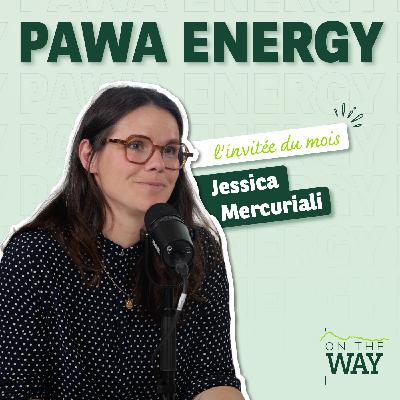
Dans ce nouvel épisode du podcast On The Way, Jessica Mercuriali, co-fondatrice de Pawa Energy, revient sur son parcours et partage sa vision d’une énergie événementielle plus propre. Saviez-vous qu’aujourd’hui en France, plus de 90 % des événements temporaires fonctionnent encore grâce à des groupes électrogènes thermiques ?Après quinze ans dans le marketing et le business, dont dix chez Microsoft entre la France et Seattle, Jessica décide fin 2023 de tout quitter. En 2024, elle fonde Pawa Energy avec son frère, ancien chef opérateur. Leur idée est de proposer une alternative en location : des batteries éco-responsables, zéro émission, zéro bruit, zéro odeur. Une solution pensée pour remplacer les groupes électrogènes classiques sur les événements éphémères. Le produit phare, la Pawa Battery, délivre 36 kW de puissance et 100 kWh d’énergie dans un format compact sur palette. Et surtout avec un impact carbone jusqu’à 80 fois inférieur à celui d’un groupe électrogène équivalent. La batterie repose sur une technologie LFP (lithium, fer, phosphate), sans nickel ni cobalt, fabriquée en France avec deux partenaires industriels : Olenergie à Bagnolet et Mute Energy à Tourcoing. Ce dernier donne même une seconde vie à des batteries de véhicules électriques pour concevoir la Pawa Mini, un format plus compact. Dans cet épisode, Jessica revient sur les premiers clients venus de l’événementiel, sportif (semi-marathon de Boulogne, festivals, food trucks), les freins culturels rencontrés sur le terrain, et l’absence de « green premium ». En effet, aujourd’hui, passer à une alternative plus propre ne coûte pas plus cher qu'un groupe électrogène classique. Et ça, ça change tout. 👉 En savoir plus sur Pawa Energy : https://www.pawaenergy.com/ L’épisode précédent de On The Way avec Laure Babin, fondatrice de Zèta, ainsi que tous les autres épisodes, sont disponibles sur vos plateformes d’écoute habituelles. Bonne écoute ! Hébergé par Ausha. Visitez ausha.co/politique-de-confidentialite pour plus d'informations.

In this episode of On The Way, Laure Babin, founder of the Zèta brand, looks back on her career and shares her vision of more responsible fashion. The fashion industry is the second most polluting industry in the world, right behind oil. Yet every year, millions of pairs of shoes are manufactured from petroleum-derived synthetics, plastics, and animal leather. What if the answer was already hiding in our waste? That’s the bet Laure Babin chose to take in 2020 when she launched Zèta, a sneaker brand made entirely from recycled materials: grape marc sourced from Italian wineries, corn, coffee grounds developed in partnership with Nespresso, and olive waste transformed in Turkey. Each material more innovative than the last for a carbon footprint two and a half times lower than a traditional sneaker. In this episode, Laure shares how a gradual awakening, shaped by internships in Cambodia, the Netherlands, and Peru, convinced her it was possible to build a fashion brand that is both desirable AND responsible. She also tells us how, with zero marketing budget, a crowdfunding campaign launched in the middle of COVID turned into a phenomenon 2,700 pre-orders in three weeks and why style must always come before the “eco-friendly” label. An inspiring conversation about material innovation, Portuguese craftsmanship, and conscious consumption without the guilt. 👉 Learn more about Zèta: https://zeta-shoes.com 👉 Discover their approach: https://www.zeta-shoes.com/en/pages/histoire The previous episode of On The Way with Laurent Perron, project coordinator at the think tank The Shift Project, as well as all the other episodes, are available on your usual listening platforms. Happy listening!
Hébergé par Ausha. Visitez ausha.co/politique-de-confidentialite pour plus d'informations.

Comments

Download from Google Play

Download from App Store
 United States