


 Claim Ownership
(in)sight-reading enlightenment/early music podcast
Subscribed: 6Played: 73
Subscribe

© Darina Ablogina
Description
Let's take a closer look behind the concert stage and into the fascinating world of historical performance. I'm your host - traverso player and curator Darina Ablogina, together we will explore how musicians approach the music of the past: from original sources and period instruments to questions of style, aesthetics, and interpretation. A thoughtful and curious space where research meets artistry, inviting both experienced musicians and passionate listeners to discover Early Music from a new perspective.
78 Episodes
Reverse
In this episode, I sit down with Sophie Maria Weber, young musicologist from Halle and winner of the Telemann-Forschungspreis, to talk about her research on Georg Michael Telemann — the grandson of Georg Philipp Telemann — and his fifty years working at the Riga Cathedral.https://telemann.de/aktuelles/telemann-forschungspreis-wird-erstmals-verliehenWe dig into the adaptations Georg Michael made to his grandfather's works (spoiler: he rewrote them directly onto the originals, fully convinced he was improving them), his reportedly prickly personality, and the pupils who admitted they learned little in his lectures, mostly because he loved telling stories about his own life instead. By the end, we somehow connect it all back to a topic from my previous episode with Francesco Corti, tying together questions of heritage and copyright across the centuries.Recorded from a hotel room in Norway, mid-tour, because the podcast must go on!🎥 Follow behind-the-scenes moments on Instagram @darinka_smeshinka, or find the official page (in)Sight-Reading Enlightenment on Instagram and Facebook.Music for the episode: https://www.youtube.com/watch?v=hSsTzRs4L_o#HistoricallyInformedPerformance #Telemann #TelemannZentrum #Musicology #EarlyMusic #BaroqueMusic #RigaCathedral #ClassicalMusicPodcast #MusicHistory #SophieMariaWeber
Okay, this episode has been such a treat to make. My guest is harpsichordist and conductor Francesco Corti, and honestly, I could have talked to him for three more hours.This mini-series is dedicated to the Telemann Festtage Magdeburg made possible thanks to their wonderfully generous support, and a special thank-you to Fynn Liess, who helped make this whole collaboration happen.So here's the mystery we're unpacking today: an opera called Otto — credited to both Handel AND Telemann. Two composers, one opera? How does that even work? I had so many questions, and Francesco had all the answers (plus a story that's honestly better than I expected).https://telemann.de/event/otto-4We also get into what it's actually like to stand in front of an orchestra as a conductor, how instrumentation gets built from the ground up, and what the real difference is between a baton and a baguette. (Turns out only one of them is edible. Barely.)Curious, funny, full of insight: this conversation has everything. Come listen!Huge thanks to Arcana recording label for allowing me to frame my episode with their stunning recordings!Recordings for the episode are from Francescos` Spotify channelJS Bach Praeludium BWV 815ahttps://open.spotify.com/track/2ylClhXiW75PVQrqjcBtD6#HistoricallyInformedPerformance #HIPP #EarlyMusic #Harpsichord #FrancescoCorti #TelemannFesttageMagdeburg #Telemann #Handel #BaroqueOpera #ClassicalMusicPodcast
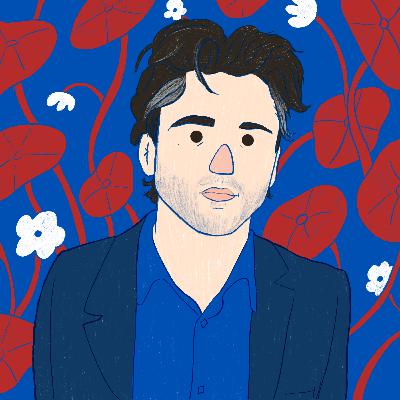
🎧 Season finale | (In)Sight-Reading EnlightenmentWhat does it mean to perform Baroque music today?In the final episode of Season 6, I speak with Belgian tenor Reinoud Van Mechelen, founder and artistic director of a nocte temporis, about navigating the early music world between iconic masterpieces and forgotten jewels. We talk about festivals, opera characters, curating programs from morning to night, and how to stay fresh when performing the same repertoire again and again.While editing this episode, one thought kept returning: the audience doesn’t come to check if we are right or wrong — they come for an experience. Simply “playing a concert” is no longer enough. People are ready to receive more.https://www.reinoudvanmechelen.be/enSpecial thanks for the music intro to the conductor Martin Wåhlberg, nmy beloved Orkester Nord and Reinoud as Sandomir. Check out this wonderful recording where I had a pleasure to take part: https://open.spotify.com/album/19J7sAU0eMMvi3UYxZjUJl🎶 Episode 12 is out now — and with it, the close of Season 6.Contact me: [email protected]#insightreadingenlightenment #earlymusic #baroquemusic #anotcetemporis #reinoudvanmechelen #earlymusicensemble #historicalperformance #baroqueopera #musicprogramming #festivalmusic #classicalmusic #artisticprocess #musicianslife #earlymusicpodcast
In this final episode of our zamus mini-series, we meet two of the driving forces behind the “Creating New Spaces” symposium: Charlotte Nachtsheim, organiser of the event, and Mélanie Froehly artistic director of zamus. Together with the artistic director of the festival Midori Seiler they have shaped the structure of the symposium and brought this idea come true.We speak with Charlotte about the meaning of colonialism and decolonialism in the context of early music—how the field is shaped by its history, and what it means to rethink that history in today’s world. Can early music become a space for equity, awareness, and reflection?Then, Mélanie shares her artistic vision and the story behind integrating such an important topic into a festival setting. We talk about structural challenges, curatorial decisions, and the deep personal motivation that connects both women to this work—not just as organisers, but as musicians and advocates for a more inclusive and responsible cultural scene.Together, they explore how music and art can become a safe space—where difficult conversations are welcomed, and new perspectives can flourish.Music in the episode:Florence Price: Symphony No. 1 in E minorAlice Smith (1839-1884) - Symphony in A minor00:00 – Intro & guest introductions: Charlotte Nachtsheim & Mélanie Froehly00:53 – Symposium theme: “Creating New Spaces”02:09 – Colonialism & decolonisation in early music04:49 – Problematic content & how to handle it06:10 – Transition to Mélanie Froehly07:07 – The concept of zamus - Center of Early Music in Cologne08:58 – How the idea for the symposium emerged, collegial approach11:14 – Integrating the symposium into the festival12:40 – Present perspectives & future plans13:18 – Personal motivation & societal change15:22 – Sneak peek at the next zamus edition18:40 – Outro#EarlyMusic#DecolonisingMusic#ColonialHeritage#HistoricalPerformance#CriticalClassics#OperaReimagined#MusicAndSociety#InclusiveArts#MusicHistoryMatters#BaroqueVoices#SoundAndStory#ArtAsResistance#NewSpacesInMusic#CulturalReflection#ListeningDifferently
In this second episode of our zamus mini-series, we take a deep dive into the work of Critical Classics—an initiative that rethinks how we perform historical operas and oratorios by addressing racism, exoticism, and other forms of discrimination embedded in the original texts.We’re joined by Leyla Ercan, co-initiator of the project, and Änne-Marthe Kühn, dramaturge and researcher, who reflect on how theatre can both reveal and reproduce harmful narratives. Together, they share the origins of the project, their guiding principles, and what it means to reframe canonical works like The Magic Flute in a way that speaks to our current world.We discuss strategies of sensitivity reading, the role of text and subtext, and how audiences respond when difficult truths are brought to light. What does it mean to preserve tradition—and when does that tradition need to be questioned?🎭 More about the project: criticalclassics.org/downloads🎼 With music from Orkester Nord, courtesy of Aparte label: Watch hereTimecodes:00:00 – Introduction of guests: Leyla Ercan & Änne-Marthe Kühn01:10 – “I dislike theatre” – the critical power of the stage02:02 – Änne-Marthe Kühn: background & why she joined Critical Classics03:09 – Leyla Ercan: the roots of theatre criticism04:15 – Aims & mission of Critical Classics07:15 – Audience reactions & communication09:49 – Theatre tools & character portrayal12:44 – Strategies for working with texts15:25 – Technical methods: how Critical Classics handles opera material18:17 – Finding inner conflicts that speak to today19:18 – Why we still need these old stories20:21 – Historical context of classical opera theatre22:04 – Outro#EarlyMusic#DecolonisingMusic#ColonialHeritage#HistoricalPerformance#CriticalClassics#OperaReimagined#MusicAndSociety#InclusiveArts#MusicHistoryMatters#BaroqueVoices#SoundAndStory#ArtAsResistance#NewSpacesInMusic#CulturalReflection#ListeningDifferently

Comments

Download from Google Play

Download from App Store
 United States