Discover
3Sixty Insights HRTechChat
Author: WRKdefined Podcast Network
Subscribed: 2Played: 1Subscribe
Share
© All rights reserved by WRKdefined
Description
The buying cycle for enterprise software and technology shouldn't be a power struggle between departments. 3Sixty Insights is a research, advisory, and consulting firm providing deep understanding of how to bridge the gap in perception and priorities between stakeholders. Through our research, we unearth strategic approaches for streamlining the decision-making process, successfully managing solutions, and maximizing value from business software and technology investments.
127 Episodes
Reverse
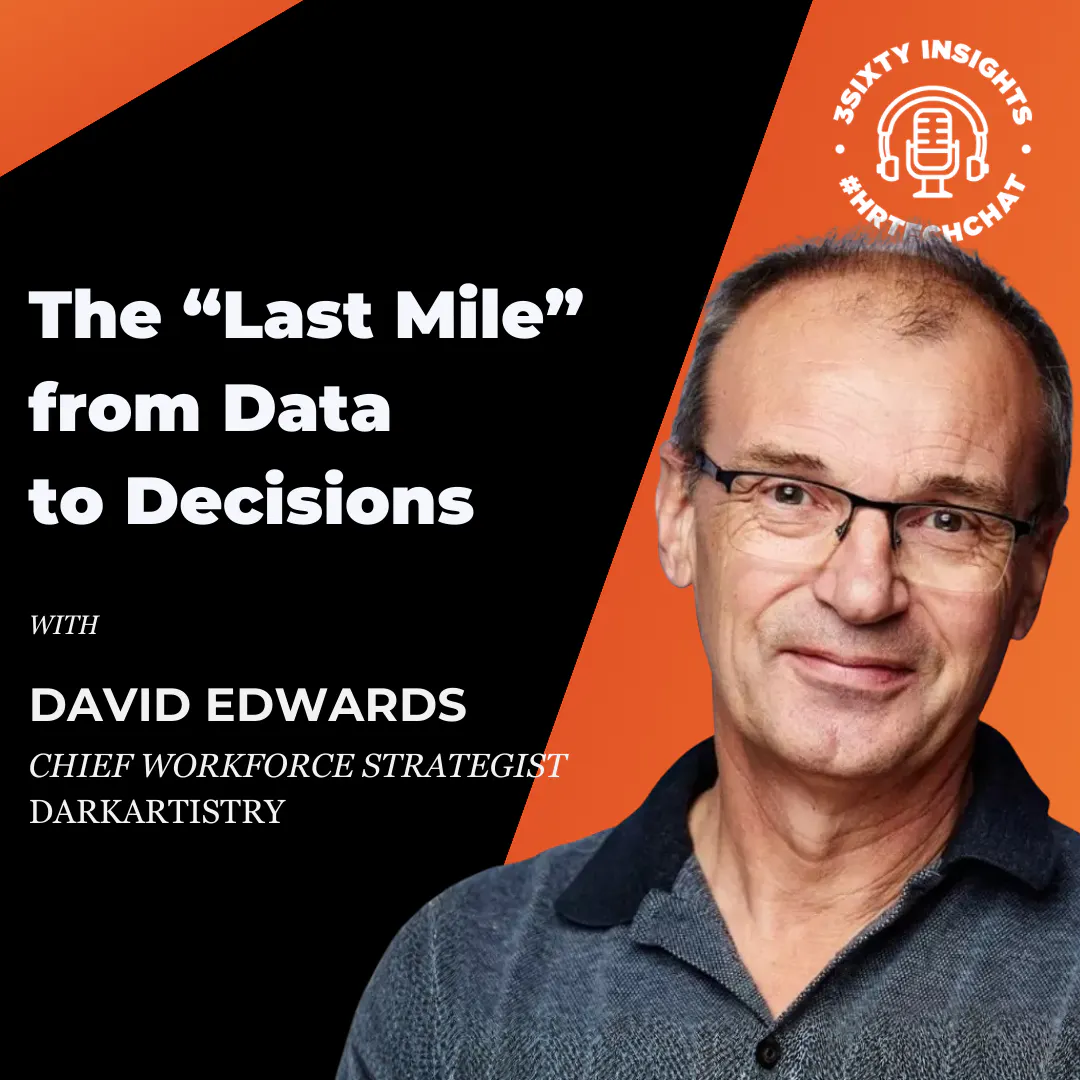
In this episode of #HRTechChat, Nicole Roberts (Senior Analyst & Advisor, 3Sixty Insights) is joined by David Edwards—strategic workforce planning practitioner, advisor, and author of The Strategic Workforce Planning Handbook—for a candid conversation about the gap between SWP theory and the messy reality of execution.
David explains why strategic workforce planning still suffers from an identity crisis (too many definitions, too many expectations), and why organizations keep getting trapped in short-term thinking that freezes out long-term capability building. Together, they unpack why chasing “perfect data” can be just as risky as oversimplifying, and why the real skill leaders need—especially as AI accelerates planning inputs—is judgment: knowing what’s decision-grade, what matters most, and what to do next.
The conversation also tackles the evolving role of managers, the incentives that discourage reskilling and redeployment, and why SWP should focus less on planning the entire workforce and more on the truly strategic segments that determine future business performance. David offers a clear challenge to HR tech providers too: analytics aren’t enough—leaders need help walking the “last mile” from dashboards to decisions, in the language of risk, outcomes, and action.
Resources mentioned (including books, discount code, and links):
The Book of Heroic Failures (Stephen Pile):
https://www.amazon.com/Book-Heroic-Failures-Official-Handbook/dp/0708819087
The Strategic Workforce Planning Handbook (David Edwards):
Kogan Page: https://www.koganpage.com/hr-learning-development/the-strategic-workforce-planning-handbook-9781398623590
Discount code: KoganPage25
Amazon: https://www.amazon.com/Strategic-Workforce-Planning-Handbook-Implement/dp/1398623598/
HR Conference Cruise:
https://hrcruise.com/
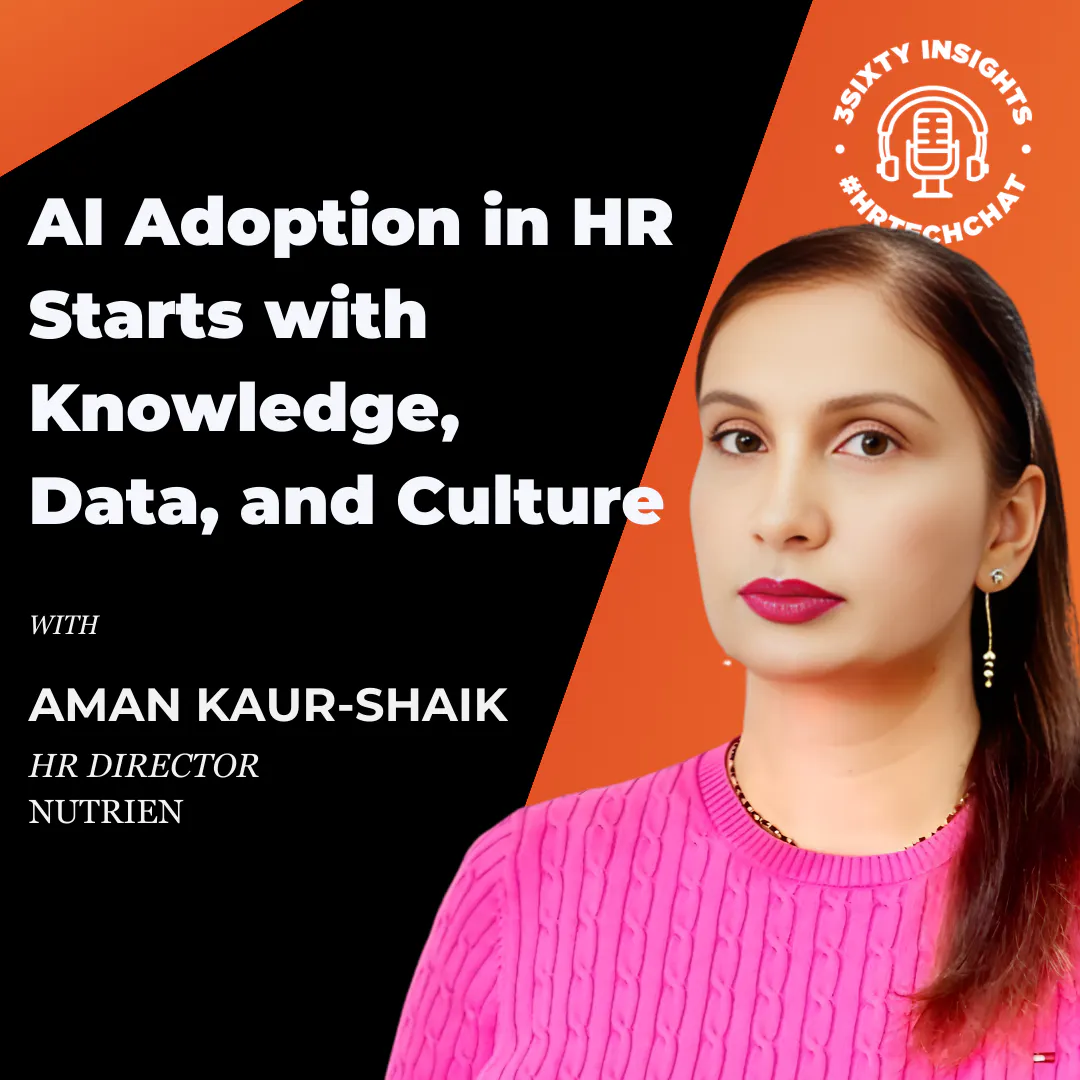
In this episode of #HRTechChat, Dylan Teggart speaks with Aman Kaur-Shaikh—HR Director at Nutrien, member of the 3SixtyInsights Global Executive Advisory Council, and a 2024 Global Top 100 HR Executive—about what it really takes for organizations to adopt AI successfully.
Aman explains why the biggest barrier to AI adoption isn’t the technology itself, but the environment organizations have built around it. From fragmented knowledge bases and outdated policies to inconsistent data and unclear guardrails, many HR teams are trying to layer advanced AI tools on top of systems that were never designed for them.
Together, they explore why the hype around AI is beginning to settle, how HR leaders can move from experimentation to practical adoption, and why starting with strong knowledge management and data foundations matters more than chasing the latest tools. Aman also shares a simple four-part model for introducing AI into day-to-day work—focusing on small, repeatable improvements, building AI habits that enhance productivity, and creating the behavioral and governance frameworks needed to support long-term success.
If organizations want AI to truly augment how work gets done, the path forward isn’t bigger technology investments—it’s better data, clearer knowledge, and a culture ready to adapt.
In this episode of #HRTechChat, Dylan Teggart is joined by JD Dillon—advisor, speaker, and author of The Modern Learning Ecosystem—to unpack the “do more with less” reality shaping work in 2026 and why managers are taking the brunt of it. JD explains how constant change, unclear AI mandates, and shrinking labor budgets are pressing frontline and middle managers from both sides—corporate demands on one side, team needs on the other.
Together, they explore why traditional leadership development isn’t meeting the moment, why “engagement” is losing meaning as a guiding metric, and what actually helps organizations adapt when disruption hits. JD makes the case that if you’re going to prioritize one investment in the employee experience, make it managers—by giving them time, clarity, and permission to lead. The conversation also digs into how vendors can translate people initiatives into operational outcomes, why “systems of work” matter more than one-off training pushes, and how long-term capability-building shows up when it counts most.
In this episode of #HRTechChat, Nicole Roberts is joined by Maria Scarangella to tackle one of the most persistent challenges facing HR today: proving business value in a climate defined by cost pressure, efficiency mandates, and heightened executive scrutiny. Drawing on her 37-year career at GEICO—including leadership of a $2.5B P&L—and her current work building Marstella, Maria explains why HR risks losing its strategic seat when it speaks only in HR metrics instead of business outcomes.
Together, they explore how quantifying the true cost of hiring, onboarding, training, and turnover can fundamentally change executive decision-making—from smarter workforce planning to more targeted investments in technology and development. Maria outlines why “a lot” is not a number, how lifecycle cost visibility creates accountability across leaders, and why HR leaders must understand how the business actually makes money if they want credibility with boards, CFOs, and investors. The conversation also looks ahead at the future of HR tech, the limits of AI without economic context, and how people metrics are increasingly sitting alongside financial KPIs in boardrooms—especially in PE-backed environments. The result is a practical, data-driven roadmap for HR leaders ready to shift from cost center to value driver.
In this episode of #HRTechChat, Nicole Roberts sits down with Jeff Smith, COO of 15Five, to unpack what it really takes to build better managers in an era of AI, constant change, and overflowing HR to-do lists. A psychologist by training with deep R&D and product experience, Jeff brings a rare lens on how organizations can redesign systems, expectations, and technology to truly support people leaders—not just measure them.
They dig into the mounting pressure on HR and managers, the shift from “HR owns all people issues” to shared accountability, and why management has to be treated as a daily practice, not a one-time promotion. Jeff explains how tools like 15Five and Kona AI can turn everyday one-on-ones into continuous performance data, simplify review cycles, and give leaders real-time coaching—while still honoring privacy, governance, and the realities of legal and IT risk. Along the way, they explore common failure modes: promoting star ICs into roles they aren’t equipped for, burying managers in 20-question reviews, and ignoring the signals that your best people no longer want to step into leadership.
If you still think “being a good manager” is something people just figure out on their own, this conversation will change your mind.
In this episode of #HRTechChat, Dylan Teggart sits down with Heike Wiesner, Global Sales Growth Director HCM, and Alastair Pride, Managing Principal Consultant, of Unit4 to explore the evolving role of payroll as a strategic business driver.
They discuss how cloud migration, integrated ERP systems, and innovations like Unit4’s Payroll Navigator are transforming payroll from a back-office function into a core asset for workforce planning, compliance, and employee trust. From real-time visibility to faster, smarter deployments, Heike and Alastair share how Unit4 is helping organizations simplify complexity, boost efficiency, and adapt to shifting workforce demands.
If you think payroll is just about getting people paid, it’s time to think bigger.
AI is changing the game—but not in the way you think. In this episode of #HRTechChat, we’re sharing a special swapcast from the PeopleTech podcast hosted by Mark Feffer, featuring Samrat Krishna of Darwinbox.
Samrat unpacks how AI agents are killing the “toggle tax” and rethinking enterprise software altogether. Instead of juggling dozens of systems and interfaces, agents now act on your behalf—fetching info, taking action, and streamlining workflows across platforms.
They dig into the mechanics of MCP (Modular Component Protocol), how Darwinbox is building for agent-first environments, and what HR leaders should automate today to unlock strategic headspace tomorrow.
If you think AI is about replacing people, you’re asking the wrong question.
Tune in to learn how to shift from assistance to agency—and why that shift changes everything.
Small businesses face growing complexity in HR, payroll, and benefits—but too often, leaders carry the burden alone. In this episode of #HRTechChat, Dylan Teggart talks with Meredith Reilly, Chief Sales Officer at isolved, about why it’s time to stop going solo.
Meredith shares how modern HR demands strategic partnerships—not just tools—and how activating an “advisory village” can help leaders scale smarter. From tech fluency to cultural alignment, they break down what today’s HR advisors must bring to the table.
If you’re still treating vendors as service providers, you’re missing the point.
Tune in to learn how synergy, not solo effort, drives results.
In this episode of GTM Innovators, host Kyle James sits down with John Baldino, President of Humareso and co-host of the But First Coffee Podcast, for a candid conversation on the future of AI in the workplace. This discussion explores how organizations must balance innovation with responsibility when adopting AI technologies. John shares his insights on building trust, maintaining ethical standards, and preserving the human element as AI continues to reshape the way we work. From recruitment to performance management, this episode offers practical advice for leaders navigating the rapidly evolving landscape of technology and talent.
As organizations face growing complexity and rapid change, the need for simple, integrated HR solutions is more urgent than ever—especially in industries where high attrition and operational efficiency collide.
In this episode of #HRTechChat, 3Sixty Insights’ Dylan Teggart sits down with Ahmad Noordin, VP of HR Technology at a leading U.S. property management company, to explore how HR and IT can partner to drive better employee experiences without overcomplicating processes.
Ahmad shares how his background in both technology and HR uniquely positions him to bridge the gap between functional needs and technical capabilities. Together, they discuss the growing shift toward simplification in HR tech, the role of no-code and low-code platforms, and why ease of use has become a competitive advantage in workforce technology.
From selecting practical solutions and balancing vendor partnerships to embracing AI as a wrapper for fragmented systems, Ahmad unpacks how organizations can reduce friction, improve usability, and deliver faster outcomes for managers and employees alike.
How can HR and IT avoid working in silos? Why is simplification the new sophistication? And where does AI fit into the evolving digital employee experience?
Tune in as Ahmad offers clear, actionable insights on uniting people and technology in pursuit of seamless, human-centered HR.
As workforce expectations evolve and hiring challenges mount, the need for seamless, scalable recruitment strategies has never been more critical—especially in industries where speed and simplicity make or break business outcomes.
In this episode of HRTechChat, 3Sixty Insights’ Dylan Teggart sits down with Heidi Barnett, former CEO of ApplicantPro and now a strategic leader at isolved, to discuss the recent merger between the two companies—and what it means for the future of talent acquisition.
Heidi brings her marketing-first mindset to HR, unpacking how ApplicantPro’s streamlined, high-conversion applicant tracking capabilities are now being scaled through isolved’s expansive HCM platform. Together, they explore the rising pressures on HR teams in SMB and mid-market companies, the realities of modern recruitment in high-turnover sectors like restaurants and healthcare, and the critical role AI and automation play in supporting overworked managers.
From applicant matching and video screening to managed recruitment services and mobile-first candidate engagement, Heidi explains how isolved and ApplicantPro are combining forces to help businesses move faster, hire smarter, and reduce operational friction—without sacrificing human connection.
What makes recruiting harder than ever in today’s labor market? How can AI actually restore humanity in the hiring process? And how can HR tech providers meet the needs of growing businesses across a fragmented talent landscape?
Tune in as Heidi shares practical insights on speed-to-hire, employee retention, and why the future of recruiting is both tech-driven and deeply human.
As quick-service restaurants (QSRs) continue to adapt in a post-pandemic world, the challenges of managing a dynamic, high-turnover workforce have never been more complex.
In this episode of HRTechChat, 3Sixty Insights' Geoff Webb sits down with Yutaka Takagi, Principal Product Evangelist at isolved, to explore the fast-paced world of QSRs and how human capital management technology is playing a pivotal role in workforce transformation.
With deep insight into the daily realities of QSR operators and managers, Yutaka shares how evolving employee expectations—especially among Gen Z—are reshaping hiring, scheduling, and engagement strategies. He explains how the speed and fluidity of the QSR environment demand not only flexible tools but also a shift in how organizations think about HR: from back-office admin to real-time frontline support.
From earned wage access and self-service scheduling to AI-driven hiring and always-on HR chatbots, isolved is helping QSR leaders streamline operations and improve the employee experience—without compromising on cost or efficiency.
What does it take to attract and retain Gen Z talent in a high-churn environment? How can technology reduce friction for managers and enhance engagement for hourly workers? And how are QSRs rethinking their tech stacks to support sustainable growth?
Tune in as Yutaka dives into the unique pressures of the QSR space, the power of automation in small physical workspaces, and how isolved is empowering employers to act fast—and smart—at every stage of the employee journey.
As the role of brokers continues to evolve, they are no longer just insurance providers but strategic advisors helping businesses navigate workforce complexities.
3Sixty Insights' Geoff Webb sits down with Andrea Dumont, Vice President of Channel Marketing at isolved, to discuss how brokers are adapting to meet the changing needs of HR and HCM. With over 20 years of experience in the industry, Andrea shares insights into how brokers are expanding their service offerings, leveraging technology, and strengthening client relationships to provide greater value.
She explores the increasing reliance on brokers for strategic business advice, the impact of compliance challenges, and how HR technology plays a central role in delivering long-term success.
How are brokers differentiating themselves in a crowded market? What role does trust and technology play in building lasting client partnerships?
Tune in as Andrea breaks down the latest trends shaping the broker landscape and how HCM platforms like isolved are helping them stay ahead.
As companies navigate hybrid work models and return-to-office (RTO) strategies, HR leaders are pivotal in shaping workplace culture and ensuring a seamless transition.
3Sixty Insight's Dylan Teggart sits down with Kathy Claytor, Chief Human Resources Officer at Delta Dental and board director at HRCI, to explore why HR should take the lead in facilities management. With over 25 years of experience in HR leadership across financial services, government, and technology, Kathy shares how workplace design, employee well-being, and strategic planning impact productivity and engagement.
She discusses Delta Dental’s approach to hybrid work, the importance of space planning, wellness initiatives, and how organizations can balance business needs with employee expectations.
Are companies rushing RTO too quickly? How can leaders create an office environment to which employees want to return?
Tune in as Kathy shares her expert insights on the future of work, hybrid work trends, and how HR can drive workplace success.
In this episode of #HRTechChat, Lynn Hurley, an experienced
HR leader, joins Dylan Teggart to break down the 2025 job market, AI’s impact
on hiring, and why recruiters must think like marketers.
They explore how economic uncertainty and AI adoption are
slowing hiring, why networking has overtaken job applications, and how employer
branding can make or break talent acquisition. Lynn also tackles ghosting in
recruitment and what companies must do to fix it.
Steven O’Brien, Senior Vice President of People Solutions at Syneos Health, joins Dylan Teggart for this episode of #HRTechChat. With over 20 years of experience in HR and talent acquisition, Steven shares his transformative approach to building high-performing teams by emphasizing the critical role of organizational design, culture, and team dynamics.
From his unique experiences at IBM to his insights on avoiding the pitfalls of “top talent” myths, Steven discusses how autonomy, task variety, and feedback are essential ingredients for unlocking potential. He also explores the impact of generative AI and modern assessment tools on enhancing productivity and fostering workplace innovation.
John Sumser, VP of Marketing at Salary.com and a seasoned industry analyst with over 30 years of experience, joins Dylan Teggart for this episode of #HRTechChat. Together, they explore the shifting landscape of compensation and the profound ways pay transparency and AI are shaping the future of work. From his beginnings analyzing the job board industry at the dawn of the internet, John offers a wealth of knowledge on HR technology and the critical role compensation plays in business strategy.
In this episode, John shares his unique perspective on key trends transforming the workforce, from navigating an aging labor market to the challenges of integrating vast amounts of data into actionable insights. With a thoughtful approach to ethics, technology, and innovation, John provides listeners with a deeper understanding of how organizations can adapt to thrive in an evolving workplace.
Ben Mones, CEO and Founder of FAMA, joins Dylan Teggart for this episode of #HRTechChat to discuss the evolving landscape of AI in HR technology and talent assessment. With over a decade of experience leading FAMA, a company dedicated to providing behavioral insights through digital footprints, Ben shares his journey from launching FAMA via an accelerator program to becoming a leader in the field. He recounts the company's origin story, inspired by an incident of workplace misconduct, and discusses FAMA's role in helping employers identify potential risks through online behavior analysis.
Ben and Dylan explore the broader trends shaping HR tech, including the increasing sophistication of AI procurement processes, the impact of societal movements on hiring practices, and the challenges of integrating AI into decision-making frameworks. Ben also highlights Fama’s approach to empowering HR professionals with actionable insights while maintaining ethical and legal standards.
This conversation sheds light on the interplay between AI, workplace culture, and the future of hiring, making it a must-listen for HR leaders and technology enthusiasts alike.
This guest podcast, originally aired on People Tech, features Mark Feffer in conversation with Opal Wagnac, Senior Vice President of Market and Product Strategy at isolved. Together, they unpack the state of AI in HR, exploring how leaders can distinguish between AI solutions that deliver real value and those that are mere hype.
In this episode, Opal discusses the challenges of AI adoption in the workplace, the evolution of tools like retention predictors and recruiting automation, and the growing alignment between human intuition and machine learning. She highlights practical AI applications in recruiting, payroll, and employee learning, while shedding light on how AI is transforming HR tasks to focus on connection, empathy, and strategic innovation.
Opal also delves into the art of the possible, offering a vision of how AI can empower HR professionals to reimagine their roles and elevate the employee experience.
This guest podcast, originally aired on People Tech, features Mark Feffer and Pragya Gupta, Chief Product and Technology Officer at isolved, as they explore AI's growing impact on HR. In this episode, they discuss shadow AI, automation, and the ethical considerations shaping today’s AI applications in HR. Pragya shares insights on how AI is transforming daily HR tasks, enhancing personalization, and streamlining strategic decisions across organizations.