DiscoverOne Planet Podcast · Climate Change, Politics, Sustainability, Environmental Solutions, Renewable Energy, Activism, Biodiversity, Carbon Footprint, Wildlife, Regenerative Agriculture, Circular Economy, Extinction, Net-Zero
One Planet Podcast · Climate Change, Politics, Sustainability, Environmental Solutions, Renewable Energy, Activism, Biodiversity, Carbon Footprint, Wildlife, Regenerative Agriculture, Circular Economy, Extinction, Net-Zero

One Planet Podcast · Climate Change, Politics, Sustainability, Environmental Solutions, Renewable Energy, Activism, Biodiversity, Carbon Footprint, Wildlife, Regenerative Agriculture, Circular Economy, Extinction, Net-Zero

Author: Creative Process Original Series

Subscribed: 51Played: 1,368
Share

Description

The story of our environment may well be the most important story this century. We focus on issues facing people and the planet. Leading environmentalists, organizations, activists, and conservationists discuss meaningful ways to create a better and more sustainable future.


Participants include United Nations Sustainable Development Solutions Network, European Environment Agency, UNESCO World Heritage Centre, European Commission, EARTHDAY·ORG, Greenpeace, IPCC Lead Authors, WWF, PETA, Climate Analytics, NASA, UN Development Program, Solar Impulse Foundation, 15-Minute City Movement, Energy Watch Group, Peter Singer, 350.org, UNESCO Mahatma Gandhi Institute of Education for Peace and Sustainable Development, Citizens’ Climate Lobby, Global Witness, Global Institute for Water Security, EarthLife Africa, Planetary Health Alliance, Ocean Protection Council, among others.


Interviews are conducted by artist, activist, and educator Mia Funk with the participation of students and universities around the world. One Planet Podcast Is part of The Creative Process’ environmental initiative.

601 Episodes
Reverse
"We need to learn from the animals how to live more gently, consume less and look out for each other in this great circle of life.":Our shared moment in time reminds us that we are one part of a vast ecosystem. Today, we explore how humanity can live in harmony with the Earth by paying attention to the land and lives of animals around us. We listen to those who translate the voices of the living world: authors Yann Martel, Georgi Gospodinov, Chiara Barzini, Erica Berry, Kristin Ohlson, Helen Whybrow, screenwriter-director Caroline Thompson and Existential Therapist Emmy van Deurzen. We reflect on our changing environment with Nobel Peace Prize-winning climate scientist Kevin Trenberth, soil expert David Montgomery, restoration ecologist Tom Crowther, wetlands conservationist Jane Madgwick, Scientist Rebellion co-founder Tim Hewlett, architect and urban designer Carlo Ratti. And Ingrid Newkirk reminds us that our survival directly depends on the health of the natural world.(0:00) Ingrid Newkirk (Co-Founder, PETA) Chiara Barzini (Author of Aqua) (3:41) Erica Berry (5:07) Yann Martel(Author, Son of Nobody) (6:20) Georgi Gospodinov (Author, Time Shelter) (7:39) Emmy van Deurzen (Therapist) (9:08) Jane Madgwick (Ecologist) (10:29) Caroline Thompson (Screenwriter) (13:00) Helen Whybrow (Author, The Salt Stones) (14:11) Tom Crowther (Founder, Restor) (14:56) Kristin Ohlson (16:10) Tim Hewlett (17:54) Kevin Trenberth(20:10) Carlo Ratti (Architect) (21:59) David MontgomeryTo hear more from each guest, listen to their full interviews https://www.creativeprocess.info/podhttps://www.creativeprocess.info/interviews-featured/anth-circle-life
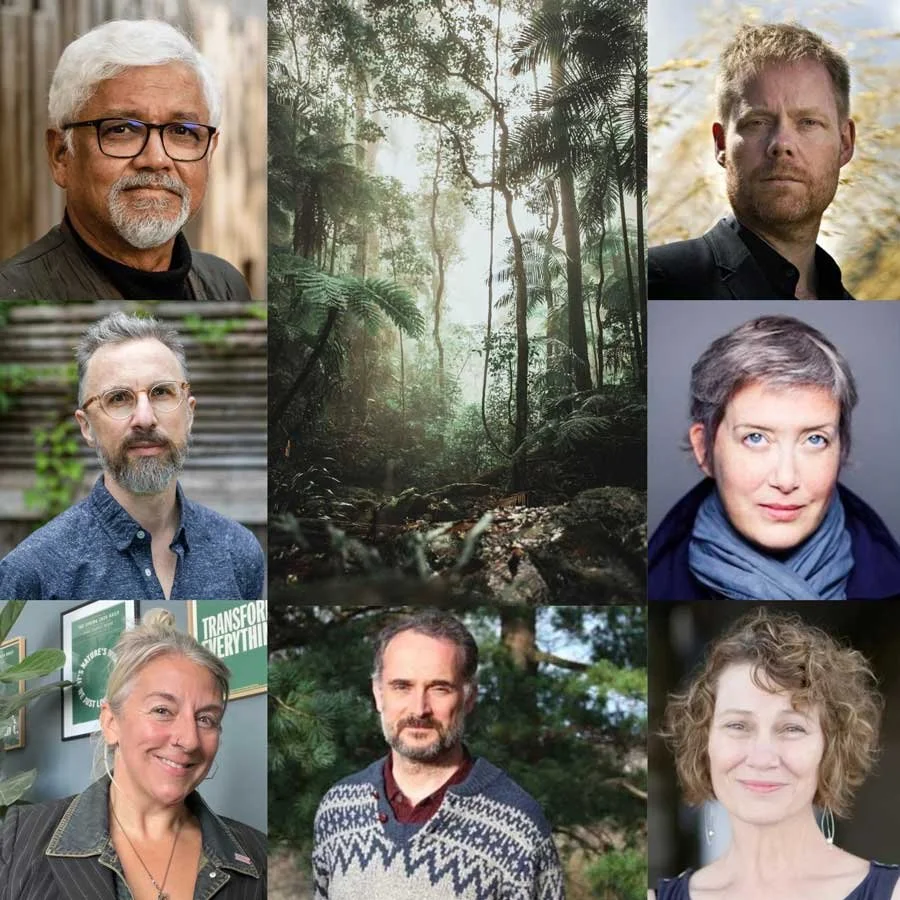
“ So that's what I would love for people to see and to realize is that nature is so incredibly beautiful and diverse. And so are we.”Today, we’re looking at how the landscapes of our childhood shape the way we see the world. We explore memory, nature, and attunement to the present moment with composer Max Richter and writer and biologist David George Haskell. We’re joined by authors Kristin Ohlson and Dan Werb who revisit the freedom of youth. Novelist Amitav Ghosh shares his sensory his experiences of Calcutta. Writer and musician Eiren Caffall reflects on finding hope and living with illness, while circular economy designer Claire Potter reflects on the living world and the art of noticing.(0:00) MAX RICHTER (Award-winning Composer & Pianist) A Continuous Stream of Music(1:55) CLAIRE POTTER (Circular Economy Designer) Protecting What You Love(3:55) EIREN CAFFALL (Writer & Musician) A Legacy of Generational Knowledge(7:40) AMITAV GHOSH (Award-winning Novelist, Ghost-Eye) Sensory Discovery and Food(9:31) DAVID GEORGE HASKELL (Biologist, The Songs of Trees) Stories to Tell the Future(10:58) KRISTIN OHLSON (Author, The Soil Will Save Us) Learning the Power of Observation Through a Free Range Childhood(12:42) DAN WERB (Epidemiologist & Author, Our Wild Familiars) The Undertow of the PacificTo hear more from each guest, listen to their full interviews.Episode Websitewww.creativeprocess.info/podInstagram:@creativeprocesspodcast
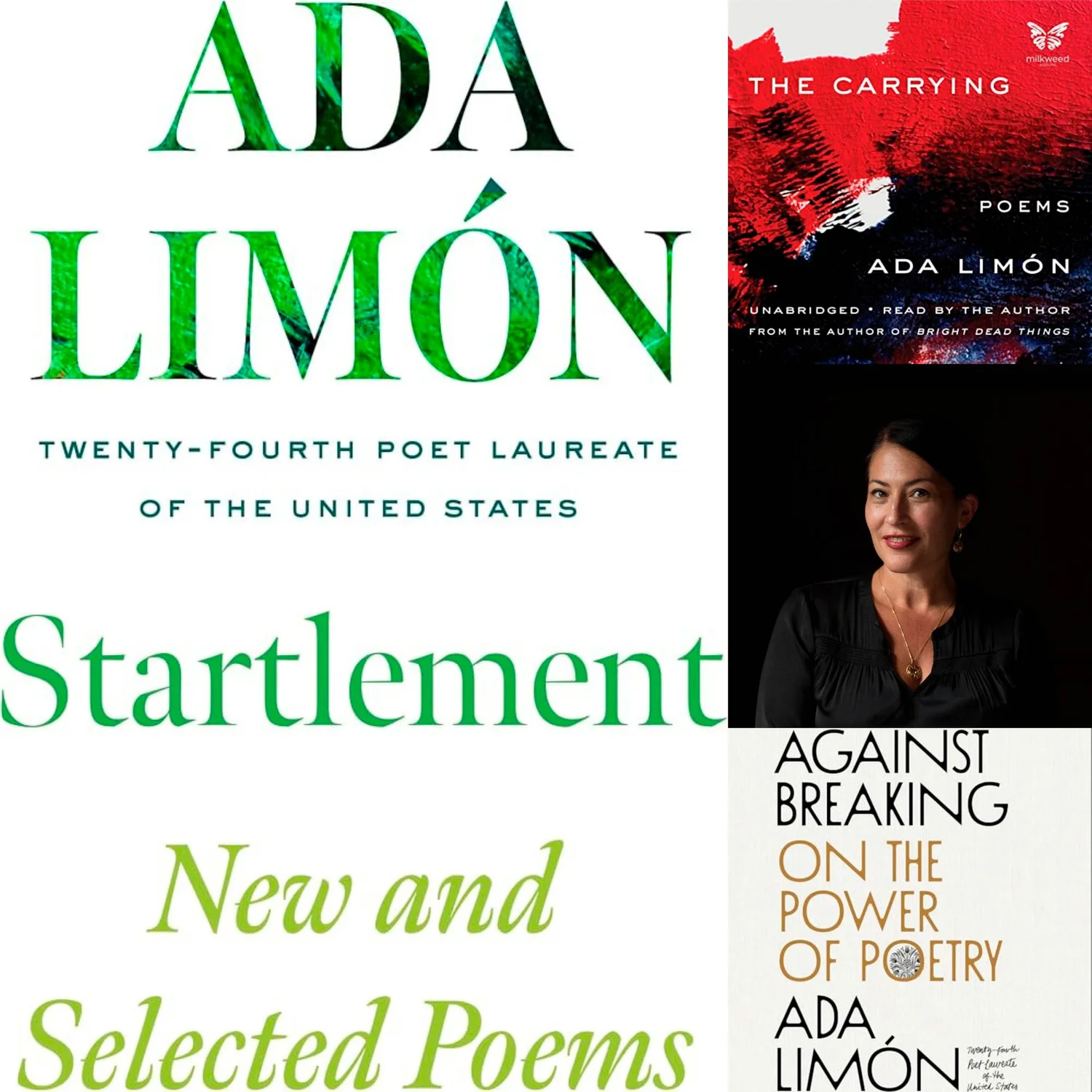
“It’s always very interesting that we have to make a case for art because we don’t have to make a case for fast food. Like, we don’t have to make a case for all of these sort of things in our lives that we do not need, and yet we have to make a case for beauty? We have to make a case for the soul? We have to make a case for humanity? We have to make a case for singing back the wounded world? That to me is fascinating”My guest today is Ada Limón. She served two historic terms as the 24th poet laureate in the United States. She has brought poetry to public parks across the US, and her words have traveled through deep space, engraved on NASA’s Europa Clipper spacecraft. In over 20 years of writing in celebrated collections like Bright Dead Thingsand The Carryingand her new book, Startlement: New and Selected Poems, Ada has brought a sincerity to American poetry rooted in connection to the natural world.She’s written with inspiring honesty about the death of loved ones, trying to conceive and also the unexpected liberation of deciding to step away from societal expectations of motherhood and embrace a life happily childfree. Her latest book on craft, Against Breaking: On the Power of Poetry, asks how a poem can hold our heaviest grief without letting the human spirit fracture.After years living in Kentucky and New York, she bought back her childhood home in Sonoma Valley, stepping back into the rooms where her poetic imagination first took root. We’ll talk about the discipline of paying attention and why poetry remains an essential act of human survival.(0:03) The Case for Beauty  (0:39) About Ada Limón(2:44) The Deepening of Roots(5:01) Reading 'On Earth As It Is on Earth'(6:08) Bearing Witness Without Surrendering to Grief(7:50) The Definition of Beauty and the Dissolving Self(9:41) Love as an Active Daily Choice(11:11) The Practice of Loving-Kindness Meditation(13:28) Reading 'Hell or High Water'(17:01) Writing Without Music and Listening to the Landscape(19:08) Dreams as Archetypes of Consciousness(21:34) The Environmental and Creative Toll of Generative AI(24:02) AI and the Future of the Arts(25:21) Stewardship, Conservation, and Faith in the Invisible Workers(28:14) The Childfree Daughter(29:57) Listening to Trees as an Act of Reciprocity(32:40) The Music of the World(34:03) The Seed of InterconnectednessEpisode Websitewww.creativeprocess.info/podInstagram:@creativeprocesspodcast
“By pretending like science is neutral or apolitical, we're really feeding a particular discourse which serves whatever political structures are in place right now, whatever status quo is in place right now. Science can never be apolitical because it's a human activity, it's practiced in society with others, with human and more-than-human beings.”In this episode of the Speaking Out of Place podcast, Professor David Palumbo-Liu talks with Fernando Racimo, a leading scientist-activist, about his new book, Science in Resistance. This book gives a riveting account of the founding and growth of the international group Scientist Rebellion, in which now thousands of scientists from around the world have organized direct actions to draw attention to the climate crisis. Breaking through the censorship and silencing carried on by big fossil fuel companies and also scientific groups in and out of academia, which often collude with each other, members of SR have put their careers and their bodies on the line to raise public consciousness and to spur action. We talk about the connection between power and knowledge, between ecocide and genocide and the need to democratize education and research if we are going to have the kind of world we want to both live in and to pass on to other generations.(0:00) Science in Resistance(2:52) Moving to Direct Action(6:57) The Power of the Teach-In(10:58) The Climate Killjoy(11:24) The Myth of Scientific Neutrality(17:38) Fossil Fuel Complicity in Universities(23:52) Educating a World on Fire(30:41) Ecocide and Genocide(32:19) Democratizing the University(37:19) Learning from the Global SouthRacimo is a scientist-activist and the author of the new book Science in Resistance. He co-founded the Danish chapters of Scientist Rebellion and Academics for Palestine and works at the intersection of academia and social movement organizing. He earned his bachelor from Harvard and his PhD from UC Berkeley and is now an assoc. professor in ecology and evolution at the Globe Institute, University of Copenhagen. He has written articles and OpEds on the urgent need for scientists to join and support social movements fighting structures of oppression, as well as on strategies for transforming and democratizing academic institutions to serve positive socio-ecological needs. He teaches ecology and evolution, degrowth and socio-ecological justice, decolonizing global health and social movement theory and practice.Episode Sitewww.palumbo-liu.comhttps://speakingoutofplace.comBluesky @palumboliu.bsky.socialIG @speaking_out_of_place
My guest today is Ada Limón. She served two historic terms as the 24th poet laureate in the United States. She has brought poetry to public parks across the US, and her words have traveled through deep space, engraved on NASA’s Europa Clipper spacecraft. In over 20 years of writing in celebrated collections like Bright Dead Things and The Carrying and her new book, Startlement: New and Selected Poems, Ada has brought a sincerity to American poetry rooted in connection to the natural world.She’s written with inspiring honesty about the death of loved ones, trying to conceive and also the unexpected liberation of deciding to step away from societal expectations of motherhood and embrace a life happily childfree. Her latest book on craft, Against Breaking: On the Power of Poetry, asks how a poem can hold our heaviest grief without letting the human spirit fracture.After years living in Kentucky and New York, she bought back her childhood home in Sonoma Valley, stepping back into the rooms where her poetic imagination first took root. We’ll talk about the discipline of paying attention and why poetry remains an essential act of human survival.(1:45) Silence as the Music of the World(9:17) The Deepening of Roots(13:19) 'On Earth As It Is on Earth'(18:08) Bearing Witness Without Surrendering to Grief(21:02) Singing Back the Wounded World and the Case for Beauty(28:22) Love as an Active Daily Choice(30:38) The Practice of Loving-Kindness Meditation(37:34) Writing Without Music, Listening to the Landscape(40:04) Dreams as Archetypes of Consciousness(42:51) The Creative Toll of AI(51:29) Embracing the Liberation of a Childfree Life(1:01:06) Listening to Trees as an Act of Reciprocity(1:06:44) Interconnectedness of Living BeingsEpisode Websitewww.creativeprocess.info/podInstagram:@creativeprocesspodcast
loading
Comments