


 Claim Ownership
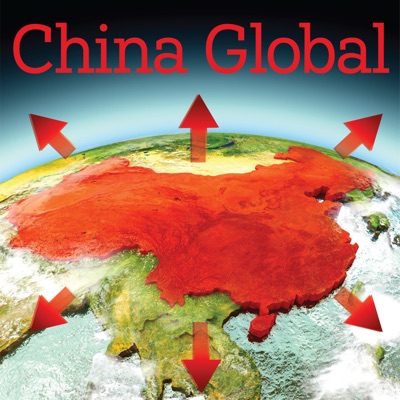
China Global
Subscribed: 358Played: 8,473
Subscribe

© 2021
Description
China’s rise has captivated and vexed the international community. From defense, technology, and the environment, to trade, academia, and human rights, much of what Beijing does now reverberates across the map. China Global is a new podcast from the German Marshall Fund that decodes Beijing’s global ambitions as they unfold. Every other week, host Bonnie Glaser will be joined by a different international expert for an illuminating discussion on a different aspect of China’s foreign policy, the worldview that drives its actions, the tactics it’s using to achieve its goals—and what that means for the rest of the world.
138 Episodes
Reverse
Under Xi Jinping, China’s growing power has fueled an intense debate about Beijing’s ambitions and long-term goals. Some observers argue that China seeks to replace or displace the United States as the world’s leading power and establish a new, Beijing-centered international order. Yet China’s behavior often defies traditional expectations of what a rising hegemon should look like. A forthcoming book offers a different framework for understanding Chinese strategy. Titled No Constraints: China’s Global Quest for Partners and Influence, it argues that Beijing’s overriding objective is not to build a Chinese-led global order, but rather to maximize its freedom of action while resisting constraints imposed by rivals, alliances, and international institutions. In doing so, it traces the historical roots of China’s approach to partnerships, engagement with the Global South, relations with the United States and Russia, and its enduring concerns about encirclement and regime security. On this episode, I am joined by Patricia Kim, author of No Constraints. Pattie is a Senior Fellow on foreign policy at the John L. Thornton China Center and the Center for Asia Policy Studies at the Brookings Institution. We’ll discuss the book’s central thesis, what it reveals about China’s relationships with major powers and the Global South, and what Beijing’s pursuit of a world with “no constraints” means for the future of US-China relations and the international order.Timestamps: [00:00] Introduction [02:07] "No Constraints" Key Arguments and Questions[06:20] Replacing vs. Reshaping International Order[08:36] Lessons Learned from the Korean War [11:32] Limits to the China-Russia Relationship[16:47] China's Evolving Engagement with the Global South[21:14] Changing Approaches to the US Relationship [25:55] Fears of Subverting Stability in China[30:57] Beijing's Efforts to Persuade Middle Powers and US Allies
In today’s episode, we’ll examine the role of development finance in U.S. economic statecraft and Washington’s efforts to compete with China for influence in strategically important areas. Competition between the United States and China increasingly extends into trade, technology, infrastructure, and critical mineral supply chains. China has used state-backed financing to support overseas infrastructure and resource projects, building economic relationships and, in some cases, dependencies that can serve its broader strategic interests. The United States has sought to offer an alternative by mobilizing private investment, strengthening supply chains, and supporting development projects that advance American economic and national security priorities. The U.S. International Development Finance Corporation, or DFC, is a central part of this effort. By providing financing, political risk insurance, and other forms of investment support, the DFC aims to mobilize private capital for projects in developing markets that might otherwise struggle to attract investment. Its role has taken on added significance as Washington looks to diversify critical mineral supply chains and reduce strategic dependencies. I'm pleased to have as my guest today, Conor Coleman, Head of Investments and Chief of Staff at the U.S. International Development Finance Corporation. We’ll discuss the DFC’s mandate, its role in U.S. economic statecraft, and how development finance can advance American strategic interests in an era of intensifying competition with China. Timestamps: [00:00] Introduction [02:10] The Role and Mission of DFC [03:58] Recent Projects and How They Advance US Interests [06:37] How the DFC Diversifies Supply Chains [08:33] Competing with the BRI [10:33] Success in Mobilizing Partnerships and Direct Investments [13:20] Balancing Support and Sovereignty [16:06] Internal and External Indicators of Success [18:12] Competition with China as a Measure [19:48] Coordinating with Allies and Partners [21:03] Prioritizing Competing Goals [22:38] Challenges for DFC and Defining a Story
In today's episode, we'll examine the state of EU-China trade relations after a pivotal few weeks that may shape how Europe deals with China for years to come.Europe's trade deficit in goods with China reached roughly 360 billion euros last year, nearly a billion euros a day, and European Commission President Ursula von der Leyen has called the imbalance structural and unsustainable. Against that backdrop, three events stand out. On October 5, French President Emmanuel Macron and German Chancellor Friedrich Merz sent a joint letter to von der Leyen urging a tougher response, including a rapid-action trade instrument. It was a striking shift for a Germany that has long been wary of confrontation with Beijing. On October 8 and 9, EU Trade Commissioner Maroš Šefčovič and Chinese Commerce Minister Wang Wentao held trade talks in Beijing that produced 16 outcomes, including an understanding to curb Chinese exports of hybrid vehicles through a 350,000-vehicle annual quota. And on October 15 and 16, EU leaders met in Brussels to decide what comes next.Is the hybrid deal a genuine breakthrough or a pressure-release valve? Does it do enough to prevent a second "China Shock," or will Chinese carmakers simply build in Europe instead? Could tools like the EU's Anti-Coercion Instrument, or its proposed faster successor, ever be used against China? And how will relations between Beijing and Brussels likely develop going forward. I am joined today by Finbarr Bermingham, Chief Europe Correspondent at the South China Morning Post, who specializes in geopolitics, geoeconomics and EU-China relations. He has spent the last five years reporting from Brussels and around Europe on rising bilateral tensions, Europe's place in the shifting world order, diplomacy, trade, and EU politics.Timestamps:[00:00] Introduction[02:26] Outcomes of the Agreement [04:46] Trading Import Volume for Localization? [08:20] "Made in Europe" for Chinese Hybrids[09:16] Unilateral Actions and Ultimatums[13:16] A Kill Switch for Unfair Trade Practices[19:32] Measuring EU Unity and Fear of Retaliation[25:12] Beijing’s Hardline Signals – A Shift to Accommodation?[29:13] On Transatlantic Coordination[31:23] What to Watch for a Durable Rebalancing
In today's episode, we'll examine China’s ambitions in the Arctic and the growing importance of Sino-Russian cooperation in the region. The Arctic is undergoing profound change. Climate change is reducing sea ice coverage, creating new opportunities for shipping, resource extraction, infrastructure development, and military activity. Russia views the Arctic as central to its economic future and national security. China doesn’t border the Arctic, but it is a permanent observer in the Arctic Council and has increasingly sought a role in Arctic governance, scientific research, shipping, and energy development. Russia's invasion of Ukraine has transformed Moscow's relationships with both Western countries and Beijing, raising new questions about the future of Arctic cooperation and competition. How aligned are Chinese and Russian interests in the region? What are the prospects for commercial development along the Northern Sea Route and elsewhere in the Arctic? And what challenges and opportunities do these developments present for the United States and its allies? To help us understand these issues, we're joined by Elizabeth Wishnick, Senior Research Scientist in China Studies at CNA and Distinguished Fellow at the Weatherhead East Asian Institute, Columbia University. She is one of the leading experts on China's Arctic policy, Sino-Russian relations, and the geopolitical implications of a changing Arctic.Timestamps: [00:00] Introduction [01:49] How China’s Interests in the Arctic Have Evolved [05:04] Which Arctic Actors are Receptive to a Larger Chinese Role? [08:19] Unpacking China-Russia Cooperation [13:33] Russian Invasion of Ukraine Impact on Chinese Involvement [15:32] Benefitting from Northern Sea Route [19:40] Arctic Energy Cooperation [22:47] How US Asian Partners View Arctic Security and Governance[24:51] Shifting US Policies and Priorities in the Arctic [26:04] What to Watch in the Arctic
Expectations for the 3rd Trump-Xi summit since Trump returned to power were modest, and the meeting delivered limited concrete outcomes: a two-month extension of the trade war truce, lower tariffs on some US and Chinese goods, an agreement to talk more about AI risks, two pandas for the Atlanta zoo, and a potential MOU between the US and Chinese militaries on crisis prevention and management. As I wrote in an analysis of the summit, Xi Jinping came away with a larger diplomatic and strategic win. He was greeted personally by President Trump upon arrival at Andrews Air Force Base and hosted for a lavish White House dinner. Those optics can be displayed to the domestic Chinese audience as evidence that China is now a peer of the United States, and its leader Xi is a peer of the US president, Donald Trump. Summits are rare opportunities to advance policy agendas, and this meeting fell short. The two leaders reportedly talked for about 90 minutes with consecutive interpretation. In my view, the leaders of the world’s two largest economies failed to seize the opportunity to discuss how to address bilateral, regional and global challenges: AI risks, technology competition, Taiwan, China’s rare earth exports, and the wars in Ukraine and the Middle East. The result was a summit that preserved the fragile stability in the US-China relationship without addressing the broader challenges that make it so consequential. On today’s episode, we’ll talk to a renowned Chinese scholar about his perspective on the summit and where U.S.-China relations may be headed next. I'm pleased to welcome Dr. Da Wei, Director of the Center for International Security and Strategy at Tsinghua University and one of China's leading scholars on U.S.-China relations. Timestamps: [00:00] Introduction [02:32] Competing Views of a New Framework [05:19] Will a Warm Reception Lead to Changes in Chinese Policy?[10:18] Will the Fourth Period Effort Last? [14:02] Barriers to Bilateral Dialogue [18:07] Comparing the U.S. and Chinese Readouts [21:24] Beijing’s View of a Military-to-Military MOU [25:41] Greater Chinese Confidence = Greater Restraint [31:17] Trump and Xi on Taiwan [36:58] Lai Ching-te and Cross Strait Integration [40:20] What Can Be Achieved In Between

Comments

Download from Google Play

Download from App Store
 United States