


 Claim Ownership
 Agile and Project Management - DrunkenPM Radio
Subscribed: 506Played: 7,880
Subscribe

© All rights reserved
Description
A podcast about Agile and Project Management
290 Episodes
Reverse

Good Teams, Bad Outcomes with Martina Ziegenfuss and Jim Elvidge
In this episode of drunkenpm radio, Martina Ziegenfuss and Jim Elvidge of Clerv.io join me for a conversation about a frustrating but common pattern in organizations: smart, capable teams still end up delivering slow, messy, or misaligned results. The conversation looks at how team performance is shaped by the surrounding system, not just the people on the team. They also unpack how AI can speed up delivery in some places while exposing bottlenecks, governance gaps, and operating model problems somewhere else.In this episode, Dave, Martina, and Jim explore what makes a team “good,” why good teams can still produce bad outcomes, and how leadership choices often create the very friction teams are blamed for. They also discuss Clerv.io’s diagnostics and playbooks, designed to help organizations see systemic problems more clearly and work through them.
Key Topics
- What defines a good team
- Systemic challenges in organizations
- Impact of AI on team performance
- Creating a culture of empowerment
- Diagnosing organizational health with diagnostics
- Experimenting with team structures
- The role of leadership and management
- Overcoming systemic resistance to change
- Tools for assessing organizational health
- The future of team design and AI
Chapters
00:00 — Why good teams can still produce bad outcomes
04:19 — Why Clerv.io started and what its playbooks are for
06:49 — Good teams, bad outcomes, and the impact of the system
11:37 — How team design depends on the broader system and architecture
14:22 — How organizational history, silos, and fear create friction
19:36 — The cross-functional team experiment and what it changed
27:05 — What AI can and can’t replace in team roles
33:06 — Theory of constraints: why faster tools don’t fix the bottleneck
35:43 — AI exposing governance and approval delays
47:03 — How to contact Martina and Jim and follow Clerv.io
Links from the Podcast
Clervio: https://clerv.io/
2026 PMI WDC Conference: www.pmiwdc.org/conference-2026-pmi-wdc
PMI SWVA 2026 Fall Symposium:
Digital PM Summit: thebureau.community/2026-digital-pm-summit
Connect with Martina Ziegenfuss
LinkedIn: https://www.linkedin.com/in/martinaz/
Connect with Jim Elvidge
LinkedIn: https://www.linkedin.com/in/jimelvidge/
Connect with Dave Prior
drunkenPM Radio: soundcloud.com/drunkenpmradio
LInkedIn: www.linkedin.com/in/mrsungo/
Youtube: https://www.youtube.com/channel/UC6E6lOSFg21gfyMmjHUH1yw

In this episode, Dave Borzillo shares insights from his book 'Sanity at Scale' on how engineering leaders can shift from heroics to systemic excellence, emphasizing removing waste, visualizing work, and fostering team collaboration.
Key Topics
- Challenges in system thinking and organizational agility
- The importance of visualizing work and using impact maps
- Strategies for removing waste and reducing cognitive overload
- The role of leadership in fostering a culture of continuous improvement
- Techniques for effective prioritization and backlog management
Chapters
00:00 Introduction to 'Sanity at Scale' and Guest Background
04:21 The Power of Removing Waste and Deleting Unnecessary Items
08:52 The Limitations of Math in Estimation and Prioritization
13:01 Fostering Team Estimation and Shared Understanding
15:45 The Importance of Triangulating Data and Multiple Measures
17:41 Building Cross-Functional Teams and Knowledge Sharing
19:58 Visualizing Work with Whiteboards and Digital Tools
22:30 Engaging Senses and Human Connection in Daily Standups
24:57 Mapping Value Streams and Identifying System Bottlenecks
27:56 Dealing with Systemic Resistance and Cultural Change
29:36 Challenging Processes and Experimenting Safely
32:14 Leadership as a Servant and the Boundary Layer Role
35:00 Reward Systems and Incentivizing Collaboration
37:16 Changing the Mindset: From Hero to System Thinker
39:18 Transitioning from Firefighter to Strategic Pilot
41:36 Aligning Work with Organizational Outcomes
43:33 The Power of Purpose and Clear Vision
45:20 Addressing Cultural and Leadership Barriers
48:12 Encouraging Deletion and Simplification in Work Processes
49:10 Upcoming Event and Book Giveaway
Links from the Podcast
Dave’s Book Sanity at Scale - https://tinyurl.com/2txmmhft
Better Ways of Working: https://betterwaysofworking.com/
Better Ways of Working Podcast: https://tinyurl.com/4nabc9sr
2026 PMI WDC Conference: https://www.pmiwdc.org/conference-2026-pmi-wdc
PMI SWVA 2026 Fall Symposium: https://pmi-swva.org/2026-symposium
Digital PM Summit: https://thebureau.community/2026-digital-pm-summit
Connect with Dave Borzillo
LinkedIn: https://www.linkedin.com/in/daveborzillo/
YouTube: https://www.youtube.com/@betterwaysofworking
Better Ways fo Working: https://betterwaysofworking.com/
Connect with Dave Prior
drunkenPM Radio: https://soundcloud.com/drunkenpmradio
LInkedIn: https://www.linkedin.com/in/mrsungo/

In this episode, Shalabh Tandon and Shubhada Sahasrabudhe join me to discuss their new book, 'Don't Panic Pivot: Managing Critical Issues to Prevent Crises.' We explore the differences between risks and issues, what makes an issue critical, and why they emphasize a systematic approach to managing crises. The authors introduce their nine-six framework, which includes three whys, nine ingredients, and six steps to effectively address critical issues. They highlight the role of leadership and organizational culture in fostering a proactive environment for issue management. We also dig into the intricacies of crisis management and the importance of building resilience within organizations, maintaining quality, and ensuring transparent communication during crises. You'll hear their tips on how to find balance between discipline and drama in crisis response and how AI can enhance crisis management strategies. The conversation highlights actionable insights for leaders and organizations to navigate crises effectively.
You can find a video version of this interview here: https://youtu.be/H9LXedwxP2U
Takeaways
- Most crises are a culmination of ignored small issues.
- A systematic process helps organizations respond thoughtfully, not react impulsively.
- Building a resilient organization involves learning from issues and creating a culture of psychological safety.
- The 9-6 framework includes steps like describe, impact assess, contain, root cause, and communicate.
- Transparency and consistent communication are crucial during crises.
Chapters
00:00 Introduction to Crisis Management
02:53 Understanding Risks vs. Issues
06:02 Defining Critical Issues
08:59 The Impact of Critical Issues
10:58 What is Critical Issue Management?
14:04 The Importance of Systematic Approaches
17:01 The Role of Leadership in Crisis Prevention
20:00 Cultural Aspects of Issue Management
21:58 The Process of Managing Issues
24:59 The Six Steps of Crisis Management
36:05 Understanding Crisis Response Dynamics
39:21 Building Organizational Resilience
43:58 Quality vs. Crisis Management
48:05 The Importance of Transparency in Crisis
54:06 Discipline Over Drama in Crisis Management
56:31 Leveraging AI for Crisis Management
The Book:
Don't Panic Pivot: Managing Critical Issues to Prevent Crises
https://tinyurl.com/4ps5jpxf
Learn More about QuRIuS
Web: www.quriusllc.com
Promo Video: https://tinyurl.com/yyk6wjaj
Contacting Shubhada and Shalabh:
Shubhada – https://www.linkedin.com/in/shubhada-sahasrabudhe/
Shalabh - https://www.linkedin.com/in/shalabh-tandon/

Agile 2026 is almost here! And John Tanner and I will be presenting on Monday, July 27th, at 3:15 PM. Our session is called When AI Starts Doing Your Job: Surviving the PM Identity Crisis. If you are someone who has been struggling with getting out of the gate with AI. If your hesitating because you don’t know how to start, you don’t know what to do with it, it's just too overwhelming, or you can see how it impacts the other roles, but not your own, you are the reason John and I put this session together beause that was me, 8 months ago, moaning about how I didn’t want to be the prompt guy.
If you’d like to learn a little more about the session and you are curious about John’s PMO as Code work, check out this video and then come see us at Agile 2026!
When AI Starts Doing Your Job: Surviving the PM Identity Crisis
PMI Agile 2026
Monday, Jul 2715:15 - 17:00 EDT
https://events.pmi.org/flow/pmi/pmiagile26/sessioncatalog/page/sessions/session/1778861942411001eyOh
Contacting John
LinkedIn: https://www.linkedin.com/in/tannerjs/
C4G Enterprises: https://c4genterprises.com
Contacting Dave
LinkedIn: https://www.linkedin.com/in/mrsungo/
Linktree: https://linktr.ee/mrsungo
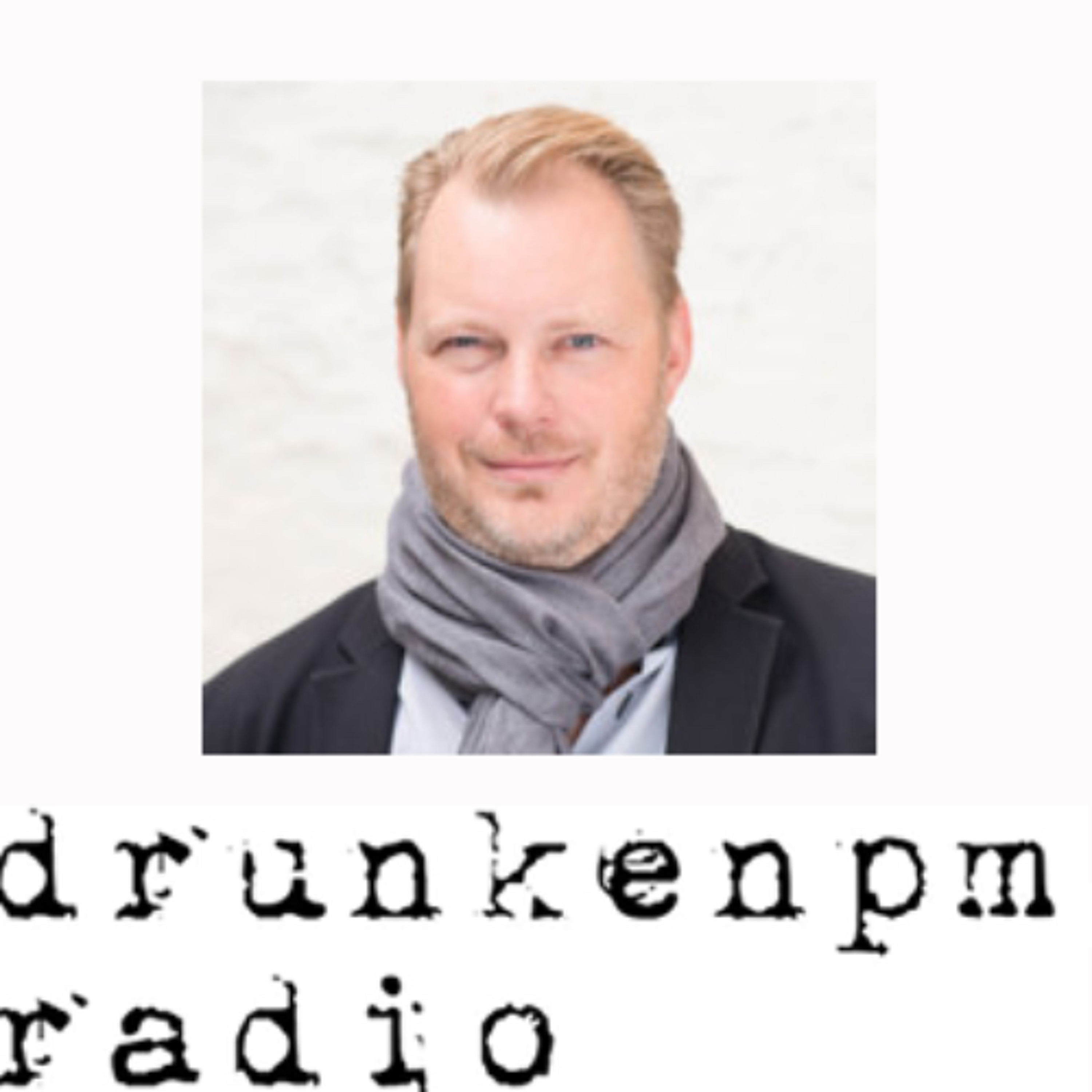
I sat down with longtime friend and fellow PMI volunteer Mattias Georgson Petrén to get schooled on Half Double, the Danish hybrid framework that has been around for over ten years but I only just learned about. Mattias walks through where it came from (a frustrated group of practitioners, industrial funding, and research backing from Aarhus University), what it promises — half the time double the impact — and how it blends Agile cadence with the discipline of traditional, stage-based product management. We get into co-location, the 50% staffing rule, and why he treats Half Double as a lens layered on top of existing frameworks rather than a replacement for any of them. We close out with a conversation about where project managers fit into an AI-driven future that left me probably less worried than I've been about this in months.
Key Themes
- How Dave and Mattias met at a PMI chapter event in Malta back in 2008, and how that network led to real client work together
- Mattias's path from engineering physics PhD to "accidental" project manager
- The early days of Agile inside PMI circles, and the influence of conferences like Øredev
- What Half Double actually is: a hybrid method built on impact, flow, and leadership
- The origin story — Danish practitioners, an industrial fund, and Aarhus University research
- Why Half Double performs best on complex projects, not predictable, fully-plannable ones
- Co-location, the 50% staffing rule, and designing cadence into distributed teams
- Why Mattias treats Half Double as a set of lenses layered on top of an existing framework (PMI, PRINCE2, Scrum) rather than a replacement for one
- The "chasing tasks vs. chasing impact" trap that both traditional and Agile PMs fall into
- Where project managers fit in an AI-driven future — and why Mattias isn't worried
Chapters
00:00 The Value of Networking in Project Management
02:47 Mattias Petrén's Journey into Project Management
05:11 The Evolution of Agile in Project Management
07:47 Introduction to Half Double Methodology
10:47 Understanding the Half Double Framework
13:15 Hybrid Approaches in Project Management
16:03 Leadership and Co-location in Half Double
18:47 Embracing Chaos in Project Management
19:51 The Role of Project Owners
21:41 Understanding Project Impact and Stakeholder Management
23:44 Integrating Agile with Traditional Project Management
26:01 The Half Double Methodology Explained
29:23 The Future of Project Management in an AI-Driven World
Links from the Podcast
Half Double Institute - https://halfdoubleinstitute.org
PMI Agile 2026 https://agilealliance.org/pmi-agile-2026/
Dave and John Tanner’s session at Agile 2026 - "When AI Starts Doing Your Job: Surviving the PM Identity Crisis" https://tinyurl.com/23jc8uhs
Contact Mattias
LinkedIn - https://www.linkedin.com/in/mattiasgeorgsonpetren/
Email - [email protected]

Comments

Download from Google Play

Download from App Store
 United States