


 Claim Ownership
G.D. West
Subscribed: 0Played: 10
Subscribe

© All rights reserved
Description
Fretted instrument specialist: guitars, banjitars, bass, mandolin. Composer, sideman, teacher.
23 Episodes
Reverse
"Whitewater" is about whitewater rafting. The patterns swirl and change constantly, in a driving rhythm. Hold on tight! This one moves fast.
This depicts an imagined ritual Aztec dance, but in reality, it's about the aftermath of eating at Taco Bell. A very strange piece of guitar music.
This song originally had lyrics, but it was almost impossible to breathe enough to sing the melody. I ended up using as an instrumental and it worked fine that way. This one is very lyrical and orchestral in its scope.
The title comes from a Ray Bradbury short story. One of the things I tried to do with this song as a solo piece was to create a separate moving bass line while playing a rhythmic accompaniment. You can hear that section in the middle. It's a fun piece to play.
This actually was the very first 12-string piece I composed, way back when I was in high school. I got my first 12-string and shortly thereafter, I came up with this melody. It has been an audience favorite ever since.
This title comes from the Voyager probe's picture showing Earth as a tiny greenish-blue dot from billions of miles away. The song is a duet of electric guitar and acoustic 12-string, with highlights from bass. The "string section" in the bridge is actually several electric guitars orchestrated.
"Winter Thunder" came from a sudden and rare winter thunder event in Southeast Alaska. The cool climate doesn't lead to thunderstorms forming, generally. One night, while setting up for a gig, there was, out of the blue, one brilliant flash of lightning and a simultaneous thunderclap. It was LOUD! Suddenly hail started falling for just a minute or two and then nothing. It kind of left us all in awe for a moment.
I wrote this one while sitting out on a lawn chair in front of a cheapo hotel outside Puyallup, Washington, watching the stars roll by overhead.
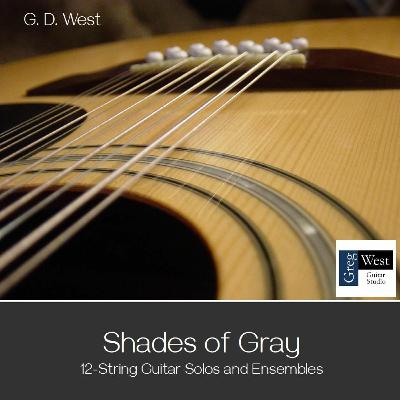
The album's title song, "Shades of Gray" has a couple of meanings. First, my music is hard to categorize. When I have to pick a genre to describe it, it's difficult. There are elements of folk, blues, jazz, and even rock in it. This song is a perfect example of a driving, constant bass beat from Delta blues to some very jazzy harmonies. The second meaning is that, as a guitarist who has played and composed music for almost 50 years, I have grown old and gray in the process! It has been a lifelong labor of love.
This is a quasi-jazzy track with a Bossa Nova kind of feel. The inspiration for it comes from the time I lived in France and the festive days of the national holiday, with fairs, fireworks, picnics in the park, and just a lot of fun times.
This is an ensemble version of a powerhouse 12-string instrumental. If you’re a fan of Leo Kottke, you will like it. It’s weird, aggressive mix of folk and acoustic rock with a touch of bluegrass. It also features 6- and 12-string banjo. I call the album “Shades of Gray” because the music crosses genres freely, just following my muse wherever it led.
"Instant Ambrosia" was composed in 1978 and it has been recorded once before on my "Orion Ascending" album in 1995. That version was solo acoustic 12-string accompanied by tabla drums. This version is true to the original concept I had for it 45 years ago. Only now do I have the means to create this definitive version.
The song is a very odd piece, using a kind of "raga" like theme that moves very quickly. It uses some very idiomatic 12-string characteristics that can't be done on a 6-string. Even after 45 years, it still is difficult to play. I love the challenge of playing it and audiences seem thrilled by it. It's usually my closing number because, after playing it, my hands are too spent to play anything else!
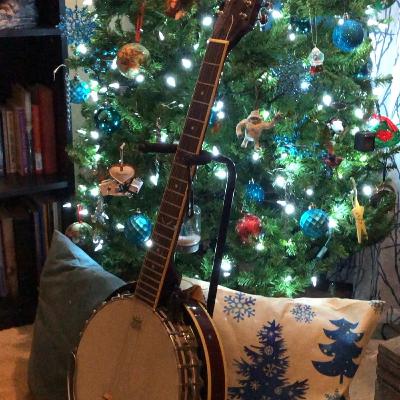
This arrangement of a holiday favorite features 12-string and 6-string guitars, 6- and 12-string banjitar, mandolin, and acoustic bass guitar.
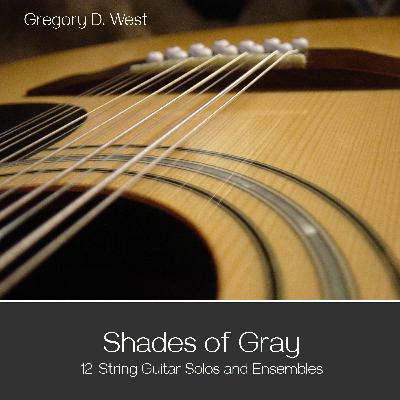
This was a song I wrote back in 1977 on my first 12-string. It has remained an audience favorite all this time.
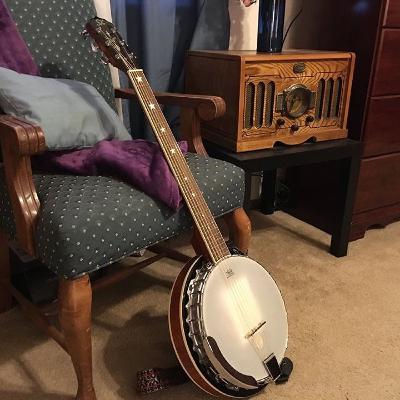
A medley of instrumental tunes for 6-string banjitar.
Two articles from the Salt Lake Tribune got me to thinking about pride and pridefulness today. Here's what came to mind.
We live hectic lives, for the most part, and sometimes we end up just having to wait for someone or something. What can we do to use that time for self-regeneration and healing?
This is the title track from my EP, "One Night." The concept of this album is capturing a single moment in time. These were longer-scale improvisations intended to test my creative abilities. The longer improvisation opens up new territory to explore and develop sonic textures that require time to construct while using the digital delays. The depth of sonic texture makes the piece more enveloping and hypnotic. For these podcasts, I have foregone the usual introductions, finding them obtrusive. Enjoy these moments, especially with your ear buds or headphones.

This is an ambient guitar composition that uses ambient sound loops. In one part of the piece, you will hear the sound of a train passing through Ellicott City, Maryland. The wheels made a peculiar metallic whining sound on the rails, which just happened to be in a 'D' tonality. In the piece, you'll hear the guitar match and then absorb the sound of the train--a pretty fun trick. Unlike most of my ambient compositions, this one does uses multiple overdubbed tracks to create the desired effect. Enjoy!
This is a recording of an ambient guitar composition. There are no synthesizers and there are no overdubs. This is an extended-length improvisation performed on one guitar in real-time. My recent work has focused on capturing moments of structured improvisations which extend the sonic palette of the guitar. The other songs, "One Day," "One Night," explore this concept, but in a shorter length. "One Hour" provides a period for intense meditation and relaxation.

Comments

Download from Google Play

Download from App Store
 United States