


 Claim Ownership
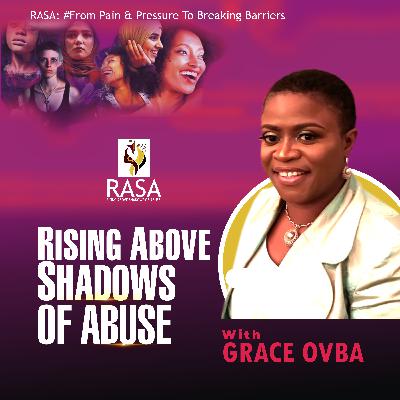
Rising Above Shadows Of Abuse
Subscribed: 8Played: 75
Subscribe

© Copyright 2026 Grace Ovba
Description
Rising Above Shadows Of Abuse Show with Grace Ovba, is about the topical issues of abuse prevalent in our society and culture. The impact on lives and possible reformation strategies. The show portrays real life stories of exceptional valiant women, who suffered pain, shame, trauma and guilt. Some of these individuals, used the tools of healing, forgiveness and compassion to serve as a positive propellant to actualising their dreams and breaking barriers in their various fields of human endeavours.
Each episode showcases case studies, stories, inspirational talks; involving interviews, conversations, solo/panel sessions with survivors, everyday people, professionals, charities, thought leaders and notable guests(Celebrities)
KEY TAKEAWAYS
"Abuse changes your life... Fight back and change the life of your abusers by breaking your silence on abuse" - Patty Rase Hopson
''So many people suffer abuse and suffer alone'' -Pamela Stephenson
''To those who abuse: The sin is yours, the crime is yours and the shame is yours. To those who protect the perpetrators: blaming the victim only masks the evil within, making you as guilty as those who abuse. Stand up for the innocent or go down with the rest.'' - Flora Jessop
#I take back my power
#Voice for the Voiceless
#Resilience
#Courage
#Mental health
ABOUT THE HOST - GRACE OVBA
Grace is a survivor of Domestic Violence, who is passionate about using her experiences to pave the way for other victims who are stuck in any form of abusive situations. She is a transformational coach, mentor, author, inspirational speaker and mother. She has a background in education, law and psychotherapy. She's on a mission to bring healing and wholeness to bruised and broken women.
Registered member of BACP (British Association For Counselling and Psychotherapy)
Registered member of Law Society UK
Connect via email: [email protected]
Social media platforms: twitter @risinaboveabuse
YouTube @risingaboveshadowsofabuse
Patreon @risingaboveshadowsofabuse.com
134 Episodes
Reverse
In this episode, Grace explores the story behind Viv Gordon’s Restless, a 12-anthem project connecting British punk, child sexual abuse survivor activism, and the power of creative expression.From her first single, Wild Open, released on 1 October 2026, to the forthcoming Restless launch gig at Lost Horizons on 27th November 2026; Viv’s work challenges silence and stigma while exploring voice, agency, survivor rage, and collective resistance.We discuss the relationship between music and activism, the importance of listening to survivors without judgement, and how art can help people find language for feelings that are difficult to express.This is a conversation about creativity, freedom, connection, and the possibility of change.Listen. Reflect. Challenge stigma. Make space for survivorsNOTABLE QUOTES:Original, interview-inspired quotations, By Grace O - written to capture the themes of Viv’s work.“Oftentimes a song says what an entire lifetime of silence could not.”On finding your voice“Reclaiming your voice is not just about speaking; it is about reclaiming the freedom to be heard.”“Silence may surround a survivor, but it does not define who they are.”“Sometimes the bravest thing you can do is find the words for what you have carried for years.”“Your voice belongs to you, even when it takes years to find it.”“There is power in saying what shame once told you to hide.”On anger, punk and resistance“Anger can be the beginning of a conversation that silence has prevented for too long.”“Punk is not simply a sound. It is the courage to question the rules that protect oppression.”“Resistance does not have to be quiet to be meaningful, and it does not have to be loud to be powerful.”“Sometimes a song says what an entire lifetime of silence could not.”“You do not have to make your pain comfortable for other people.”On survival and identity“Survival is part of a person’s story, but it is never the entirety of their identity.”“Healing does not require a public performance, and privacy does not diminish courage.”“You are more than what happened to you, and you deserve the freedom to decide what comes next.”“Taking back your space begins with recognising that you have a right to be there.”“Your story does not have to be shared to be valid.”On music, creativity and community“Music can give language to feelings we have struggled to explain.”“When one voice becomes many, isolation can begin to give way to connection.”“Art can turn private feelings into a conversation that society can no longer ignore.”“Collective resistance begins when people recognise that they do not have to face injustice alone.”“Hope is not pretending that harm never happened; it is making room for possibilities beyond it.”On Restless and the power of the sea:“Like the restless sea, a voice can return again and again until it is heard.”“You cannot measure a person’s strength by how loudly they speak or how much they reveal.”“Freedom means having the choice to speak, sing, create, remain private, and take up space on your own terms.”“A survivor community should make room for every voice, every boundary, and every way of healing.”“The goal is not simply to break the silence; it is to build a world in which survivors are heard, respected, and supported.”JOURNAL PROMPTSKindly reflect, it is not an obligation to revisit traumatic memories. Feel free to omit any prompt that does not feel right for you.Theme One: Finding Your VoiceWhat does having a voice mean to me, besides the ability to speak?Are there ordeals I have struggled to express? What might help me communicate them safely?What would it mean to feel heard without being judged, questioned, or dismissed?How can I express myself through creativity, writing, music, movement, or another activity?What is one thing I wish people understood about the significance of listening?Theme Two: Anger, Grief and Emotional ExpressionWhat emotions or feelings have I found difficult to express, and what would a safe outlet for them look like?What does anger mean to me? Can it help me recognise a boundary that matters?How do I respond to grief, sadness, frustration, or heartbreak when words are difficult to find?What song, poem, artwork, or piece of writing has helped me feel understood and heard?If I could turn one difficult emotion into a creative expression, what form might it take?Theme Three: Identity, Agency and Personal FreedomWhat parts of my identity do I want to recover, strengthen, or explore?What does having agency over my own life mean especially to me?What boundaries help me feel respected, seen and safe?In what ways can I give myself permission to take up space without feeling that I must apologise?What does freedom look like in my everyday life, past how other people define it?Theme Four: Connection and Collective ResistanceWhen have I felt understood or encouraged by another person or a community?What makes a community feel secure, inclusive, and respectful?How can I assist someone who shares a difficult experience without pressuring them to disclose more?What social attitudes or barriers would I like to see change- reforms?What would collective resistance look like in my own community?Theme Five: Hope and Moving ForwardWhat gives me a perception of possibility when life feels difficult?What does hope mean to me, and how has my understanding of it changed?What small steps could help me feel more connected to my creativity or community?What would I like my future self to remember about my strength, choices, and individuality?If I could write a message of encouragement to someone who feels alone, what would I say to them?A gentle reminder: Survivors do not have to turn their experiences into art, share their stories publicly, forgive anyone, or show resilience to deserve support. Reflections can be private, and choosing not to revisit a painful subject is also a valid preference.THREE KEY TAKEAWAYSKey Takeaway 1: Reclaiming Your Voice Is an Act of AgencyViv’s journey, demonstrates how creative expression can provide a way to convey experiences that once felt impossible to articulate.Through Restless, speaking, shouting, singing, and performing become ways of claiming creative freedom and the right to occupy public space.The wider message is that every survivor deserves to be heard and respected, whether they express themselves publicly, privately, through art, or not through words at all.Key Takeaway 2: Anger and Art Can Challenge Silence and StigmaBy bringing together punk music and survivor activism, Restless challenges the expectation that survivors should remain quiet or make their experiences comfortable for others.The album recognises anger as a possible response to injustice and uses music to explore how difficult emotions can be expressed creatively.Its message is not that every survivor must become an activist, but that survivors deserve the freedom to define their own experiences and choose how they respond or express themselves.Key Takeaway 3: Collective Resistance Can Create Connection and PossibilityViv’s project places individual experiences within a broader history of activism, creative resistance, and community-building.The album invites listeners to recognise the importance of solidarity, meaningful social change, and spaces where survivors can feel connected rather than isolated.The ultimate objective is to leave people feeling hopeful, defiant, and aware that they are part of a wider community or a social development.Embargoed listening link for media only on Samply: https://samply.app/p/STiCnptSUFU6YO9C1v3H?token=sb90IPXtHA6FaER62h8A&si=Ak8BtFk0hweCZCbyJCuXvgoG59B2Contact Viv Gordon:www.vivgordoncompany.co.ukvivgordoncompany.co.ukThe Missing Millions report (May 2026) vivgordoncompany.co.uk/the-missing-millions/Donation Link For RASA: ko-fi.com/grace_rasaMBACP- Certified. (British Association For Counselling & Psychotherapy)Contacts For RASA:...
Grace sits with Emmanuel Guarino, who spent roughly 15 years hiding a pornography struggle while building what looked like a successful life on the outside. He became a millionaire by 28, gave a TEDx talk, spoke over 100 times. But none of that touched what was actually broken. Early in his marriage to Bekah, pornography-related sexual dysfunction forced the truth into the open; and he finally had to stop pretending marriage would fix what secrecy had shaped.He is the Director of "Team Vulnerable," where he now works with Christian married couples who are stuck in that same cycle of secrecy, broken trust, and disconnection. He's worked with over 850 people across more than 25 countries.Notable Quotes“Courage, dear heart.” - C.S. Lewis“The truth is, of course, that what one regards as interruptions are precisely one’s life.” - C.S. Lewis:“Shame needs three things to grow out of control: secrecy, silence, and Judgement.” - Brené Brown“The Christ in my own heart is weaker than the Christ in the word of my brother.” - Dietrich Bonhoeffer“Transformation is not a matter of trying harder, but of training wisely.” - John Ortberg“The spiritual life is not a life of extraordinary moments, but a life of ordinary moments lived with extraordinary attention.” - Henri Nouwen“Our hearts are restless until they rest in you.”-Augustine of Hippo“Forgiveness is an act of the will, and the will can function regardless of the temperature of the heart.” - Corrie ten BoomKey takeaways1. Success can hide sufferingA person can have money, influence, career achievements, public recognition, and a seemingly successful marriage while privately struggling.2. Secrecy and shame can reinforce each otherThe more someone hides, the more shame can develop; the more shame develops, the more difficult honesty can become.3. Marriage isn’t a treatment for pornographyA spouse cannot be expected to “fix” an addiction simply by providing love, sex, affection, or marriage.4. The wife shouldn’t become the porn policeAccountability should involve responsibility, transparency and appropriate support—not turning the betrayed spouse into a detective responsible for catching every failure.5. Accountability belongs to the person recoveringThe husband must ultimately own his recovery. His wife can support him, but she cannot do the recovery for him.6. Stopping pornography and rebuilding trust are different processesA person may stop the behaviour while the spouse is still experiencing hurt, fear, uncertainty, or betrayal.7. Trust is rebuilt through consistent behaviourPromises matter, but sustained honesty, transparency, responsibility and consistency are what allow trust to gradually return.8. Forgiveness doesn’t mean pretending nothing happenedChristian forgiveness and reconciliation aren’t necessarily the same thing. Forgiveness does not require someone to ignore boundaries or immediately trust again.9. Shame shouldn’t become an excuse for secrecyFeeling shame can explain why someone hides, but it doesn’t remove responsibility for addressing the behaviour.10. Couples need to fight the problem—not each otherThe goal isn’t for one spouse to become the enemy and the other the accused. Healthy recovery requires responsibility, compassion, boundaries and honesty.Journal PromptsWhat am I currently hiding that I am afraidsomeone might discover?Where in my life am I presenting an image that doesn’t match what is happening internally?What emotions tend to appear before I engage in unhealthy or secretive behaviour?What role has shame played in keeping me silent?What would honesty look like in my situation?Am I confusing privacy with secrecy?What does accountability mean to me?Where have I expected another person to fix something that I need to take responsibility for?If I am the betrayed spouse, what do I need in order to feel emotionally and relationally safe?If I am the spouse struggling with pornography, what responsibility belongs to me—and what responsibility does not belong to my spouse?Have I confused stopping a behaviour with actually repairing the damage caused by that behaviour?What trust has been damaged, and what specific actions would begin rebuilding it?What would genuine repentance look like beyond saying, “I’m sorry”?What boundaries might help create safety without turning one spouse into the other person’s police officer?What would I want my spouse to understand about my pain that I haven’t been able to express?What am I afraid will happen if I tell the truth?What would change if I stopped measuring healing by appearances?Where do I need professional, pastoral, or relational support?What would healthy forgiveness mean to me without pretending the hurt never happened?What is one honest conversation I need to have next?Contact Emmanuel Guarino:Executive Director - Team Vulnerable(480) [email protected] Links: ko-fi.com/grace_rasaBook a therapy and, or coaching session via my website: https://www.freedom4betterlife.com/MBACP- Certified. (British Association For Counselling & Psychotherapy)Contacts For RASA: +447984098577Email: [email protected] contribute, use #participation to be a guest, # feedback or comment on the subject title.To share your story on the podcast, kindly send an email to: [email protected] - using #STORY for subject title.Kindly subscribe and leave reviews on Spotify, Apple Podcast:https://podcasts.apple.com/gb/podcast/rising-above-shadows-of-abuse/id1592540880Follow RASA Podcast on social media.Facebook: https://www.facebook.com/Realrasa1/Instagram: https://www.instagram.com/rasareal1/Twitter: https://twitter.com/risinaboveabuseTikTok: https://tiktok.com/risingaboveshadowsofabuseYouTube: www.youtube.com/channel/UColB9fTRkBSuon4lfsFaSJwLinkedin: https://www.linkedin.com/in/risingaboveshadowsofabuse/Patreon: https://patreon.com/risingaboveshadowsofabuse
Grace converses with Nat Hagee, a survivor of child abuse...The author of Surviving Hagee, a memoir about childhood abuse, family secrecy, trauma, identity, and the long process of reclaiming her own story.Quotes:“Survival may have been how I got here, but it does not have to be where my story ends.”“Breaking the silence is not about destroying a family. Sometimes it is about finally telling the truth about what happened inside it.”“What happened to me is part of my story, but it is not the whole of my identity.”“Reclaiming your story means deciding that someone else’s secrecy will no longer define your voice.”“A child should never have to carry the responsibility for protecting an adult’s secret.”“Healing is learning that you can build a life that is bigger than the things you survived.”“There is a difference between remembering what happened and continuing to live inside what happened.”“Trust is not something you owe automatically. Sometimes it has to be rebuilt one safe experience at a time.”“Your younger self deserved to be protected, believed, heard, and loved.”“The end of survival is not forgetting the past. It is discovering that the past does not have to control every chapter that comes next.”Journal prompt :What parts of my childhood story have I kept silent about, and why?What did I learn about myself during the years when I was simply trying to survive?What did I need as a child that I did not receive?Which family expectations influenced the way I understood myself?What does silence mean in my family?What truths have I been afraid to acknowledge?Which parts of my identity belong to me, rather than to my trauma?What does safety mean to me today?What does trust mean to me now?What boundaries help me feel safe and respected?What would I say to the younger version of myself who did not have the words to explain what was happening?What am I allowed to feel without explaining or defending those feelings?What does reclaiming my voice mean to me?Which parts of my story am I ready to own?What parts of my story am I not ready to share, and how can I honor that boundary?What have I learned about survival that I no longer need in my current life?What would “living beyond survival” look like for me?What does healing mean to me personally, rather than according to someone else’s definition?What kind of relationships do I want to build now?If my life were no longer defined by what happened to me, what would I want it to be defined by?Key takeaways:Silence can protect a secret, but it can also leave survivors carrying the burden alone.Childhood abuse can affect identity, relationships, trust, boundaries, and one’s understanding of safety long after childhood ends.Survival is not the same thing as living. Reaching a place where life contains choice, connection, purpose, and self-expression can be an important part of rebuilding.Family secrecy can make survivors question their own experiences and perceptions.Reclaiming a story does not require sharing every detail. A survivor has the right to decide what belongs in their story and what remains private.Healing is not necessarily a straight line. Different people experience recovery and rebuilding differently.Trust can be rebuilt gradually through consistent boundaries, honesty, safety, and relationships that respect those boundaries.A person’s identity can extend far beyond what happened to them.Breaking generational silence can create space for conversations that previous generations were unable or unwilling to have.Writing a memoir can become a way of organising experiences, giving language to previously unspoken experiences, and taking ownership of one’s narrative.Contact Nat Hagee:Author, Surviving HageeBook: https://www.amazon.com/dp/[email protected]: @surviving_hageenatTikTok: @.survivinghageeDonation Link: ko-fi.com/grace_rasaBook a therapy and, or coaching session via my website: https://www.freedom4betterlife.com/MBACP- Certified. (British Association For Counselling & Psychotherapy)Contacts For RASA: +447984098577Email: [email protected] contribute, use #participation to be a guest, # feedback or comment on the subject title.To share your story on the podcast, kindly send an email to: [email protected] - using #STORY for subject title.Kindly subscribe and leave reviews on Spotify, Apple Podcast:https://podcasts.apple.com/gb/podcast/rising-above-shadows-of-abuse/id1592540880Follow RASA Podcast on social media.Facebook: https://www.facebook.com/Realrasa1/Instagram: https://www.instagram.com/rasareal1/Twitter: https://twitter.com/risinaboveabuseTikTok: https://tiktok.com/risingaboveshadowsofabuseYouTube: www.youtube.com/channel/UColB9fTRkBSuon4lfsFaSJwLinkedin: https://www.linkedin.com/in/risingaboveshadowsofabuse/Patreon: https://patreon.com/risingaboveshadowsofabuseEmail: [email protected]
Grace converses with Corey Wright, who was incarcerated for 10 years. He thought about the consequences of what happened but that did not deter him. He refused to carry his past and continue living in it, but rather became a positive example by holding himself accountable, changing his identity and utilising his experience; to rebuild across music, film, authorship, entrepreneurship and community work. Quotes:“You may encounter many defeats, but you must not be defeated.”- Maya Angelou“The greatest glory in living lies not in never falling, but in rising every time we fall.” - Nelson Mandela“When we are no longer able to change a situation, we are challenged to change ourselves.” - Viktor E. Frankl“Not everything that is faced can be changed; but nothing can be changed until it is faced.” - James Baldwin“Without community, there is certainly no liberation.” -Audre Lorde“The time is always right to do what is right.” - Martin Luther King Jr.Original Quotable Lines for the Episode:“Accountability means facing what happened without surrendering the rest of your life to it.”“Your past can explain you without having to define you.”“Rebuilding isn’t pretending nothing happened. It’s deciding what happens next.”“You can carry your history without continuing to live inside it.”“Survival gets you through the storm. Purpose teaches you what to build afterwards.”“The consequence was part of my story. It didn’t have to become the conclusion.”Episode Takeaways:By the end of the conversation, listeners should walk away understanding:1. Accountability and identity are different things.A person can acknowledge serious wrongdoing without believing they are permanently incapable of change.2. Rebuilding takes time.Returning to society doesn’t automatically mean everything returns to normal.3. Shame and accountability aren’t the same.Accountability can lead toward responsibility and change; destructive shame can keep someone trapped in their past.4. Trust has to be rebuilt through action.Words alone don’t necessarily repair relationships or community trust.5. Your past can become part of your purpose.Lived experience can inform writing, music, film, entrepreneurship, mentorship, and community work without romanticising the hardship itself.6. Perseverance is more than endurance.It can mean continuing to learn, create, contribute, and take responsibility after circumstances have changed.7. Rebuilding doesn’t require erasing history.The goal isn’t necessarily to forget what happened. It’s to prevent the past from controlling everything that happens next.Question: "If the person you were ten years ago could sit across from the person you are today, what would you tell them?"Journal Prompts:What part of my past am I willing to acknowledge without allowing it to define me?What does accountability mean in my life?What have I survived that taught me something valuable?Where have I confused shame with responsibility?What would rebuilding look like if I stopped waiting for everyone’s approval?Who am I becoming beyond the labels people have placed on me?What relationships need patience, honesty, or rebuilding?What lesson from my hardest experience could potentially help someone else?What am I carrying that I no longer need to carry alone?Am I using my past as a foundation—or allowing it to become a prison?What does perseverance look like in my life this week?If I stopped defining myself by my worst decision, what would I begin building?Contact Corey Wright:Email: [email protected] Link For RASA: ko-fi.com/grace_rasaBook a therapy and, or coaching session via my website: https://www.freedom4betterlife.com/MBACP- Certified. (British Association For Counselling & Psychotherapy)Contacts For RASA: +447984098577Email: [email protected] contribute, use #participation to be a guest, # feedback or comment on the subject title.To share your story on the podcast, kindly send an email to: [email protected] - using #STORY for subject title.Kindly subscribe and leave reviews on Spotify, Apple Podcast:https://podcasts.apple.com/gb/podcast/rising-above-shadows-of-abuse/id1592540880Follow RASA Podcast on social media.Facebook: https://www.facebook.com/Realrasa1/Instagram: https://www.instagram.com/rasareal1/Twitter: https://twitter.com/risinaboveabuseTikTok: https://tiktok.com/risingaboveshadowsofabuseYouTube: www.youtube.com/channel/UColB9fTRkBSuon4lfsFaSJwLinkedin: https://www.linkedin.com/in/risingaboveshadowsofabuse/Patreon: https://patreon.com/risingaboveshadowsofabuseEmail: [email protected]
In today's episode, Grace converses with Colin Owensby an ultra-marathon athlete, a two times Ironman, Former model, actor and the founder of "The Purpose Through Endurance Campaign. His story centres on confronting, understanding and rebuilding after deep trauma.Quotes:1. “You are not defined by your setbacks—your response to them defines you." — Unknown2. “Strength isn’t just what you can lift, it’s what you can overcome.” — Rikki Rogers3. “The obstacle in the path becomes the path.” — Zen Proverb4. “Success is not final, failure is not fatal: it is the courage to continue that counts.” — Winston ChurchillJournal Prompts: — “Never Meant to Walk, Built to Run”1. Resilience & Adversity* What is one difficult experience in my life that changed the way I see myself?* When life has told me “you can’t,” how have I responded?* What setback have I survived that I rarely give myself credit for?* What does resilience mean to me personally?* If I could speak to my past self during my hardest season, what would I say?2. Identity & Reinvention* Who am I beyond my job, achievements, relationships, or titles?* What part of my identity have I outgrown?* Is there a version of myself I am ready to leave behind?* What new version of myself am I currently becoming?* If I had permission to reinvent my life completely, what would I change?3. Mindset* What thoughts consistently move me forward?* What beliefs are currently holding me back?* How do I respond when things don’t go according to plan?* What does “thinking outside the box” look like in my own life?* Where could I take a more courageous or unconventional approach?4. Fitness, Health & Discipline* What does being genuinely healthy mean to me beyond physical appearance?* How does movement affect my mood, confidence, and mindset?* Where in my life could I benefit from greater discipline?* What small healthy habit could I commit to consistently?* Am I focused more on quick results or sustainable progress?5. Community & Relationships* Who are the people who genuinely support my growth?* What kind of community do I want to build around myself?* Am I willing to ask for help when I need it?* What can I contribute to the people around me?* How could stronger relationships help me achieve my goals?6. Purpose & Legacy* What is my deeper reason for wanting to succeed?* Who do I want to help through my experiences?* What knowledge or lessons could I pass on to others?* What would I want people to remember about me?* If I knew I couldn’t fail, what would I dedicate my life to?7. Living Fully* What experiences make me feel most alive?* When was the last time I stepped outside my comfort zone?* Am I allowing myself to experience the full range of my emotions?* What does “living my best life” actually mean to me?* What is one experience I’ve been postponing that I want to make happen?8. Action — The Final ReflectionFinish these sentences:I am stronger than I think because…The obstacle I am currently facing is…The lesson this season is teaching me is…One thing I refuse to give up on is…The person I am becoming is…My next courageous step is…I will start today by…Episode Reflection Question:“If your current circumstances could not define your future, what future would you choose to build?”Key Takeaways• Resilience is built through adversity, not comfort• Identity is fluid—you can reinvent yourself at any stage• Fitness is not just physical—it’s emotional and mental healing• Community is a cornerstone of long-term success• Adaptability is a superpower in uncertain times• Mindset determines how you experience life, not just outcomesContact Colin OwensbyInstagram: https://www.instagram.com/thecolinowensby/Donation link for RASA: ko-fi.com/grace_rasaBook a therapy and, or coaching session via my website: https://www.freedom4betterlife.com/MBACP- Certified. (British Association For Counselling & Psychotherapy)Contacts For RASA: +447984098577Email: [email protected] contribute, use #participation to be a guest, # feedback or comment on the subject title.To share your story on the podcast, kindly send an email to: [email protected] - using #STORY for subject title.Kindly subscribe and leave reviews on Spotify, Apple Podcast:https://podcasts.apple.com/gb/podcast/rising-above-shadows-of-abuse/id1592540880Follow RASA Podcast on social media.Facebook: https://www.facebook.com/Realrasa1/Instagram: https://www.instagram.com/rasareal1/Twitter: https://twitter.com/risinaboveabuseTikTok: https://tiktok.com/risingaboveshadowsofabuseYouTube: www.youtube.com/channel/UColB9fTRkBSuon4lfsFaSJwLinkedin: https://www.linkedin.com/in/risingaboveshadowsofabuse/Patreon: https://patreon.com/risingaboveshadowsofabuse

Comments

Download from Google Play

Download from App Store
 United States