


 Claim Ownership
High Voltage Business Builders Podcast
Subscribed: 19Played: 1,728
Subscribe

© Neil Twa
Description
Daily Amazon seller and FBA news: what changed, what it costs you, and what to do.
Amazon seller news and FBA strategy, every day. The show gives Amazon FBA sellers and e-commerce brand owners the news that hits their margins, what it costs them and what to do about it, plus guest episodes with founders who built and sold e-commerce brands. Hosted by Neil Twa, founder of Voltage, who has built and sold e-commerce brands and runs 25 of them today. New episodes daily.
Amazon seller news and FBA strategy, every day. The show gives Amazon FBA sellers and e-commerce brand owners the news that hits their margins, what it costs them and what to do about it, plus guest episodes with founders who built and sold e-commerce brands. Hosted by Neil Twa, founder of Voltage, who has built and sold e-commerce brands and runs 25 of them today. New episodes daily.
450 Episodes
Reverse

Amazon now sells you reviews. Review Requests launched as an ad type in late October 2026. You pay when a shopper clicks to submit a rating. It is a paid way to get trust. Most sellers have not seen this yet, but it changes how you price your listing. I had Amazon Ads What's New up this morning, and here is what jumped out at me. They are not just changing the rules. They are charging for the social proof that used to be free. Say you have a new kitchen gadget. It launched recently. It is stuck. Conversion is low because the star count feels small compared to competitors. Under the old model, you wait. You hope buyers remember to leave a review. Now, you can buy that click. But does it work? We test these tools before we tell you about them. We look at the margin. We look at the math. We do not just chase the new shiny object. This episode covers the cost of buying trust on Amazon. You will learn how to list every SKU with fewer than 1,000 ratings and reviews. You will see a clean list of eligible products in your account. You will stop guessing and start pricing your trust. This is for sellers at every level, from beginners to operators. If you are stuck on conversion, this is your move. Listen to The High Voltage Business Builders Podcast to get the exact steps. Do something imperfectly and something perfect will happen along the way. Until tomorrow, stay high voltage.
Want today's Voltage 3 written out? The Daily Amazon Seller puts the three tips in your email, plus a free Alexa Gap Audit, at voltagedm.com/amazonsellernewsletter: https://voltagedm.com/amazonsellernewsletter?utm_source=rss&utm_medium=show_notes&utm_campaign=ep453

Walmart's US marketplace sales surged by fifty-two percent last quarter, but that growth doesn't guarantee your success. With over 200,000 sellers competing for attention this Black Friday, the real challenge is protecting your margins during the holiday rush. Anything sold between October first and December thirty-first can be returned through January, which can eat into your profits. I’ll share three actionable steps to safeguard your margins this holiday season. First, check your fulfillment lag time settings in Seller Center to ensure they align with your sales strategy. Second, analyze your pricing strategy to avoid margin erosion during discounts. Finally, monitor your inventory closely to prevent stockouts on your best-selling items. By implementing these strategies, you can maintain profitability and navigate the post-holiday return wave effectively. Don't wait until January to address these issues. Start taking action now to secure your margins. For more insights, check out The High Voltage Business Builders Podcast.
Want today's Voltage 3 written out? The Daily Amazon Seller puts the three tips in your email, plus a free Alexa Gap Audit, at voltagedm.com/amazonsellernewsletter: https://voltagedm.com/amazonsellernewsletter?utm_source=rss&utm_medium=show_notes&utm_campaign=ep452

Amazon is building a map of every product on Earth, targeting October 2027. If your data is not in that graph, your brand becomes invisible to AI-driven discovery. Most sellers still optimize for human clicks, scanning titles like 'Best Stainless Steel Water Bottle Insulated Leak Proof Travel Mug.' That approach fails when a machine reads structured data instead of keywords. This shift changes how buyers find products, and it starts now.
I break down the World Product Graph and why it matters for your visibility. You hear the specific difference between keyword stuffing and structured backend search terms. I show you how to audit your SKUs so they are ready for AI-driven discovery. This is not a future theory. It is a current operational gap that costs you sales today.
Listen to get three concrete wins for your account. First, you learn to audit backend search terms for clear, separated data. Second, you see how to structure your product information for machine readability. Third, you get a simple check to ensure each SKU has the right data points. These steps work for sellers at every level, from new brands to established catalogs.
The Daily Amazon Seller puts these three tips in your email, plus a free Alexa Gap Audit. Go to voltagedm.com/amazonsellernewsletter. We run more than twenty-five brands of our own, and we use these exact checks daily. Do something imperfectly and something perfect will happen along the way. Until tomorrow, stay high voltage.
Want today's Voltage 3 written out? The Daily Amazon Seller puts the three tips in your email, plus a free Alexa Gap Audit, at voltagedm.com/amazonsellernewsletter: https://voltagedm.com/amazonsellernewsletter?utm_source=rss&utm_medium=show_notes&utm_campaign=ep451
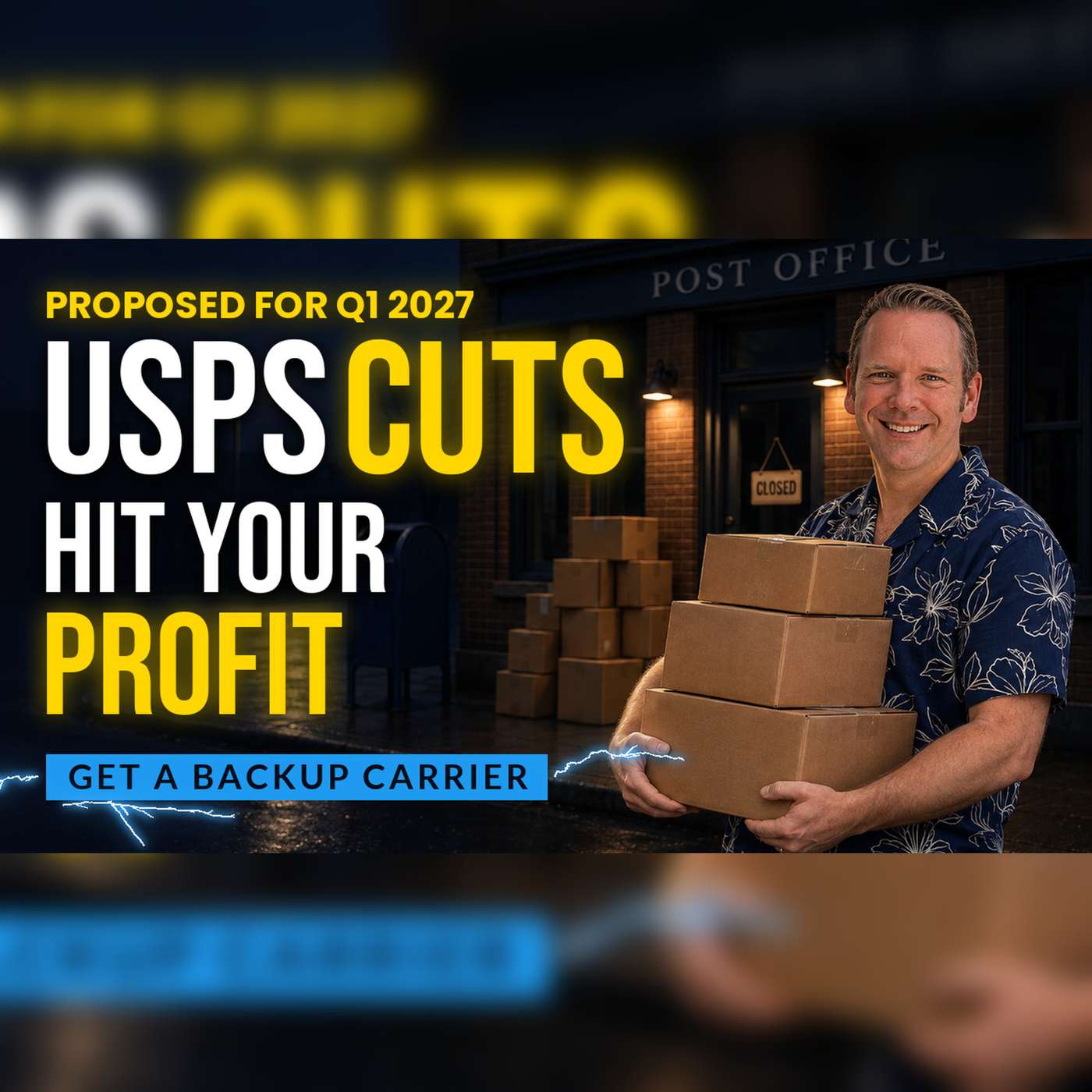
USPS reported a net loss of six point five billion dollars in fiscal year 2026. That is an improvement over the nine billion dollar loss in 2025, but the service cuts are already hitting FBA sellers who rely on physical mail or FBM. If you run a brand that uses printed catalogs, direct mail, or standard shipping, your margins are on the line. You have to plan for the cut before it eats your cash flow.
This episode on The High Voltage Business Builders Podcast breaks down what USPS service reductions mean for your operation. I walk through an example: a small apparel brand coordinating spring collection mail with digital ads. When the post office slows down, your customer experience slows down, and late deliveries put your seller metrics and repeat buyers at risk.
Here is what you get from listening. First, you learn how to map every SKU that touches USPS shipping so you know exactly where the risk sits. Second, you get a clear framework for identifying a backup carrier before you are forced to scramble. Third, you see how to protect cash flow when delivery times stretch out and customer expectations drop.
The Voltage 3 is your challenge for today. Number one: List every SKU that ships via USPS. Check: You have a list of all SKUs that use USPS shipping. Number two: Identify your backup carrier. Check: You have a contract or agreement with a private carrier like FedEx or UPS. Number three: Update your delivery window estimates. Check: Your Seller Central delivery window reflects the new, slower USPS timeline.
Do all three before tomorrow’s episode. Want the full list and a free Alexa Gap Audit? Go to voltagedm.com/amazonsellernewsletter. We run more than twenty-five brands of our own, and we protect our margins the same way you should. Do something imperfectly and something perfect will happen along the way. Until tomorrow, stay high voltage.
Want today's Voltage 3 written out? The Daily Amazon Seller puts the three tips in your email, plus a free Alexa Gap Audit, at voltagedm.com/amazonsellernewsletter: https://voltagedm.com/amazonsellernewsletter?utm_source=rss&utm_medium=show_notes&utm_campaign=ep450
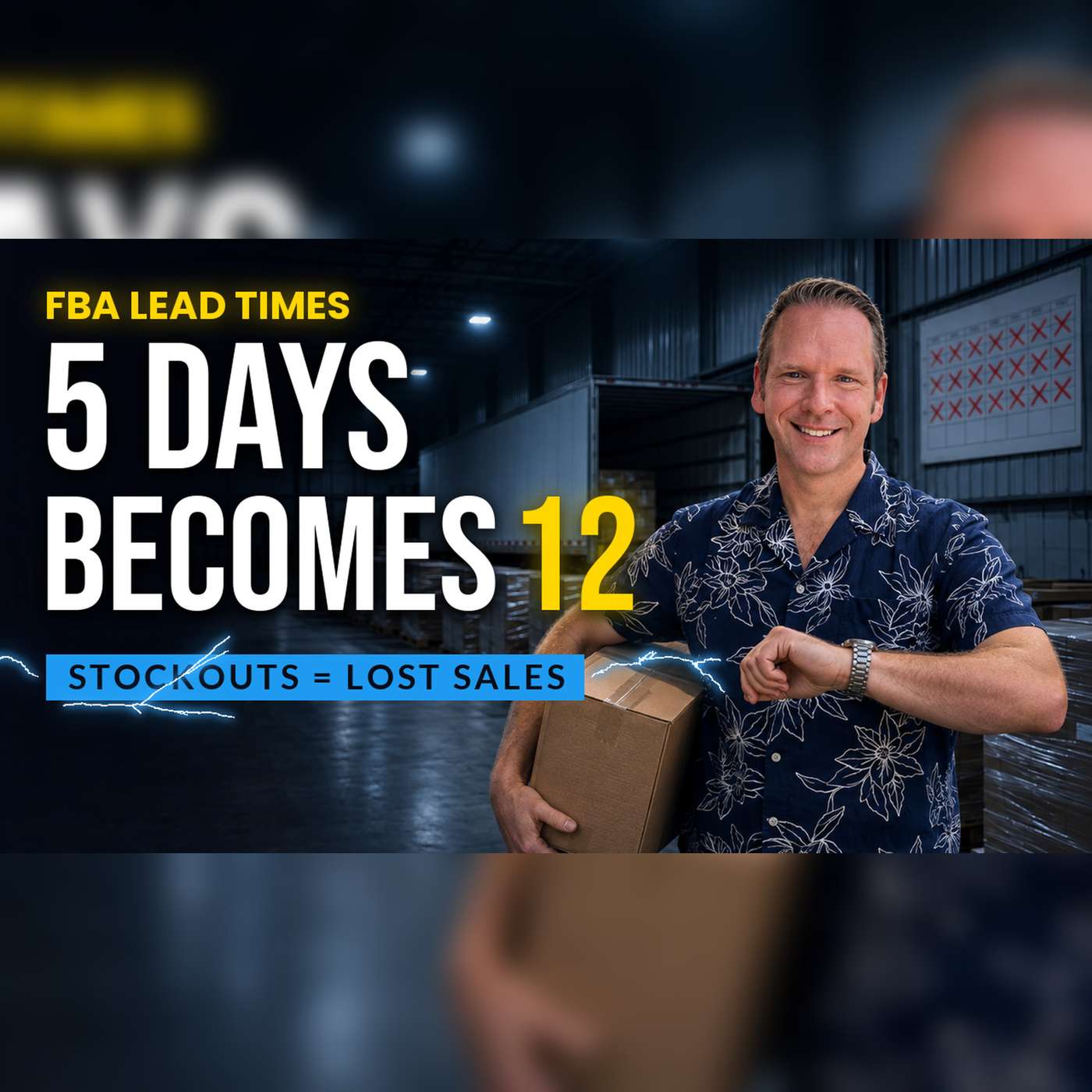
Amazon is rolling out estimated lead times for US FBA shipments. It started in November and reaches accounts over the coming weeks. Amazon's own example: a shipment that takes 5 days in January may take 12 days during the holiday season. That is 7 extra days, more than double.
Ship too late and you are out of stock. Ship too early and you are paying storage. Amazon calls these estimates typical timelines, not guarantees, so you still have to check your own numbers.
In this episode:
- Where the estimate shows up: the Manage Shipments page, when you create an eligible shipment. It covers direct shipments, AWD replenishment and GWD replenishment.
- What it measures: when most of your units should be received and become Prime eligible, not every carton. Amazon does not say what counts as most.
- A hypothetical home goods brand that plans on 5 days and gets 12.
The Voltage 3:
1. Open your Manage Shipments page and check the estimated lead time for your next planned shipment.
2. Compare that estimate to your actual recent arrival times.
3. Adjust your safety stock by the number of extra days you found.
Want today's Voltage 3 written out? The Daily Amazon Seller puts the three tips in your email, plus a free Alexa Gap Audit, at voltagedm.com/amazonsellernewsletter: https://voltagedm.com/amazonsellernewsletter?utm_source=rss&utm_medium=show_notes&utm_campaign=ep449

Comments

Download from Google Play

Download from App Store
 United States