


 Claim Ownership
Keystone Church | Paradise Sermons
Subscribed: 2Played: 68
Subscribe

℗ & © 2024 Keystone Church | Paradise
Description
These are sermons delivered during the Sunday morning worship services of Keystone Church, an Evangelical Free Church in Paradise, PA, USA. Please visit www.keystonechurch.org for more information.
507 Episodes
Reverse
Kyle Kauffman | Mar 8 2026 One of the most universal problems that people face in every culture and in every age is the problem of self. We may be prone to have to high a view of ourselves or too low a view of ourselves, but either way we are prone to think and focus on ourselves way too much. This was a problem in Corinth, and it remains a problem in our own day. So often we try to solve the problem of self by focusing more on ourselves with self-esteem, self-help, and self-care. This never cuts to the root of the issue and deals with the pride that is the source of all the problems with self. While we long to be free of the problem of self, none of our human solutions end up working. Only the gospel is able to liberate us from ourselves so that we can live a life of self-forgetfulness. This is what then frees us to joyfully live to glorify God and love others rather than being so focused on ourselves. This is what Paul found in Christ and this is what he invites us to find as well.
Kyle Kauffman | Mar 1 2026 Many of the best gifts we receive in this life also come with responsibilities and challenges. Whether it is friendship, a job, marriage, children, owning a home, or any other gift, we can see how the gifts we are given also bring responsibilities and challenges in our lives. The same is true of ministry in the church. While Paul is mainly referring to himself and Apollos in 1 Corinthians 3:1-17, what he says here applies to every Christian. We are all called to minister to one another in the church. We have been given specific gifts, abilities, and interests that God wants us to use to love and serve one another. This ministry is both a gift and challenge for many reasons. And 1 Corinthians 3 is a great source of encouragement to us as we seek to do the work of ministry God has called us to.
Kyle Kauffman | Feb 2026We live in a day of almost limitless information and knowledge. We can access it all at the hands of our fingertips. And the ability to know and find more information will likely only increase as our technology continues to increase. But is all this information and knowledge making us wise? Or is it making us fools? God tells us in 1 Corinthians 2 that true wisdom is not the same as simply knowing more or being culturally or technologically savvy. Rather true wisdom is found trusting God even when trusting him seems to go against the wisdom of our day. This trust should lead us to seek wisdom in what God has revealed rather than simply in more knowledge and information. And this wisdom is displayed in pursuing a life of living more like Christ. It’s this posture, source, and pursuit that define what true wisdom looks like in an age of limitless information and knowledge.
Keith Rohrer | Feb 15 2026 What if the main reason Jesus saved you was not just to provide an escape plan out of hell? Just before He was arrested and killed, He told His disciples: “I chose and appointed you to bear fruit” (John 15:16). What did He mean by “fruit?” And was He just talking to His original 12 disciples, or speaking to believers today too? To you; to me? If so, does He think we’ll produce this fruit too?
Kyle Kauffman | Feb 8 2026The church has struggled with unity from it’s very beginning. Anytime a group of people starts to gather together there is going to be the threat of division. Paul sees this as a threat not only to the harmony of the church but also to the truth and witness of the gospel. In a church that is full of different problems and issues, it’s instructive that Paul begins by dealing with the issue of division in the Corinthian church. The things that may cause us to divide at times today look different than they did for the Corinthian church, but division remains a constant threat to the church and our witness to the gospel. In 1 Corinthians 1:10-31 Paul shows us what source of our division is often rooted in, and he shows us how the message of the cross unites us together. And the more united we are around the cross of Jesus, the more effective we will be in our witness to the gospel in our world.
Kyle Kauffman | Feb 1 2026 God saves us in order to also set us apart. As Christians, we are called to live holy lives as God’s people in the midst of whatever culture or context he has placed us in. We see in Corinth that the temptation to be conformed to the culture rather than transformed by God is an ever present struggle for God’s people. But we also see that the same grace that saves us in the past, present, and future is also the grace that enables us to live holy lives. God does not save us and then leave us on our own. Rather he gives us all we need to live lives of holiness that distinct from the culture and pleasing to him. We are all people who are a work in progress in this area, but we are also people who held fast by God. As a result we can confidently work out our salvation while continuing to be daily dependent on God’s grace to us in Jesus. The more we seek to do this the more we will live as those who are set apart by God’s grace in the midst of a confusing culture.
Kyle Kauffman | Jan 25 2026 God’s Word has the power to change our lives. The more we read it, know it, believe it, and obey it, the more our lives our minds, hearts, and lives are transformed by it. The Bible is not simply a book to be studied, it is living and active and is able to save us, changes us, sustain us, and equip us for all of life. The Bible can save us as it points us to our need for Jesus and leads us to put our trust in Him. The Bible can change us as it transforms our minds and hearts, and reshapes our lives. The Bible can sustain us as it enables us to keep going in our faith and holds us fast through the suffering and trials of this life. And the Bible can equip us as God uses it to prepare and train us to live out our faith in everyday life. God’s Word is not meant to stay on the page. Rather it is meant to shape our lives as we daily immerse ourselves in it and seek to live in line with it.
Josh Stalnaker | Jan 18 2026 “Who’s in charge here?” That’s a question we might ask in all sorts of areas of life. But it’s also a question we should each ask of our lives as a whole. God’s word is meant to be the final authority in our lives—He alone has the right to say what is true, good, and right. Since the very beginning we’ve struggled with trusting God’s authority and we are prone to live in all sorts of ways that undermine His authority, But the truth is, God’s Word is final because He is God. But He is also good. And so His authoritative word is always good for us. Like a loving Father who sets boundaries to keep His children safe, God’s commands are meant to help us thrive—not to harm or hurt us. Living under God’s Word brings life and flourishing but denying it or ignoring it leads to destruction and death. And God’s Word isn’t just advice we can choose to follow or ignore—it’s an authoritative word that demands a response. We are invited to trust it fully, believe all it teaches, and obey all it requires, knowing that His Word is for our good.
Kyle Kauffman | Jan 11 2026 The Bible is completely true and trustworthy because it comes from the God who cannot lie. Every word is rooted in His character, confirmed through history, eyewitness testimony, fulfilled prophecy, and the unchanging message that points us to Jesus. God has faithfully preserved His Word through countless manuscripts and careful transmission over time, so we can be confident that what we hold today is His truth. In a world filled with confusion, shifting opinions, and overwhelming information, God’s Word is our steady anchor. It protects us from the lies of the enemy, points us to what is real and lasting, and helps us filter everything through the lens of His truth. As we stand on the truth of Scripture we are standing on the solid rock of God’s unchanging Word.
Kyle Kauffman | Jan 4 2026 God is not silent. He speaks! From the very beginning, God spoke the world into existence, and creation continues to pour forth His speech and reveal Him. The earth and the heavens preach His majesty, but as glorious as this revelation is, it is not enough to save us. We need more than the stars in the sky and the wonders of the world—we need the Bible, God’s Word. God has spoken through the Scriptures and He continues to speak to us today through His written Word, assuring us it is not just another book but the very Word of God. And ultimately, God has spoken most clearly through His Son, Jesus Christ—the Word made flesh. God is not silent. He speaks! This should lead us to cherish and meditate on His Word so that we might know and enjoy Him.

Kyle Kauffman | Dec 28 2025 When you look at Jesus, what do you see? Do you see a King who deserves to be worshipped with everything you have? Or do you see threat to your way of life and your control over things? The journey and response of the wise men who came to meet Jesus after his birth challenge us to see Jesus not only as a baby in a manger, but as the King God promised to rule over all people. Unlike Herod, who saw Jesus as a threat to his throne, the wise men responded with worship—marked by joy, devotion, and costly gifts. Their story is meant to confront our hearts: will we cling to our personal kingdoms, or bow before the one true King? The wise men also discovered that Jesus is unlike any earthly ruler. He comes gently, for the weak and lowly, and reigns with compassion like a shepherd. At Christmas, we’re invited to follow the wise men’s example to see and submit to Jesus as our King and give ourselves fully to Him in joyful worship.
Kyle Kauffman | Dec 21 2025 The shepherds experienced the shock of a lifetime on the first Christmas. They saw something glorious: the radiance of God’s glory breaking into their ordinary night, both in the shining heavens and in the face of a newborn baby. This is what we were made for — to see and behold the glory of God — yet sin has blinded us to it. Jesus came to restore our sight. But they didn’t just see; they also heard. The angel brought good news of great joy for all people: that Jesus had come to be our Savior, our Lord, and our peace. And finally, the shepherds believed and saw with their own eyes what God promised. True joy comes not only from seeing and hearing, but from trusting that God’s Word is true. As we, like the shepherds, see the glory of Christ, hear the good news of His coming, and respond in faith, we can experience the joy he came to offer.
Kyle Kauffman | Dec 14 2025At Christmas, we’re invited to slow down and marvel at the greatness of God’s love for us. In Joseph’s quiet decision to stay with Mary, even at great personal cost to his reputation and honor, we catch a glimpse of the costly love that God has shown to us in Jesus. Just as Joseph stepped into Mary’s shame to love her, so God stepped into our brokenness—our sin, sorrow, and suffering—through His Son to love and save us. Jesus didn’t love us from a distance; He drew near, fully identifying with us in every way. And that kind of love changes everything. When we truly grasp the love God has for us in Jesus it transforms how we see ourselves, how we live our lives, and how we relate to others.
Kyle Kauffman | Dec 7 2025 Mary received the surprise of a lifetime when God sent the angel to announce that she would give birth to the Messiah. We see through her eyes how God is at work in and through the coming of Jesus at Christmas to bring His peace to people. At the core of every heart is a longing for peace with the God who made us and loves us. Yet because of our sin, that peace has been broken. The good news is that God, in His grace, offers us a peace that is far greater than we could ever imagine. It comes in ways we don’t expect—not something we can earn or achieve, but a gift He gives freely. His peace meets us in our struggles, steadies us in our fears, and one day will fill the whole earth. It’s a peace that does what we could never do for ourselves—restoring us to God and making us whole through the birth of a miraculous child. But it’s a peace only found by the humble—by those who trust His Word, submit to His will, and receive what He so graciously offers.
Brandon Fisher | Nov 30 2025 In a time when everything felt dark and uncertain—when war loomed, morality was crumbling, and hope seemed lost—God offered a promise that still speaks to us today. The people of Judah, led by King Ahaz, were placing their trust in the wrong things, hoping that Assyria could save them. But through Isaiah, God pointed them to the true source of hope: a coming Messiah. Jesus would be the light to break through the darkness, the joy that lifts sorrow, and the Savior who breaks the chains of bondage. He would come not just to rescue, but to reign—restoring us to God, making all things right, and establishing a kingdom of peace that will never end. In our own times of darkness or uncertainty, this same Jesus is our unshakable hope as we trust in him and wait for his return.
Kyle Kauffman | Nov 23rd 2025 Ruth 4:13–22 brings the story to a close with a beautiful glimpse of restoration not just for Ruth and Boaz, but especially for Naomi, whose journey moves from emptiness to fullness and from bitterness to blessing. In many ways, Naomi’s story mirrors our own. Life in a broken world brings all kinds of loss—relationships, health, dreams, seasons of life—and in every loss, we’re reminded of a deeper longing: the loss of our perfect relationship with God in Eden. But the good news of Ruth’s ending is that God is a God of restoration. Though we may only taste it in part now, we live with the sure hope that He will one day fully restore all that is broken. Naomi could never have imagined how her pain would be woven into God’s plan to bring David—and eventually Jesus—into the world. And so it is with us: our small, ordinary lives are part of a far bigger story, one that’s moving toward the return of Christ and the full renewal of all things. Whatever we’ve lost in this life, God promises to restore in ways far greater than we can imagine. So we fix our eyes on that future, trusting that even when we can’t see it, God is always working redemption into the details of our story.
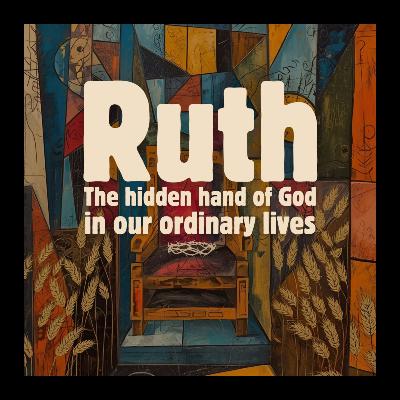
Kyle Kauffman | Nov. 16 2025Ruth 4:13–22 brings the story to a close with a beautiful glimpse of restoration not just for Ruth and Boaz, but especially for Naomi, whose journey moves from emptiness to fullness and from bitterness to blessing. In many ways, Naomi’s story mirrors our own. Life in a broken world brings all kinds of loss—relationships, health, dreams, seasons of life—and in every loss, we’re reminded of a deeper longing: the loss of our perfect relationship with God in Eden. But the good news of Ruth’s ending is that God is a God of restoration. Though we may only taste it in part now, we live with the sure hope that He will one day fully restore all that is broken. Naomi could never have imagined how her pain would be woven into God’s plan to bring David—and eventually Jesus—into the world. And so it is with us: our small, ordinary lives are part of a far bigger story, one that’s moving toward the return of Christ and the full renewal of all things. Whatever we’ve lost in this life, God promises to restore in ways far greater than we can imagine. So we fix our eyes on that future, trusting that even when we can’t see it, God is always working redemption into the details of our story.
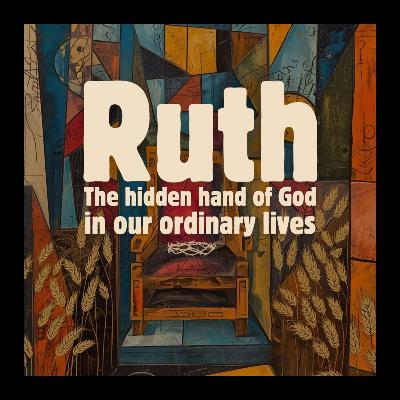
Kyle Kauffman | Nov 9 2025 Ruth 3:1–18 invites us to consider how faith and love will lead us to take risks with our lives. Ruth takes a bold and vulnerable risk in approaching Boaz, not because she had everything figured out, but because she trusted in Naomi’s wisdom and ultimately in God’s care. Faith is never about having total control—it’s about trusting God when we don’t know how things will unfold. Likewise, love always involves risk. Ruth risks shame and rejection to express her love and loyalty, while Boaz shows his love by acting with integrity, not taking matters into his own hands, but protecting Ruth’s honor. Relationships in this life will always involve risk where we open ourselves up to the possibility of loss, hurt, or heartbreak. But we are freed to take these risks because we know God is sovereign and good. Ruth’s willingness to step forward was shaped by the kindness she had already seen in Boaz—and we, too, have seen the kindness of our Redeemer at the cross. That love gives us the courage to trust God and to step out in bold obedience and love, even when the outcome is uncertain.
Kyle Kauffman | Nov 2 2025 Ruth 2:14–23 gives us a glimpse into the heart of God through the kindness of Boaz. Far from treating Ruth as a burden, Boaz delights in doing good to her as he welcomes her to his table, provides generously, and ensures her safety. In Boaz, we see a picture of how God delights in His people—not begrudgingly providing for us, but joyfully pouring out His kindness. The question is: do we truly believe that God delights in us? Or do we quietly live as though we're a burden He merely tolerates? Boaz not only provides food but invites Ruth into fellowship—a small reflection of God's greater desire: to be with us. Throughout Scripture, from Eden to the Lord’s Supper to the coming Kingdom, God’s longing is to dwell with His people so that we might see and be satisfied with His glory. This passage also reminds us that God is not stingy. Boaz’s abundance shows us the heart of a God who blesses richly so we can be a blessing to others. We are recipients of lavish grace, called to reflect that same grace in how we love and serve the people around us.
Kyle Kauffman | Oct 26 2025 Ruth 2:1–13 paints a beautiful picture of God's providence woven into the ordinary moments of life. Ruth doesn’t sit back waiting for provision—she steps out in faith, working hard to care for Naomi and herself. Her initiative reminds us that trusting God doesn’t mean becoming passive; rather, it frees us to work diligently, using our gifts and opportunities to meet needs—physical, emotional, and spiritual—while trusting God to provide through it all. As Ruth “happens” into the field of Boaz, we’re reminded that God is always directing our steps, even when we don’t see the full picture. Sometimes His hand is clear; other times, we walk by faith, trusting He’s at work even in our uncertainty. This passage invites us to rest in God’s providence—to believe He sees us, knows our needs, and protects us from harm, even when life feels fragile. Ruth’s awe at Boaz’s kindness invites us to worship with even deeper wonder: that the God of the universe sees us, notices us, and pours out His favor—not because we deserve it, but because of His great love, ultimately shown in the gift of His Son.

Comments

Download from Google Play

Download from App Store
 United States