


 Claim Ownership
The Minor Consult
Subscribed: 44Played: 1,080
Subscribe

© Stanford Medicine
Description
The Minor Consult explores leadership with innovators, changemakers, and risk-takers.
Hosted by Stanford School of Medicine Dean Lloyd Minor, MD, the podcast convenes top minds from across fields to share their perspectives, impart lessons from their careers, and discuss the complex challenges leaders face today. Through their conversations, Dr. Minor unearths the qualities and skills that leaders need to succeed in turbulent times.
Dr. Minor has served as Dean since 2012 and is also a professor of Otolaryngology–Head and Neck Surgery at the Stanford School of Medicine. Under his leadership, Stanford Medicine has emerged as a leader in the Precision Health revolution, which emphasizes preventive, personalized health care and leverages advances in biomedicine to treat and cure complex diseases. With more than 160 published articles and chapters, Dr. Minor is an expert in balance and inner ear disorders. In 2012, he was elected to the National Academy of Medicine.
Disclaimer: Lloyd Minor has no financial interests in or formal relationships with the organizations of his guests.
Hosted by Stanford School of Medicine Dean Lloyd Minor, MD, the podcast convenes top minds from across fields to share their perspectives, impart lessons from their careers, and discuss the complex challenges leaders face today. Through their conversations, Dr. Minor unearths the qualities and skills that leaders need to succeed in turbulent times.
Dr. Minor has served as Dean since 2012 and is also a professor of Otolaryngology–Head and Neck Surgery at the Stanford School of Medicine. Under his leadership, Stanford Medicine has emerged as a leader in the Precision Health revolution, which emphasizes preventive, personalized health care and leverages advances in biomedicine to treat and cure complex diseases. With more than 160 published articles and chapters, Dr. Minor is an expert in balance and inner ear disorders. In 2012, he was elected to the National Academy of Medicine.
Disclaimer: Lloyd Minor has no financial interests in or formal relationships with the organizations of his guests.
62 Episodes
Reverse
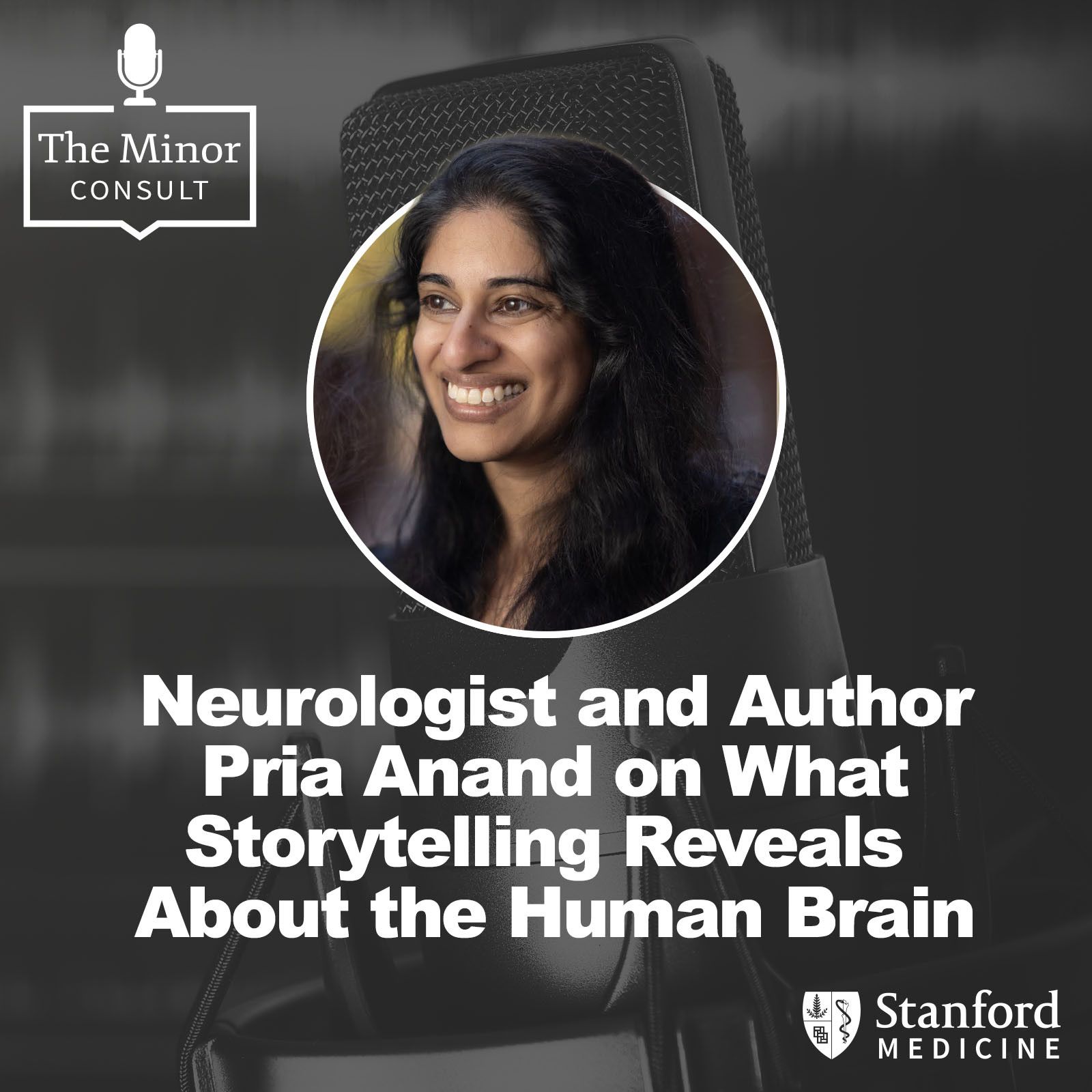
Dean Lloyd Minor welcomes neurologist and author Pria Anand, MD, for a conversation about the power of narrative in neurology. They explore how symptoms such as sleep paralysis and confabulation — the brain’s tendency to fill gaps in memory — can illuminate how the brain works, and how culture shapes the way people experience, interpret, and describe illness. They also discuss what the brain’s storytelling tendencies may reveal about AI, why human connection matters for healthy aging, and how emerging imaging technologies could transform our understanding of the nervous system.

In this episode of the Big Ideas series, Dean Lloyd Minor welcomes Joseph DeSimone, PhD, professor of translational medicine and of chemical engineering at Stanford University, for a conversation about how advances in materials science and precision manufacturing are opening new frontiers in medicine. They explore DeSimone's pioneering innovations in polymer-based drug delivery, biodegradable stents, digitally fabricated dentures, high-speed 3D printing, and microneedle patches that could improve vaccine delivery and enable new forms of liquid biopsy. They also discuss the promise of AI to integrate molecular diagnostics and other health data, helping to make precision health more actionable and widely accessible.

Dean Lloyd Minor welcomes William Brody, MD, PhD, president emeritus of Johns Hopkins University, for a conversation about leadership, critical thinking, and lessons from his career spanning academia, medicine, and entrepreneurship. They discuss insights from Brody's 2026 book "Uncommon Sense: Rethinking Ordinary Problems in Extraordinary Ways," including the roles of preparation and opportunity in success, the importance of authenticity in leadership and the value of building meaningful relationships over collecting accolades. They also explore Brody’s philosophy as president of Johns Hopkins, as well as the benefits of questioning conventional wisdom.

In this episode of the Big Idea series, Dean Lloyd Minor welcomes Freddy Abnousi, MD, vice president of health technology at Meta and an interventional cardiologist, for a conversation about how artificial intelligence and augmented reality have the potential to transform preventative health care. They discuss how ambient AI, wearables, and smart glasses can capture valuable health information from “lived experience” that is often missed in medical records, helping to avert or manage chronic conditions. They also explore the critical challenges ahead for AI in health, from privacy concerns to workflow integration, as well as what these rapid advances mean for the future of medical education.

Dean Lloyd Minor welcomes Eric Horvitz, MD, PhD, chief scientific officer at Microsoft, for a conversation about the rapid evolution of AI and its implications for how we think, work, and make decisions. They discuss the accelerating pace of AI advances, the need to safeguard human judgment and agency, and the growing role of these technologies in health care — from easing administrative burden to supporting complex clinical decisions. They also explore how AI is reshaping scientific discovery and what it will take to guide its development responsibly.

Comments

Download from Google Play

Download from App Store
 United States