


 Claim Ownership
Future of Agriculture
Subscribed: 2,597Played: 71,963
Subscribe

© Copyright 2019 All Rights Reserved Future of Agriculture
Description
This show explores the people, companies, and ideas shaping the future of the agriculture industry. Every week, Tim Hammerich talks to the farmers, founders, innovators and investors to share stories of agtech, sustainability, resiliency and the future of food.
We believe innovation is an important part of the future of agriculture, and real change comes from collaboration between scientists, entrepreneurs and farmers. Lead with optimism, but also bring data!
For more details on the guests featured on this show, visit the blog at www.FutureOfAgriculture.com.
We believe innovation is an important part of the future of agriculture, and real change comes from collaboration between scientists, entrepreneurs and farmers. Lead with optimism, but also bring data!
For more details on the guests featured on this show, visit the blog at www.FutureOfAgriculture.com.
477 Episodes
Reverse
![[History of Agriculture] The Murder of Nikolai Vavilov](https://s3.castbox.fm/e4/29/64/01da11818e9428e4ae1783bd58bca3d1e4_scaled_v1_400.jpg "[History of Agriculture] The Murder of Nikolai Vavilov")
"The Murder of Nikolai Vavilov" by Peter Pringleanother installment in our series on the history of ag innovation. And to be honest, I’ve waited too long to do this episode. I read this book “The Murder of Nikolai Vavilov” months ago. And it was one of the most incredible stories I had ever heard. But every time I went to make an episode about it, the episode just never did justice to the greatness of the book. But those of you who haven’t read it or have any familiarity with Vavilov, I decided that I just needed to do my best and send it. Nikolai Ivanovich Vavilov was a pioneer in plant breeding and genetics, but he was also much more than that. At a time, in the early 1900s that the field of genetics was just newly formed and not widely accepted, he saw the potential to collect plant species and varieties from all over the world and bring them back to his home country of Russia which desperately needed a solution to food shortages and starvation. But as you can probably tell by the title of Peter Pringle’s book “The Murder of Nikolai Vavilov”. The story does not have a happy ending. But it is both a story of incredible contributions to agricultural innovation and a cautionary tale of what happens when science is seen as a threat instead of a solution. As with every story I read on the history of ag innovation, the insights and lessons are as relevant today as they were when this story was transpiring. To quote the book: “Nikolai Ivanovich’s extraordinary life would end in 1943, not in the cities where he made his reputation as one of the great scientists of the twentieth century, not in Moscow, or Leningrad, or any of the distant places on five continents where he had risked his life for samples of rare food plants - in the Hindu Kush of Afghanistan, the high plateau of Abyssinia, the Andes of Argentina, Bolivia and Peru. He would die of starvation in Saratov, in a fetid prison, on the edge of the rich black earth of the steppe. It was here that he planned to use his new plant varieties to end the ghastly cycle of Russian famines and turn them into crops that would feed the world.”
 1
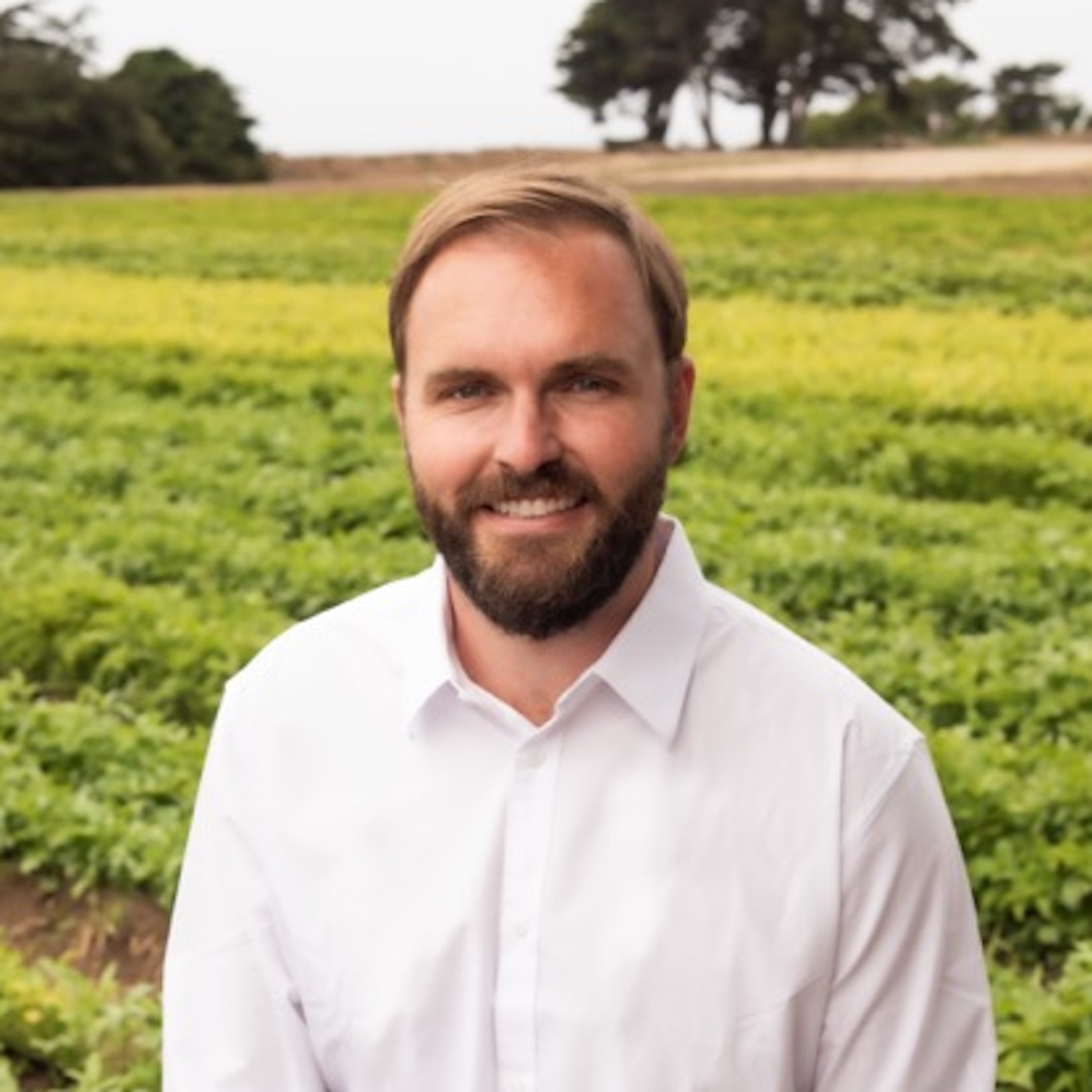
1Bonsai Robotics: https://bonsairobotics.ai/Over the past 10 years of doing this podcast, we’ve seen a lot of farm robotics companies come and go. And while it’s discouraging every time one of them closes its doors, enthusiasm for the space feels like it’s at an all time high. And I think that’s in large part, due to successful companies like Bonsai Robotics. “I think the key, the key piece to successfully deploying autonomy on these farms is that- A, is the farm set up for it, and does it actually make sense from an ROI perspective, right? Is it big enough ultimately to go run these 24/7 and not have to cross public roads? But also, right, like the other big thing is just the want from the people who are gonna run it, right? Do they want it? 'Cause like farmers, employees, you could say whatever, but if they want it and are interested in it, they're gonna find a way to, you know, make it work, especially in the early days. Whereas if they're opposed to it, right, especially if the product is good, there could be challenges there. So that's a big, like making sure it's coming from the bottom up and not top down is a pretty good feature. Like the, the bottom up has to want it to make it successful, even if it's a perfect product.” - Tyler NidayBonsai founder and CEO Tyler Niday joins the show today to talk about the past, present and future of farm robotics, and his companies impressive inroads in specialty crops and beyond. In recent years, the ag robotics space has seen highs and lows, and what has emerged has been a handful of companies that are still showing some real promise, and they’ve developed a few hype men out there on social media platforms like LinkedIn. To be honest, the longer I cover the ag robotics space, the more guarded I am with my enthusiasm, but I find it extremely valuable to talk to people like today’s guest, Tyler Niday of Bonsai Robotics. Bonsai is doing some really interesting work to thoughtfully and practically bring autonomy to the industry. Bonsai builds vision AI first autonomous systems for outdoor equipment. They got their start in specialty crops, and have not only developed some real traction, they’ve started expanding beyond that part of the industry as well. He has worked in ag equipment and robotics his entire career after earning his bachelor’s at Cal Poly and Masters at MIT. He has worked at both a well established ag equipment company, Orchard Machinery Corporation or OMC. And he has worked at one of the most successful startups in the space, Blue River, before founding Bonsai. Today, Tyler and I cover a lot of aspects to Bonsai’s work and farm robotics generally. I particularly enjoyed Tyler’s thoughts on a transition going on right now from hardware to software in ag. And the three reasons he believes robotics are a huge enabler for this. Whether you’re an agtech founder, enthusiast, user or observer, I think there are some great insights in here for you.

Elo Life Systems: https://elolife.com/Super excited to bring on Matt DiLeo of ELO Life Systems on today’s episode. Some of you may remember that ELO Life CEO Todd Rands was a part of 412 of this podcast two years ago. I’ve been fascinated by their work ever since to bring to the market what they call molecular farming. Matt does a great job of explaining the concept and how this shifts the value in some ways from food processors back to the farm by allowing farmers to grow desirable healthy ingredients inside of the commodity crops they already grow. It’s kinda mind blowing. Some background on Matt: Dr. Matt DiLeo serves as the vice president of research & development at Elo Life Systems. In his role, Matt applies agricultural OMICs and precision breeding technologies to advance Elo’s product pipeline. Prior to joining Elo, Matt held scientific leadership roles at Novozymes and KeyGene USA. Matt received his Ph.D. in Plant Pathology from UC Davis and completed a postdoc at the Boyce Thompson Institute, where he studied the impact of silencing regulatory genes on the nutritional composition of the tomato fruit metabolome.Matt seems to have a knack for being on the cutting edge of ag science and technology and has shown this in a variety of areas throughout his career.
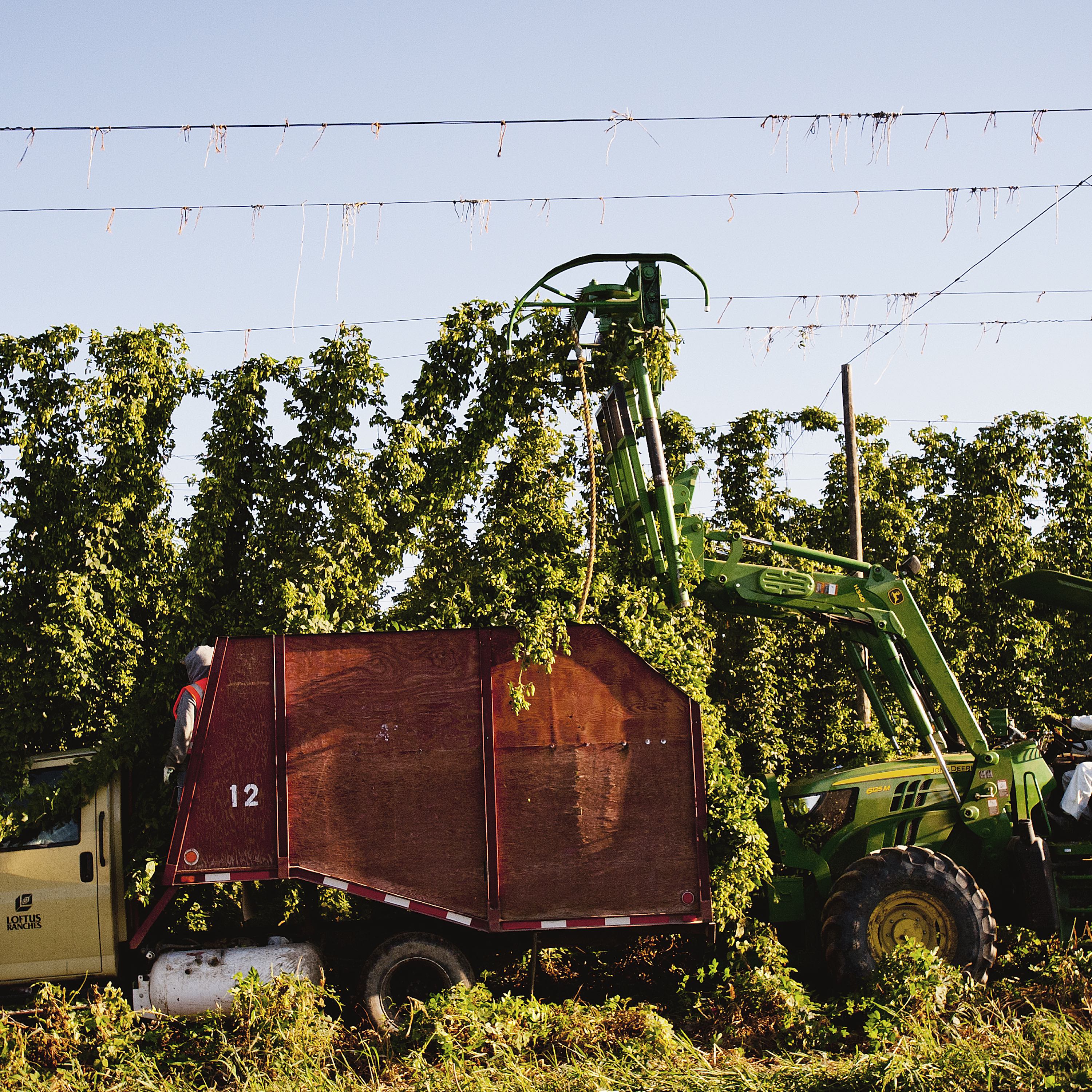
Oxrow.aiLoftus Ranches: https://www.loftusranches.com/Patrick Smith is a fourth-generation farmer and the CEO of Loftus Ranches, a Yakima Valley-based agricultural business producing hops alongside apples, pears, peppers, and other crops. He focuses on long-term strategy, capital allocation, and stakeholder relationships, balancing operational discipline with financial rigor.He founded Oxrow.ai, an analytics platform that helps agribusinesses pull together fragmented operational and financial data into decision-ready insight. The platform grew out of direct experience running complex businesses with messy data, where the cost of getting things wrong is high.In 2013, Patrick co-founded Bale Breaker Brewing Company, extending the family’s hop-farming roots into a consumer brand built at the source. He serves on the board of Yakima Chief Hops and has held leadership roles across hop industry organizations.He holds an M.S. in Business Analytics from NYU Stern, an MBA from Indiana University’s Kelley School of Business, an M.S. in Agricultural Economics from Purdue University, and a B.A. in Business Administration from the University of Washington.

LandTrust: https://landtrust.com/LandTrust is an online platform that connects landowners to people looking for outdoor recreation like hunting, fishing or camping. Think AirBNB for hunters. For most of you, that is probably not a novel concept in 2026, but the concept isn’t the story here - at least not to me. The story is how Nic and his team are pulling it off. How they are building trust with farmers, ranchers and other landowners. And how they are using technology to create real value and solve real problems on both sides of this two-sided marketplace.Some background on Nic before we dive in: Nic De Castro is the founder and CEO of LandTrust, a marketplace that connects landowners with sportsmen seeking outdoor recreation opportunities like hunting, fishing, and camping on private land. Since founding LandTrust in 2019, Nic has focused on helping farmers and ranchers unlock new income streams while expanding access to the outdoors. Prior to starting LandTrust, Nic worked in technology and entrepreneurship, and he now writes and speaks about the intersection of agriculture, land stewardship, and the growing outdoor recreation economy. He lives in the Southeast and spends as much time as possible hunting, fishing, and exploring rural America.Don’t let the name fool you here, this has nothing to do with land trusts like people putting land into trusts. It really is just the simple concept of needing to build trust between landowners and people enjoying that land. Nic will explain a lot more about that.

Comments

Download from Google Play

Download from App Store
 United States