


 Claim Ownership
The Smart Cookies podcast
Subscribed: 120Played: 2,977
Subscribe

© Matjaz Juren 2022
Description
Deep-dive conversations with the world's leading minds. European host Zaza looks beyond the mainstream to explore history, technology, philosophy, psychology, and science.
101 Episodes
Reverse

In 2010, a shocking discovery reverberated throughout the scientific community - a bone fragment previously thought to have belonged to a Neanderthal turned out to be a completely new species of archaic humans. Named after the Denisova cave in which the fragment was found, this mysterious new group was named the Denisovans. But even two decades later, the answers about who exactly these people were, what they looked liked, and how they behaved are still few and far in between. Fascinated yet undeterred by the lack of information, I talked to paleoanthropologist Prof. Bence Viola - one of the first people who analysed the original Denisovan hominin fossils.

Bill McKibben is someone I've been wanting on the pod for ages - he's not only one of the most celebrated environmentalists alive, but is also widely credited as having written the first ever book on climate change for a general audience, The End of Nature.Last year, he released another groundbreaking book called Here Comes the Sun: A Last Chance for the Climate and a Fresh Chance for Civilization.In this conversation we talk about why this decade represents our last chance to steer away from our current, mortal trajectory, and why a turbocharged deployment of renewable energy globally is the only way we don't break the planet forever.

What do lunatic asylums, lobotomies and electroconvulsive therapy have in common? They were all desperate attempts to cure mental illness. Long before the advent of pharmacology, "maverick" psychiatrists proposed different theories on what caused madness - from germs and infections to abnormal pathways in the brain. These ideas gave birth to a host of horrific "cures" that often left the patients worse off than before... if they managed to survive them in the first place.In his acclaimed book Desperate Remedies: Psychiatry's Turbulent Quest to Cure Mental Illness, historian of medicine Prof. Andrew Scull traces the turbulent past of this new medical science that spurned on some of the most well known horror cliches ever...In this haunting conversation, we talk about this dark history, but also about Freudian psychoanalysis, the wartime birth of psychotherapy and the poor state of psychiatric care today.

We always assume Hitler forced his way into the Chancellor's office and then single-handedly ended the Weimar Republic, ushering in his horrific dictatorship that would plunge Europe into WWII. It turns out that wasn't the case... at all. In reality, Hitler campaigned his way into the German parliament (the Reichstag) and then skilfully maneuvered until he managed to take the top job. The most sinister part came right after that, however - without firing a single shot, it took the Nazis only 8 weeks to dismantle German democracy. Even more, during these fateful 2 months Hitler convinced the majority of the parliament to pass the infamous Enabling Act, granting him unlimited power. These ominous events are unfortunately becoming very relevant again - democratic forces are in retreat, while the extreme right inches closer to power, even in places we would least expect it (like the AfD in Germany). That's why it's more important than ever to understand how this catastrophic unfolding happened - and eminent Professor Timothy Ryback, author of the acclaimed book 53 Days: How Hitler Dismantled a Democracy, is probably the most qualified person to ask.
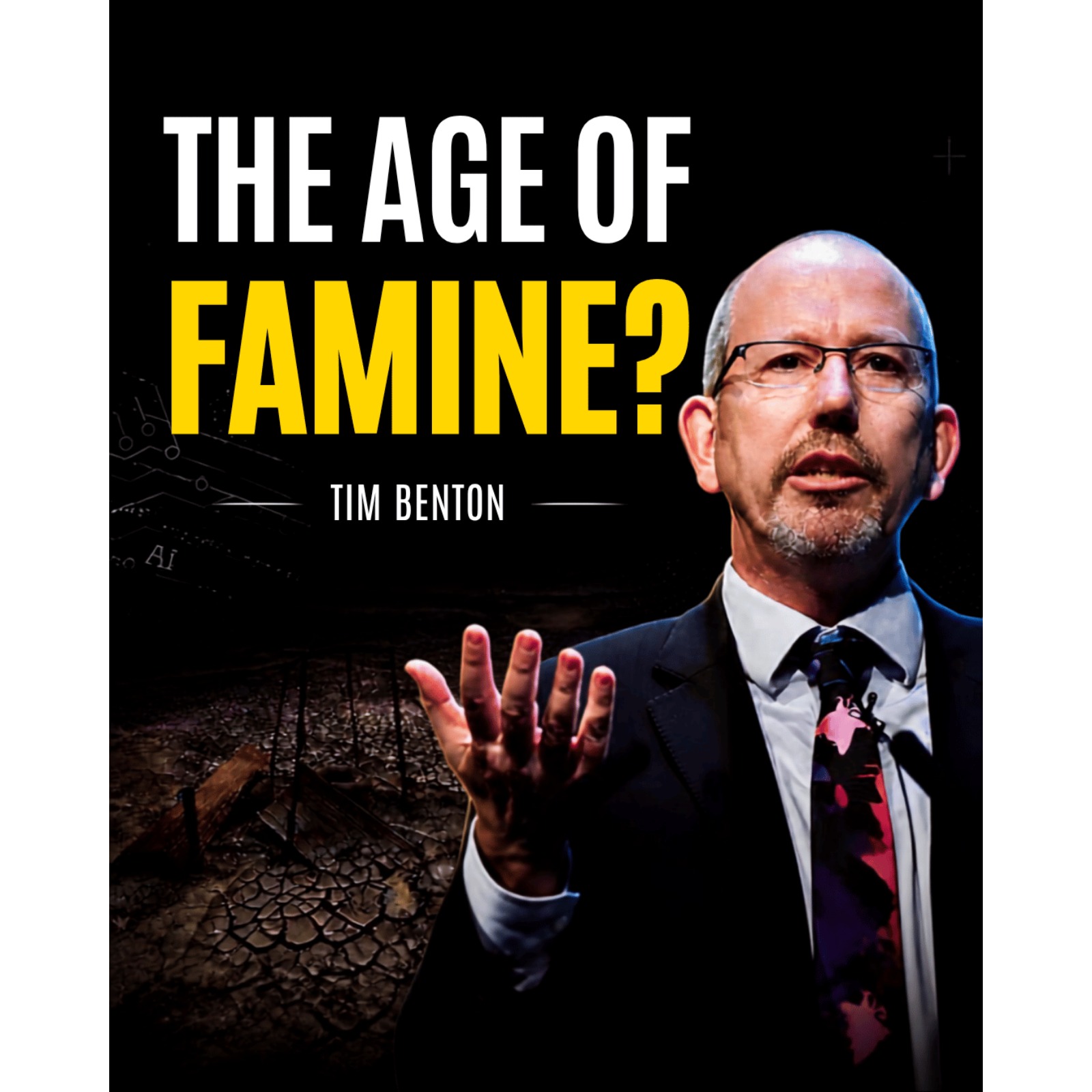
We've all noticed that food prices keep going up without an end in sight. Couple that with the increasingly dramatic effects of climate change and a world that's increasingly unstable, and you've got a legitimate crisis on your hands. Which begs the question - will we really be able to feed a population that is projected to hit 10 billion soon?Prof. Tim Benton, one of the biggest experts on food systems in the world, believes our economic model of infinite growth on a finite planet, will falter, and sooner rather than later. But how soon will that happen? What does it mean in practice? And finally, are we actually entering the era of famine? Tune in to find out...

Comments

Download from Google Play

Download from App Store
 United States