


 Claim Ownership
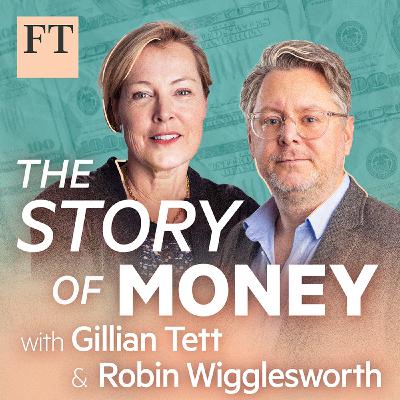
The Story of Money
Subscribed: 8,807Played: 229,074
Subscribe


© Financial Times
Description
FT columnist Gillian Tett and FT Alphaville editor Robin Wigglesworth dig into the ideas, personalities and institutions that have shaped the history of finance.
Hosted on Acast. See acast.com/privacy for more information.
352 Episodes
Reverse
Imagine a tropical land, replete with fertile soil, an untapped gold mine and a beautiful capital city. Does it sound too good to be true? If the name of this land is Poyais, it just might be.Host Robin Wigglesworth is joined by Dan Davies, financial historian and author of 'Lying for Money', to meet Gregor MacGregor, the infamous con artist who pitched a fake country to both settlers and investors in 1820s Europe. Together they chart the origins of this fraud and discuss what this 19th century disaster can tell us about financial scams of the modern era.Further reading:Lying for Money: How Legendary Frauds Reveal the Workings of the World, by Dan DaviesSir Gregor Macgregor and the Land That Never Was, by David SinclairFurther listening:The South Sea Bubble and the birth of modern financial crashesHow a financial crash created Britain’s first prime ministerTo enjoy future episodes, be sure to subscribe to The Story of Money wherever you get your podcasts, also on the show's dedicated YouTube channel here: https://www.youtube.com/@FTTheStoryOfMoneyHost: Robin WigglesworthSenior producer: Michela TinderaExecutive producer: Kate FordOriginal music and sound design: Breen TurnerVideo editor: Michael SalibaPodcast development: Laura ClarkeFT global head of audio: Flo PhillipsRead a transcript of this episode on FT.com Hosted on Acast. See acast.com/privacy for more information.
Credit cards are a part of everyday life, consumer debt is widespread and access to credit has helped make America a worldwide economic force. But where did it all begin?According to legend, in 1940s New York when businessman Frank McNamara was out for lunch with his associates. He forgot his wallet, and resolved to create a new way to pay. What emerged was the ‘Diners Card’. A few decades and a disastrous experiment later, this morphed into the credit card we know today.Hosts Gillian Tett and Robin Wigglesworth discuss the invention of the credit card, consider a crazy scheme dubbed the ‘Fresno drop’, and reflect on how the flexible friend revolutionised the way we pay - and built a trillion dollar mountain of debt.Further reading: A Piece of the Action (1994) by Joe Nocera. Follow Joe Nocera on X @opinion_joeWashington Post article by Joe Nocera: ‘The Day The Credit Card was Born’: https://www.washingtonpost.com/archive/lifestyle/magazine/1994/11/04/the-day-the-credit-card-was-born/d42da27b-0437-4a67-b753-bf9b440ad6dc/‘How Credit Cards changed the way we spend’ by Tim Harford: https://www.bbc.co.uk/news/business-41916711For more on the history of credit, check out our past episode ‘Why money is the biggest shared hallucination in human history: https://www.youtube.com/watch?v=MFM_JqnJVogTo enjoy future episodes, be sure to subscribe to The Story of Money wherever you get your podcasts, also on the show's dedicated YouTube channel here: https://www.youtube.com/@FTTheStoryOfMoneyHosts: Gillian Tett & Robin WigglesworthProducer: Lulu SmythSenior producer: Michela TinderaExecutive producer: Kate FordOriginal music and sound design: Breen TurnerVideo editor: Michael SalibaPodcast development: Laura ClarkeFT global head of audio: Flo PhillipsSpecial thanks to Elizabeth Marcus.Learn more at www.ft.com/tsom or get in touch at [email protected] a transcript of this episode on FT.com Hosted on Acast. See acast.com/privacy for more information.
 2
For 80 years, a currency created by France has remained in use across large parts of west and central Africa - even decades after the countries there gained independence. But is the CFA franc, as it’s called, a tool of economic stability, or a colonial relic that has allowed France to maintain its grip on its former colonies?Senegalese economist Ndongo Samba Sylla joins Gillian Tett and Robin Wigglesworth to uncover the controversial history of the CFA franc, asking whether monetary independence is the missing piece of the post-colonial puzzle and whether former colonial powers can ever truly relinquish control. Who does the CFA franc really serve: African economies, their political elites, or France?To enjoy future episodes, be sure to subscribe to The Story of Money wherever you get your podcasts, also on the show's dedicated YouTube channel here: https://www.youtube.com/@FTTheStoryOfMoneyHosts: Gillian Tett & Robin WigglesworthSenior producer: Laurence KnightExecutive producer: Kate FordOriginal music and sound design: Breen TurnerVideo editor: Michael SalibaPodcast development: Laura ClarkeFT global head of audio: Flo PhillipsLearn more at www.ft.com/tsom or get in touch at [email protected] a transcript of this episode on FT.com Hosted on Acast. See acast.com/privacy for more information.
Hundreds of years ago, across Europe - from Germany to Scandinavia, France to Britain - tens of thousands of mostly women were executed, accused of being witches. The persecution reached its height in the 16th and 17th centuries. But why? And could economics help explain the hysteria?Hosts Gillian Tett and Robin Wigglesworth are joined by Brown University economist Emily Oster, whose research explores whether colder temperatures during the Little Ice Age led to economic hardship and an increased number of witch trials. They discuss how Oster used historical weather and witch trial data to investigate the connection, how evolving economic data changes our perceptions of history and what Europe's witch hunts reveal about scapegoating.Further reading:Witchcraft, Weather and Economic Growth in Renaissance Europe, The Journal of Economic Perspectives, by Emily OsterWitch Trials, The Economic Journal, by Peter T. Leeson and Jacob W. RussMalleus Maleficarum, by Heinrich KramerTo enjoy future episodes, be sure to subscribe to The Story of Money wherever you get your podcasts, also on the show's dedicated YouTube channel here: https://www.youtube.com/@FTTheStoryOfMoneyHosts: Gillian Tett & Robin WigglesworthProducer: Lulu SmythSenior producer: Michela TinderaExecutive producer: Kate FordOriginal music and sound design: Breen TurnerVideo editor: Michael SalibaPodcast development: Laura ClarkeFT global head of audio: Flo PhillipsLearn more at www.ft.com/tsom or get in touch at [email protected] a transcript of this episode on FT.com Hosted on Acast. See acast.com/privacy for more information.
The French Revolution was a bloody fight for liberty, equality and fraternity. But it was also a battle over money.In part two of our series on the French Revolution, host Robin Wigglesworth tackles the transformation of France’s monetary system with Rebecca Spang, historian and author of Stuff and Money in the Time of the French Revolution.As the country descended into war, political turmoil and the Reign of Terror, the experiment with the currency known as the Assignat became increasingly troubled. Robin and Rebecca examine why trust in money matters. Plus, did the revolution’s economic turmoil pave the way for Napoleon Bonaparte’s rise to power?Further reading:Stuff and Money in the Time of the French Revolution by Rebecca L SpangTo enjoy future episodes, be sure to subscribe to The Story of Money wherever you get your podcasts, also on the show's dedicated YouTube channel here: https://www.youtube.com/@FTTheStoryOfMoneyHosts: Robin WigglesworthSenior producer: Michela TinderaExecutive producer: Kate FordOriginal music and sound design: Breen TurnerVideo editor: Michael SalibaPodcast development: Laura ClarkeFT global head of audio: Flo PhillipsLearn more at www.ft.com/tsom or get in touch at [email protected] a transcript of this episode on FT.com Hosted on Acast. See acast.com/privacy for more information.

Comments

Download from Google Play

Download from App Store
 United States