


 Claim Ownership
Tomorrow's World Telecast (audio)
Subscribed: 55Played: 833
Subscribe

© Copyright 2014-2026 Living Church of God (International), Inc.
Description
530 Episodes
Reverse
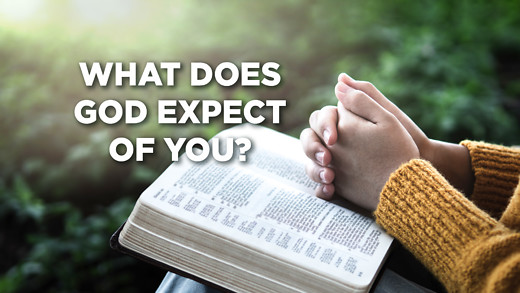
We live in a world of religious confusion. There is no end to the bizarre list of traditions that have developed as a means to honor some concept of the divine. Fire-walking. Prayer wheels. Leaving food at gravestones. Tattoos – yes, tattoos originally had religious meaning in pagan cultures. And by the way, did you know that God specifically forbade His people from getting cuttings in their flesh or getting tattoos on their bodies? That’s found in Leviticus 19:28.
Some traditions are more bizarre and even deadly. In India, before the British rule, a widow was expected to throw herself onto the burning corpse of her dead husband, in a tradition called “sati” (suh-TEE). The British banned this cruel and barbaric custom in 1829.
But even within the professing Christian religion, there is a wide variety of beliefs of what God expects of us. How can this be when it all supposedly came from one source, Jesus Christ? And more specifically, how can you know what God expects of you?
Gerald Weston - TVCA1505 - What is most important to you? Is it your politics, career or family? What is the most important thing in your life? Many profess one thing, but their actions tell a very different story. For some, the pursuit of fun and pleasure is seen as the ultimate motivator. Is there a lasting goal that we should be striving for?
Gerald Weston - TVCA1504 - In 2018, U.S. President Donald Trump made headlines for blasting several members of NATO for spending less than 2% of their national GDP on defense. Less than 10 years later, these nations have agreed to more than double their spending. Committing to invest 5% of GDP to defense at the 2025 NATO Summit in the Hague. Rebuilding these once proud militaries will take time. But the trajectory is clear, and you need to know where it is leading!
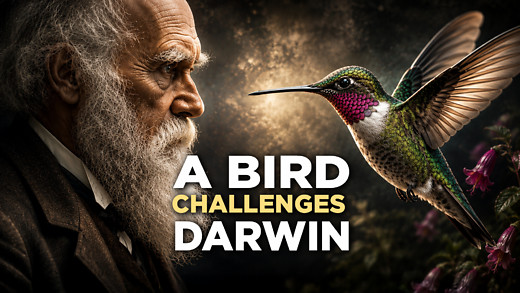
When was the last time you took a trip to the zoo? What about an afternoon at a marine park to be entertained by dolphins and seals? The late fellow evangelist and Tomorrow’s World telecast presenter Richard Ames and his wife once paid us a visit when we lived near Toronto, Canada. While there, we stopped at a Butterfly Conservatory near Niagara Falls and I must confess, I’d driven by it numerous times without feeling a tug on the steering wheel to turn in. However, we all found it more interesting than I expected, especially the butterfly that liked sitting on my shoulder.
It doesn’t matter where you look, our world is filled with beautiful, amazing, strange, and fascinating life forms: giant elephants, long-necked giraffes, or sure-footed mountain goats. Each one is uniquely and marvelously designed. There is seemingly no end to the variety of birds: eagles, vultures, ducks and geese, parrots, and doves. Then there are reptiles: snakes, lizards, crocodiles, and turtles, to name a few. What about amphibians? And we haven’t even considered the incredible variety of fish and other sea creatures.
This program doesn’t give me enough time to mention all the varied life forms seen in the air, on land, and in the waters. There is also the huge subject of plant life. Some maintain that all living flora and fauna are the result of blind chance through evolutionary processes, but the more we learn about life, the more scientists and laymen are coming to conclude that it is mathematically and logically impossible for life to be the result of chance.
But none of this would be possible without the dirt beneath our feet. To put it in grander terms, how did the universe get here? Astronomers and cosmologists have been forced to conclude that matter had a beginning. So, whether one refers to it as the big bang, the cosmic expansion, or something else, a beginning means there was a time when matter did not exist. How then did the universe come to be? On this Tomorrow’s World program, I’m going to focus on one tiny bird that hovers in the face and stares down Charles Darwin.

Stuart Wachowicz - TVCA1503 - In ancient Greece, physicians took an oath as they began their medical career. A form of the Hippocratic oath has been used for North American doctors for several decades. It includes the prohibition of giving "a deadly drug to anyone who asks for it." We can see that this promise is no longer very compatible with the social demands and expectations of today's society. As general healthcare practices, government legislations and public opinion change to allow, support and even encourage the practice of Medical Assistance in Dying (MAID), how should a Christian respond to this increasingly common practice?

Comments

Download from Google Play

Download from App Store
 United States