


 Claim Ownership
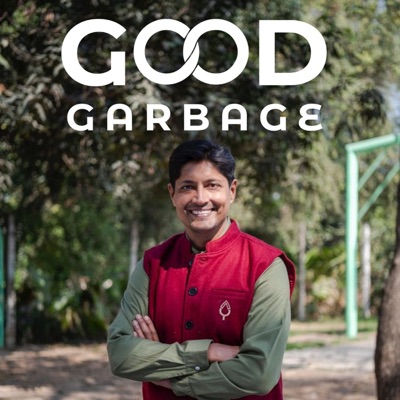
Good Garbage with Ved Krishna
Subscribed: 11Played: 121
Subscribe

© Pakka
Description
Hello, hello!
We’re so excited to be here and embark on an enlightening journey with our fellow planet advocates - yes, we’re talking about you – to leave the earth cleaner! 💪🌏
Tune in for engaging conversations around the evolution of the packaging industry as we scale up towards a more sustainable future 🌱
Join us, in our endeavour to learn from our inspiring guests and get their insight on the pertinent (and our forever favourite) question – what does #GoodGarbage mean to you? ♻️✨
Feedback? Collaboration requests? Guest recommendations?
Hit us up at [email protected] ✍️
126 Episodes
Reverse

Did you know that sanitary pads have been found to cause infections, carry hormone-disrupting toxins, and even shed microplastics directly into your bloodstream? In this Good Garbage episode, Ved Krishna sits down with Shagun Maheshwari, Founder of Papaya, a company making biodegradable pads that are safe for your body and the planet. Shagun quit her corporate Silicon Valley job to pursue this passion project, and ended up creating the world's first pad with biocoagulation/ clotting technology! 🩸🎧 Full episode on Spotify & Apple: https://linktr.ee/goodgarbagepodcast👩🏻🔬 In this episode with Shagun Maheshwari:• Why the name, Papaya?• Shagun's journey from being a mechanical engineering in Silicon Valley to an entrepreneur in India• Papaya Pads: science & structure• Patented biocoagulation technology• The ultimate compromise: is a little bit of plastic okay to help the product perform better?• How Papaya plans to reduce cost, expand access, and potentially supply clotting cores to other pad companies🎙️ Chapters:00:00 Intro & name origin02:09 Climate concerns, menstruation, and growing up06:51 Choosing mechanical engineering and finding biology labs11:24 From semiconductor work to startups and lab experiments14:43 The community lab where the pad idea took shape19:17 Why Shagun left her job to build Papaya22:06 How physical clotting differs from absorption24:59 The five layers of a sanitary pad27:31 Plastic trade-offs, tape, and imperfect packaging30:15 Choosing nonwovens and natural fibers42:02 Scaling the clotting core from hand-built prototypes47:45 Biopolymers, compostability, and skin considerations50:08 Reusable products, tampons, and testing questions53:09 Skin irritation and what period products may be missing57:09 Manufacturing, cost, and scaling access01:01:14 Marketing, funding, and early distribution01:04:19 Papaya’s wrapper design and resealability challenge01:10:08 The future of clotting-based pads and Good GarbageGood Garbage is a podcast about sustainable materials, packaging and regeneration, hosted by Ved Krishna — conversations with the innovators, scientists and founders building a cleaner planet. The question behind every episode: What is Good Garbage?Papaya's Website: https://www.papayapads.comPapaya's Instagram: https://www.instagram.com/papaya.india/▶ Subscribe: https://www.youtube.com/@GoodGarbage🎧 Listen on Spotify & Apple: https://linktr.ee/goodgarbagepodcast🔗 Our Website: https://www.goodgarbage.info💌 Contact us: [email protected]
Sustainable packaging news from October 2026 — from Nestle's failed attempt at revolutionizing compostable coffee pods to California reducing its single-use plastic cut goal.In this Good Garbage episode of “Around the World of Packaging”, Sargam Krishna and Kumar Niketan round up the month: Sargam covers innovation, Kumar covers trade — laws, bans, and trailblazers like Italy writing compostable packaging into its law.🎧 Full episode on Spotify & Apple: https://linktr.ee/goodgarbagepodcast🗞️ In this episode with Sargam & Kumar:• Shunho Creative's TransMet: A 30-nanometer aluminum layer with biodegradable paper for a plastic-free metallic finish• Nestlé is discontinuing its 82%-paper Nespresso capsules• Tetra Pak is validating a 53 GSM, 85%-paper ice cream wrapper with European producers before a planned rollout• Bower Collective and Kelpi presented liquid soap sachets with a seaweed-based water barrier• Koehler Paper and The Bell Group team up to make paper flow packs for Babybel 2 Go cheese snacks• A second EU PFAS restriction affecting paper and paperboard food packaging, with a 25-parts-per-billion limit for PFHxA• Italy's compostable-packaging exception to EU's 2030 single-use plastic bans• India's FSSAI proposed allowing chemically recycled polyethylene and polypropylene in food packaging under specified conditions, with a 60-day public comment period• California recalculated its single-use plastic reduction baseline; the 2032 target is described as a 250,000-ton cut, while packaging sold in the state must be recyclable or compostable• South Korea proposed a 15% recycled-content requirement for PET bottles from 2027, and Thailand is reviewing stricter BPA and PFAS limits for plastic food containers📰 Chapters:00:00 October packaging and sustainability news begins00:45 Plastic-free metallic paperboard and the Nespresso capsule reversal05:21 Tetra Pak's 53 GSM paper ice cream wrapper06:36 Seaweed-coated liquid sachets and paper recycling08:49 Babybel two-packs move to recyclable paper flow packs12:02 Europe's second PFAS limit and Italy's compostable exception14:17 EU exporter paperwork and India's recycled-plastic proposal16:07 California's revised target and Oregon's EPR appeal17:04 South Korea and Thailand weigh new packaging rules18:27 Why packaging claims now need proofGood Garbage is a podcast about sustainable materials, packaging and regeneration, hosted by Ved Krishna — conversations with the innovators, scientists and founders building a cleaner planet. The question behind every episode: What is Good Garbage?▶ Subscribe: https://www.youtube.com/@GoodGarbage🎧 Listen on Spotify & Apple: https://linktr.ee/goodgarbagepodcast🔗 More: https://linktr.ee/goodgarbagepodcastWebsite: https://www.goodgarbage.infoInstagram: https://www.instagram.com/goodgarbagepodcast/💌 Contact us: [email protected] by Pakka
How do you deal with the world's most invasive aquatic weed, that harms both humans and animal life? If you're a Kenyan company that has cracked the code, you turn it into sustainable packaging! 🌿In this episode, we had an amazing conversation with Joseph Nguthiru, Founder of HyaPak, a company killing two birds with one stone by turning water hyacinth into bioplastics. Joseph is making waves as an Obama Leader, UN Young Champion of the Earth and a Presidential Award recipient, and using his platform for incredible innovation and making good change for the earth. 🌍🎧 Full episode on Spotify & Apple: https://linktr.ee/goodgarbagepodcast🧠 In this episode with Joseph Nguthiru:• Joseph's background and early influences• The problem of water hyacinth and its ecological impact• The journey from idea to business and funding challenges• The role of consumer testing and market fit in product development• The importance of industry collaboration and scaling solutions• Science and process of creating bioplastics from hyacinth• Market challenges and application-driven product development• Cost and value considerations in sustainable packaging• Long-term vision for environmental impact and circular economy🪻Chapters:00:00 Introduction to Joseph Nguthiru and Water Hyacinth Innovation02:11 Meeting Barak Obama & King Charles04:19 Joseph’s Early Influences and Growing Up in Kenya05:01 Science behind bioplastics from hyacinth and process challenges08:35 Understanding Water Hyacinth and Its Impact10:13 Market application and product development journey12:53 The Business of Water Hyacinth and Market Challenges15:39 Cost, value, and consumer preferences in sustainable packaging19:15 The Water Hyacinth as a Raw Material and Its History20:23 Collaboration, open source, and future visions24:28 Starting the Entrepreneurial Journey in Kenya24:55 Impact of recognition, awards, and long-term goals30:01 Final thoughts and call to action for sustainability33:01 Government Support and Market Opportunities in Kenya36:44 Converting Water Hyacinth into Products and Scaling43:43 Unique Properties of Water Hyacinth and Its Potential50:56 The Future of Water Hyacinth and Ecological SolutionsGood Garbage is a podcast about sustainable materials, packaging and regeneration, hosted by Ved Krishna — conversations with the innovators, scientists and founders building a cleaner planet. The question behind every episode: what is good garbage?HyaPak: https://hyapak.comJoseph: https://www.instagram.com/_nguthiru/▶ Subscribe: https://www.youtube.com/@GoodGarbage🎧 Listen on Spotify & Apple: https://linktr.ee/goodgarbagepodcast🔗 Our Website: https://www.goodgarbage.info💌 Contact us: [email protected]
India is banking on something too small for the naked eye to see for advancement in fields that matter most: microbes! 🦠These tiny creatures are responsible for development across medicine, agriculture and industry. And who better to learn about microbes from than the first female director of CSIR-IMTECH, Dr. Alka Rao?Dr. Rao is one of the most accomplished scientists in India today, with over 16 years of experience in R&D and regulatory affairs. She is a former FSSAI Advisor for Science, Standards & Regulation, two-time representative of 24 Asian countries at the Codex Alimentarius Commission, and a recipient of over 15 awards and fellowships. On top of this amazing list, she has also lead the development of Indian Sign Language, especially in relation to STEM subjects! Last month, we flew to her office in Chandigarh to have this conversation with the force of a woman that is Dr. Rao– and we are so excited to finally bring it to you guys! 🎧🔬 In this episode with Dr. Alka Rao:• CSIR-IMTECH's history and contribution to Indian scientific development• What microbes are and how they can be used across various sectors• A scientist's process• Can creating fake meat and leather from animal cells work?• Dr. Rao as a person and her work with the hearing impaired community and ISL🎙️ Chapters:0:00 Trailer & intro01:55 Dr. Rao's experience as CSIR-IMTECH Director02:20 CSIR-IMTECH as an institution03:55 What are microbes?08:00 How cultures are made10:50 Can microbes degrade plastic?15:30 Repercussions of dealing with microbes17:10 Using microbes to make polymers26:30 Lab-made meat and leather32:10 Collaborations between industry & microbiology42:00 Alka, the person47:10 Dr. Rao's work with ISL53:45 What does Good Garbage mean to Alka Rao?54:55 ConclusionsGood Garbage is a podcast about sustainable materials, packaging and regeneration, hosted by Ved Krishna — conversations with the innovators, scientists and founders building a cleaner planet. The question behind every episode: what is good garbage?▶ Subscribe: https://www.youtube.com/@GoodGarbage🎧 Listen on Spotify & Apple: https://linktr.ee/goodgarbagepodcastCSIR-IMTECH: https://www.imtech.res.in/enWebsite: https://www.goodgarbage.info💌 Contact us: [email protected]
What is flexible packaging? Why can't we recycle MLPs? Is the future of packaging paper, plastic, or something else entirely? If you've ever asked yourself any of these questions, don't miss the chance to get answers from a senior VP at the biggest sustainable packaging company in all of North America! 🧻This week on Good Garbage, Ved Krishna meets Allison Scales, the first female VP of Printing and Graphics at Atlantic Packaging: an 80 year old company that started as a newspaper exposing the KKK, and now leads the charge in sustainable packaging. Allison teaches us all about the challenges, achievements and hope for the future in the world of packaging from her 14 years of experience at Atlantic! 🎧 Full episode on Spotify & Apple: https://www.goodgarbage.infoIn this episode with Allison Scales:• Flexible packaging: Basics and Evolution• Materials and equipment used in flexible packaging• Sustainability and end-of-life challenges• Innovations in paper and biopolymer packaging• Atlantic's history and growth in the packaging industry• Challenges in converting and alternative materials• Future trends in sustainable packagingChapters:00:00 Introduction to Allison Scales and Atlantic Packaging01:59 Allison's leadership journey and early influences06:06 Career trajectory and key learnings in printing industry11:03 Basics of flexible packaging and its importance12:00 Materials and equipment in flexible packaging production13:45 Evolution and significance of flexible packaging in daily life16:52 Multilayer structures and their role in shelf life extension18:51 Industry standards and decision factors for packaging structures21:59 Challenges of recycling multilayer flexible packaging24:04 Complexity of printing and converting flexible materials27:05 Atlantic's equipment innovations for sustainable packaging36:55 Atlantic's history from newspaper to diversified packaging company43:58 Atlantic's initiatives in sustainable packaging solutions49:56 Future growth plans and industry evolution56:06 Challenges in customer adoption and industry change57:06 What does Good Garbage mean to Allison?Good Garbage is a podcast about sustainable materials, packaging and regeneration, hosted by Ved Krishna — conversations with the innovators, scientists and founders building a cleaner planet. The question behind every episode: what is good garbage?Atlantic Packaging: https://www.atlanticpkg.com▶ Subscribe: https://www.youtube.com/@GoodGarbage🎧 Listen on Spotify & Apple: https://linktr.ee/goodgarbagepodcast🔗 More: https://www.goodgarbage.info💌 Contact us: [email protected]

Comments

Download from Google Play

Download from App Store
 United States