


 Claim Ownership
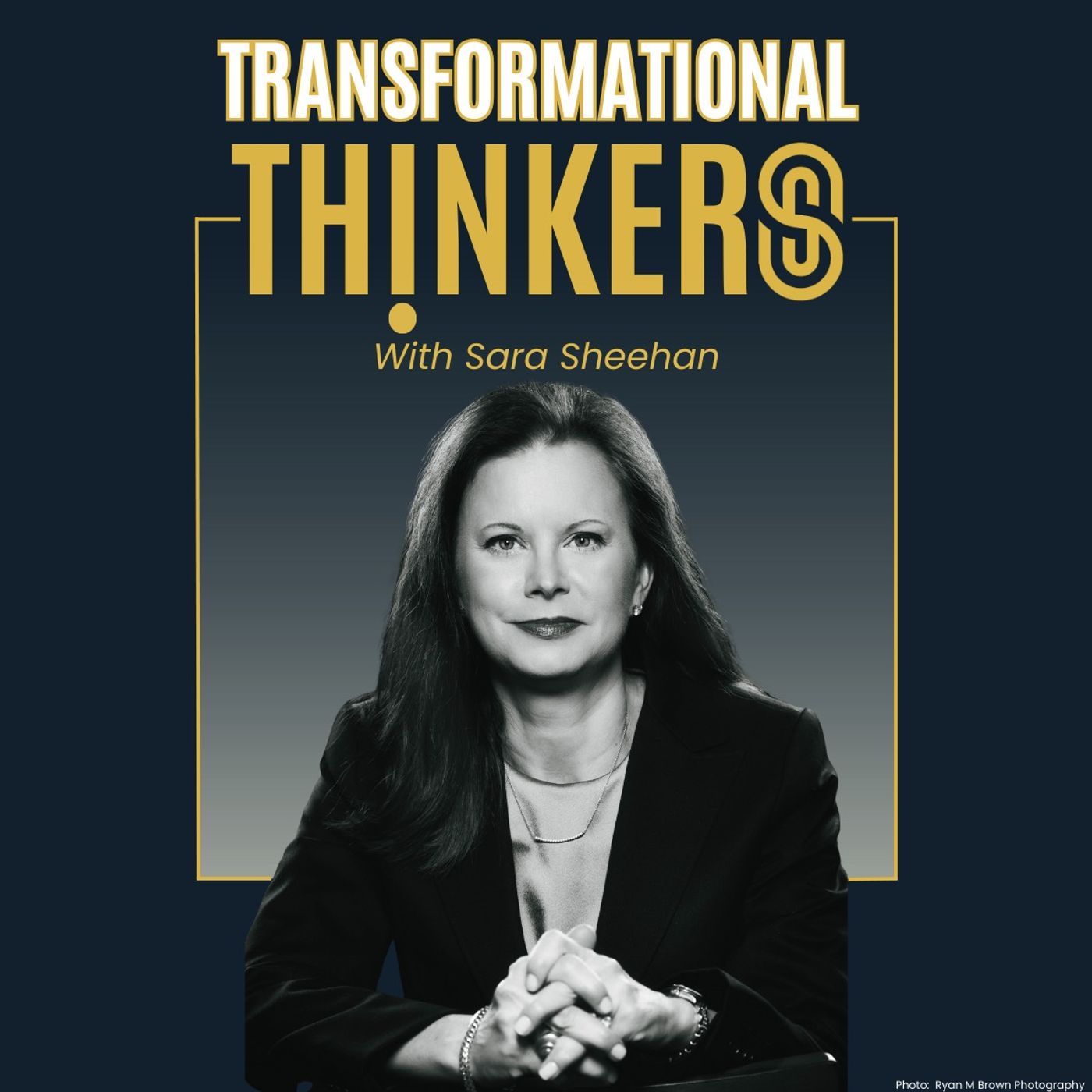
Transformational Thinkers with Sara Sheehan
Subscribed: 3Played: 63
Subscribe

© 2026 Sara Sheehan Consulting, LLC
Description
The business world is brewing up a storm. Let's thrive in these extraordinary times together! This is a clarion call to Transformational Thinkers across the globe who are ready to rise up and successfully lead change in their teams.
Every other week, Change Consultant Sara Sheehan talks with leaders and experts to spotlight real-world stories in the change management space. You will walk away with the latest change strategies to empower your employees, enhance your creativity and communication, and establish your legacy as a leader in business.
Every other week, Change Consultant Sara Sheehan talks with leaders and experts to spotlight real-world stories in the change management space. You will walk away with the latest change strategies to empower your employees, enhance your creativity and communication, and establish your legacy as a leader in business.
76 Episodes
Reverse
Could the talent shortage your organization is experiencing be partly caused by your own hiring technology? What if your strongest candidates are being rejected before a human recruiter ever sees their qualifications?In this episode of Transformational Thinkers with Sara Sheehan, host Sara Sheehan examines the hidden risks of AI hiring tools and their impact on talent acquisition, business transformation, and leadership accountability. As organizations increasingly rely on automated recruitment systems to improve efficiency, Sara explains why faster hiring doesn't necessarily lead to better hiring decisions.Through emerging AI discrimination lawsuits, research into algorithmic bias, and studies examining the effectiveness of human oversight, Sara highlights how automated screening can exclude qualified candidates while creating significant legal, operational, and reputational risks. She also challenges leaders to consider whether their recruitment technology helps them identify exceptional talent or simply rewards candidates who most closely match rigid job descriptions.Drawing on her change management expertise, Sara shares practical strategies for auditing AI hiring systems, empowering recruiters to question automated recommendations, and improving transparency with candidates. She emphasizes that responsible AI adoption requires organizational readiness, employee training, leadership accountability, and ongoing monitoring.For CEOs, CHROs, and executive leaders navigating digital transformation, this episode offers a fresh perspective on responsible AI governance and strategic talent management. The competitive advantage may not belong to organizations using the most AI, but to those capable of recognizing exceptional talent that other hiring systems overlook.Tune in to Transformational Thinkers with Sara Sheehan to discover how mastering change management and rethinking talent acquisition can help your organization make better hiring decisions and drive sustainable business growth. Key Moments:00:48 | The Hidden Cost of AI HiringCould automated recruitment systems be rejecting your organization's next transformational leader before anyone reviews their qualifications?02:17 | Is Your Hiring Technology Creating a Talent Shortage?Research reveals how rigid screening criteria may exclude qualified candidates while employers struggle to fill critical positions.03:49 | AI Hiring Discrimination Lawsuits and Employer AccountabilityThe Workday lawsuit and other legal challenges raise important questions about algorithmic bias, employment discrimination, and organizational responsibility.10:02 | What Research Reveals About Algorithmic BiasStudies involving millions of applications expose how AI screening tools can disadvantage qualified candidates while hiding bias in aggregate data.14:29 | Why Human Oversight May Not Prevent AI Hiring BiasUniversity of Washington research demonstrates how recruiters can adopt biased AI recommendations and why effective training matters.18:20 | The Business Cost of Overlooking Qualified TalentRigid resume screening and automated filtering can exclude unconventional candidates and undermine the quality of your talent pipeline.20:16 | How AI Recruitment Impacts Employer Branding and Candidate TrustJob seekers are questioning automated interviews and hiring transparency, creating new risks for talent attraction and candidate experience.22:36 | The Changing Regulatory Landscape for AI HiringEvolving state and federal requirements reinforce the importance of AI governance, transparency, and leadership accountability.24:37 | Five Questions Every Executive Team Should Ask About AI HiringSara shares practical steps for auditing recruitment technology, reviewing rejected applicants, strengthening human oversight, and improving hiring decisions.26:33 | Why Responsible AI Adoption Requires Change ManagementSuccessful AI recruitment strategies depend on organizational readiness, employee training, ongoing monitoring, and human-centered leadership. Resources mentioned in this episode:ManpowerGroup 2026 Global Talent Shortage Survey Harvard Business Review: How Businesses Can Find Hidden Workers EEOC: iTutorGroup AI Hiring Discrimination Settlement University of Washington: People Mirror AI Systems' Hiring Biases Greenhouse 2026 Candidate AI Interview Report __ Contact Sara Sheehan | Sara Sheehan Consulting:SaraWSheehan.comSara Sheehan on LinkedInMeet with SaraSubmit Questions or Feedback to Sara Hosted by Simplecast, an AdsWizz company. See pcm.adswizz.com for information about our collection and use of personal data for advertising.
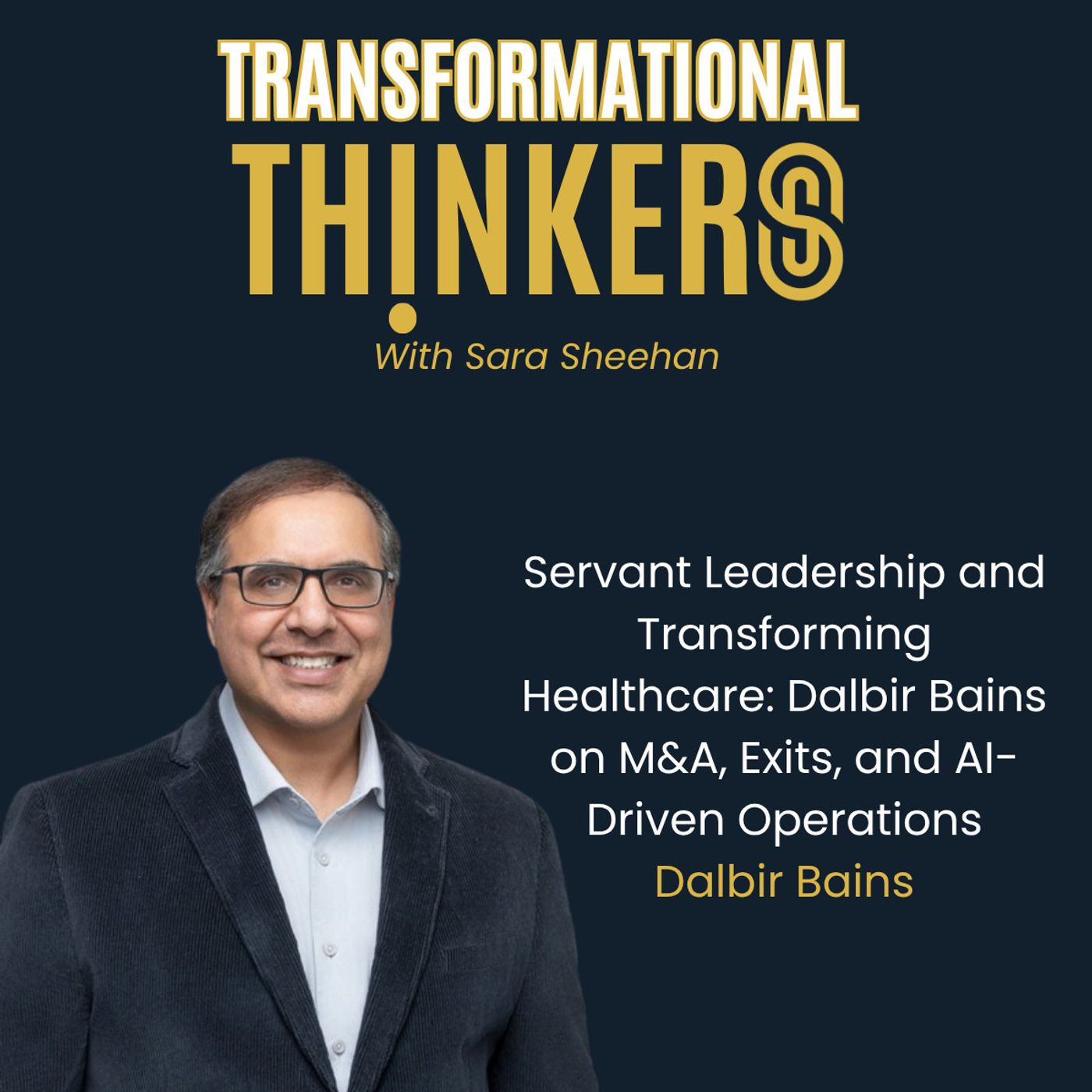
What happens when a leader combines an M&A mindset with an operator’s commitment to people, process, and continuous transformation? In this episode of Transformational Thinkers with Sara Sheehan, host Sara Sheehan welcomes healthcare entrepreneur and operator Dalbir Bains to explore acquisitions, business transformation, AI in pharmaceutical manufacturing, and servant leadership. Dalbir shares how his early experience at Canwest Global shifted his focus from completing transactions to creating real operational value as a builder and operator.When Dalbir cofounded Amenity Health and began acquiring independent pharmacies in underserved communities, his first acquisition taught him an important lesson about the pace of transformation. His team moved quickly to introduce new medical services without spending enough time understanding the previous owner, employees, community, and existing business. After going on to make 55 acquisitions, Dalbir says the most challenging part of integration remains people and culture. Trust requires consistency, communication, empathy, and time, while one-on-one conversations uncover concerns that may never surface in a group setting.Sara and Dalbir also examine the lessons of an acquisition that ultimately had to be written off, his successful healthcare exits, and the differences between operating in public and private companies. Across these experiences, Dalbir emphasizes strategic discipline, stakeholder relationships, and building businesses that create genuine value. His experience demonstrates why successful M&A integration involves much more than financial strategy. Leaders must understand the people behind the business and earn their trust.The conversation then turns to Galaxy Pharmaceuticals, 503B pharmaceutical manufacturing, and the potential for AI in regulated healthcare. Dalbir explains how AI can help manage complex information, strengthen process controls, identify potential issues, and support quality teams while keeping humans firmly in the loop. He also shares his approach to deciding whether to build AI technology or integrate an existing solution, and how leaders can turn employee resistance and concerns about AI into constructive feedback that improves technology and adoption.Throughout the conversation, one principle connects Dalbir’s experiences in M&A, healthcare, pharmaceutical manufacturing, and AI: transformation depends on people. His enduring operating principle is servant leadership: serving people and the organization with humility and helping employees, clients, and investors succeed. For CEOs, entrepreneurs, executives, and transformational thinkers, this episode offers practical insights into M&A integration, AI adoption, organizational transformation, and building trust while leading through change.Key Moments:00:00 — From Corporate Executive to Builder and OperatorDalbir shares how his experience at Canwest Global shifted his focus from transactions and finance to building businesses and creating operational value.03:24 — The First Acquisition and an Early Lesson in TrustDalbir reflects on his first Amenity Health acquisition and why moving too quickly taught him to prioritize relationships, community knowledge, and trust.06:12 — What 55 Acquisitions Teach You About People and CultureAfter dozens of acquisitions, Dalbir explains why people, culture, communication, and trust remain the most challenging parts of integration.09:13 — Using One-on-One Conversations to Uncover ConcernsDalbir discusses why individual conversations during due diligence and onboarding can reveal needs and concerns that may never emerge in a group setting.09:59 — A Failed Acquisition and the Cost of Misreading PeopleDalbir examines an acquisition outside the company’s core business that ultimately failed and the lessons he learned about evaluating people and intentions.11:32 — Building Healthcare Companies for Value and Successful ExitsSara and Dalbir discuss the exits of Amenity Health and FGC Health and his focus on building strong businesses that solve meaningful healthcare problems.13:19 — Public Versus Private Company Stakeholder ManagementDalbir compares the pressures of public company governance and investor relations with the greater flexibility available when building a private company.16:28 — Entering 503B Pharmaceutical ManufacturingDalbir explains why he entered highly regulated pharmaceutical manufacturing and saw an opportunity to address drug shortages and underserved healthcare needs.18:40 — Using AI to Transform Pharmaceutical OperationsDalbir describes how AI can help manage the immense volume of data, procedures, and workflow requirements involved in regulated pharmaceutical manufacturing.20:21 — Turning an Internal AI Strategy Into a Business OpportunityIndustry conversations helped Dalbir recognize that the regulatory and operational challenges his team was solving with AI were shared across the marketplace.23:10 — Quality, FDA Requirements, and Keeping Humans in the LoopDalbir explains the quality function’s role in regulated manufacturing and why human accountability remains essential when incorporating AI.24:54 — Build or Buy? Choosing the Right AI SolutionDalbir shares his requirements-first approach to deciding whether to integrate existing AI technology or build a solution for a unique business problem.27:37 — How AI Changes Quality and Work on the Shop FloorDalbir explains how AI can strengthen process controls, identify potential problems earlier, and improve quality while reducing the time required for certain tasks.28:56 — Turning AI Resistance Into Constructive FeedbackRather than dismissing concerns about hallucinations and incorrect outputs, Dalbir explains how leaders can use employee feedback to improve AI models and adoption.30:02 — Servant Leadership as an Operating PrincipleDalbir identifies servant leadership, humility, and helping others succeed as the principles he has carried across the businesses he has built.30:38 — Where to Follow Dalbir’s WorkDalbir shares where listeners can learn more about his work with Galaxy Pharmaceuticals and his technology initiatives.___About Dalbir Bains:Dalbir Bains is a founder, CEO, and transformational business leader with deep experience in regulated healthcare, artificial intelligence, M&A, and strategic growth. His career includes approximately 55 healthcare acquisitions, more than $120 million in growth capital raised, and two healthcare platform exits at 10x and 8x EBITDA. His broader M&A experience includes public company transactions, with his personal site reporting more than $3.2 billion in enterprise value across 100 media acquisitions.Dalbir is the Founder and CEO of Tek HQS AI, a custom AI company focused on regulated healthcare, and is also building Galaxy Pharmaceuticals, a 503B sterile pharmaceutical operation in New York. His approach to AI emphasizes validated technology, human accountability, quality oversight, and solutions designed to withstand the requirements of highly regulated healthcare environments.Throughout his career, Dalbir has used M&A, operational excellence, technology, and high-performance teams to drive growth, profitability, and strategic transformation. His leadership approach combines visionary thinking with disciplined execution to create long-term value for organizations, investors, employees, and the communities they serve.Resources mentioned in this episode:Galaxy Pharmaceuticals: GalaxyPharma.netTech HQS: TekHQS.ai__ Contact Sara Sheehan | Sara Sheehan Consulting:SaraWSheehan.comSara Sheehan on LinkedInMeet with SaraSubmit Questions or Feedback to SaraContact Dalbir Bains:Website: DalbirBains.comLinkedIn: Dalbir-Bains Hosted by Simplecast, an AdsWizz company. See pcm.adswizz.com for information about our collection and use of personal data for advertising.
AI investment and adoption are accelerating, yet many organizations are struggling to translate that investment into measurable business results. In this episode of Transformational Thinkers with Sara Sheehan, host Sara Sheehan explains why the culture gap is increasingly becoming the AI gap.Successful AI adoption requires more than implementing technology. Organizations must prepare their people to change behaviors, learn through experimentation, integrate AI into existing workflows, and adapt how work gets done. Sara examines research showing that employees may already be further ahead in their use of generative AI than executives realize, creating an important readiness challenge for CEOs and leadership teams.Sara identifies four leadership behaviors that can help close the culture gap: visibly role modeling AI use, leading with empathy, protecting psychological safety, and measuring human adoption rather than technical deployment alone. Employees need to feel comfortable experimenting, raising concerns, identifying inaccurate AI outputs, and learning as new workflows develop.Middle managers also play a critical role. Rather than treating managers as obstacles to AI transformation, Sara explains why organizations should involve them in designing workflows, shaping communication, and championing adoption. When trusted leaders throughout the organization participate in the change, transformation becomes something employees help create rather than something imposed on them.Sara concludes with a practical six-pillar approach for leaders. Assess organizational readiness before launching the next AI initiative. Build a change network and align leaders. Redesign communication around stakeholder needs and concerns. Conduct a comprehensive business impact analysis. Build training before launch. Finally, establish a sustainment strategy that reinforces behaviors, recognizes progress, and measures adoption over time.The central message is clear: AI adoption is a transformation challenge first and a technology rollout second. Organizations that invest in leadership, culture, communication, training, and human adoption will be better positioned to capture the value their AI investments promise.Tune in to Transformational Thinkers with Sara Sheehan to explore how a human-centered approach to change can help close the AI culture gap and create sustainable business transformation. Key Moments:00:00:48 | The Culture Gap Is the AI Gap Sara examines the disconnect between rapidly increasing AI investment and the organizational cultures and workflows needed to generate measurable returns.00:02:27 | The Growing AI Readiness Gap Research reveals a significant disconnect between how executives perceive employee AI use and how employees are actually incorporating generative AI into their work.00:04:34 | Why AI Investment Alone Is Not Enough Sara explores why organizations need to invest in leadership, people, and change management alongside technology to create sustainable AI adoption.00:06:50 | Human-Centered AI and Employee Participation A human-centered approach built on curiosity, iteration, psychological safety, and employee involvement can improve the likelihood that AI transformation takes hold.00:09:06 | Leadership Behaviors That Drive AI Adoption Sara identifies essential leadership behaviors, including role modeling AI use and leading with empathy, that help organizations close the culture gap.00:11:16 | Psychological Safety and Measuring Real Adoption Successful transformation requires creating space for experimentation and measuring whether employee behaviors have actually changed, not simply whether technology has launched.00:14:00 | Turning Middle Managers Into Change Champions Sara explains why involving middle managers in workflow design, communication, and implementation can shift them from potential resistors to powerful champions of AI adoption.00:15:57 | A Six Pillar Approach to AI Transformation Sara introduces a practical sequence beginning with readiness assessment, change networks, leadership alignment, communication strategy, and business impact analysis.00:18:02 | Training, Sustainment, and the Human Edge The final pillars focus on building training before launch and creating a sustainment strategy that reinforces behaviors and supports lasting adoption.00:19:25 | AI Transformation Starts With Leadership Sara closes with the central takeaway that successful AI adoption is a transformation challenge first and a technology rollout second, with human capital strategy at its core.Resources mentioned in this episode:How to Foster Psychological Safety When AI Erodes Trust on Your Team by Jayshree Seth and Amy C. EdmondsonMastering Change Resilience: The Key to AI-Driven Success - HBS AI Content & Learning | HBS and HBS AI Affiliate Research5 Takeaways from MIT’s 2025 Report on the State of AI in Business by Christine Dadali__Contact Sara Sheehan | Sara Sheehan Consulting:SaraWSheehan.comSara Sheehan on LinkedInMeet with SaraSubmit Questions or Feedback to Sara Hosted by Simplecast, an AdsWizz company. See pcm.adswizz.com for information about our collection and use of personal data for advertising.
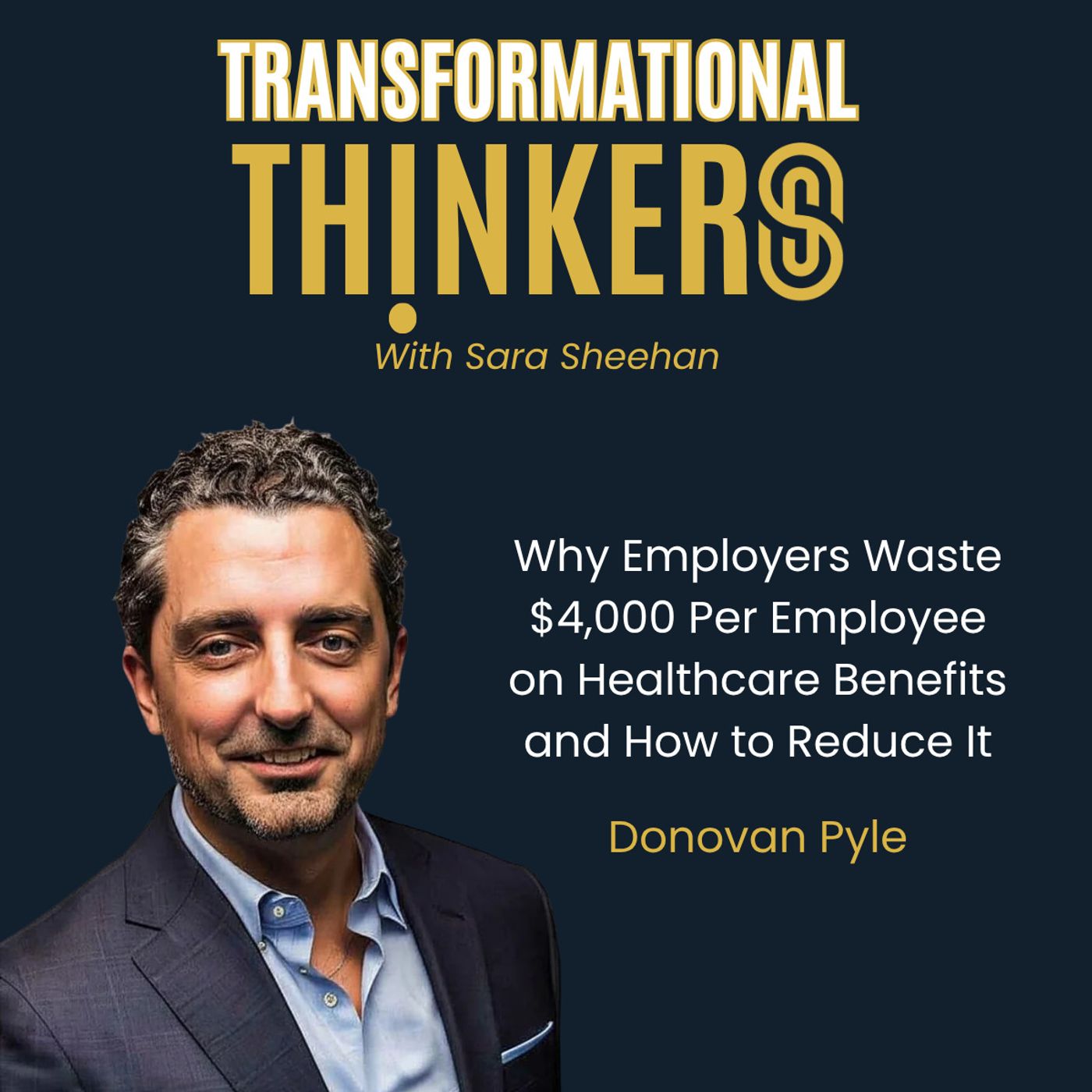
Employee healthcare benefits are one of the largest expenses for many businesses, yet CEOs and CFOs often lack visibility into how those dollars are spent. Donovan Pyle believes transforming that investment starts with unbiased professional advice and a more strategic approach to benefits.Sara and Donovan examine conflicts of interest within the traditional brokerage model and the financial consequences for employers. Donovan estimates that healthcare waste cost U.S. employers approximately $4,000 per employee in 2024. He shares how Health Compass Consulting helped Champion Solutions Group develop a customized health plan that improved coverage while saving more than $3,000 per employee compared with projected spending, ultimately contributing to greater enterprise value.Donovan also introduces Health Compass Consulting’s APIM framework: Assess, Procure, Implement, and Manage. The approach begins with understanding an organization’s goals, risks, opportunities, and readiness for change before determining which solutions to pursue.Professional expertise is another critical consideration. Donovan, who holds both the Certified Health Value Professional (CHVP) and Registered Employee Benefits Consultant (REBC) designations, encourages executives to evaluate benefits advisors with the same rigor they use when selecting CPAs, attorneys, and other trusted professionals.Sara and Donovan also explore the change management required to transform benefits successfully. Leaders do not need to change advisors and insurance products at the same time, and moving too aggressively can create unnecessary disruption. A deliberate, multiyear strategy can help organizations control healthcare costs while delivering greater value to employees and the business.For CEOs, CFOs, and business owners, this conversation challenges the assumption that rising healthcare costs are simply unavoidable. Tune in to discover how fiduciary alignment, informed leadership, and strategic benefits management can turn a major business expense into an opportunity for stronger financial performance and long-term enterprise value. Key Moments:00:34 The Moment That Changed EverythingDonovan shares how confronting conflicts of interest in employee benefits ultimately changed his career direction.03:08 The Hidden Conflict in Employee BenefitsWhy traditional broker compensation can create misaligned incentives and unnecessary costs for employers.04:40 The $4,000 Per Employee OpportunityDonovan explains the scale of healthcare waste and its potential financial impact on employers.07:46 Turning Benefits Savings Into Enterprise ValueA customized health plan saved Champion Solutions Group more than $3,000 per employee while improving coverage.11:32 The APIM Framework for Benefits StrategyDonovan introduces the Assess, Procure, Implement, and Manage approach to maximizing benefits investments.18:53 Choosing a Qualified Benefits AdvisorDonovan explains the CHVP, REBC, and CEBS credentials executives should understand when evaluating benefits professionals.24:59 Changing Advisors Without Changing Your PlanDonovan challenges the misconception that selecting a new benefits advisor requires changing insurance products.26:45 Diagnosis Before PrescriptionWhy effective benefits transformation starts with understanding organizational needs, data, and readiness for change.28:01 Moving Beyond Off-the-Shelf Health PlansDonovan explains how employers can eliminate unused services and stop overpaying for the healthcare employees actually use.30:30 Scaling Without Sacrificing Fiduciary StandardsSara and Donovan discuss the challenge of delivering a consistent fiduciary experience as Health Compass grows.32:36 Managing Change and Staying the CourseHow communication and a multi-year strategy helped one client navigate change while reducing healthcare costs for three consecutive years.34:34 Building Trust Through Fiduciary ValidationDonovan explains the Validation Institute’s fiduciary validation and its $100,000 credibility guarantee for employers. About Donovan Pyle:Donovan Pyle is a nationally recognized employee benefits authority, author, speaker, and founder of Health Compass Consulting. Named the 2025 Benefits Advisor of the Year by the Validation Institute, Donovan is dedicated to transforming the business of healthcare by helping employers turn benefits spending from a growing liability into a strategic asset.As the author of Fixing Healthcare, Donovan provides business leaders with a practical framework for improving healthcare value through greater transparency, fiduciary alignment, and strategic benefits management. He is one of only two professionals in the United States to hold both the Certified Health Value Professional (CHVP) and Registered Employee Benefits Consultant (REBC) designations. Donovan is also a trusted speaker for organizations including Chief Executive Group and the Validation Institute and leads workshops helping benefits professionals transition to a fiduciary advisory model.Beyond his work in healthcare, Donovan has been a professional musician since 1995. As a bassist, drummer, engineer, and mixer, he has worked with artists including U2, Freddie Jackson, Luther and Cody Dickerson (North Mississippi Allstars), and Aaron Julison (Kid Rock). His drumming has also appeared in national campaigns for HBO, Chevy, Nike, Motorola, and the National Highway Traffic Safety Administration.After nearly a decade performing and engineering full-time in New York City and three years touring nationally, Donovan is now based in Orlando, Florida, where he continues to perform and record while leading his work to transform employer-sponsored healthcare.Resources mentioned in this episode:Fixing Healthcare: How Executives Can Save Their People, Their Business, and The Economy by Donovan Pyle__Contact Donovan Pyle: Website: DonovanPyle.comLinkedIn: DonovanPyleBusiness Website: HealthCompassConsulting.com Contact Sara Sheehan | Sara Sheehan Consulting:SaraWSheehan.comSara Sheehan on LinkedInMeet with SaraSubmit Questions or Feedback to Sara __ Hosted by Simplecast, an AdsWizz company. See pcm.adswizz.com for information about our collection and use of personal data for advertising.
Organizations invest heavily in technology, digital transformation, restructuring, and artificial intelligence, yet many transformation initiatives still fail to deliver their intended results. Sara Sheehan explains that the problem is often not the technology or strategy, but an underinvestment in the people who must adopt new systems, processes, behaviors, and ways of working. Drawing on more than 30 years of enterprise transformation experience, she makes the case that managing the human side of change is essential to achieving adoption, ROI, and sustainable business transformation.
Sara challenges the idea that change management is a one-time workshop, kickoff event, or communication campaign. Instead, it is a sustained discipline that begins before change is announced and continues through implementation and sustainment. She shares practical strategies including readiness assessments, resistance diagnosis, behavior change planning, and change champion networks. Her 30-, 60-, and 90-day behavior change framework helps move employees from awareness and orientation through application, reinforcement, and ultimately sustainment.
Listeners also get an inside look at Sara's Mastering Change Management program, which translates more than three decades of experience into practical change leadership capability. The curriculum addresses the full arc of organizational change, including stakeholder assessment, readiness, communication, training, behavioral change, employee engagement, strategy execution, and adoption. Sara outlines four learning formats designed for different leadership needs: live cohorts, a 21-hour self-paced course, an 11.5-hour Learning Path, and customized private cohorts for organizations and executive teams.
Sara also examines why change management has become increasingly important as organizations adopt artificial intelligence. AI is not simply a technology deployment; it is an organizational transformation that requires employees to understand, adopt, and integrate new tools into their work. For CEOs and executives, the takeaway is clear: strategy and vision alone cannot deliver transformation. Leaders must invest intentionally in communication, training, trust, and the human transition required to build lasting organizational resilience and change agility.
Key Moments:
00:00:04 Why the Human Side of Change Matters
Sara introduces change management as one of the most undervalued executive capabilities and explains why transformation requires attention to people as well as strategy and technology.
00:02:22 Why Organizational Transformations Fail
Sara examines the persistent failure of large-scale change initiatives and argues that inadequate investment in the human side of change is often the missing factor.
00:06:26 Lessons From 30 Years of Transformation
Sara reflects on her career across Andersen Consulting, IBM, KPMG, and other consulting organizations and the experiences that shaped her approach to change management.
00:10:01 Change Management Is a Sustained Discipline
Sara explains why effective change management must extend beyond a workshop or kickoff and continue throughout implementation and sustainment.
00:12:38 Assessing Readiness and Diagnosing Resistance
Sara explores how readiness assessments and resistance diagnosis help leaders understand whether employees are prepared for change and what support they actually need.
00:14:53 Creating Sustainable Behavior Change
Sara shares her 30, 60, and 90-day behavior change framework and explains how change champions can help new ways of working become the organizational norm.
00:17:30 Inside Mastering Change Management
Sara introduces the purpose behind Mastering Change Management and outlines how the curriculum builds practical capability for leading organizational transformation.
00:19:52 Turning Change Management Knowledge Into Action
Sara discusses the program's final execution and impact phase along with the research and frameworks that inform its approach to communication, trust, transition, and adoption.
00:22:04 What Participants Are Applying at Work
Participant experiences illustrate how the program connects change management concepts with practical skills that leaders can immediately apply in their organizations.
00:24:29 Four Ways to Learn Change Management
Sara introduces the four program formats and explains how the live cohort creates an immersive, collaborative environment for leaders and change practitioners.
00:27:01 Self-Paced and Learning Path Options
Sara explains how the 21-hour self-paced course provides depth and flexibility while the 11.5-hour Learning Path focuses on practical change leadership capability.
00:28:33 Private Cohorts for Executive Teams
Sara describes how private cohorts customize the curriculum around an organization's actual strategy, stakeholders, culture, and transformation initiatives.
00:30:20 Why AI Adoption Is a Change Management Challenge
Sara explains why organizations should approach AI as an organizational transformation and why its value depends heavily on people adopting new processes and ways of working.
00:33:55 A Message for CEOs Leading Transformation
Sara challenges CEOs and executives to look beyond strategy and vision by investing in communication, training, transition support, organizational resilience, and the people responsible for the success of transformation.
Resources mentioned in this episode:
Atomic Habits by James Clear
William Bridges' work on transitions
Conversational Intelligence by Judith E. Glaser
Do Hard Things by Steve Magness
__
Contact Sara Sheehan | Sara Sheehan Consulting:
SaraWSheehan.com
Sara Sheehan on LinkedIn
Meet with Sara
Submit Questions or Feedback to Sara
Hosted by Simplecast, an AdsWizz company. See pcm.adswizz.com for information about our collection and use of personal data for advertising.

Comments

Download from Google Play

Download from App Store
 United States