



 Claim Ownership
MSFAccessCampaign
Subscribed: 6Played: 38
Subscribe

© All rights reserved
Description
In the field, MSF doctors are constantly frustrated by the lack of adequate medical tools to give quality care to the patients we treat.
In response, Médecins Sans Frontières set up the MSF Access Campaign in 1999 to improve access to existing medical tools (medicines, diagnostics, vaccines) and to stimulate the development of urgently needed better tools for people in countries where MSF works.
TO LEARN MORE ABOUT WHAT WE DO, VISIT WWW.MSFACCESS.ORG
Follow us on Twitter: www.twitter.com/MSF_access
Become a fan on Facebook:
www.facebook.com/MSFaccess
In response, Médecins Sans Frontières set up the MSF Access Campaign in 1999 to improve access to existing medical tools (medicines, diagnostics, vaccines) and to stimulate the development of urgently needed better tools for people in countries where MSF works.
TO LEARN MORE ABOUT WHAT WE DO, VISIT WWW.MSFACCESS.ORG
Follow us on Twitter: www.twitter.com/MSF_access
Become a fan on Facebook:
www.facebook.com/MSFaccess
9 Episodes
Reverse
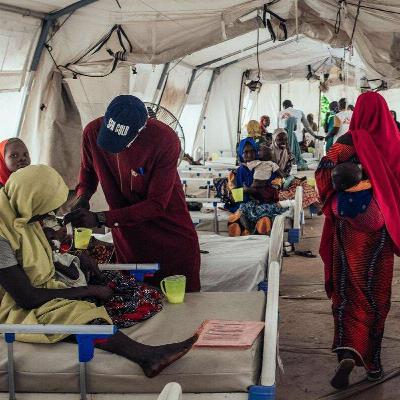
In 2022, we treated more than 140,000 children for acute malnutrition in Zamfara, Katsina, Sokoto, Kebbi and Kano states.
We are still seeing children dying on the way to our clinics, children whose medical condition is so severe that we can’t do anything to save them. Escalating violence, displacement, soaring food prices, epidemics and climate change are the factors triggering this alarming health and malnutrition crisis.
The needs for the northwest #Nigeria malnutrition crisis are great. Humanitarian actors must immediately step up response: https://www.msf.org/un-must-urgently-recognise-malnutrition-crisis-northwest-nigeria
An excerpt from a World Radio Switzerland interview with Sharonann Lynch, MSF Access Campaign's HIV/AIDS Policy Advisor, on the current financial crisis facing global health funding and in particular HIV treatment.
More information: www.msfaccess.org
A new malaria vaccine trial shows that there is potential, but MSF Access Campaign's Nathan Ford medical director warns about the possibility that by focusing too much on this promising research, the global donor community might forget about the standard preventative measures, like mosquito netting and spraying, that still need to be funded until a vaccine is 100 percent effective.
This is from "The Takeaway": http://www.thetakeaway.org/2011/oct/19/long-fight-ahead-battle-against-malaria/
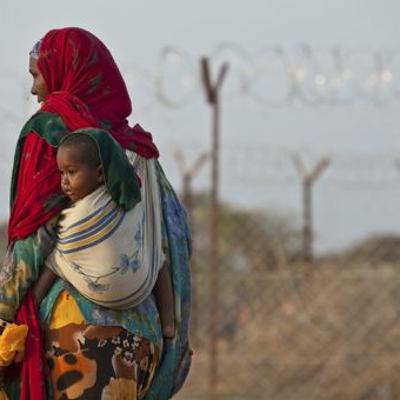
In Turkana, northwestern Kenya, MSF is now able to distribute supplementary nutrient-rich food, which will prevent children from becoming malnourished.
For more information visit, www.msfaccess.org
To participate & join MSF's campaign "Starved for Attention", visit www.starvedforattention.org
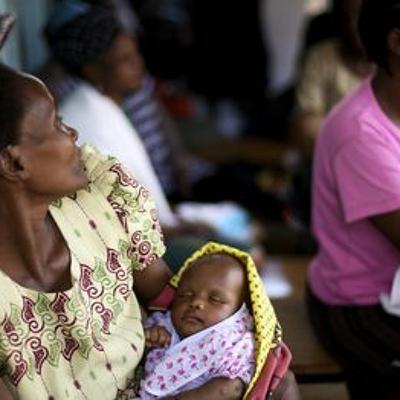
From MSF Frontline Reports:
Without proper treatment, half of the 370,000 children newly infected with HIV last year will die before they reach their second birthday. But very few medicines are designed and adapted specifically for children, and are affordable and practical to use in the places where they live. The Drugs for Neglected Diseases initiative (DNDi) recently announced a new project to help develop appropriate HIV drugs for children.
To learn more visit, msfaccess.org
In May 2008, the World Health Assembly agreed on a Global Strategy and Plan of Action aimed at reforming the medical R&D system and enhancing access to medicines for patients in developing countries. Too often MSF staff find themselves in the painful situation where they don't have adequate medical tools to treat their patients. This is largely because the global system of pharmaceutical Research and Development doesn't developm medicines for diseases that mostly affect poor people. In this report, produced by Laura McCullagh, patients and MSF doctors explain why urgent change is needed
Listen to the song about sleeping sickness
Over the last four months, Médecins Sans Frontières teams in cooperation with the Ministries of Health, have carried out the largest vaccination campaign for 7.5 million people in West Africa.
Find out more about this huge logistical campaign from our teams on the ground, including Australian medical doctor Liz Bannister and Dr Greg Elder, Program Manager for Nigeria.
No Money at all for TB Diagnostics. If the case for funding research into TB drugs is dire, then the problem for funding TB diagnostics is appalling. Great advances could be achieved by improving the capacity to positively identify TB at the earliest juncture. But diagnostic research attracted only 7.3% of all global funding for TB in 2006 (source: TAG, July 2008). The EC did not provide any funding for TB diagnostics research either in 2006 nor in 2007.
Comments

Download from Google Play

Download from App Store
 United States